





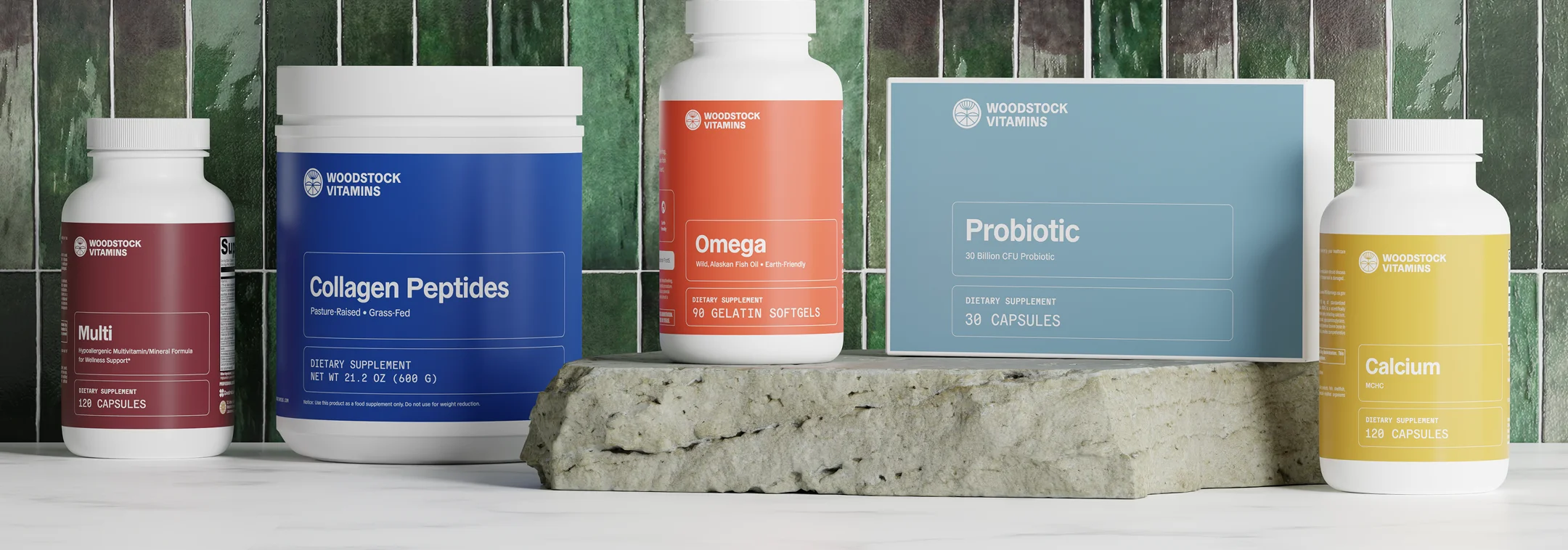

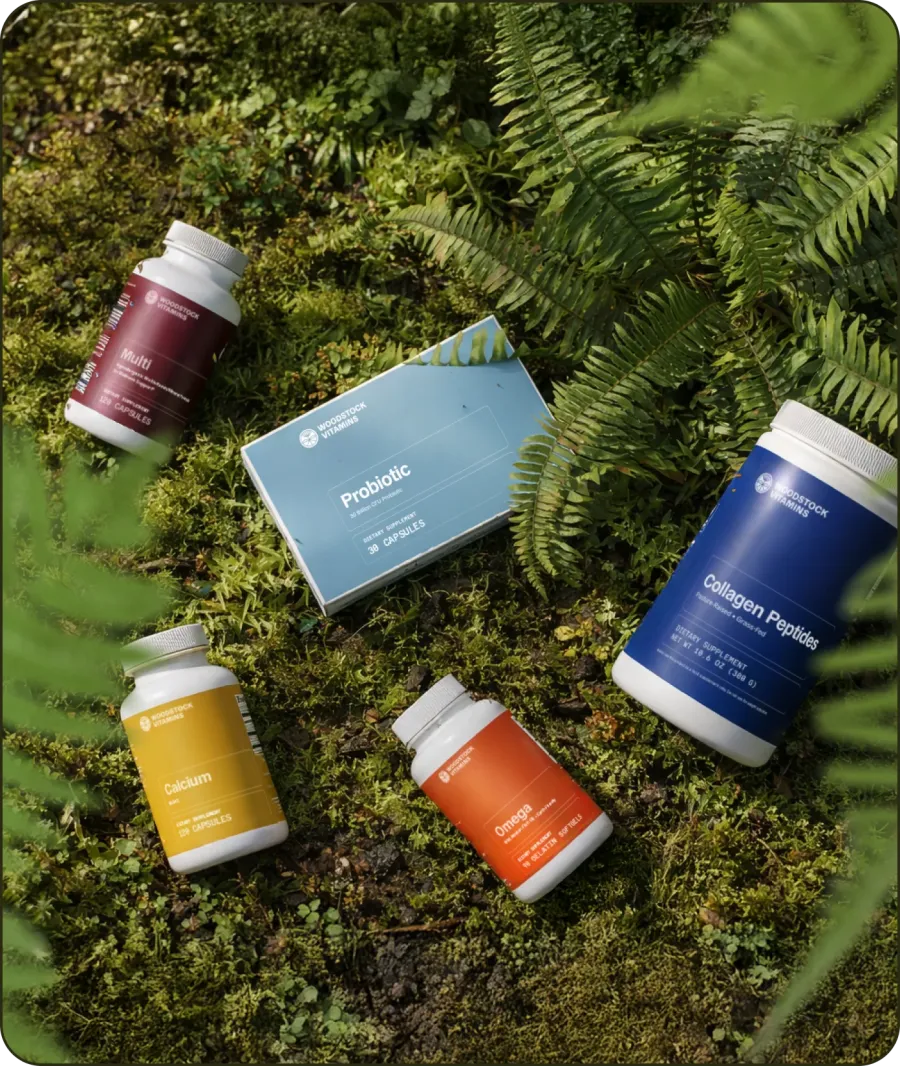
Collagen peptides are like the Swiss Army Knife of supplements. They do a whole lot, inside and out, yet they don’t get much publicity for the foundational nutrients they provide. Collagen peptides’ benefits range from rejuvenating skin health to growing lean muscle mass to supporting gut health. Still, many people are missing the essential amino acids they supply.
That’s why Dr. Neal Smoller, supplement strategist, holistic pharmacist, and founder of Woodstock Vitamins, has been advocating for supplementing with collagen peptides for years. He’s talked about why choosing the right protein supplement is so important to total-body health. We’re going to expand upon his idea, and by the end of this article, you’ll understand why the protein found in collagen peptides is so foundational and how to choose the right protein source for you.
How Collagen Peptides Support The Body
Collagen peptides are special in that they provide a full spectrum of amino acids and 20g of protein (at least our Collagen does). This nutrient profile comes with a whole host of benefits, like:
- Supporting skin structure and elasticity (1)
- Maintaining joint health (2)
- Contributing to bone structure (3)
- Promoting muscle growth (4)
- Improving sleep quality (5)
- Supporting gut health (6)
- Contributing to healthy BMI and metabolism (7)
From your skin, gut, joints, and muscles, collagen peptides aren’t “optional”. They’re a fundamental part of total-body health. Learn more here: Why Our Collagen Peptides is Vital.
The Different Forms of Protein
Most people don’t know this, but “protein” isn’t a monolith. There are several types of protein:
- Structural Proteins: These offer the support and framework for the body (this includes collagen peptides)
- Enzymatic Proteins: These speed up chemical reactions like digestion (these include lactase).
- Hormonal Proteins: These are chemical messengers that communicate in the body (this includes insulin).
- Defensive Proteins: These help protect the body from viruses and pathogens (these include antibodies).
- Transport Proteins: These move compounds around the body (think hemoglobin in the blood).
- Contractile Proteins: These play a role in muscle movement (including actin and myosin).
- Storage Proteins: These store nutrients (think of the casein that’s found in milk)
But not all protein sources are created equal. Some protein sources have more amino acids, others have less. Some are more bioavailable than others. And the list goes on. Here are the three main sources of protein:
- Animal Protein: Considered a complete protein with all nine essential amino acids and plus some (this includes meat, fish, dairy, and eggs).
- Plant Protein: Found in plant-based sources like beans, lentils, nuts, and seeds. This often requires combining different sources to get the full spectrum of amino acids.
- Protein Powder & Supplements: Fast and slow-acting protein sources like whey, casein, pea, and soy that can offer a full spectrum of amino acids or need to be combined with other sources.
Fortunately, with Collagen, you won’t have to worry about getting enough protein to boost your health. Featuring 20g of protein and all nine essential amino acids, this 100% bovine (cow-based) collagen peptides supplement covers your bases.
How Much Protein Do I Need?
How much protein you need per day depends on your gender, weight, movement routine, and health goals. Generally speaking, protein should account for 10-35% of your daily calories if you’re shooting for a 2,000-calorie diet. To make it easy, the formula for the right amount of protein is: Your body weight in lbs x 0.5-0.6 = grams of protein.
While there is no widespread “protein deficiency” in the United States, people still may not be getting the right protein. You’ll need a source that covers your essential amino acid needs and is easily absorbed by the body. Learn more about different protein sources here: How Protein Supplements Are Processed (Within an Inch of Their Lives).
The Different Types of Collagen
Did you know there are over 28 different types of collagen? But three types constitute the vast majority of collagen that are responsible for skin integrity, joint health, and bone integrity.
- Type I: The most common form of collagen, which is responsible for providing strength and structure to skin, joints, bones, and ligaments. It also plays a role in skin elasticity and may help reduce the appearance of wrinkles.
- Type II: This form is mainly found within the body in your cartilage. This type plays an important role in joint flexibility and shock absorption.
- Type III: This type is often found with type I in your muscles, skin, blood vessels, and organs. This type plays a role in the body’s wound healing process.
Of these three types, there are different sources of collagen that may be easier to absorb and more helpful for the body.
- Bovine (Cow): This is what our Collagen is made of, and it mainly contains Types I and III collagen. This makes it especially beneficial for skin and connective tissues.
- Marine (Fish): This form is very bioavailable and provides Type I collagen. This source makes it useful for supporting healthier skin, hair, and nails.
- Chicken: This form is rich in Type II collagen and plays a role in maintaining joint and cartilage health.
Collagen Tested for Quality & Purity
One of the biggest hesitations around collagen supplements and protein powders in general is heavy metals. It’s been well documented that an estimated 70% of protein powders studied exceed safe levels of metals like lead, arsenic, cadmium, and mercury. Fortunately, our Collagen is third-party tested for heavy metals like lead, cadmium, and mercury as well as contaminants like E. coli, Salmonella, yeast, and mold. Testing is a huge component of choosing a protein supplement with confidence. It’s a good idea to give yourself peace of mind by knowing your protein powder has been rigorously tested for heavy metals.
What to Look For When Buying Protein Supplements
As mentioned earlier, not all protein sources are the same. And the same goes for protein supplements. Some contain fillers, too much sodium, questionable ingredients, and the list goes on. Here are a few things to look for when buying a protein supplement:
- Sustainability: Is it made from sustainable sources like grass-fed, free-range cows or conventionally grown with pesticides?
- Processing: Was it minimally processed or refined to no end?
- Fillers: Does it contain artificial colors, sweeteners, or thickeners?
- Contaminants: Was it third-party tested for heavy metals and contaminants?
- Sodium: Is there added sodium that could affect your health in negative ways?
- Caffeine: Does it contain caffeine to boost its properties, or is it caffeine-free?
- Hormones: Does it contain steroids or testosterone? And do you want that in your protein supplement?
What goes in your body matters. Doing your due diligence to peek under the hood of a protein supplement and see how it’s made will pay dividends towards your health goals. Dive deeper into what to look for with protein supplements here: Protein Supplements: Are You Getting Ripped Off?
When to Expect Results
Collagen peptides are not a one-and-done kind of supplement. Consistent intake yields the best results, particularly for your gut, skin, joints, and muscles. Studies show that it takes as little as 8 weeks of continuous use to see results from collagen peptides. So, stick with it — even if you don’t see immediate results — and you’ll be rewarded with the amazing health benefits mentioned earlier.

Where Collagen Fits into Your Health Foundation
At Woodstock Vitamins, we believe in building your health on a solid foundation. Yes, you can fill your body and medicine cabinet with tons of nice-sounding, unnecessary supplements. But why would you when you can get your foundational nutrients solid instead? That’s the logic behind Collagen and all of the First 5.
That’s why Collagen is part of our First5 framework — five foundational inputs most people lack:
In this First5 line-up, Collagen covers your:
- Skin, hair, and nails
- Digestive and gut integrity
- Muscle and joint health
- Weight and metabolic goals
- Sleep quality
These amazing health benefits are why Collagen has been included in our First5. But we always recommend getting all five to cover all of your bases from head to toe.
The Bottom Line
When it comes to total body health, collagen peptides are a powerful way to support your body from the inside out. But most of us don’t get the right form of protein into our diets. That affects everything from how we sleep to whether our gut properly absorbs nutrients. Protein is not “optional”; it’s foundational. Rebuilding your health from the inside out starts with what you put in your body, and our Collagen is a good place to begin. Learn more about Collagen and our other First5 here.
Most people looking for more energy start by asking the wrong question. They ask what to add — a stimulant, a shot, a “hack” for the afternoon slump. The better question is what’s missing. Energy isn’t manufactured by a single ingredient. It’s produced, continuously, inside your cells — and that process depends on a specific set of nutritional inputs showing up, every day, in the right amounts.
This piece goes one level deeper than our other articles about the specific roles B vitamins, iron, and magnesium play in energy metabolism, and why gaps in any one of them can leave you running on empty no matter how much sleep you get or coffee you drink.
Energy Is Made, Not Found
Every cell in your body produces energy through a process that converts food into a usable form — a molecule called ATP. That process runs on a chain of chemical reactions, and chemical reactions need cofactors: vitamins and minerals that help enzymes do their job. Take enough of the right inputs off the table, and the chain slows down, regardless of how many calories you’re eating.
This is the foundational case for supplementation at all: not to manufacture energy from nothing, but to make sure the machinery that already produces it has what it needs.
B Vitamins: The Metabolic Engine
The B vitamins are the closest thing the body has to a dedicated energy-production team. Several of them work directly inside the pathways that turn carbohydrates, fats, and protein into ATP:
- B1 (thiamine) and B2 (riboflavin) help support the early steps of converting glucose into usable energy.
- B3 (niacin) is a building block for NAD+, a molecule the body’s energy-producing pathways depend on at nearly every step.
- B5 (pantothenic acid) helps support the formation of coenzyme A, a central player in breaking down fats and carbohydrates for fuel.
- B6 plays a role in how the body metabolizes protein and supports normal red blood cell formation.
- B12 and folate support normal red blood cell production and nervous system function — both of which affect how well oxygen and nutrients get where they need to go.
None of these vitamins are stored in large reserves. B12 is the exception with meaningful liver storage, but most B vitamins are water-soluble, meaning your body uses what it needs and clears the rest daily. That makes daily, consistent intake — not occasional dosing — the relevant variable.
Iron: Oxygen Is Non-Negotiable
Cellular energy production requires oxygen. Iron is the reason oxygen gets there. It’s a core component of hemoglobin, the protein in red blood cells that carries oxygen from your lungs to every tissue in your body, including the tissues doing the work of producing energy.
Low iron intake is common, particularly among people who menstruate, endurance athletes, and anyone eating a largely plant-based diet, since iron from plant sources is less readily absorbed than iron from animal sources. When iron intake doesn’t keep pace with what the body needs, oxygen delivery becomes less efficient, and energy metabolism has less to work with, cell by cell.
This is a nutrient gap worth understanding, not a reason to panic. Most people don’t need to test or supplement iron aggressively. They need to know it’s a foundational input worth paying attention to — particularly if diet alone isn’t reliably covering it.
Magnesium: A Closer Look
Magnesium is a cofactor in hundreds of enzymatic reactions in the body, and energy metabolism is one of the biggest. ATP — the energy molecule every cell relies on — is typically bound to magnesium in its usable form. Without adequate magnesium, the body’s ability to actually use the ATP it produces is affected, not just the production of it.
Magnesium intake is low across a lot of populations, which is why it shows up so often in conversations about energy, sleep, and stress. It’s a real nutrient with real science behind its role in metabolism. It’s also why we treat it as a situational add-on rather than a foundational member of the First5: it earns its place after the foundation is covered, not before. Layering magnesium onto a diet that’s still missing its baseline B vitamins and iron is optimization without a foundation underneath it — the exact pattern we built Woodstock Vitamins to help people avoid.
What This Means for Your Foundation
B vitamins and iron are foundational nutrient inputs for energy metabolism — which is why they’re part of what a well-formulated Multi is built to cover. A daily multivitamin, taken consistently, is one of the more direct ways to make sure these inputs aren’t the reason your energy metabolism is working with less than it needs.
Magnesium is worth understanding, and worth considering once your foundation — Omega, Collagen, and Multi, for Energy & Performance — is in place and taken consistently. First things first.
None of this is about finding one nutrient that unlocks more energy. It’s about making sure the inputs your cells already depend on are consistently available. That’s a foundation, not a hack — and it’s the difference between chasing energy and actually producing it.
Curious where your own foundation has gaps? Take the quiz to find out which of the First5 matter most for you.
Ask the internet how to improve your mood, and you’ll get a thousand answers. Most of them are contradictory, and the other half are selling something. Strip away the noise and the actual evidence points somewhere much less exciting: four unglamorous levers — sleep, movement, connection, and diet — do more for everyday mood and stress resilience than almost anything else available to you. No trend required.
This isn’t a substitute for professional care when it’s genuinely needed. It’s what’s true for the everyday stress and low mood most people carry around without ever addressing the root causes.
Sleep: The Lever Everything Else Depends On
Mood regulation is downstream of sleep, not the other way around. A single short night measurably shifts emotional reactivity — small frustrations register as bigger ones, and the mental bandwidth for handling stress shrinks along with the hours you got.
The fix isn’t complicated, but it is consistent: a stable wake time, a wind-down period free of screens, and treating sleep as non-negotiable rather than the first thing sacrificed when the schedule gets tight. If your mood has been off and your sleep has also been off, start there before you start anywhere else.
Movement: Not About the Workout You’re Skipping
Exercise doesn’t need to be intense to matter for mood. Regular, moderate movement — a daily walk, a bike ride, anything that gets the body working consistently — is associated with meaningfully better stress resilience and day-to-day mood stability. The mechanism isn’t mysterious: movement regulates the same stress-hormone systems that chronic sitting and chronic stress both push out of balance.
The threshold that matters most is consistency, not intensity. Fifteen minutes most days does more for mood than an hour once a week that you dread and eventually skip.
Connection: The Most Overlooked Lever of the Four
Isolation is a measurable stressor on the body, not just an emotional experience. Regular social contact — a standing coffee, a weekly call, showing up somewhere in person — supports the same nervous system regulation that sleep and movement do, and it’s the lever people neglect first when life gets busy, precisely because it feels optional. It isn’t. Treat a recurring connection point in your week with the same seriousness you’d give a workout or a bedtime.
Diet: Feeding the System That Runs Your Mood
Mood regulation runs on specific nutritional inputs — the same B vitamins, omega-3s, and gut-supportive nutrients that show up everywhere else in foundational health. A pattern heavy in ultra-processed food and light on whole foods doesn’t just affect energy and digestion; it removes raw material the nervous system depends on to regulate itself.
You don’t need a restrictive diet to fix this. You need consistent access to the nutrients that are already known to matter — protein, fiber, omega-3s, and a gut environment that’s actually functioning, since a meaningful share of the body’s mood-relevant neurotransmitter activity originates in the gut, not the brain.
Why None of These Work in Isolation
Here’s the part that gets lost in most “top tips” lists: these four levers reinforce each other. Poor sleep saps the motivation to move. Skipping movement makes sleep worse. Isolation removes the accountability that helps both. A diet leaning on convenience food is often what’s left when sleep and stress have already eaten into the time and energy for anything else.
That’s why chasing one lever in isolation — a single supplement, a single habit change — rarely moves the needle much on its own. The foundation has to be built, not patched.
Where Supplementation Fits — and Where It Doesn’t
Foundational nutrition supports this system; it doesn’t replace it. For everyday stress and mood, Omega is the Superstar — EPA specifically is among the more studied nutrients for supporting normal mood regulation. The complete foundation adds Probiotic, given the gut’s direct role in mood-relevant signaling, Calcium+D for the broader nutrient baseline tied to nervous system function, and Multi to close the B-vitamin and mineral gaps that feed into the same system.
None of these are a stand-in for sleep, movement, connection, or diet. They’re the nutritional floor that makes it easier for the other four levers to actually work — not a shortcut around them.
The Real Takeaway
If your mood has felt off and you’re looking for the one thing to fix it, the honest answer is that there isn’t one thing. There are four ordinary, unglamorous levers, and they compound. Start wherever feels most doable this week — sleep is usually the highest-leverage place to begin — and build from there.
Want to know where your foundation actually stands? Take our quiz to see what belongs in your foundation first, or check out the Stress & Mood Health foundation for the full picture.
When people think about bone health, calcium usually gets all the attention. Maybe Vitamin D gets a mention too, since it’s well known for helping the body absorb calcium. And while both are essential, they aren’t the entire story. One question often gets overlooked:
Once your body absorbs calcium, how does it know where to put it?
That’s where Vitamin K2 enters the conversation. K2 has become one of the most common nutrients people add to an established Calcium + Vitamin D routine. Not because it’s trendy, but because it supports an important step in the process that comes after absorption.
Here, we believe supplements work best when they’re built on the right foundation. Understanding where K2 fits—and where it doesn’t—is part of making informed decisions about your health.
Calcium Absorption Is Only Step One
Think of building a house. Delivering lumber to the job site doesn’t automatically build the walls. The materials still need to be put in the right place. Calcium works much the same way. Vitamin D helps your digestive system absorb calcium from the foods and supplements you consume. Without enough Vitamin D, your body simply can’t utilize calcium efficiently.
But after calcium enters your bloodstream, another process begins. Your body still needs to incorporate that calcium into healthy bone tissue while minimizing calcium deposition in places it isn’t intended to accumulate, such as soft tissues. Absorption and utilization are two different biological processes, and they rely on different nutrients.
The Important Role of Vitamin K2
Vitamin K2 doesn’t increase calcium absorption. Instead, it helps activate proteins that participate in calcium utilization throughout the body.
Researchers have identified two proteins that depend on Vitamin K2:
- Osteocalcin, a protein produced by bone-building cells that helps bind calcium within bone tissue after it has been activated.
- Matrix Gla Protein (MGP), which helps regulate calcium in soft tissues after activation.
Without sufficient Vitamin K2, these proteins remain undercarboxylated (inactive), meaning they cannot perform their intended functions efficiently. This is a well-studied biological mechanism that helps explain why K2 has become such a frequent topic in conversations about bone health.
Why Calcium, Vitamin D, and K2 Work Together
This trio contains the essential nutrients to provide truly rock-steady bone health. Each nutrient contributes something different:
- Calcium provides one of the primary minerals that support healthy bones.
- Vitamin D helps your body absorb calcium efficiently.
- Vitamin K2 helps activate proteins involved in directing calcium toward normal bone mineralization.
Rather than replacing one another, they perform complementary roles. It’s less about finding a “magic nutrient” and more about understanding that healthy physiology depends on multiple systems working together.
Not All Vitamin K2 Supplements Are the Same
One detail that often gets missed is that “Vitamin K2” isn’t a single ingredient.
The two most common supplemental forms are MK-4 and MK-7, and they behave differently in the body.
MK-4
MK-4 has a relatively short half-life, meaning blood levels decline fairly quickly after supplementation. Because of this, higher or more frequent dosing is often required to maintain consistent levels.
MK-7
MK-7 remains in circulation considerably longer. Its extended half-life allows it to provide more sustained activation of Vitamin K-dependent proteins between daily doses.
For many people looking to supplement with K2, this longer duration is one reason MK-7 is commonly chosen. While both forms have been studied, understanding the difference helps explain why supplement labels—and dosages—can vary significantly.
Who May Consider Adding Vitamin K2?
People often begin looking into K2 when they’ve already established consistent habits around bone health and want to take a more comprehensive approach.
That may include adults who:
- Already take Calcium and Vitamin D consistently.
- Want additional nutritional support for normal bone mineralization.
- Are becoming more proactive about maintaining bone health as they age.
- Prefer building a supplement routine step by step rather than taking everything at once.
Not everyone needs to begin with K2, and it isn’t intended to replace the basics. Instead, it fits naturally into a well-built routine after the nutritional foundation has already been established.
Food Sources of Vitamin K2
While supplements are one option, Vitamin K2 also occurs naturally in certain foods. Some of the richest dietary sources include:
- Natto (fermented soybeans)
- Certain aged cheeses
- Egg yolks
- Liver
- Some fermented dairy products
Because these foods aren’t staples in many Western diets, supplemental K2 has become increasingly popular among people looking to increase their intake.
Why K2 Isn’t Part of the First5 Foundation
This is where the Woodstock Vitamins philosophy becomes especially important. We don’t believe every beneficial supplement belongs in everyone’s routine from day one.
The First5 represents foundational nutrients that address common nutritional needs for a broad range of adults.
For bone health, Calcium + Vitamin D form that foundation because they address the basic requirements for calcium intake and absorption. Vitamin K2 is different.
It’s an excellent next-step nutrient, but only after the fundamentals are already in place.
Trying to optimize calcium utilization without first ensuring adequate calcium intake and Vitamin D status is a bit like installing premium tires on a car with an empty fuel tank. The upgrade may have value—but it isn’t the first priority. Order matters.
A Few Important Considerations
Although Vitamin K2 is appropriate for many adults, it isn’t right for everyone. Individuals taking anticoagulant medications such as warfarin should speak with their healthcare provider before taking Vitamin K supplements, since Vitamin K can affect how these medications work.
As with any supplement, it’s always a good idea to discuss changes to your routine with your healthcare professional, especially if you have an existing medical condition or take prescription medications.
The Woodstock Vitamins Takeaway
Bone health isn’t about finding one perfect nutrient. It’s about understanding how different nutrients work together. Calcium provides the building material. Vitamin D helps your body absorb it. Vitamin K2 helps activate the proteins involved in putting that calcium where it’s needed most.
That’s exactly why K2 has earned its reputation as one of the most common add-ons for people focused on bone health—but it’s also why we don’t put it ahead of the essentials. At Woodstock Vitamins, our philosophy is simple: build the foundation first, then layer in targeted support where it makes sense.
For most people, that means starting with Calcium + Vitamin D and considering Vitamin K2 as the next logical step once those basics are already part of a consistent daily routine.
We all want to feel more energized. Play with our kids, hike up a mountain, and have laser focus at work. The problem is, most of us are approaching it all wrong. Instead of doing the daily habits and consuming the foundational nutrients we need for natural energy, we find ourselves in the energy supplement aisle. There you’ll find hundreds of promises: more focus, more drive, more stamina — usually delivered by a bigger dose of caffeine than the last one. It works, for about an hour. Then you’re back where you started. That’s not an energy solution. It’s a trap. We’ll explain.
The Stimulant Trap
Caffeine and other stimulants don’t create energy. They block the signals that tell your brain you’re tired, which is a different thing entirely. Your body still did the work, used the resources, and built up the fatigue — you just stopped being able to feel it for a while.
Do that often enough and two things happen. First, tolerance builds, so the same dose stops doing much of anything, which is how a single afternoon coffee turns into a pre-workout, an energy drink, and a second coffee just to feel normal. Second, the crash that follows isn’t random — it’s the fatigue you postponed, arriving all at once with the stimulant’s exit.
This is the loop most “energy” products are built around: mask the symptom, sell the next dose. It’s a real category, and it has its place. It is not the same thing as addressing why you’re tired in the first place.
What Real Energy Actually Requires
Energy, in the physiological sense, isn’t a feeling you manufacture. It’s a process your body runs constantly, converting food into usable fuel at the cellular level. That process depends on a specific set of nutrients doing their jobs: B vitamins that support energy metabolism, iron that carries oxygen to the tissues that need it, magnesium involved in hundreds of the reactions that keep the process running.
When one of these inputs is running low — and for B vitamins, iron, and magnesium, that’s a common story, not a rare one — the whole system runs less efficiently. You feel it as low energy, poor focus, that “tired but wired” state that no amount of caffeine actually resolves, because caffeine was never addressing the input problem to begin with.
Why Stacking Stimulants Doesn’t Fix a Gap
Here’s what’s not said: if the fatigue is coming from a nutrient gap, a stimulant can’t close it. It can only override the signal telling you the gap exists. That’s why the pattern of “more caffeine, same tiredness” feels so familiar to so many people. The underlying cause was never addressed, just muted for a few hours at a time.
Foundational nutrition doesn’t work like a switch. It works by giving the system what it needs to run the way it’s supposed to, consistently, so the fatigue doesn’t build up, looking for an override in the first place.
The Foundation-First Approach
For Energy & Performance, Multi is the Superstar — it’s the most direct way to close the B vitamin, iron, and magnesium gaps that feed into normal energy metabolism. Built to our pharmacist-formulated standard, with activated forms and doses that reflect what the research actually supports, not what looks impressive on a label.
The complete foundation adds two more angles. Omega supports energy from a structural and cognitive-function standpoint — a different mechanism entirely from a B-vitamin gap. Collagen contributes amino acids that play a role in the body’s broader recovery and repair processes, which matters more to sustained energy than people usually assume.
None of these are a stimulant. None of them will make you feel “wired” in twenty minutes. That’s the point — they’re addressing the input, not overriding the signal.
What Else Actually Matters
No foundation fixes fatigue on its own if the basics aren’t in place. Sleep debt, dehydration, and a sedentary stretch of days will outweigh any supplement on the shelf. Foundational nutrition supports the energy system — it doesn’t replace the conditions that system needs to function.
If you’re consistently reaching for another cup of coffee just to feel normal, that’s worth paying attention to. It’s usually not a caffeine problem. It’s a foundation problem wearing a caffeine disguise.
Want to know where your foundation actually stands? Take the Woodstock Vitamins quiz to find out what belongs in your foundation first, or check out the Energy & Performance foundation for the full picture.
Everyone wants a sleep hack. The one supplement, gadget, or “secret” that finally delivers a full night’s sleep with little to no lifestyle changes. But here’s the uncomfortable truth: most sleep struggles aren’t caused by a lack of something. More often, they’re the result of habits that quietly work against your body’s natural sleep cycle every single day.
But there’s good news. This means improving your sleep doesn’t always require buying another product or completely overhauling your lifestyle. Sometimes, the biggest improvements come from removing the obstacles that are already standing in the way. Before you add anything to your nighttime routine, try subtracting these five habits first.
1. Stop Scrolling Right Up Until Lights Out
For many of us, checking our phones before bed has become automatic. A few emails turn into an hour of social media scrolling. Before you know it, it’s much later than you planned on going to bed, and your mind is completely wired.
The problem is the blue-enriched light from phones, tablets, and laptops tells your brain it’s still daytime. That signal can delay the natural release of melatonin, the hormone that helps regulate your sleep-wake cycle. When melatonin production is pushed back, falling asleep can become more difficult—even if you’re feeling tired.
There’s also the mental side of screen time. Reading work emails, scrolling through headlines, or engaging with stimulating content keeps your brain active at the exact moment you’re trying to wind it down.
Do this instead: Create a simple “screen sunset”. Put your phone away 30 to 60 minutes before bed, dim the lights, and give your brain permission to shift into nighttime mode. If you use your phone as an alarm clock, consider charging it across the room or outside the bedroom altogether.
2. Stop Pretending Your 3 p.m. Coffee Doesn’t Count
Coffee gets all the attention, but caffeine shows up in more places than you might expect—including tea, soda, energy drinks, chocolate, and even some pre-workout supplements.
What surprises many people is how long caffeine sticks around. While everyone metabolizes it a little differently, caffeine can remain in your system for several hours after you drink it. That afternoon pick-me-up may still be affecting your nervous system well into the evening, making it harder to fall asleep or stay asleep through the night. You may not even notice the connection because you’ve become accustomed to it.
Do this instead: Experiment with setting a caffeine cutoff in the early afternoon. Give it a week or two before deciding whether it makes a difference. Sleep improvements often happen gradually, and consistency is what allows your body to respond.
3. Stop Napping Like It’s a Second Job
Naps aren’t the enemy. In fact, a brief daytime nap can improve alertness, mood, and concentration when used intentionally. The challenge comes when naps become long, late, or unpredictable.
Your body naturally builds “sleep pressure” throughout the day—the biological drive that helps you feel ready for bed at night. A long afternoon nap can reduce that pressure, making bedtime feel less appealing and leaving you lying awake wondering why you’re suddenly wide awake. It’s an easy cycle to fall into: poor sleep leads to long naps, which lead to poorer sleep the next night.
Do this instead: If you need a nap, aim for about 20 to 30 minutes earlier in the day. Think of it as a quick recharge, not a substitute for a full night’s sleep.
4. Stop Treating the Weekend Like a Sleep Reset Button
After a busy week, sleeping in on Saturday feels earned. Unfortunately, your internal clock doesn’t always agree.
Our bodies thrive on consistency. Going to bed and waking up at dramatically different times from one day to the next can confuse your circadian rhythm, making Sunday night feel strangely restless and Monday morning especially difficult.
It’s sometimes called “social jet lag” because your body experiences a similar kind of disruption—even though you never left home. While one late night won’t undo your progress, regularly shifting your schedule by several hours can make it much harder to establish healthy sleep patterns.
Do this instead: Try to keep your wake-up time within about an hour of your usual schedule, even on weekends. If you need extra rest, consider going to bed a little earlier instead of sleeping far later.
5. Stop Reaching for the Supplement Aisle Before You’ve Handled the Basics
This may sound surprising coming from a supplement company, but it’s worth saying anyway. No supplement can consistently outwork habits that undermine sleep every night.
If you’re exposing yourself to bright light before bed, drinking caffeine late in the day, taking lengthy evening naps, and changing your sleep schedule every weekend, adding a capsule to your routine probably won’t address the root cause. That’s not to say supplements don’t have a place.
Once you’ve built a solid sleep routine, nutritional support may help fill genuine gaps or complement healthy habits. But supplements work best as part of a strong foundation—not as a replacement for one.
Do this instead: Focus on the fundamentals first. Create a consistent bedtime routine. Limit evening screen time. Watch your caffeine intake. Keep your schedule steady. Once those habits are in place, you’ll have a much clearer picture of whether additional nutritional support makes sense.
Small Changes Add Up
Better sleep rarely comes from one dramatic change. More often, it’s the result of small decisions repeated day after day. Turning off your phone a little earlier. Choosing water instead of another cup of coffee. Keeping your wake-up time consistent. Letting your body follow the rhythm it was designed to follow. None of these habits are flashy, but together they can have a meaningful impact on how rested you feel.
The best place to start isn’t by asking, “What should I add?”
It’s by asking, “What’s getting in the way?”
That’s the philosophy behind the First5 approach: build your health from the foundation up. Once the basics are in place, every other healthy choice has a better chance to work.
Curious about where your own foundation stands? Take our quiz to discover which foundational areas may deserve your attention first—and build from there.
Most people think about their gut only when something feels off. Maybe it’s occasional bloating after a meal, inconsistent digestion, or that heavy, sluggish feeling that seems to arrive every afternoon. But your digestive system does much more than process food.
Every day, your gut is engaged in a constant conversation with your brain. Through an intricate communication network known as the gut-brain axis, these two systems exchange millions of signals that influence digestion, immune function, energy, mood, and how your body responds to everyday stress.
This isn’t a wellness trend or the latest health buzzword—it’s well-established physiology. Scientists continue to uncover just how closely the gut microbiome, nervous system, and brain work together to help maintain overall health.
That’s one of the reasons we consider Probiotic the Superstar of our Digestive Resilience Pillar. Supporting a balanced microbiome isn’t just about digestive comfort—it’s about helping build a stronger foundation for your entire body.
Your Gut Has Its Own Nervous System
Inside the walls of your digestive tract lives an incredibly sophisticated network of approximately 100 million neurons, known as the enteric nervous system (ENS).
Often called the body’s “second brain,” the ENS can regulate many digestive functions independently, coordinating everything from muscle contractions that move food through the intestines to the release of digestive enzymes. While your gut isn’t literally thinking, it is constantly processing information.
Even more fascinating is how closely it’s connected to your brain through the vagus nerve—one of the body’s largest communication pathways. Rather than acting as a one-way street, the vagus nerve carries information in both directions. In fact, much of the traffic actually travels from the gut to the brain.
That means what’s happening inside your digestive system doesn’t stay there. Your gut microbiome is continually sending signals that help inform how your nervous system responds to the world around you.
Where Mood Chemistry Actually Starts
Your digestive tract is home to trillions of microorganisms, collectively called the gut microbiome. Far from being unwanted guests, many of these bacteria perform jobs your body can’t do alone.
A balanced microbiome helps:
- Break down certain fibers and nutrients
- Produce beneficial short-chain fatty acids that nourish cells lining the colon
- Support normal immune function
- Help maintain the integrity of the intestinal barrier
- Interact with the nervous system through chemical signaling
Scientists now recognize that many of these microbial activities have ripple effects throughout the body—including the brain.
Why Strain Matters More Than the Number on the Label
One of the most surprising discoveries in gut-brain research is that approximately 90–95% of the body’s serotonin is produced in the digestive tract. Serotonin is widely known for its role in supporting mood, but it also helps regulate normal digestion, appetite, and communication throughout the nervous system.
While serotonin produced in the gut doesn’t simply travel into the brain, the gut and its resident bacteria influence many of the building blocks and signaling pathways involved in healthy nervous system function.
Gut microbes also interact with compounds involved in the production of neurotransmitters like GABA and dopamine precursors, while producing metabolites that communicate with immune cells, endocrine cells, and nerve tissue. The result is an ongoing conversation between your microbiome and your nervous system that researchers are still working to fully understand.
This doesn’t mean probiotics replace therapy, medication, quality sleep, or other evidence-based approaches when those are needed. It does mean that maintaining a healthy gut is one meaningful piece of the larger puzzle that supports normal mood regulation and resilience to everyday stress.
The Stress Loop Runs Both Ways
The gut-brain axis works both ways. Just as your gut influences your nervous system, chronic everyday stress can change the environment inside your digestive tract.
Elevated stress hormones may affect digestion, alter intestinal motility, influence the balance of beneficial bacteria, and impact the intestinal barrier. Over time, those changes may influence the very signals traveling back to the brain.
It’s a feedback loop. Stress can affect the microbiome. The microbiome can influence nervous system signaling. That altered signaling may make it harder for the body to adapt to ongoing stress. Breaking that cycle isn’t about finding one miracle supplement. It’s about strengthening the foundation that supports both systems every day.
Why the Right Strains Matter More Than a Huge CFU Number
Walk down the supplement aisle, and you’ll see probiotics boasting 50 billion, 100 billion, or even 200 billion CFUs. It sounds impressive. But bigger numbers don’t automatically translate into better results. A probiotic is defined by its strains, not simply its bacterial count.
Different strains perform different functions. Some are better studied for digestive balance, others for immune support, and others for maintaining a healthy microbial ecosystem. That’s why our formula focuses on four well-researched strains instead of chasing the biggest number on the label:
- Bifidobacterium lactis
- Bifidobacterium longum
- Lactobacillus acidophilus
- Lactobacillus plantarum
Together, these strains provide 30 billion CFUs per serving in a formula designed for shelf stability and acid resistance, helping more beneficial bacteria survive the journey through the stomach and reach the intestines where they’re intended to work.
Because even the highest CFU count doesn’t matter if the bacteria don’t make it to the gut.
Building the Foundation, Not Chasing a Fix
While Probiotic is the Superstar of our Digestive Resilience Pillar, lasting wellness rarely comes from a single product.
The First5 philosophy is built around complementary systems that work together.
Probiotic supports a balanced microbiome—the foundation of healthy gut-brain communication.
Omega provides EPA and DHA, essential fatty acids that contribute to normal brain function and support healthy nervous system structure.
Collagen provides important amino acids that support connective tissues, including those that help maintain the integrity of the digestive tract.
Multi helps fill nutritional gaps with vitamins and minerals—including B vitamins that support normal energy metabolism and healthy nervous system function.
Each addresses a different piece of the same foundation.
Together, they create a more complete approach than any one supplement could deliver on its own.
What Else Actually Moves the Needle
Supplementation supports a practice — it doesn’t replace one. Sleep, movement, and what’s actually on your plate matter just as much for gut health and stress resilience as anything in a capsule. If those basics are missing, no formula fixes that gap. If they’re in place, the First5 foundation gives the gut-brain relationship what it needs to function the way it’s supposed to.
Not sure where your foundation is missing something? Take our quiz to find out which of the First5 belongs in your foundation first.
Most multivitamin labels are built to impress you, not to inform you. Twenty-three ingredients in bold type, a “Daily Value” percentage that sounds reassuring, a front-of-bottle claim in a font size doing a lot of heavy lifting. None of that tells you whether the product will actually do anything.
Here’s the thing nobody on the shelf wants to say out loud: most multivitamins are formulated to sell, not to work. That’s not an accusation — it’s just what happens when a category competes on ingredient count instead of ingredient quality. More looks better in a listing. It rarely performs better in your body.
If you’re standing in front of a wall of options — or scrolling through one — here’s what actually matters, and what’s mostly noise.
What the Label Doesn’t Tell You
A supplement bottle has to say what’s in the product. It doesn’t have to say whether any of it matters, whether it’s good quality, or in the right doses.
The ingredient quantity doesn’t always mean quality. A multivitamin with 40 ingredients isn’t twice as effective as one with 20. Often it means the formulators added trendy extras at doses too small to move the needle, just so the label reads longer. More vitamins doesn’t mean it’s going to help you get healthier.
“100% Daily Value” and “Daily Value” are not the same claim — read it closely. Some products load up on a handful of nutrients at levels far beyond what the research supports, then quietly underdose the ones that actually matter, or skip them completely. A multivitamin’s job is to close gaps, not to hit dramatic numbers on a few flashy ones.
The Supplement Facts panel matters more than the front of the bottle. That’s where the actual doses and forms live. Front-of-package language is written by companies. The back panel is written by regulators. Pay attention to the back panel more.
Inactive ingredients are still ingredients. Fillers, binders, coatings, artificial dyes, and other agents don’t do anything for you. And some are worth avoiding altogether. If a label doesn’t disclose them clearly, that’s information too.
What Forms to Look For
This is the part most people skip, and it’s the part that determines whether your multivitamin actually gets absorbed.
Not all forms of a nutrient behave the same way in your body. Two multivitamins can list “500mg of calcium” and deliver completely different amounts to your bloodstream, depending on the chemical form used. This is true across almost every mineral and several vitamins.
A few specifics worth knowing:
- Minerals are often listed in cheap, poorly absorbed forms — oxides and carbonates are common because they’re inexpensive to manufacture, not because they work well. Chelated forms (minerals bound to amino acids) are generally better absorbed. If you see “TRAACS” on a label, that’s a specific, patented chelated mineral technology with published absorption data behind it. It’s worth knowing and looking for.
- B vitamins are frequently included in synthetic forms that a meaningful portion of the population doesn’t process efficiently. “Activated” or “methylated” B vitamin forms (like methylcobalamin instead of cyanocobalamin) are already in the form your body uses, rather than one it has to convert first.
- Vitamin D3 (cholecalciferol) is the form your body produces from sunlight and the one the research is built around. D2 is technically vitamin D, but it isn’t the same thing metabolically.
The takeaway: don’t just check whether a nutrient is on the list. Check what form it’s in.
What Dose Actually Means
This is where the real gap between “looks good” and “does something” shows up.
A dose is only meaningful in context — relative to what the research actually showed, and what your body can use.
Megadoses aren’t a bonus. Some multivitamins load certain vitamins at 500% or 1,000% of the Daily Value, betting that bigger numbers read as more generous. For fat-soluble vitamins in particular, more isn’t simply wasted — it can accumulate. A well-formulated multivitamin is dosed to close a gap, not to win an arms race on the label.
Underdosing is the quieter problem. It’s common for a multivitamin to include a nutrient at a particular amount — enough to legally list it, not enough to matter. This is especially common with nutrients that are expensive to dose properly. If a formula includes 30 ingredients but half of them are there in name only, you’re paying for a longer list, not a better product.
The right target, for most foundational nutrients, is closing the gap between what you eat and what you need — not maximizing every number on the panel. That’s a different design goal than most of the category is working toward, and it’s why dose has to be read alongside form and purpose, not in isolation.
The Three-Question Filter
Next time you’re evaluating a multivitamin — ours or anyone else’s — three questions cut through most of the noise:
- Is the dose based on what the research actually studied, or on what makes the label look generous?
- Is the form one your body can actually use, or the cheapest one available to the manufacturer?
- Does the ingredient list reflect real nutritional gaps, or is it just good marketing?
If you can’t answer those three questions from the label, that’s the answer.
Where a Multivitamin Fits into a Foundation
A multivitamin isn’t meant to replace a diet, and it isn’t meant to treat anything on its own. Its job is narrow and specific: fill the nutritional gaps that a typical diet leaves behind, consistently, in forms your body can use. That’s the whole job. Judged against that standard, most of what’s on the shelf is working harder to look complete than to be useful.
Our Multi is built to that standard — activated B vitamins, TRAACS chelated minerals, and doses set at 100% Daily Value rather than inflated megadoses, with no unnecessary fillers. Want the full formulation story, including what we left out and why? Read Multivitamins: Why Most Are Built Backwards for the complete picture.
Most calcium supplements are chosen for their bone-building benefits. Calcium has long been marketed as a solution for bone and joint resilience — and most people are right. Calcium, with the addition of vitamin D, has been shown in studies to support bone remineralization and keep them going strong. But not all forms of calcium are created equal and have the same bone-building effect.
The form of calcium you choose determines how much of it your body can actually use — and on that measure. That’s why looking at a bottle with 1200mg, 1500mg or even bigger sounds great. But it’s not the quantity that moves the needle; it’s the form. This is the case for why we use Calcium Hydroxyapatite in our Calcium+D. And the two forms that didn’t make the cut.
The Three Forms of Calcium You’ll Actually See
Walk down any supplement aisle, and you’ll find calcium in one of three forms. Each behaves differently once it’s in your body.
Calcium Carbonate is a mined mineral salt. It’s high in elemental calcium (about 40%), but it needs stomach acid to be absorbed, so it’s best taken with food, and it can cause bloating or constipation at higher doses.
Calcium Citrate is calcium bound to citric acid. It’s lower in elemental calcium (about 21%), but it doesn’t need stomach acid to absorb, so it can be taken on an empty stomach. Its main downside is that it requires a larger pill to hit the same elemental dose as carbonate.
Calcium Hydroxyapatite is a naturally occurring calcium-phosphate complex, structurally similar to bone mineral itself. Elemental calcium runs moderate (roughly 20–39%, depending on the formulation); it doesn’t require stomach acid to absorb, and it comes with phosphorus and trace bone-supportive minerals rather than just calcium alone. The main thing to watch for with this form is sourcing quality, which varies significantly by supplier.
Carbonate is cheap to produce, which is why it’s everywhere. Citrate solved the absorption problem carbonate has, which is why it became the “upgrade” most brands reach for next. Hydroxyapatite solves a different problem — one most labels don’t even mention.
The Problem Neither Calcium Carbonate Nor Citrate Solves
Bone isn’t just calcium. It’s a matrix. Calcium and phosphorus are arranged together with trace amounts of other minerals, in roughly the same ratio your skeleton is already built from. Carbonate and citrate deliver calcium in isolation. Hydroxyapatite delivers it in something closer to the form your body is actually working with.
That distinction matters because calcium doesn’t do much on its own. Supplementing calcium without the cofactors your body uses to deposit it is like sending building material to a job site with no plan for how it gets used. Hydroxyapatite is derived from bone mineral itself, which means the calcium arrives already in relationship with phosphorus and the two minerals bone structure depends on together, not separately.
This is also why we never recommend calcium without Vitamin D. Calcium absorption is D-dependent — without adequate D, a meaningful share of the calcium you take never gets where it’s going. Pairing them isn’t a formulation flourish. It’s the whole point.
What This Looks Like in Calcium+D
Calcium+D pairs 700mg of Calcium Hydroxyapatite with 2000 IU of Vitamin D3, sustainably and ethically sourced. There were a few specific decisions behind that formula:
We opted for 700mg, not 1200mg. Megadosing calcium doesn’t build stronger bones. It just increases the odds of the GI issues carbonate is known for, with no added benefit. 700mg reflects what the research on daily calcium intake actually supports, not what looks most impressive on a label.
Hydroxyapatite, not carbonate. We chose the form that mirrors bone’s own mineral structure over the form that’s cheapest to source. D3 in the same capsule. Not sold separately, not positioned as optional. Calcium without D is an incomplete formula.
Calcium and Vitamin D help support bone strength and density over time — that’s the claim, and it’s the only one we’ll make. We won’t tell you this reverses anything or promises a timeline. Bone is slow-changing tissue. What you can control is whether you’re giving it the right inputs, consistently, for as long as it takes.
The Takeaway
If a calcium supplement’s whole pitch is bone-building with a big number on the bottle, that’s a sign the form wasn’t the priority. Form determines what your body can actually do with what you’re taking — and Calcium Hydroxyapatite, paired with the D3 that makes it usable, is the version of calcium we were willing to put our name on. Calcium+D is one of the First5 — the foundational nutrients most people are missing, and the first place to start before adding anything else.
You may have heard of collagen somewhere on the internet. Maybe a YouTube video explained how to keep your skin looking young with collagen supplements. An influencer on social media created a delicious-looking collagen protein shake in their morning routine. Or perhaps some news article highlighted the benefits of collagen for your joint and digestive health. All of the above are true, but which type and source of collagen you choose makes a big difference in the benefits you’ll get. In this article, we’re going to break down what collagen is, how it works, and which form will give you many of the health benefits you’re looking for.
What Collagen Actually Is
Collagen is a structural protein — the most abundant protein in the human body. It’s the framework material: the scaffolding that gives skin its structure, joints their cushioning, bones their matrix, and connective tissue its integrity.
Most people don’t get enough protein quality overall. But even people who do are almost certainly not getting enough collagen specifically. Modern diets have largely eliminated the foods that used to supply it — bone broth, organ meats, skin-on cuts — in favor of the lean, trimmed cuts that dominate a typical plate.
A chicken breast and a cup of bone broth can both hit the same gram count on a protein tracker. Only one of them contains the amino acid profile your body uses to maintain collagen-dependent structures. Closing the collagen gap isn’t about eating more protein; it’s about restoring a specific input that most conventional protein sources don’t carry.
Why Whole Collagen Doesn’t Work as a Supplement
Here’s the problem: collagen, in its natural form, is a large, tightly wound triple-helix molecule. It’s built to be strong and stable, which is exactly what makes it useless to swallow as-is. Whole collagen is too large to cross the gut lining intact. Eaten on its own, it’s broken down into individual amino acids before absorption, the same as any other protein, and loses the specific peptide structure that makes it useful for connective tissue support.
This is the piece most collagen supplement brands don’t talk about. A supplement can list “collagen” on the label and still deliver almost none of what made collagen worth taking in the first place.
What Hydrolyzation Actually Does
Hydrolyzation solves the problem of making collagen more digestible. It’s an enzymatic process that breaks the collagen molecule down before it ever gets to you. This cuts the long protein chain into much smaller fragments called peptides, including short chains known as di- and tri-peptides.
This matters for one reason: size determines whether something can be absorbed intact. Smaller peptide chains are able to pass through the gut lining largely whole, rather than being fully broken down into individual amino acids first. That means a meaningful share of what you take reaches circulation still carrying the specific peptide sequences your body recognizes and uses for collagen-dependent structures — not just a generic amino acid pool.
This is what “hydrolyzed” means on a label, and it’s the difference between a collagen supplement that does something specific and one that behaves like any other protein source once it’s been digested.
The Amino Acid Profile That Makes It Work
Collagen peptides help support healthy skin, joints, and connective tissue because of what they’re made of, not just because they’re protein. Three amino acids define the profile: glycine, proline, and hydroxyproline. Together, they make up a significant share of the collagen molecule and are the specific building blocks your body draws on to maintain skin, joint, bone, and connective tissue structure.
Conventional protein sources — chicken, eggs, whey, plant proteins — don’t carry this profile in meaningful amounts. You can eat plenty of high-quality protein and still be missing the specific inputs collagen peptides supply. That’s the distinction worth holding onto: this isn’t about adding more protein to your day. It’s about supplying an input that a well-rounded diet still tends to miss.
What This Looks Like in Our Collagen
A few formulation decisions follow directly from the science above:
Bovine, not marine. Bovine collagen peptides offer a well-studied amino acid profile suited to skin, joint, and connective tissue support, with a formulation that’s easier to source consistently at scale.
Pasture-raised, grass-fed sourcing. Sourcing affects quality. We chose pasture-raised, grass-fed cows over conventional sourcing.
Unflavored, single ingredient. No added sugars, fillers, or flavor systems — nothing standing between the peptides and the amino acid profile that makes them work.
18g per serving. A dose sized to matter, not to make a label look generous.
The Takeaway
Not all collagen supplements are doing the same thing once they’re in your body. Hydrolyzation — the process that breaks collagen down into smaller, absorbable peptides — is what determines whether a supplement delivers a meaningful amount of the amino acid profile your connective tissue actually depends on, or just another source of generic protein you’ve already got covered. Collagen is one of the First5 — the foundational nutrients most people are missing, and the first place to start before adding anything else.
When you’re fishing for a new omega-3 supplement, let’s be honest: most look roughly the same. A fish photo on the label, a big number on the front, a promise of brain and heart support. But what’s inside those bottles is nowhere near as uniform.
Most of what separates a good omega-3 from a mediocre one isn’t on the front of the label. It’s in four specific details: form, dose, sourcing, and freshness. Here’s how to check each one, so you’re deciding with information instead of guessing from packaging.
Check the Form
Not all fish oil is absorbed the same way, and the form it comes in is the reason.
- Ethyl ester is a more concentrated, more stable form. Generally more absorbable than older, cheaper alternatives.
- Triglyceride form is the form fish oil naturally exists in. Also well absorbed, though typically at lower concentrations per capsule.
- Free fatty acid is the most absorbable form, but rare and usually far more expensive.
What to look for: the label should state the form outright. If it doesn’t, that’s a sign the product wasn’t built with absorption as a priority.
Check the Dose
This is where label math matters most. A bottle can say “1000mg Fish Oil” in bold — and still contain very little of what actually does anything. Fish oil is mostly filler oil. EPA and DHA are the two components with the research behind them, and they need to be called out separately, in milligrams, per serving.
What to look for:
- The EPA + DHA amount listed specifically — not just “fish oil” or “omega-3” as a vague total
- A combined EPA + DHA dose that’s meaningful, not a fraction of the total fish oil weight
- A serving size you’d actually take daily — if it takes four capsules to hit a reasonable dose, that’s a compliance problem waiting to happen, not a convenience
If the front of the label makes a big claim and the back of the label makes a small one, trust the back.
Check the Sourcing
Where the fish came from — and how it was caught — affects both quality and the toxin load in the final oil.
What to look for:
- Wild-caught over farm-raised, where possible
- Cold-water species (like the ones found off Alaska), which tend to carry a cleaner fat profile
- Sustainability certification — a real, named standard, not just the word “sustainable” on the label
- Third-party testing for heavy metals and contaminants — this should be stated, not implied
If a brand can’t tell you where the fish came from or how it was tested, that’s the answer to whether it’s worth trusting.
Check for Oxidation
This is the detail almost nobody checks — and the one that quietly determines whether a fish oil is worth taking at all.
Fish oil oxidizes. It’s a fat, and fats go rancid over time, with heat, and with exposure to light and air. Rancid fish oil isn’t just less useful — it smells and tastes the part, and that “fishy burp” people complain about is often a sign of oxidation, not a normal side effect of taking omega-3.
What to look for:
- Third-party oxidation testing (sometimes shown as a TOTOX score) — the lower, the better
- A product that doesn’t leave a strong fishy aftertaste, which usually signals a fresher, better-preserved oil
- Dark or opaque packaging, which protects the oil from light exposure before it ever reaches you
The Four-Point Checklist
Before you buy any fish oil, run it through this:
- Form — Does the label state ethyl ester, triglyceride, or free fatty acid?
- Dose — Is EPA + DHA broken out specifically, and is the amount meaningful?
- Sourcing — Is it wild-caught, traceable, and third-party tested for contaminants?
- Freshness — Is there oxidation testing, and does it avoid a strong fishy aftertaste?
If a product can answer all four clearly, it’s a fish oil worth considering. If a label dodges any of them, that’s the point where you start asking why. Omega-3s help support brain, heart, and joint health over the long term — but only the dose you’re actually absorbing does any of that work. The rest is packaging.
Curious how a specific formula stacks up against this checklist? See how our Omega measures up and if it belongs in your foundation.
For decades, the supplement industry has sold a comforting idea: one bottle, one pill, one habit, and you’re covered. Multivitamin in the morning, box checked, done thinking about it. It’s a tidy story. It’s also the wrong question. No single supplement can provide a person’s complete nutrition — even if they want it to. Building an intentional supplement stack where a few good supplements support multiple systems in the body.
The Multi-As-Everything Fallacy
A multivitamin is built to do one job well: fill small, broad gaps across a wide range of vitamins and minerals at modest doses that meet your daily value. That’s a legitimate and important job. It is not the same job as closing five distinct, well-documented nutrient gaps that most people’s diets leave wide open.
Here’s the math problem hiding inside the one-a-day mindset. A multivitamin formulated to cover 23 nutrients at sensible doses simply doesn’t have room — physically, in a capsule someone will actually swallow — for a gram of EPA and DHA, or 30 billion CFU from targeted probiotic strains, or 700mg of calcium paired with real Vitamin D3, or a meaningful dose of collagen peptides. Trying to cram all of that into one pill doesn’t produce a better multivitamin. It produces an enormous pill nobody takes consistently, at doses too small to matter for any single nutrient.
That’s the fallacy in one sentence: a single pill can’t replace five distinct nutrient priorities, because it was never designed to carry the dose any one of them requires.
Why the First5 Are Separated on Purpose
Woodstock Vitamins built the First5 — Omega, Probiotic, Calcium+D, Collagen, and Multi — around a simple rule: each nutrient earned its place because it’s broadly under-consumed, backed by strong evidence, relevant to multiple body systems, and meant for long-term daily use. Those five criteria are also why they can’t be flattened into one formula.
Each of the First5 works through a different mechanism, at a different dose, often needing a different delivery format entirely:
- Omega needs enough EPA and DHA — real gram-level amounts — to matter, in a form the body can actually absorb.
- Probiotic needs live, targeted strains that survive stomach acid to reach the gut. That’s a delivery problem a standard tablet doesn’t solve.
- Calcium+D needs a calcium dose large enough to matter, paired with Vitamin D3, because calcium absorption depends on it.
- Collagen isn’t a vitamin or mineral at all — it’s a structural protein, and it needs to be dosed in grams, not milligrams, to supply the amino acid profile connective tissue actually uses.
- Multi does what a multivitamin does best: covers the broad vitamin and mineral gaps at sensible, Daily-Value doses.
None of these substitute for each other. A well-formulated Multi helps support baseline nutritional gaps. It was never built to also help support cardiovascular health, a balanced gut microbiome, and connective tissue in the same swallow.
The Category Illusion
The “all-in-one” pitch is appealing precisely because it promises to make a decision disappear. One choice, made once, and you’re finished. That’s a comforting story — and it’s exactly the kind of story the supplement industry tells to keep things simple to sell, not simple to actually work.
The honest version is less tidy but more useful: most people aren’t under-supplemented because they’re missing one magic formula. They’re under-supplemented because a handful of specific, well-evidenced nutrients are missing from a typical diet, and no single pill is built to close all of those gaps in workable amounts.
That’s not a reason to feel behind. It’s a reason to stop looking for the one pill and start looking at the handful of specific gaps that are actually there.
Foundation, Not Accumulation, is Key
To be clear, the answer to “a multivitamin isn’t everything” is not “add more supplements.” The First5 exists precisely to prevent that spiral — five nutrients, chosen because the evidence says they matter broadly, not an invitation to start collecting bottles.
A Multi is a reasonable place to start. It’s a poor place to stop, if the goal is actually closing the gaps that most affect how people feel and function over time. The right question was never “which one pill does everything?” It’s “which of the specific nutrient gaps do I actually need to close?”
That’s the question the First5 was built to answer. Find your foundation with the Woodstock Vitamins quiz, or read more about the reasoning behind the First5.
If you’ve ever wondered what the difference is between a cabinet full of supplements and an intentional supplement stack, it’s this: a stack is a collection, and the First5 is a foundation. Let us explain.
That distinction sounds small but isn’t. Anyone can collect bottles of supplements for hair, skin, gut, and digestion, but a stack is a select group of supplements that have specific intentions that work together in unison. It’s the difference between adding a new supplement versus choosing an intentional product. This distinction is the reason the First5 was never meant to be read as a bundle of five products sitting next to each other on a shelf. But instead, as a stackable, cohesive group of products that work with nearly every major body system to bring out longer-lasting, total body health.
What a Stack Actually Is
Ask anyone you know to describe their “stack,” and you’ll get a list. A greens powder here, a nootropic there, and whatever a friend swore by. Each item earned its place for its own reason, on its own timeline, usually with its own separate story about why it got added.
That’s not a criticism of the people building their supplement regimen this way. It’s a description of how the category trains people to think. More products means more combinations, and even more personalization dressed up as precision. The underlying logic isn’t “what does the evidence say I’m missing” — it’s “what haven’t I tried yet.”
A stack can be extensive and still be directionless. Nothing about having twelve bottles on the counter tells you whether any of them are the right place to start.
The First5 Asks a Different Question
The First5 didn’t begin with a list of products. It began with a question: which nutrients are broadly under-consumed, well-supported by real evidence, relevant to multiple body systems, and worth taking consistently over the long term?
Run every nutrient in the category through that filter, honestly, and the field narrows fast. Most ingredients fail at least one of those four tests — they’re niche, they’re trendy, they’re single-system, or the evidence doesn’t hold up outside of a press release. What’s left is a short list. Not because five is a tidy marketing number, but because five is what the evidence actually supports as foundational.
That’s the reordering that matters. A stack starts with the product and works backward to a justification. The First5 starts with the criteria and works forward to whichever nutrients survive them.
Order Isn’t Arbitrary Here
In a stack, order is usually whatever you added most recently, or whatever’s cheapest to swap out. In the First5, the order reflects the weight of the evidence behind each nutrient — it’s fixed because the reasoning behind it doesn’t change from one marketing cycle to the next.
That’s a meaningful difference in how the two ideas function. A stack can be rearranged on a whim because nothing was holding it together in the first place. The First5 holds its shape because the criteria that built it haven’t moved.
A Framework Tells You What to Do With New Information
This is where the difference matters most in practice. A stack has no mechanism for handling something new. A trending ingredient shows up, and the only available response is to add it because adding is the whole operating model.
A framework responds differently. When something new comes along, the question isn’t “should I add this too?” It’s “does this meet the same bar the First5 already meets?” Most of the time, it doesn’t — and that’s fine. Not making the cut doesn’t mean a nutrient is useless. It means it isn’t foundational, which is a different and much narrower decision.
That’s also why the First5 is described as a living model rather than a fixed list. The model can evolve if the evidence genuinely shifts. What it won’t do is expand just because something new showed up and asked nicely.
Fewer Moving Parts, Not Fewer Standards
None of this is an argument that five is a magic number, or that nothing outside the First5 has value. It’s an argument about where to start and what to trust as the base of a routine. Foundational nutrients earn that role by clearing a high bar consistently — not by being new, not by being trendy, not by being marketed as personalized.
Once that foundation is in place, there’s room for a more individual layer — supplements that make sense for a specific health picture — and beyond that, room for the things a person simply wants to try. But that ordering only holds if the foundation was built on a framework in the first place. Skip that step, and what looks like a personalized plan is really just a stack with better branding.
Start With the Foundation, Not the List
The First5 isn’t asking anyone to memorize five products. It’s asking a simpler question first: are you building on a foundation, or are you just accumulating? Answer that honestly, and the rest of the decision gets a lot easier. Not sure where your own foundation stands? Take the quiz to see which of the First5 nutrients matter most for you
If you eat a thoughtful, well-planned plant-based diet, you’re probably doing more for your long-term health than most people who eat whatever they want. That’s worth saying plainly, because most of what gets written about vegan and vegetarian nutrition starts from a place of suspicion — as if the diet itself is the problem.
It isn’t. But it does change the math on a few specific nutrients. Not because plant-based eating is deficient by nature, but because a handful of nutrients are structurally easier to get from animal foods and food alone. No matter how well you eat, you have a harder time closing those particular nutrient gaps than your omnivore peers.
This isn’t a piece about what’s wrong with plant-based eating. It’s a piece about which nutritional gaps may arise, which of the First5 actually addresses them, and where we’re honest that our current product lineup doesn’t fully fill a gap.
Why Some Gaps Don’t Close Through Food Alone
Most nutrient conversations treat “eat better” as the answer to everything. For most nutrients, that’s true. For a few, it isn’t, and the reason has nothing to do with effort or diet quality.
Some nutrients are concentrated almost entirely in animal tissue. Others exist in plant form, but in a version the body has to convert before it can use it. And that conversion is inefficient enough that food intake and usable nutrient status aren’t the same thing. A plant-based eater can do everything right at the plate and still end up falling short, simply because the chemistry doesn’t fully translate.
That distinction matters because it changes what “fixing it” looks like. A nutrient that’s just low in the diet can usually be addressed by eating more of the right foods. A nutrient that the body can’t efficiently make from plant sources needs a different kind of intervention, which is exactly where a foundation-first approach to supplementation earns its place.
Where the First5 Helps — and Where It’s Honest About Its Limits
The First5 wasn’t built around any single dietary pattern. It was built around the nutrients that are broadly under-consumed across nearly everyone, regardless of how they eat. For plant-based eaters, some of those nutrients become more important, not less, and a couple of them need a closer look.
Omega-3 is the clearest case, and the most complicated one. Plant foods contain ALA, an omega-3 precursor. But the body has to convert ALA into EPA and DHA, the forms that actually do the work for brain, heart, and joint health, and that conversion is inefficient at best. This is why omega-3 status is one of the more consistent gaps in plant-based diets, even among people eating plenty of flax, walnuts, and chia. It’s also why omega-3 sits in the First5 in the first place — the gap is common in any diet, but it shows up earlier and more reliably in a plant-based one.
Here’s the honest part: our current Omega is sourced from wild-caught fish. It is not a fit for someone following a strict vegan diet. Algae-based EPA/DHA exists as a category and is the standard plant-based alternative, and it’s not something we currently offer. If you’re vegan and looking to close this specific gap today, an algae-based omega-3 from a brand built for that audience is the more honest recommendation than pretending our Omega works for you when it doesn’t.
Calcium+D is relevant, though less dramatically than people assume. Plant foods do contain calcium, but some of the best plant sources also contain compounds that interfere with how well that calcium gets absorbed — so intake on paper doesn’t always translate to intake in practice. Vitamin D adds a second layer, since the most concentrated dietary sources are animal-based and most people’s sun exposure isn’t reliable enough to close the gap on its own, regardless of diet. Calcium+D in the First5 is formulated as Calcium Hydroxyapatite, a non-animal mineral source, paired with D3 — making it a reasonable fit for vegetarians. For strict vegans, it’s worth checking the D3 source specifically, since D3 is most commonly derived from lanolin; a vegan-sourced D3 (typically from lichen) is the alternative to look for if that distinction matters to you.
Multi covers general gaps that plant-based eaters share with almost everyone else. But one nutrient deserves a specific callout that a general multivitamin conversation usually skips: vitamin B12. B12 is reliably found only in animal foods. There’s no meaningful plant source, fortification aside, which makes it one of the few nutrients where “eat more variety” genuinely isn’t the answer for a vegan diet. This isn’t a multivitamin footnote — it’s close to a non-negotiable for anyone eating fully plant-based, and worth confirming specifically rather than assuming a general multi has it covered at a meaningful dose.
Collagen is where we’re most direct. Collagen peptides are a structural protein found in animal connective tissue — there is no plant equivalent that does the same thing in the body. Plant-based “collagen support” products on the market typically work by supplying the building blocks (like vitamin C, which supports the body’s own collagen production) rather than supplying collagen peptides themselves, because that’s the only mechanism available without an animal source. Our Collagen is bovine-sourced. If you’re vegan, it’s not a product we can recommend for you, and we’d rather say that clearly than beat around it.
Probiotic is the most diet-neutral of the five. Gut health doesn’t run on animal protein, and strain-specific probiotic formulation works the same way regardless of how you eat. This is the one place in the First5 where plant-based eaters aren’t navigating a structural gap at all.
The Honest Summary
Plant-based eating doesn’t create five new problems. It sharpens a couple of existing ones and leaves the rest unchanged. If you’re vegetarian, the First5 framework mostly holds, with a closer look at D3 sourcing being the main thing worth checking. If you’re vegan, two of the five — Omega and Collagen — aren’t something our current catalog solves for you, and B12 deserves specific attention rather than general multivitamin coverage.
We’d rather tell you that directly than blur the formulation details to make five-for-five work on paper. Foundations only mean something if they’re built honestly — and that includes being honest about where ours doesn’t yet reach.
Most people who feel stretched thin reach for one thing: a supplement that promises to take the edge off. Something with “calm” or “destress” on the label. A single ingredient positioned as the fix.
That’s the wrong place to start. Not because those ingredients are worthless — some have real evidence behind them — but because stress doesn’t operate on a single pathway, and your body doesn’t run on a single nutrient. Chronic stress draws down resources across systems: the nutrients that support your brain, your gut, and your baseline mood regulation all take a hit, often at the same time. A single targeted supplement layered onto a depleted foundation is asking one ingredient to do a foundation’s job.
This article covers the nutritional foundation that everyday stress and mood support are actually built on before any single-ingredient stress supplement enters the conversation.
A little disclaimer: we’re talking about everyday stress and baseline mood — the kind that comes from a demanding week, a bad night’s sleep, or a season that’s asking more of you than usual. Chronic stress and mood disorders are diagnosed medical conditions that deserve real clinical attention, not supplement advice.
Why Stress Hits Harder Than It Should
Stress itself isn’t the enemy. Some stress is a normal, even useful, part of life. It sharpens focus, drives short-term performance, and resolves once the trigger passes. The problem is chronic stress: the kind that doesn’t resolve, that builds up day after day until you start feeling “off” every day.
A few things make modern stress harder to absorb than it should be:
- It rarely lets up. Work, caregiving, finances, and constant connectivity mean the stress response gets triggered more often, with less recovery time in between.
- Sleep and stress feed each other. Poor sleep makes stress harder to manage. Stress makes sleep harder to get. Most people are caught in that loop without realizing it’s a loop.
- The diet most people eat doesn’t help. Highly processed, nutrient-poor eating patterns are common, and they’re particularly bad timing, because chronic stress is also pulling on the body’s nutritional reserves.
Why Foundations Matter: What Chronic Stress Actually Draws Down
Your body doesn’t experience “stress” as an abstract feeling; it’s a physiological state with real nutritional costs. Sustained stress increases the demand on several systems that depend on consistent nutrient intake to function normally: energy metabolism, nervous system signaling, and the gut-brain communication loop, among others.
This is why foundation-first thinking is non-negotiable here, not optional. If those baseline nutrient needs are already running short — which is common even in people eating reasonably well — chronic stress adds pressure to a system that’s already behind. That’s the gap a single “stress supplement” can’t close on its own, no matter how good the ingredient is.
This is also where the First5 — the foundational nutrients most people are missing regardless of how stressed they are — becomes directly relevant to stress and mood, not just to general health. Three of the five play a specific, well-documented role here: Omega, Probiotic, and Calcium+D.
The Omega-Mood Connection
EPA, one of the two primary omega-3 fatty acids, is among the most studied nutrients in the mood-support space. It’s more studied, in fact, than most of the ingredients marketed specifically as “mood” or “stress” supplements. Omega-3s are structural components of brain tissue, and EPA in particular plays a role in normal mood regulation and the body’s stress-response signaling.
What that means in practice: omega-3 fatty acids help support brain health and normal mood regulation. That’s a foundational input, not a quick fix and not a treatment for anything. It’s one piece of why Omega sits at the top of the foundation for stress and mood content.

The Gut-Brain Axis
The gut and the brain are in constant two-way communication, and a meaningful share of that conversation runs through the gut microbiome. Probiotics help support the gut-brain connection, which is part of why Probiotic belongs in this foundation, not as an afterthought but as a structural piece of it.
This isn’t a fringe idea anymore; it’s one of the more active areas of nutritional research, and it’s a big part of why “just take this one ingredient for stress” misses the point. If the gut environment is out of balance, that has downstream effects on mood-related signaling that no single mood ingredient can fully compensate for.
Vitamin D and Mood
Vitamin D’s connection to mood is one of the better-documented, more seasonal stories in nutrition. Vitamin D status tends to dip in fall and winter for people who get less sun exposure, and that dip tracks with shifts many people notice in their baseline mood and energy. Calcium+D — which pairs Vitamin D with the calcium it helps the body use — is part of the foundation for this reason, not just for bone health.
The evidence here supports a foundational, baseline role: a strong nutritional foundation supports overall mental well-being. It is not a treatment, and the seasonal pattern doesn’t mean a higher dose fixes a worse mood faster; consistency over time is still the operating model.
Why Single Supplements Fail
Walk into the stress-and-mood aisle, and you’ll find ashwagandha, L-theanine, magnesium glycinate, GABA, and a dozen other ingredients, each positioned as the answer. Some of them have decent evidence behind specific uses. None of them works the way the bottle implies.
The “miracle supplement” trap is the same one the rest of the supplement industry runs on: isolate one ingredient, promise it’ll handle a complex, multi-system problem, and let the customer assume that taking it means they’ve covered their bases. They haven’t. A single ingredient layered onto a foundation that’s already missing EPA, probiotic support, or adequate vitamin D is solving for one variable in an equation with several.
This is also where situational add-ons like magnesium genuinely fit, but they fit after the foundation, not instead of it. Magnesium is a reasonable, evidence-backed add-on for some people dealing with stress and sleep disruption. It is not a substitute for the foundational nutrients most people are missing, regardless of stress level. Add it once the basics are in place — not before.

The First5 Approach to Stress & Mood
Put together, the foundation for stress and mood support looks like this:
- Omega — supports brain health and normal mood regulation through EPA and DHA, the most studied nutrients in this space
- Probiotic — supports the gut-brain connection that influences mood-related signaling
- Calcium+D — supports overall well-being through Vitamin D, particularly relevant given common, often-overlooked insufficiency
- Multi — fills the broader nutrient gaps (B vitamins among them) that diet alone often leaves, and that chronic stress places additional demand on
None of these works in isolation, and none of them works overnight. The point isn’t that any single nutrient here “fixes” stress. The point is that a body running short on foundational nutrients is less equipped to handle stress well and closing those gaps is the groundwork that has to happen before anything else has a fair chance to help.
What Else Helps
Supplements support a practice. They don’t replace one. If stress is a persistent part of your life right now, the foundation matters — but so does everything around it:
- Sleep is the single biggest lever most people underuse. Poor sleep amplifies stress; managing stress without addressing sleep is working against yourself.
- Movement — even modest, regular movement — supports the same systems that chronic stress puts under strain.
- Connection matters more than most wellness content gives it credit for. Isolation and unmanaged stress tend to compound each other.
- Diet is the baseline the First5 is built to support, not substitute for. No foundation closes a gap that a consistently poor diet keeps reopening.
This is supplementation as a wellness practice, not a workaround for the rest of your life.
Where to Start
You don’t need to overhaul everything at once. Start with the foundation — find out which of the First5 closes your specific gaps, and build from there. Take the quiz to find your starting point, or explore Your Practice to see what a sustained foundation looks like over time.
Low energy is one of the most common complaints people bring to a pharmacist, and one of the most consistently mishandled by the supplement industry. The default response is a stimulant — caffeine, taurine, some proprietary blend with a name that sounds vaguely like a sports car. Take it, feel a spike, crash, repeat.
That cycle isn’t a personal failure. It’s a predictable result of treating energy as a stimulant problem when, for most people, it’s a foundation problem.
The Real Reason Behind “Why Am I So Tired?”
Before reaching for something that revs the engine, it’s worth asking what the engine is actually running on. Energy isn’t manufactured by a supplement — it’s produced by your own cells, constantly, through metabolic processes that depend on specific nutritional inputs. B vitamins, iron, magnesium, healthy fats, and amino acids, to name a few. When those inputs are missing or insufficient, no amount of stimulation fixes the underlying gap. It just borrows energy you don’t have and charges interest later.
This is the lens Woodstock Vitamins applies to energy: not “what can perk me up right now,” but “what does my body actually need to produce energy consistently, day after day.”
Diet, quality, sleep quality, and stress all play a role here, too, and we’ll get to those. But the nutritional foundation is where most energy conversations should start, because it’s the piece most people overlook entirely.
What a Multivitamin Is Actually For
If one product in the First5 carries the most weight for energy, it’s the Multi. And the reason is almost embarrassingly simple. Energy metabolism runs on a cluster of micronutrients that a well-formulated multivitamin is built to cover: B vitamins involved in converting food into usable energy, iron that supports oxygen transport throughout the body, and magnesium, which plays a role in hundreds of enzymatic processes, several of them tied directly to how cells generate energy.
This isn’t a niche claim. It’s basic physiology. The B vitamins, iron, and magnesium are not “energy supplements” in the hype sense; they’re structural inputs to the process that makes energy happen at all. When intake of these is consistently low, the result often isn’t a dramatic deficiency disease. It’s something quieter and more familiar: feeling like you’re running at 70% more often than you’d like.
That’s why Multi is the Superstar for this health concern. Not because it’s flashy, but because it’s foundational. It’s doing the unglamorous work of making sure the inputs are there in the first place.
A well-formulated multivitamin isn’t trying to replace your diet or treat a medical condition. It’s there to do one job well: close the common nutrient gaps that most diets leave behind, so the systems that depend on those nutrients — including the ones that produce energy — have what they need to function normally.

Omega and Collagen: Supporting Energy From a Different Angle
Energy isn’t only a metabolic input problem. It’s also a systemic health problem, and that’s where Omega and Collagen come in. Not as direct “energy” ingredients, but as foundational support for the broader systems that determine how you feel day to day.
Omega-3s (EPA and DHA) help support cardiovascular health and brain health; two systems that have an outsized effect on how energized or sluggish a day feels. A body working harder than it needs to, at the cardiovascular or cognitive level, has less capacity left over for everything else. Omega’s role here is indirect but real: support the systems, and the felt experience of energy tends to follow.
Collagen peptides play a different but related role. Collagen is a structural protein, and structural integrity — joints, connective tissue, the physical infrastructure that lets you move through your day without friction — matters more to sustained energy than people expect. Most diets don’t deliver much collagen at all; modern eating patterns have largely phased out the foods (bone broth, organ meats, skin-on cuts) that used to provide it. That’s a distinct gap from a general protein shortfall, and it’s one that conventional protein sources don’t close.
Neither of these is a stimulant, and neither is being positioned as “the” energy fix. They’re part of the same foundation-first logic: support the systems that energy actually depends on, rather than chasing the feeling of energy directly.
The Stimulant Trap
Here’s the pattern worth naming plainly: most products marketed for energy are built around caffeine, and caffeine works — briefly. It blocks the signals your brain uses to register tiredness. It doesn’t add energy; it masks the request for it. That’s a meaningfully different thing, and the difference is exactly why the stimulant approach tends to fail people over time.
A few things consistently happen with stimulant-first energy products:
- Tolerance builds. What worked at one dose stops working, so the dose creeps up.
- The crash arrives on schedule. Borrowed energy gets paid back, usually right when you need to be functioning.
- The underlying gap never gets addressed. If low iron, low B vitamins, or low magnesium were part of the problem, a stimulant does nothing to close that gap — it just adds noise on top of it.
- Sleep gets worse. Which compounds the very problem the stimulant was supposed to solve.
None of this means caffeine is inherently a problem in moderate, intentional use. It means caffeine isn’t a foundation; it’s a short-term tool layered on top of one, and most energy products on the market skip the foundation entirely and lead with the tool.
The honest version of an energy product doesn’t promise a jolt. It asks a quieter, more useful question: what does your body actually need more of, consistently, so it can produce energy on its own?
What Sustainable Energy Actually Requires
Supplementation supports a foundation. It doesn’t replace one. If the goal is energy that holds up day after day — not just on the days you remember to take something — a few non-negotiables sit alongside the nutritional piece:
- Sleep. No nutrient can compensate for chronically poor sleep. This is the single biggest lever most people aren’t pulling.
- Movement. Counterintuitively, consistent physical activity tends to increase felt energy rather than deplete it.
- Nutrition beyond supplements. A multivitamin fills gaps; it doesn’t offset a diet that’s consistently low in real food.
- Stress management. Chronic stress has its own metabolic cost, and it’s one reason “why am I tired” rarely has a single-variable answer.
This is the same principle that runs through everything Woodstock Vitamins recommends: supplements are one input into a wellness practice, not a replacement for it. Get the foundation right, and the rest of the picture — sleep, movement, real food — has something to build on instead of working against a deficit.
Where Energy Fits Into Your Foundation
If chronic low energy is the concern, the starting point isn’t a stimulant. It’s an honest look at whether the basic inputs — the B vitamins, iron, and magnesium that energy metabolism runs on — are consistently there. For most people, they aren’t, not because of some rare condition, but because modern diets are inconsistent and modern life is demanding.
The First5 approach to energy starts with the Multi, because it’s the most direct way to close that foundational gap, and brings in Omega and Collagen to support the broader systems energy depends on. None of this works in isolation, and none of it works overnight. It works the way foundations always work: consistently, and over time.
Not sure which gaps apply to you? Take the WV quiz to find your starting point or explore the First5 system to see how the foundation fits together.
Welcome. For everyone who’s supplement-curious or supplement-overwhelmed, we recommend starting with the First5 — five core nutrients that are commonly missing from even the best diets, and that almost everyone would benefit from. Closing one or all of these gaps has a profound impact on how you feel today and on long-term health. To find your foundation, take the Woodstock Quiz — it identifies which of the First5 you actually need.
No. The First5 are foundational nutrients that many people are missing, but your needs may vary. Some people benefit from all five; others only need one or two. Our goal is to help you focus on what your body actually needs — not take more supplements than necessary.
At some point, almost everyone who starts thinking seriously about supplements asks the same question: what’s the best brand?
It feels like a reasonable place to start. Brands are how we navigate most consumer categories. You find one you trust, you buy from it, you don’t have to think too hard about the rest. The problem is that supplements don’t work like most consumer categories — and starting with brand leads almost everyone to the same place: a cabinet full of things they’re not sure about, a routine they can’t sustain, and results that are hard to measure and easy to doubt.
The question isn’t wrong because brands don’t matter. They do. The question is wrong because it skips the step that actually determines whether a supplement is worth taking at all.
The Wrong Question
Brand-first thinking puts marketing in charge of your supplement decisions. And supplement marketing is very good at one thing: making you feel like whatever you’re currently taking isn’t quite enough.
There’s always a new ingredient. A new delivery mechanism. A new study — usually preliminary — that generates a wave of products and claims before the research has had time to replicate. The brand-first approach means you’re navigating that noise without a filter. You’re comparing labels, reading reviews, trying to parse the difference between “clinically studied” and “clinically effective,” wondering whether the 47-ingredient formula is better than the 12-ingredient one, and whether the one your friend takes is actually doing anything.
This isn’t a consumer failure. It’s what the industry is designed to produce. Confusion is profitable. A person who has a clear sense of what they need and why is a much harder sell than a perpetually uncertain person.
The same dynamic drives trend-first supplement thinking. When something trends — collagen a few years ago, lion’s mane more recently, whatever comes next — the question it generates is “should I be taking this?” That question assumes the trend is the starting point. It isn’t. The trend is a marketing event. Whether the ingredient deserves a place in your routine is a completely separate question, and one that requires a different kind of answer.
The Right Question
The question that actually produces useful answers is this: which nutrients do most people need and aren’t getting?
That’s it. When you start there, the noise drops out immediately. You’re no longer evaluating brands or trends. You’re evaluating nutrients — what they do in the body, what the evidence shows, how common deficiency or insufficiency actually is, and whether a person can realistically get enough from food alone.
When Neal started asking that question — applying a pharmacist’s evidence standard to the supplement category — a pattern emerged that he couldn’t ignore. Across the population, the same nutrients kept showing up as undersupplied. The same gaps kept appearing in the same people. And the science supporting supplementation for those specific nutrients was far stronger and more consistent than the science supporting most of what fills supplement shelves.
The answer to the right question isn’t a brand. It’s five nutrients. Every time.

The First5 and Why
The First5 aren’t a product bundle. They’re the answer to a nutrient question, and they’re there because they each cleared the same bar: broadly under-consumed in modern diets, supported by strong and consistent evidence, relevant to multiple body systems, and safe for long-term daily use.
Omega-3s. EPA and DHA — the long-chain omega-3s found in fatty fish — are the building blocks of cell membranes throughout the body, including in the brain and cardiovascular system. Modern diets, even reasonably healthy ones, rarely deliver the amounts the research associates with meaningful benefit. Plant-based omega-3 sources provide ALA, which the body converts to EPA and DHA inefficiently. Most people are running low on the forms that actually matter, and the downstream effects influence your natural inflammatory response, cognitive function, joint health, and cardiovascular health — which is what it looks like when a nutrient is relevant across multiple systems.
Probiotics. The gut microbiome — the ecosystem of bacteria that lives in the digestive system — is involved in far more than digestion. It influences immune function, mood, and nutrient absorption. Modern life is systematically hard on that ecosystem: processed food, antibiotic use, chronic stress, and environmental factors all disrupt it. A well-formulated probiotic, chosen for strain specificity rather than CFU count, supports the gut environment that everything else depends on.
Calcium and Vitamin D. Calcium is the structural mineral of bone. Vitamin D is the mechanism by which the body absorbs and uses it. The two are inseparable — calcium without adequate D doesn’t behave the same way in the body — and insufficiency in both is common across the population, not just in the groups that typically get warned about it. Low sun exposure, limited dairy, and the gradual decline in bone density that begins earlier than most people expect make this a foundation piece for most adults.
Collagen Peptides. Collagen is the most abundant protein in the human body — the structural material of skin, joints, bones, connective tissue, and the gut lining. The body produces it, but production declines with age, and modern diets have almost entirely eliminated the collagen-rich foods — bone broth, skin-on cuts, organ meats — that used to supply it. This isn’t a general protein gap. It’s a specific structural gap that no other protein source closes, and the research on hydrolyzed collagen peptides shows meaningful support for the systems that depend on it.
Multivitamin. Not the multi-as-everything solution that decades of marketing has promised — but a well-formulated multivitamin as a genuine gap-closer. Modern food supply, dietary patterns, and individual variation leave most people consistently short on specific vitamins and minerals: B vitamins, magnesium, vitamin D, iron. A multivitamin built with the right forms at clinically relevant doses addresses those gaps without requiring a person to figure out and manage each one individually.
These five are in the First5 because the evidence put them there. They’re not the most exciting category. They’re not trending. They’re the nutrients that most people are missing and that the science most consistently supports — and that combination, it turns out, is both rare and worth paying attention to.
The Execution Gap
Here’s where things get complicated. Most people who take at least some of these nutrients aren’t taking them correctly — and in supplements, how you take something is often as important as what you take.
Form is the clearest example. Many multivitamins use synthetic B vitamins that a meaningful portion of the population can’t properly convert into usable forms. Many calcium supplements use calcium carbonate, which has lower bioavailability than other forms and requires stomach acid to absorb — an issue for anyone whose stomach acid is reduced, which includes a large number of older adults. Many fish oils deliver far less active EPA and DHA than their label implies, because the label counts total omega-3 rather than the fractions that the research actually studied. Many probiotics lead with CFU count — billions of bacteria — when strain specificity is what determines whether a probiotic does anything relevant to your health.
Dose matters for the same reason. An ingredient at half the dose used in the research that supports its claims is not half as effective. It may be effectively ineffective, depending on the nutrient and the outcome. This is not a minor distinction. It’s the difference between a supplement routine that produces results and one that produces expensive urine.
Getting the right nutrients matters. Getting them right matters more.
What Changes When You Get This Right
The most common thing people report when they’ve been consistent with the First5 for a few months isn’t a dramatic transformation. It’s the absence of certain things — the midday energy collapse that had become normal, the joint stiffness that seemed like an inevitable part of aging, the digestive inconsistency that was easy to attribute to stress or diet but never quite resolved.
This is what foundational nutrition looks like. It doesn’t announce itself. It supports systems that are supposed to work quietly in the background, and when those systems are better supported, daily life feels different in ways that are hard to attribute to any single thing — which is exactly what you’d expect if the foundation was doing its job.
People who get the First5 right also stop chasing the next thing. Not because they’ve decided to ignore the supplement category, but because they’re not operating from the anxiety that drives most supplement decisions. When you have a clear foundation, and you understand why it’s there, the next trending ingredient is just an ingredient — something to evaluate on its merits, not something to feel behind on.
This is what supplements as a wellness practice actually look like. Not a cabinet full of uncertainty. A small number of things taken consistently, for good reasons, with realistic expectations and real results over time.
Start Here
Not everyone needs all five. The goal of the First5 isn’t to add five products to your routine — it’s to identify which gaps exist in yours and close them. You can find which gaps you need to fill by taking our two-minute quiz.
Some people have the omega piece handled. Some have been consistent with a quality probiotic for years. Some have dietary patterns that partially address specific needs. The quiz exists to help you figure out where your actual gaps are, so you start with what matters most for you rather than working through the full five on the assumption that more is better.
More is rarely better. The right things, taken correctly, consistently — that’s what produces results that last.
You’re probably already taking calcium — or you know you should be. Here’s what most people don’t know: the form you take matters more than you think. Most calcium supplements are in the wrong form, the wrong dose, or missing the one nutrient that makes calcium absorbable at all. But if you want to maximize your calcium intake and not miss a beat, you’re one missing one important nutrient that can unlock absorption and its effects.
The Calcium Misconception
It might be hard to believe, but more calcium doesn’t mean stronger bones. If that’s true, then why has it earned its reputation for being one of the best bone-building nutrients? Well, it’s simple. Calcium is missing a foundational nutrient that changes its absorption.
You can take calcium on its own, but the average absorption rates are between 10-15%, but with the addition of one exceptional vitamin, those rates increase 20-25%. That missing nutrient is vitamin D.
Our Calcium+D is formulated to Dr. Neal Smoller’s Supplement Quality Standard — the same pharmacist-crafted standard that he’s applied to all supplements for decades in his Woodstock community. He formulated vitamin D with calcium in order to increase calcium absorption and to provide several other health benefits.
Why D Changes Everything
Vitamin D is useful for many things, like:
- Helping improve bone density metrics (5)
- Reducing the risk of fractures (6)
- Easing feelings of fatigue (7)
- Decreasing the risk of muscle atrophy (8)
But in combination with calcium, it increases absorption rates two-fold. That means calcium can actually get absorbed and get to the bone and teeth-building benefits that you’re interested in. This potent combination is what separates Calcium+D from other supplements on the market.
The Form Problem: Why Most Calcium Supplements Don’t Deliver.
Not all calcium is created equal. Some forms are more bioavailable than others. And other forms are more familiar to the form found naturally in your bones and muscles. Here are the four main forms of calcium commonly found in supplements:
Calcium Gluconate: This form of calcium contains only 9% elemental calcium, but it’s a handy form when your blood calcium and magnesium levels are too high.
Calcium Lactate: This form of calcium is also pretty low-dose, with just 13% elemental calcium. But it’s good for your bones and is mostly used to soothe acid reflux.
Calcium Carbonate: This form of calcium contains a whopping 40% elemental calcium. But it can be hard on the gut and is more difficult to absorb than other forms on this list.
Calcium Citrate: This form of calcium contains 21% elemental calcium, which means you’ll have to take more pills of this than some forms to get a good dose.
Calcium Hydroxyapatite: Microcrystalline hydroxyapatite complex (MCHC), or calcium hydroxyapatite, is considered the most beneficial form of calcium. It’s derived from bone and contains phosphorus and collagen, which are part of your bone’s natural structure and make it easy for your body to utilize.
When it comes to bones, we’re not messing around. Our Calcium+D supplement contains Calcium Hydroxyapatite, one of the most bioavailable and familiar forms of calcium. Plus, it’s wrapped in a plant-based HPMC capsule that’s easy on the stomach. Our Calcium+D gets to work on your bone, heart, and muscle health and does it well. You can learn more about the different forms of calcium here: Why We Always Recommend Calcium Hydroxyapatite.
The Right Dose of Calcium and Vitamin D
Calcium needs vary depending on your age, gender (men and women may have different calcium requirements), and bone health needs. Most calcium supplements either underdeliver at 300mg or overdose at 1,000mg+. Dr. Neal’s standard lands at 700mg — the dose the evidence actually supports for daily foundational use. That’s a good baseline for maintaining your bone and total-body health.
Getting your Vitamin D dose right is another important factor. Most supplements also underdeliver or overdeliver on Vitamin D3. The evidence suggests that 1000-2000 IU per day is what’s needed to get calcium absorption to that 20-25% threshold mentioned earlier. Fortunately, the vitamin D in our Calcium+D has the ideal and well-researched dosage for both vitamins.
Who Needs Calcium+D The Most
Everyone could use calcium and vitamin D, but some need it more than others. From a lifestyle perspective, people who smoke, drink, or have poor nutrition need calcium and vitamin D. Smoking can decrease bone density and make your bones weaker, but it can also mess with your body’s ability to absorb calcium and other nutrients necessary for healthy bones. While drinking alcohol can prevent your body from properly absorbing the nutrients it needs to keep bones strong, it can also increase your risk of falls, and that can lead to fractures. Not to mention, poor nutrition can rob your body of the nutrients it needs to build and maintain strong bones, and it can also wreak havoc on your overall health.
Oder adults also need more calcium and vitamin D for bone and fracture risks. Some studies have found that calcium with vitamin D supplementation can help reduce hip and non-vertebral fractures by about 30%. Postmenopausal and pregnant women could also use more calcium and vitamin D. Hormonal changes can accelerate bone loss. Calcium and vitamin D can help the body better react to the impact of hormonal imbalances on bone health. Plus, people with darker skin can benefit, too. Due to the melanin in their skin, darker-skinned people require about six times as much UV radiation as lighter-skinned individuals. Supplementing can help fill the gaps and ensure those individuals get the full spectrum of health benefits.
While these groups would benefit greatly from Calcium+D, the nutrient combination isn’t just nice to have — it’s foundational for everybody.
Where Calcium Fits into Your Health Foundation
At Woodstock Vitamins, we believe in building your health on a solid foundation. Yes, you can fill your body and medicine cabinet with tons of nice-sounding, unnecessary supplements. But why would you when you can get your foundational nutrients solid instead? That’s the logic behind Calcium+D and all of the First5.
That’s why Calcium+D is part of our First5 framework — five foundational inputs most people lack:
The foundational health benefits of Calcium+D are why it’s been included in our First5. But we always recommend getting all five to cover all of your bases from head to toe.
The Bottom Line
For bone and joint health, Calcium+D is where the foundation starts — it’s the Superstar of the Bone & Joint Foundation Bundle, paired with Omega and Multi for complete support. Not sure what your full foundation looks like? Take the quiz. Two minutes, and you’ll know exactly where to begin.
Have you heard the news? There’s a certain supplement in the spotlight right now, thanks to recently released research straight from the COSMOS.
Okay, so, it wasn’t beamed down to us from the heavens. COSMOS, which stands for COcoa Supplement and Multivitamin Outcomes Study, is a large-scale clinical trial exploring the potential benefits of both cocoa extracts and multivitamins on memory and cognition.
The data of a smaller study within the COSMOS framework has yielded surprising results regarding the effects of multivitamins on brain health. But of course, we weren’t too surprised to learn that multis can slow brain aging and improve cognitive function.
Dr. Neal has been ranting and raving about multivitamins for years now, after all.
What was surprising was the influx of articles about this study from NBC, The New York Times, and everyone in between. Turns out, we Americans are pretty concerned with maintaining optimal brain health well into our twilight years!
But before you rush to grab that Women’s One-A-Day off the nearest natural foods store shelf, there are a few things you should know about the results of this study and what it means to take multivitamins properly. For that info and more, scroll on, fellow wellness seeker.
In This Article:
- The COSMOS study and how multivitamins can affect brain health
- Why multivitamins are vital
- Three things to know about buying multivitamins
How Can Multivitamins Help Brain Health?
Here’s the short answer: Multivitamins can bolster brain health by filling dietary gaps and ensuring optimal micronutrient levels.
By doing so, multivitamins can help prevent deficiencies that can, if left unchecked, develop into diseases. Because, well, we can’t really consider ourselves healthy people if we’re suffering from one or more micronutrient deficiencies that will eventually bloom into a full-blown disease.
They may be small, but their influence on health is huge — astronomical, even.
This COSMOS trial reaffirms a long-held understanding of micronutrients and what exactly they do in the body. In it, 573 participants aged 60 and up were split into two groups.
One took a multivitamin daily for two years, and the others took a placebo. As it turns out, the unlucky schmucks in the latter group missed out on the significant improvements in memory and cognitive function that the people taking multivitamins experienced.
So, by addressing deficiencies caused by a lack of proper micronutrient intake via diet, multivitamins were able to not only support but actually improve brain health in these random boomers.
That’s (Part of) Why Multivitamins Are Vital
This study by COSMOS is important for many reasons. For example, it’s comforting to be reminded that multivitamins can help us fight back against some of the more terrifying aspects of aging — like memory loss and cognitive decline.
On the other hand, though, it’s also kind of… not that important. Studies have shown, for decades now, that multivitamins are crucial for overall health in the modern age. This new study, while interesting, isn’t groundbreaking, it’s redundant.
To be fair, the internet is so rife with misinformation about food, supplements, and wellness that most people don’t know what it actually means to be healthy these days. Hence the shell-shocked response to the idea that getting the micronutrients your body needs has a positive effect on your health.
But before we segue into an industry rant, let’s take a deeper look at what it is that makes multivitamins vital and more specifically, part of the First5. Because, in case you need reminding, they were a member of Dr. Neal’s quintessential supplement quintet long before this COSMOS study hoopla.
To make the First5 list — which may one day be a First6, 7, or 10 list — a supplement has to hit all 3 of the following marks.
First5 Criteria:
- It must be backed by mounds of clinical data and research
- It must be critical for more than one body system
- It must be something the average person is severely lacking
That last one is the kicker. Most of us, for one reason or another, aren’t getting enough micronutrients from the food we eat. Whether it’s due to a lack of access to nutritious food and food education or leaky gut and digestive issues that prevent absorption, we are all on the struggle bus.
Learn More: 5 Crucial Nutrients (Almost) All of Us Are Lacking
Getting a Multivitamin That Actually Works
You know what, though? Forget our haterade about the COSMOS study commotion. If it amplifies the message Dr. Neal has been sharing for years, then it benefits us all.
That message is, of course, that everyone needs a multivitamin. If that’s the case — that everyone and their mothers need a multivitamin — it makes sense that there are 75,000+ different multivitamin products out there. Right?
Wrong.
There are only about 2,000 helpful ingredients that those 75,000 different products could be using, max. Which leads to a lot of overlap. And it means that most of the differentiating factors you see in these different products are marketing speak, not quality markers.
We should, as modern humans, be able to pick up any multivitamin from the shelf and rest assured that it’s helping us reach our targets for micronutrients. We should, but we can’t.
Instead, if we want to take multivitamins for brain health without wasting time or money, we have to transform from an average consumer to a savvy shopper. We can do so by getting educated about the three things that make a multivitamin worth the price tag: Form, Dose, and Strategy.
1. Multivitamin Forms: Why They’re Crucial for Brain Health Optimization
Over the last 20+ years, our holistic-pharmacist-turned-Woodstock-Vitamins-founder, Dr. Neal, has compared and contrasted thousands of multivitamins, scouring the digital aisles for top-rated and underground favorites to scrutinize their supplement facts panels.
And honestly, he has NOT been impressed.
Most multivitamins use ineffective, cheap, isolated forms of vitamins, minerals, and nutrients in their formulas. In an effort to seem comprehensive, they jam-pack ingredient lists with sprinklings of micronutrients in forms that are, at best, completely ignored by your body.
So don’t fall for fancy branding and highfalutin marketing speak like “whole food” when you’re shopping for a multivitamin. Instead, do your research.
Look at the specific forms of vitamins and minerals included in a particular multivitamin supplement and get out your reading glasses if you have to. It’s imperative to make sure that every single active ingredient included is one that, according to actual science, can be absorbed and utilized by your body.
2. Multivitamin Doses for Brain Health — How to Avoid Wasting Money
But there’s more trickery afoot than just the cheap ingredients — remember that sneaky ingredient sprinkling we mentioned?
Multivitamin manufacturers will often pull this sleight of hand when marketing their products to you. They put what Dr. Neal calls fairy dust doses of vitamins and minerals in their products to swindle folks into thinking they’re getting what their brains and bodies need.
The reality is that taking these infinitesimally small doses of micronutrients does nothing to improve your health. In fact, when you factor in the stress caused by wasting money on these kinds of multivitamin supplements, they might actually do more harm than good.
So while you can microdose your mushrooms all you want (if you’re in Colorado), you shouldn’t microdose your multivitamins.
It was this unethical aspect of multivitamin marketing that was the straw that broke Dr. Neal’s science-loving back, pushing him to create his own formulation. (But don’t fact-check us on that.)
Thus, Coenzyme Multi, a multivitamin that contains not only the proper, biologically active forms of micronutrients but also the correct, data-backed doses of each god-loving ingredient, was created.
And that you can fact-check us on.
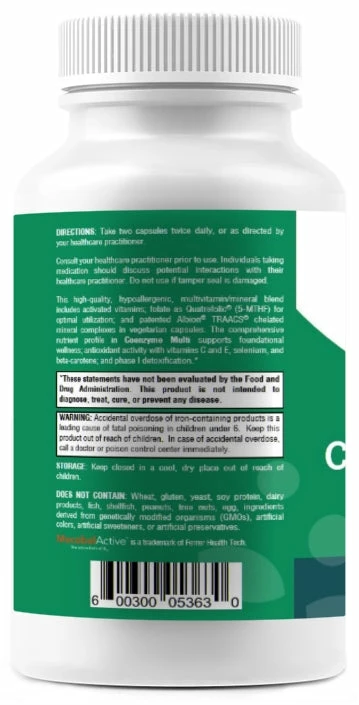

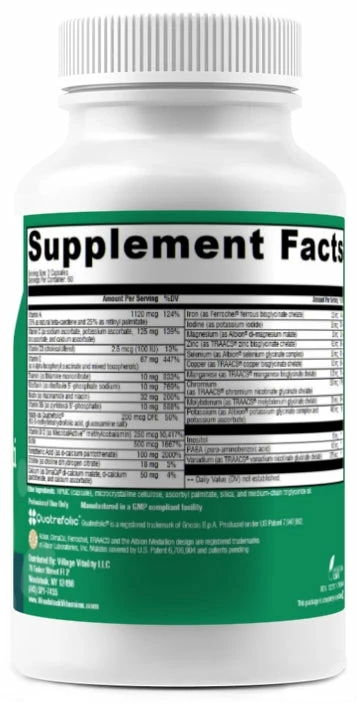
3. Strategy: What to Do Before Taking a Multivitamin for Brain Health
More bad news: There’s no single multivitamin that can save your life. Not even the best of the best multivitamins around — cough, cough, Coenzyme Multi.
That’s because, as much as we wish the opposite, multivitamins aren’t one-a-day space food that can keep our bodies in optimal health for productivity 100% of the time. The marketing might imply this, but it simply isn’t true.
What is true is that multivitamins can help improve our health — especially brain health, as we now know — when they’re building on a strong foundation of wellness. Translation: you can’t take a multivitamin while maintaining your all-cheeto diet and expect to be in good health. That’s not how it works.
So before you snatch up your own bottle of Coenzyme Multi — take a keen look at the mundane areas of your hopefully healthy life. What, in the domains of diet, sleep, exercise, stress management, and lifestyle changes, can you improve first?
Focus on bolstering your brain through movement, rest, nutrition, and environmental changes before you buy a supplement. Your brain and your wallet will thank you.
Learn More: The Wellness Pyramid: Your Roadmap to Holistic Health
It’s a No-Brainer, Right?
Are you racking your brain for a lifestyle-based wellness practice that will save you cash and benefit your noggin? Do you have half a mind to start taking a multivitamin for your brain health, but want to learn more about bioactive micronutrient forms?
Well, then, give us a call! As always, our certified-egghead, holistic brain health experts are available to talk about your particular cerebral curiosities via Counterside Consult — yes, for free.
Have you noticed a subtle theme to our recent blog posts?
In preparation for the adventurous eats of the holiday season, we’ve been knee-deep in tummy trouble topics. Chewing on everything from digestive enzyme myths to probiotic strain research, the Woodstock Vitamins blog has been a veritable smorgasbord of gut health information.
But we’re going a little off-menu today because, well, we have to eat crow.
After publishing our recent review of Dr. Neal’s top three digestive support supplements, we realized there was one more nutrient that should have made the cut.
This supplement has become the apple of the wellness industry’s eye, being touted for its data-backed benefits on hair, skin, and nails. And yet, the most remarkable of its effects gets about as much love as the green bean casserole at Christmastime.
So if you’re hungry for insider info on why collagen supplements are the best thing for gut health since sliced bread, read on! Dr. Neal has spilled the beans — sharing his expert knowledge on how collagen peptides can support digestive health, repair intestinal damage, soothe gut inflammation, and more down below.
In This Article:
What is Collagen?
You probably already know that protein is one of the core building blocks of your body, but were you aware roughly 1/3rd of that protein is collagen?
Collagen protein molecules are made up of essential amino acids, or organic compounds that humans need to function properly. While our bodies naturally use the fibrous structure of collagen to build connective tissue in cartilage, bones, and skin, we can’t actually create all the amino acids we need to thrive.
That, plus, we produce less and less collagen as our flesh sacks start to age, hence the sagging skin and sore joints. As a result, we have to eat a healthy diet, rich in collagen and amino acids — no ifs, ands, or buts.
Foods like organ meats, skin-on chicken, bone broth, and some fish are excellent sources of collagen, but (okay there’s one but), most of us aren’t getting enough of these nutrient-dense foods in our everyday diets.
Learn More: 3 Digestion Support Supplements for Surviving the Holiday Season
Can Collagen Supplements Help Gut Health?
It makes sense, then, that collagen supplements have become wildly popular amongst wellness fanatics and fitness buffs alike.
Collagen peptides powders are typically sourced from the connective tissue of meat sources and are revered for their positive effects on skin, hair, and nails. But (oops, there’s another one) one of the amino acids in collagen — glycine — is also a major component of the gut lining.
In fact, a huge portion of your gut lining is made from collagen.
So the next time you spot an airbrushed influencer holding a jug of perfectly branded peptides, remember to look beneath the surface to see the protein for what it really is: A scientifically verified and holistic, or whole-body, supplement that goes beyond the skin to affect multiple bodily systems, including the gut.
After all, it’s one of Dr. Neal’s Vital5 nutrients for a reason!
Learn More: 5 Crucial Nutrients (Almost) All of Us Are Lacking
5 Ways Collagen Can Boost Gut Health
Whether you’re upping your sardine intake or taking an ethically sourced collagen supplement, you can expect to experience a number of gut health benefits alongside your radiant skin and shiny hair.
Just make sure you’re getting enough collagen consistently and for long enough to allow your body to begin these 5 repair and rebuild processes.
1. Intestinal Barrier Strengthening
If you ask us, one of the most exciting advantages of this unique protein is its ability to strengthen your intestinal barriers. In Layman’s terms, we’re talking leaky gut.
Leaky gut, or intestinal permeability, is a phrase used to refer to the process of degradation that can occur in the walls that line your internal organs. These barriers are typically only one cell thick, and things like stress, inflammatory foods, caffeine, and alcohol can bust through those walls like the Kool-Aid man no problem.
When food particles and toxins leak from these ruptures or holes in the gut, they enter the bloodstream and tissues to wreak havoc.
Thankfully the amino acids in collagen, like the poor set designer on those Kool-Aid commercials, can help rebuild and fortify the lining of our gastrointestinal tract. One of the key amino acids in collagen, glutamine, is especially crucial to maintaining the impermeability of intestinal cells according to recent research.
Learn More: How Protein Supplements Are Processed (Within an Inch of Their Lives)
2. Amino Acids Soothe Gut Inflammation
Glutamine isn’t alone in its ability to help heal the gut, either. Glycine, the other, previously mentioned micronutrient in collagen, also exerts anti-inflammatory effects despite not being an essential amino acid.
Plus, its amenable amino amigo, lysine, can contribute to the reduction of gut inflammation and is being studied as a treatment option for people with Crohn’s Disease and IBS. And if that wasn’t enough for you, the threonine amino acid found in collagen also combats inflammation. Who would have thought?
Recent studies have found that an inflamed gut may actually increase the amount of threonine required for regular GI functions, too. So for folks suffering from inflammatory bowel diseases or inflammation-related symptoms like loose bowel movements, amino acids are shaping up to be a viable option for relief.
Learn More: The Gut-Brain Connection: 3 Holistic Tips for Optimal Health
3. Enhances Nutrient Absorption
One of the lesser-known side effects of lowered gut inflammation and strengthened intestinal barriers is enhanced nutrient absorption.
Which might not seem as cool and sexy as inflammation reduction, but it’s still pretty important. Especially if you’re buying your own groceries in 2024 — no one wants a bite to go to waste.
Working to repair our leaky guts, then, is critical if we want the good stuff from our food to actually be absorbed by our bodies. Otherwise, they escape through the damaged gut lining and our $400 Whole Foods trip goes right down the drain.
By patching in the holes found in the intestinal barrier, feeding gut flora, and increasing impermeability, the amino acids found in collagen can, basically, help you get the most bang for your buck.
Learn More: Mastering Holistic Nutrition: Dr. Neal’s Top 5 Diet Guidelines
4. Supports a Healthy Gut Microbiome
Did we really say that this protein powder can feed the microorganisms living in the canals and caverns of your digestive tract? Yes, we did, because it can.
Intestinal microbes and amino acid proteins have a tight relationship. The latter provides nutrition for the former, and as a result, we have fueled up gut bacteria and general digestive homeostasis.
But an imbalance in amino acid intake can lead to an imbalance in the gut flora, which is often a root cause of GI diseases like IBD and IBS. And, at the same time, it can decrease nutrient absorption, as the microorganisms help facilitate the process of assimilation in the gut.
Upping your amino acid intake through collagen-rich foods and sustainably sourced supplements can support the mutual relationship between the creatures of your GI microbiome and these proteins. So well, in fact, that recent studies have shown collagen to have an anti-obesity effect on the gut microbiome, too.
Learn More: Best Probiotics for Gut Health — 4 Strains Backed by Science
5. Improves Digestion
So let’s recap! Collagen can not only help repair and prevent leaky gut, but also reduce intestinal inflammation, boost nutrient absorption, and protect the health of your gut microbiome.
Is it any wonder that increasing your collagen intake can improve your overall digestion, then?
As this protein moves through the rivers and valleys of your gastrointestinal tract, it works to break down other proteins and carbs, on top of the previously mentioned beneficial functions. That’s why collagen is a truly holistic, or whole-being, tool: By targeting the root cause of gut discomfort like bloating, gas, abdominal pain, and diarrhea, it acts as more than just a band-aid for the symptoms.
And yet, it’s still great for symptom relief, too. So don’t walk to your nearest collagen dealer — run.
Collagen for Gut Health — Made Simple
Actually, wait! Before you speed on over to Natural Grocers to grab the biggest jug of collagen peptides you can find, make sure you know what quality markers to look for. Not all collagen supplements are ethically sourced, sustainably made, and rigorously tested for heavy metals.
Ours is, of course, but that’s beside the point.
Want to learn more? Click around to explore our growing collection of collagen-related wellness topics or hop on a free Counterside Consult to have all your peptide inquiries answered by one of our supplement experts. No weird bird gifs included.
Which is longer — your Thanksgiving grocery list or the nights you’ve spent awake, anxiously awaiting the digestive repercussions of unfettered feasting?
If it’s the latter, don’t worry, because you’re not alone! In fact, roughly 2 out of every 3 Americans struggle with some kind of stomach issue, which means this time of year is equal parts merry-making and gut-churning.
For wellness-seekers with stomach discomfort or digestive imbalance, the obvious answer is probiotic supplements. But how much can probiotics really help with gut health? Are all probiotics created equally? Why are there so many different strains, and with such strange names?
We brought these inquiries to our go-to gut health expert, Dr. Neal, for the inside scoop on probiotic supplements. Scroll on, fellow tummy ache survivor, to learn which probiotic strains are best for gut health according to the latest scientific research.
In This Article:
- The importance of choosing specific strains
- How to avoid useless probiotic supplements
- 4 best strains for gut health
Why Choose Specific Probiotic Strains?
If you’ve missed our recent probiotic-related topics, then you might be a little shocked to learn that the nooks and crannies of your GI tract are filled to the brim with microorganisms like yeasts and bacteria.
It’s one of the weirder parts of being human, especially when you know how drastically the health of these tiny creatures can affect your overall well-being.
Once you get over the strangeness of hosting millions of creepy crawlies in your stomach, probiotic supplements and foods don’t seem so odd. It actually makes sense that probiotics can support our gut health by filling our internal organs with loads of good bacteria — the more CFUs the merrier, right?
Wrong.
Well, it’s kind of right.
We do want more CFUs of clinically verified, highly beneficial probiotic strains, but we don’t want just any strain from any source. So the real issue with these kinds of health products lies in the fact that the natural wellness industry is like the Wild West.
Lazy standards and even lazier regulations are the hallmarks of the supplement sphere. As a result, health-conscious consumers have to be extraordinarily discerning when it comes to buying vitamins — especially probiotics.
Even a well-branded probiotic can, upon further examination, turn out to be nothing more than highly profitable bunk.
Unethical supplement manufacturers can pull the wool over our probiotic-seeking eyes in a few key ways:
- By using cheap, ineffective strains without any scientific backing
- By sharing unclear information about which exact strains are included in their formulas
- Or by creating beefed-up formulas that lose almost all potency during the production and shipping process
But it is possible to avoid wasting money on a probiotic supplement that’s more placebo than panacea! To do so, your two central focuses should be on the precise strain names and the number of live CFUs, or the potency of the capsules when they reach you.
Before coughing over your cold, hard cash, do your research. Make sure you can identify the probiotic strains by first AND last name, and check those strains against the research you’ve done for your specific health concern.
Learn More: Be Proactive: How Can Probiotics Improve Your Health?
Potency Pro-Tip Don’t buy probiotic supplements that require refrigeration unless you can verify a chain of cold storage from the supplier and all the way through the manufacturing, shipping, supplying, and selling process.
Otherwise, there’s a good chance your probiotic supplement has had some warm days in the box truck or the back of the grocery store.
4 Best Probiotic Strains for Gut Health
Probiotics have gained popularity recently because of the myriad of benefits they can offer the average person. From immune system support to UTI prevention, probiotics impact not one but multiple bodily functions.
But not every strain helps every little thing!
We’re shining a spotlight on these 4 probiotic strains because they have been shown to support GI health specifically by the latest scientific data. But a functional GI tract can, in turn, bolster the immune system, mental well-being, and brain health. So almost everyone will benefit from these 4 strains, but you might want to add on other, well-researched strains if you’re targeting a different body system.
1. Lactobacillus Acidophilus La-14
First created in 1900, Lactobacillus Acidophilus, or L. acidophilus for short (ish), is a species of bacteria with some of the most comprehensive scientific backing around. This species and its positive effect on things like lactose intolerance, cancer prevention, digestion, and immune system regulation have been studied for over 100 years — believe it or not!
A few key benefits of L. acidophilus strains:
- Improves gastrointestinal diseases
- Anti-diarrhea effects
- Reduces gut inflammation
- Supports proper digestion and assimilation
La-14 is a proprietary formulation of a Lactobacillus Acidophilus strain that comes with a whole host of secondary perks due to its ability to survive throughout the GI tract. Like protecting and toning the liver, which can support functional digestion of fats, and improving the health of the vaginal microbiome.
Learn More: Why You Need a Supplement Strategy — Plus 3 Steps to Get Started
2. Bifidobacterium Longum Bl-05
Bifidobacterium Longum snuck into modern history just one year before L. acidophilus — in 1899, this bacterial species was isolated from the feces of infants. While its origins might make you shudder, the data-backed benefits of this particular species are more than enough justification.
Considered by many to be the ultimate gut-healing powerhouse of all probiotic strains, B. longum has been linked to:
- Balanced gut microbiota
- Improved symptoms of inflammatory bowel diseases like ulcerative colitis
- Strengthened gut lining and intestinal barrier function
- Increased protection against infection
B. longum probiotic strains can help break down foods and absorb nutrients, so these positive effects of supplementation should come as no surprise. The trademarked form of B. longum known as Bl-05 is often used in leading-edge probiotic supplements because of its excellent tolerance of low pH environments and bile salts.
This unique feature allows the Bl-05 bacteria to survive longer in the GI tract and, therefore, spend more time fighting inflammation.

Learn More: The Gut-Brain Connection: 3 Holistic Tips for Optimal Health
3. Lactobacillus Plantarum Lp-115
Not to be confused with its cousin, L. acidophilus, Lactobacillus Plantarum is a lactic acid bacteria found in traditionally fermented foods like kimchi, sauerkraut, and yogurt. As a fermentation aid, L. plantarum stands out for being one of the hardiest strains of probiotics as it can withstand a wide variety of temperatures, unlike other species.
Thanks in part to its high rate of survival and bioavailability, L. plantarum delivers positive effects on overall well-being and:
- General gut health
- Obesity and diabetes
- Inflammatory bowel diseases
- Intestinal barrier fortification
- Colon cancer prevention and treatment
Some key features of Lactobacillus Plantarum Lp-115 that make L-115, specifically, an ideal option for supplementation are its resistance to acid and bile and its ability to adhere to intestinal surfaces. These attributes drive proper absorption and may be why L-115 has shown such promising results on the gut-immune health axis.
Learn More: 3 Digestion Support Supplements for Surviving the Holiday Season
4. Bifidobacterium Lactis HN019
Last, but certainly not least, is the research-dense gut support strain, Bifidobacterium Lactis HN019. Most often praised for its demonstrated ability to improve gut motility, B. Lactis is often found in common foods like cheese, buttermilk, and yogurt.
Gut motility, if you’re unfamiliar with the term, refers to the movement of food compounds through the GI tract — from mouth to colon. This digestive process plays an integral role in overall gut health and nutrient assimilation, so it should come as no surprise that the patented strain from this species, Bifidobacterium Lactis HN019, is widely used for gut motility.
A few other advantages of using B. Lactis HN019 in particular are:
- A healthy gut lining
- Reduced diarrhea
- Proper bowel function
- Improved symptoms of upper and lower gastrointestinal issues
- Modulated immune system response
- Treatment support for oral health disorders
You’re a Probiotics Professional Now, Pal
The adventurous eats of Thanksgiving don’t pose a threat to those stocked up with the 4 strains that have the biggest impact on gut health! Start your strategic probiotic supplement schedule today to start building up the beneficial bacteria in your GI tract and find relief from common digestive issues.
And if you want to nerd out about these 4 probiotic strains and their unique benefits for gut health, give us a call. Our supplement experts are available for direct guidance all day, (almost) every day via Counterside Consult.
Just don’t call us on Turkey Day, please — we’ll be busy gorging.
Okay, so, maybe you eat a few too many cookies and a few too few veggies on a regular basis. As long as you pop a multivitamin every day, you should be fine, right?
Wrong.
Multivitamins aren’t really the one-a-day space food that they’re made out to be. For all our advancements in the technological age, the science behind these supplements is actually pretty obsolete.
And yet, multivitamins are still a crucial component of an intelligent supplement strategy. So how do we tailor our expectations to be based on the clinical data of reality, without getting caught up in marketing schemes for these so-called superfood panaceas?
Any time we need to get to the deepest stratum of truth about a supplement, we turn to Dr. Neal, notorious wellness wizard and holistic health advocate of 20+ years.
Read on, fellow wellness seeker, to learn about a food-first approach to micronutrients and how to buy the best multivitamin to fill the gaps in our still-human diets.
In This Article:
- Improving your diet before supplementing multivitamins
- How to choose the best multivitamin supplement
- What to avoid when buying a multivitamin
- What to look for when choosing your multi
Food First: Supplementing Multivitamins Won’t Make You Healthier
Before we dive in, let’s get one thing straight. You don’t have to give up your cookies.
Why? Because a food-first mentality isn’t the same thing as a fad diet or fanatical fasting. Rather, it’s a shift in mindset away from what we’ve been taught by the sales tactics of the supplement industry.
It can be boiled down as such: You can’t out-supplement a nutritionally bankrupt diet.
It’s true — regardless of what you’ve heard from health influencers, no amount of vitamins, supplements, oils, or potions can make up for a diet that lacks a diverse range of nutritious foods.
That’s why Dr. Neal created the Wellness Pyramid after 20 years of explaining: yes supplements are great, but no they aren’t the key to immortality. The Wellness Pyramid simplifies this really complex thing — holistic, or whole-being, health — into a compact graphic that illustrates this principle.
We start, then, at the bottom of the pyramid, laying the groundwork for genuine, long-term health. The 5 foundational domains are diet, sleep, exercise, stress management, and lifestyle changes.
Most applicable in the realm of multivitamins is diet.
Walking the Middle Path of Nutrition
But you don’t have to go full paleo or cut out your favorite treats. You can if you want, but most of us…don’t really want to do that.
So, instead, we walk the middle path, making manageable changes and taking everything in moderation — including moderation. That looks something like:
- Eating more whole, fresh foods and fewer processed foods.
- Getting 1-2 cups of fruits and veggies (each!) per day.
- Balancing meals with all 3 macronutrients (healthy fats, complex carbs, and protein).
- Eating small, frequent meals and having snacks every few hours to maintain healthy energy levels, blood sugar, metabolism, and brain functioning.
Not so bad, right? Once you’ve optimized your diet — and done some work in the other 4 foundational domains, too — you can take multivitamins confidently, knowing you’re not wasting money on well-branded bunk.
How to Choose the Right Multivitamin Supplement
Except… Creating a multivitamin supplement strategy that actually works isn’t as simple as fixing your diet first.
While that is the non-negotiable first step, once you cross that hurdle, the next stumbling block involves finding a multivitamin with the appropriate forms and doses of critical nutrients. This part should be easy, but thanks to the loose regulations and even looser standards of the wellness industry, it’s not.
So before you shell out your hard-earned cash, check out Dr. Neal’s insider tips for buying the best multivitamin supplement available.
Multivitamin Buying — The Don’ts:
Don’t Buy Demographic-Specific Multivitamins
We’ve all seen them — multivitamins for women, multivitamins for men, multivitamins for children, seniors, vegans, dog owners, hair models, skydivers, the list goes on.
At first blush, it might seem like a great idea to buy a multivitamin with specific nutrients for your specific demographic or health concern. You’re not crazy for thinking that.
The issue lies in the fact that most of the supposedly targeted nutrients included are only added to give the illusion of a powerful formula. These kinds of gimmicky vitamins almost never include the proper forms and doses of the compounds listed, and they come from bottom-of-the-barrel sources.
Learn More: Multivitamins for Women, Men, Seniors, & Teens | Dr. Neal
Don’t Just Buy the Multivitamin with the Most Ingredients
You should avoid multivitamins that brag about ungodly numbers of different nutrients for essentially the same reasons you should avoid demographically branded multis.
More doesn’t always equal better; there’s a limit to what you can fit in a capsule.
And we should know, what with our proprietary supplement formulations and all! Typically, when you see a multivitamin with a supplement facts panel as long as your receipt, you’ll only be getting minuscule amounts of the nutrients listed.
Like, 1-5mg. Seriously.
It’s not just that these supplements contain low doses and are therefore less effective — they’re useless without the proper, clinically studied doses of the nutrients contained.
Learn More: 3 Spooky Supplement Marketing Tactics Unmasked
Multivitamin Buying — The Do’s:
Do Your Research on Nutrient Forms Before Buying
Most people think that getting any form of a vitamin is better than getting no form of the vitamin. That’s not really the case.
Take calcium, as one simple, yet emblematic example. We always recommend calcium hydroxyapatite because it’s the same form of calcium that’s found right there in our bones. This makes it super bioavailable and easy to absorb.
Other, cheaper forms of calcium are more difficult to absorb. But the real concern lies in the fact that unabsorbed calcium in your gut can cause major tummy issues.
Even the most comprehensive-seeming supplements, when examined a little closer, can be seen cutting corners to save on manufacturing costs.
They’ll use folic acid instead of tetrahydrofolate. They’ll use pyridoxine instead of P5P. None of the B vitamins are in their methylated state. Minerals are in their most basic form as if they were scraped off a rock and put right into the capsule.
Dr. Neal Smoller
So when choosing a multivitamin, look for the supplements that use the most bioavailable form of each nutrient — no ifs, ands, or buts.
Do Examine the Doses Included
Yep, we’re circling back to multivitamin doses again because the importance of it cannot be stressed enough.
When it comes to dosage, manufacturers are banking on the fact that you haven’t done your research and don’t know how much of each nutrient your body needs. They’re counting on you to see multivitamins as cure-alls, despite the fact the formulas have way less of each active ingredient than a stand-alone supplement would have.
The doses are so low, we call them “Fairy Dusted” doses. They just sprinkled a little ingredient in there so they can make the claim on the label.
Dr. Neal Smoller
To be a savvy shopper of multivitamin supplements, you have two choices:
- Investigate the clinical data and scientific findings on the proper doses of each and every vitamin, nutrient, herbal compound, antioxidant, etc., included.
- Buy your supplements from a reputable manufacturer that prioritizes efficacy and evidence-based formulations at equitable retail prices.
A Multi-Pronged Attack on Multivitamin Marketing Schemes
Multivitamins, when done right, can be the boost your body needs to support your healthy diet and reach optimal health.
When done wrong, they’re a bad investment at best and a dangerous gamble with low-quality ingredients at worst.
But you don’t have to worry about getting swindled by skeevy marketing tactics of supplement suppliers anymore, right!? Equipped with Dr. Neal’s integral do’s and don’ts for buying multis, you’re a veritable multivitamin maestro.
And if you need a copilot to help navigate the world of futuristic superfood space supplements, just give us a call. Chat with one of our supplement strategists for free via Counterside Consult anytime, anywhere.
They say if you can’t laugh at yourself, life just isn’t much fun.
And you know what? We think the wellness industry could learn a thing or two about that!
We’ve been known to throw a few jabs at its expense — calling out snake oil salesmen, keeping it real about skeevy marketing tactics, et cetera. But it’s not because we want to burn down the natural health world. We just want to raise the bar a bit.
And really, the lack of meaningful regulations in the industry is pretty laughable! Not to mention the myriad of myths surrounding supplements, à la last week’s blog on probiotic misconceptions.
But before we get stitches in our sides, let’s cut through the funny business — there are some serious health benefits at stake. So, with Dr. Neal’s 20+ years of clinical experience leading the way, we’re diving back into the world of probiotics.
Read on, wellness seeker, to transform your probiotic pursuit from a wild goose chase into a strategic, research-guided mission that saves you time and money.
In This Article:
- When you should take probiotic supplements
- What kind of probiotic supplements to take
- What probiotic strains are best for gut health
- How many billion CFUs to look for
Should I Take Probiotic Supplements?
Speaking of jokes — the one we hear the most around these parts is, “My gut is great, I don’t need a probiotic!”
First of all, it’s not nice to brag. And second of all, if you’re living in the modern world, your gut is in an endless battle against environmental toxins, external stressors, and inflammatory agents.
“Because of our ever-changing food quality, varied diets, stress levels, medications, and supplements, our gut is constantly under attack.”
Dr. Neal Smoller
This isn’t meant to freak you out though — just to help us all recognize the challenges our bodies are facing every day. The scariest part is that we’ve normalized a lot of gut-related things that are definitely not normal.
Ignoring the warning signs emanating from your tummy is a dangerous game to play considering how much the gut influences our overall health and well-being.
Despite what you might have learned in school, your GI tract isn’t just responsible for digesting Twinkies and turning that fluff into energy. Its role expands far beyond the limits of the abdomen.
In the canals and caverns of your gut live hundreds of millions of neurons — the cells that send and receive electrical signals in your brain. These neurons are connected to your brain via the nervous system, the backbone of which is the vagus nerve.
When your stomach is in distress, those SOS signals get sent straight up to your brain, where they’re interpreted as anxiety, stress, and depression.
Your gut health is inextricably linked to your overall quality of life because nothing in the body exists in a vacuum.
Plus, your gut lining is one of your most important defenses against disease and infection, because a big chunk of your immune system is found in or around there, too.
You should probably up your probiotic intake if:
- You don’t eat perfectly 100% of the time
- You have chronic gut issues like constipation, gas, or diarrhea
- You have an inflammatory gut disease
- You currently have or frequently get UTIs
- You have or are going to be taking antibiotics
- You want to bolster your immune system, GI tract, and/or mental health
- You are exposed to the routine toxins and stressors of the modern world
Should I Tell My Doctor I’m Taking Probiotic Supplements?
Yes, definitely.
These guidelines are generalized and they don’t account for the possibility that your stomach issues are connected to a larger issue.
The underlying cause of your tummy troubles might be addressed by probiotics — by healing your gut barrier, for example — or it might be masked. Symptoms aren’t a whole lot of fun, but they are important messages from your body.
So chat with your doctor, healthcare specialist, or one of our experts if you start taking a probiotic supplement.
What Kind of Probiotic Supplements Should I Take?
Moral of the story: If there’s one bandwagon to jump on, it’s the daily probiotic supplement train.
Probiotic supplements and their widespread benefits have gained popularity, but like many vitamin-related conversations, the nuance is lacking. Clever phrasing and even cleverer marketing have led the general public to believe that all probiotics — whether from kombucha or a supplement — can change your life.
But that’s not really the case.
The truth is there are some strains of probiotic bacteria that have been shown to have a positive effect on bodily systems by recent research. And there are some that don’t do anything at all.
So when you’re shopping for probiotic supplements, don’t equate more CFUs with better results. Unethical manufacturers and vitamin drop-shippers aren’t above dumping cheap, useless strains in their formulas to bolster the product’s image.
Specific probiotic strains have specific benefits.
Do your research — and not just a quick Google search, please — to figure out which particular cultures are proven to help with your particular issue. And then, when you find supplements that contain those probiotic strains, be exacting.
“Look for probiotics that have a first, middle, and last name, like Lactobacillus rhamnosus GG. Only by using specific strains in our probiotic can we know if we are matching our problem to the right solution.”
Dr. Neal Smoller
Which Probiotic Strains are Best for Gut Health?
There are tons of reasons for wanting to improve your gut health. Putting your newfound knowledge of how the gut interacts with your immune system and mental health is just one, but it is a big one.
To optimize your GI tract and get all the benefits of a happier gut, look for the probiotic supplements with the four strains below.
The latest research has shown that these bad boys are a major boon for your belly:
- Bifidobacterium Lactis HN019
- Lactobacillus Acidophilus La-14
- Lactobacillus Plantarum Lp-115
- Bifidobacterium Longum Bl-05

Learn More: Best Probiotics for Gut Health — 4 Strains Backed by Science
Probiotic Supplement Dosing: How Many Strains and CFUs Do I Need?
To recap: We don’t buy probiotic supplements that contain ineffective strains. Pretty easy!
But there’s another marketing tactic to be wary of, too. The billions and billions of CFUs scheme that is, in fact, a scheme.
In America, we tend to think that more always equals better. With probiotic supplements, more can actually be way, way worse. As Dr. Neal always says, capsules aren’t clown cars — you can only fit so much inside of them. More strains typically translate to fewer CFUs or smaller doses.
Generally, we want as many active, colony-forming units in our probiotic supplements as possible — around 30 billion is great.
But as long as those strains are backed by clinical research and not just tossed in for fun, we should be good with however many billion, right? Right…kind of.
When choosing a probiotic supplement, make sure the product’s labeled dosage is guaranteed through the expiration date. Otherwise, the “billions and billions of CFUs” advertised is nothing more than a record of how many active cultures were present at the time of manufacture.
Probiotic supplements can lose potency — AKA active CFUs — quickly due to improper shipping and storage conditions so this is a pretty common sales tactic.
Pro-Tips for Choosing the Best Probiotic Supplements
“Remember, everything that we read — the label, the website, the flyer — is marketing. The only source of relative truth is on that Supplement Facts Panel.”
Dr. Neal Smoller
Now that you’ve got the brains for strains, your probiotic pursuit is perfectly primed for palpable results. Take your scrutiny a step further by only supporting supplement companies with rigorous standards and a commitment to sustainability.
After all, the health of your body and our world depends on it!
Crack open a cold one, fellow wellness seeker! A cold kombucha, that is.
Today, we’re uncovering the facts about a health trend bandwagon that over a million people have jumped on — probiotics.
Like most ultra-popular vitamins, probiotic supplements are shrouded in myths, misconceptions, and marketing tactics. While it shouldn’t be our job, as consumers, to don our detective hats and put a magnifying glass to these microorganisms, we have no choice.
And we have the lack of industry regulations in the natural health world to thank for making the probiotic landscape one that’s riddled with misleading clues and deceptive disguises.
(Turns out the FDA isn’t the Dr. Watson to our Sherlock.)
So, in pursuit of the truth, we turned to our founder and very own supplement sleuth, Dr. Neal. The holistic pharmacist and wellness wisecracker has spent 20+ years of clinical experience investigating supplements and interrogating charlatans.
Now, with Dr. Neal’s insight, we can deftly navigate the labyrinth of claims and counterclaims, separate fact from fiction, and reveal what truly matters when it comes to probiotics.
In This Article:
- Probiotic foods vs. probiotic supplements
- CFUs: Do you need billions?
- Probiotic potency
- Should you refrigerate your probiotics?
Are Probiotic Foods Better than Probiotic Supplements?
If you know anything about us wellness rebels here at Woodstock Vitamins, it’s that we always take a food-first approach. Because, unfortunately, even the highest quality supplements can’t outweigh a Cheeto-based diet.
To avoid wasting money on supplements, then, we start at the foundation of the Wellness Pyramid, strategically optimizing the 5 lifestyle domains before anything else.
(For the newbies — that’s diet, sleep, exercise, stress management, and lifestyle changes.)
So it might be surprising to hear us say that, when it comes to probiotics, you should start supplementing ASAP. Like, right now.
Do not pass go, do not collect 200 different kinds of kimchi.
While probiotic bacteria are found in cultured foods like kefir and yogurt, or fermented foods like sauerkraut and some pickles, the amount of beneficial bacteria included usually isn’t worth the price tag. Recent research has shown that the dosages of probiotics from food sources are too low to offer the benefits found in clinical trials.
Does that mean you shouldn’t diversify your diet and support your gut microbiome with probiotic foods? No way!
Probiotic foods can still provide crucial micronutrients that your body needs to function, and the fiber your stomach needs to thrive. Just don’t rely on food as your only source of probiotics as even the healthiest will lack the levels needed to reap the benefits.
That’s why probiotics are one of Dr. Neal’s First5, after all.
Learn More: 5 Crucial Nutrients (Almost) All of Us Are Lacking
How Many Billion CFUs Do You Really Need in a Probiotic?
One of the first things you’ll notice about the myriad of options for probiotic supplements is that they all claim to have billions upon billions of CFUs.
Which seems like a good thing, right? When it comes to our health, we always want more, more, more of the stuff that’s going to make our bodies happier. So a billion or two beneficial bacterial cells swimming around in our guts seems pretty great on the surface.
But with probiotics, bigger isn’t always better.
Learn More: Be Proactive: How Can Probiotics Improve Your Health?
A high-quality probiotic supplement will still have a relatively huge dose of active CFUs, but it’s the amount of certain, specific strains we should be looking at.
Billions of random, cheap, ineffective probiotic strains make their way into supplements all the time. And innocent consumers purchase them, thinking the extra 5 billion in this supplement makes it a better option than that supplement over there.
It’s a clever marketing tactic, not an actual selling point.
So before you fork over your cold hard cash for a probiotic supplement, do your research. Cut through the noise by figuring out which strains have been clinically proven to help with the issue you’re addressing, and then ignore the billions of phonies vying for your purchase.
Learn More: Probiotics Done Right: 3 Tips for Buying the Right Probiotic Supplement
Are Probiotics Potent Through the Expiration Date?
Now you know that billions aren’t better and probiotic foods are close but no cigar. Congrats! You’re two steps ahead of the average consumer and two steps closer to finding the best probiotics supplement.
But here’s another hurdle: Most probiotics are decreasing in potency every day that they sit in your supplement cabinet.
So not only do you have to find the probiotic with the right dose of the right strains — but also you have to find the one with a potency guarantee.
And no, reading the label isn’t enough to ascertain whether or not you’ve found a probiotic supplement that won’t lose effectiveness while you’re still taking it. For that, you’ll have to find a super transparent manufacturer.
Why? Because the billions and billions of beneficial strains listed in the supplement facts were there at the time of manufacture, which could have been days, weeks, months, or even years ago.
While this isn’t quite a straight-up marketing myth, it is a salesy sleight of hand.
Skeevy supplement manufacturers can be somewhat honest by saying they mixed in a billion CFUs of this strain and a billion of that strain, without having to explain that by the time it reaches your doorstep, only millions remain.
Throw in conditions of the real world — like temperature fluctuations, improper storage, and shipping mishaps — and you’re likely only getting about 1/4th of those millions, according to third-party analyses.
Learn More: Supplement Expiration Dates: To Toss or Not to Toss
Do You Have to Keep Probiotic Supplements Refrigerated?
Speaking of adequate storage and shipping conditions: No, you don’t have to refrigerate all probiotic supplements.
Shocking, we know.
This misconception has been circulating the health forums for a while now, and at one point, it was based in reality. It used to be that probiotics had to be in cold storage because the microorganisms would die if exposed to too much heat or light.
Nowadays, the science of shelf-life has improved, and thank goodness for that. In times past, probiotics needed to be cultured, manufactured, shipped, and stored at the proper temperature to maintain what’s called the “cold chain.”
Maintaining the cold chain in a profit-first industry known for cutting corners was, as you’d expect, a nightmare.
Don’t get us wrong though — some probiotic supplements still require refrigeration, and it’s super important to know if yours does or not.
Because if it does require cold storage, it’s probably a waste of money.
You see, for most vitamin retailers, the first time their probiotics are put in a fridge is when they reach the store. Supplement distributors typically outsource their formulas and products, so verifying the cold chain is nearly impossible.
Thankfully, the workaround for this issue is pretty dang easy. Save yourself the time and stress of figuring out if your supplement was kept chilly enough by simply opting for a shelf-stable probiotic formula instead.
The Jury’s Out on Probiotic Supplements
TL;DR: Don’t buy probiotics based on the billions of CFUs, buy them based on the number of clinically-verified strains included. Avoid the supplements that require refrigeration and/or can’t offer a potency guarantee.
And listen, rookie. If you need a pro to join you on the probiotic beat, give us a call. You can chat with one of our supplement detectives or even the big man himself, Dr. Neal, for free via Counterside Consult.
Yep, you read that title right!
If the 5 omega-3 supplement myths we already debunked didn’t make a splash, the following 5 surely will.
But why is it that omega-3 supplements are surrounded by murky waters of misinformation in the first place? We took this humble inquiry to Woodstock Vitamins’ big fish and notorious boat rocker, Dr. Neal.
Turns out, the main reason supplements have been in hot water lately is that the wellness industry is as lawless as the sea itself. In fact, the regulations surrounding vitamins and such are so loose, maritime law seems like a major step up.
As omega-3 supplements and their myriad benefits continue to rise in popularity, so too will the myths, marketing tactics, and mediocre formulas. Our journey isn’t over!
Hoist the sails and secure your life vest, fellow wellness seeker. We’re diving back in.
In This Article:
- 5 common myths about omega-3 supplements
- Omega-3 supplements and rancidity
- Should you take an omega-3-6-9 supplement?
Myth 1: Krill is a Good Source of Omega-3
Krill are little tiny creatures swimming in the ocean, minding their business, getting eaten by whales and living their #bestlives.
Then, one day in America, fish oil and Omega-3 supplements blow up, and now they’re harvested as a “superior” source of Omega-3.
Dr. Neal Smoller
We wrapped up the first blog in this two-part myth-busting series with a doozy of a debunk: Flaxseed is not a good source of omega-3.
Fortunately for krill and unfortunately for krill-lovers, the tides are turning on this supplement, too. Krill does contain the essential omega-3 fatty acids that have been in the spotlight for heart, brain, and skin benefits, but…not nearly enough.

You already should know the daily dose of omega-3 that has been clinically verified as beneficial is 3,000mg — 2,000mg minimum — because we’ve gone on and on and on about it.
Krill supplements typically come in at a whopping 100mg of EPA and DHA per capsule. And who wants to take THIRTY capsules just to hit that target dose?
At best, krill supplements are a waste of money. At worst, they’re rancid, loaded with toxins, and actively detrimental to your health.
All fish-based omega-3 supplements have toxin and rancidity risk factors, and krill is no exception. These tiny denizens of the deep are exposed to and absorb the pollutants we’ve dumped in the sea, and they degrade really quickly.
As a result, krill oil products can be inundated with heavy metals and microplastics and are likely to turn rancid faster than, say, an Alaskan fish oil.
Learn More: Omega-3 Supplement Buying Guide: 3 Things to Look For
Myth 2: Rancidity isn’t a Big Deal
Okay, so krill oils are decidedly not krillin’ it, but they’re not alone in their grossness either.
Fish oils from any and all aquatic sources can go bad, and they can actually go bad very easily. It’s true — despite all the modern processing technology we have rancidity is still a huge deal.
By the time cheap omega-3 supplements reach your doorstep or grocery cart, they’ve likely been sitting in a warehouse for months. And it’s equally unlikely that the cheaper formula has been crafted specifically for a longer shelf life.
Learn More: Something Fishy | Dr. Neal’s Monthly Rant
If your omega-3 supplement turns rancid, the anti-inflammatory health benefits aren’t only negated, but directly inverted. Once sour, your fish oil will have a pro-inflammatory effect on your body.
Plus, recent animal studies have shown that exposure to rancid, or over oxidized, fish oil may cause organ damage and carcinogenesis, or the initiation of cancer formations.
The main takeaway? Skimping on your omega-3 supplement will end up costing your body and wallet a lot more in the long run. Instead, look for a fresh, regularly tested omega-3 supplement with an ultra-low TOTOX value.

Myth 3: Enteric Coating is Crucial
Enteric coating was the wellness industry’s answer to continued issues with rancidity. The only problem is that enteric coating doesn’t really lower your chances of getting a rancid fish oil supplement, it just masks the signs.
Typically, a rancid omega-3 supplement will smell and taste exactly like you’d expect — rotten fish. But that foul fragrance we’ve come to rely on as a marker for rancidity can be completely obscured by our good old friend enteric coating.
“Enteric coating isn’t the sophisticated technology its made out to be — really, it’s a parlor trick to hide a major quality problem.”
Dr. Neal Smoller
Enteric coating isn’t all bad though. Unfortunately for black-and-white thinkers, the conversation is rather nuanced.
We use enteric-coated capsules in our carefully formulated Alaskan omega-3 supplement, for example, but not because it will help with the fish burps. (Another myth!)
The benefit here is that an enteric-coated fish oil capsule will survive longer in the digestive system, releasing the nutrients into your small intestine after it’s passed through your GI tract.


The main takeaway? Never buy an omega-3 supplement solely for the enteric coating. If enteric coating is the main draw of the product you’re looking at, it’s likely being used to mask the smell and taste of rancidity.
For cold-pressed omega-3 supplements with verified supply chains and rigorous testing, enteric coating is just the bioavailability cherry on top.
Learn More: Omega-3 Supplement Buying Guide: 3 Things to Look For
Myth 4: You Should Take an Omega-3-6-9 Supplement
When it comes to omega-3 supplements, isn’t more always better?
Well, yes and no. More EPA and DHA per dose is a good thing, more numbers in the product title is not.
Omega-3-6-9 products have gained a bit of traction in the wellness world because, at first blush, they seem like a comprehensive option. In reality, these 3-in-1 omega supplements don’t do any of their three jobs very well:
- Omega-3: Typically, an omega-3-6-9 product won’t have enough omega-3 to yield any benefit whatsoever. (Remember those clinically-studied doses we’ve talked about a bazillion times?)
- Omega-6: Unless you’re supplementing omega-6 for menopause or skin health, you don’t need to take more of this pro-inflammatory fatty acid. In fact, most of us Americans are already getting waaaayyyy too much omega-6 from the processed foods in our diets.
- Omega-9: This omega fatty acid is non-essential, plain and simple. The seed and nut oils found in a healthy diet are more than enough to bridge the omega-9 nutrient gap you might — but likely don’t — have.
So that omega-3-6-9 supplement that seems like a good deal? It’s actually overpriced, over-hyped bunk.
Myth 5: EPA- and DHA-Only Supplements Are Healthier
Yes, EPA and DHA are the shining stars of the omega-3 supplement show. They’re the fatty acids that have been linked to a whole host of benefits like:
- Boosted cognitive performance
- Decreased risk of cardiovascular diseases
- Rebalanced immune function
- Improved depression symptoms
- Enhanced skin health
But it’s not a two-man band. Your omega-3 supplement strategy will work best if you’re getting a balance of all three essential fatty acids.
ALA, EPA, and DHA.
ALA has risen and fallen from public favor in a roller-coaster ride of acronyms and conflicting opinions. It went like this: We believed that our bodies had the ability to convert ALA into the highly beneficial forms EPA and DHA.
Plant-based omega-3 supplements — notorious for being high in ALA and not much else — got really popular as a result. The two other fatty acids fell to the wayside, despite the continued waves of research in support of EPA and DHA supplementations.
Then we found out that, actually, our bodies don’t synthesize APA into EPA and DHA very well. In fact, the conversion rate is so low it barely makes a ripple.
So EPA and DHA stepped into the limelight, and ALA was shunted backstage.
While we agree that emphasizing EPA and DHA is the way to go — who are we to disagree with the science? — there’s still a place for ALA in our hearts. The human body can’t produce ALA on its own so it must be absorbed through food sources or supplements.
Boiled down: Focus on getting enough EPA and DHA from your omega-3 supplement, but don’t throw the baby out with the bathwater. Make sure you’re eating enough fish and flaxseed to get the ALA your body needs, too.
E-Fish-ient Omega-3 Supplementation
Omega-3 supplements are one of the few viral vitamins that we think deserve all the hype. (Obviously — they’re one of the Vital5!)
The benefits are proven, our diets are lacking it, and the only thing standing in the way of successful supplementation is misinformation.
But not anymore!
Go forth, wellness seeker, and start your omega-3 journey equipped with the truth about these common myths. If you need a co-captain, you can sail on over to our Counterside Consults for free, personalized health guidance from our experts.
So. You had one too many hot dogs at the end-of-summer barbecue and now your tummy hurts.
While we do hope you’re not currently stuck on your aunt’s toilet as you’re reading this, we hope most of all that you know you’re not alone.
In fact, nearly 70 million people in America struggle with digestive issues — that’s roughly 20% of the population — so you’re in good company!
And with over-processed foods lining the grocery aisles and the stress of the daily grind turning our stomachs into knots, is it any wonder good gut health is hard to come by these days?
That’s why Dr. Neal — holistic practitioner of 20+ years and well-known wellness loudmouth — has emphasized the importance of the gastrointestinal tract in his health frameworks.
Central to this quest for a happy gut are the microbial powerhouses we call probiotics. These supplements have gained popularity in recent years for their role in maintaining digestive balance, but how much do we really know about probiotics outside of TikTok?
Read on, fellow tummy ache survivor, to uncover the truth about probiotics for GI health — and how they’re really helpful for so much more than that.
In This Article
- How a probiotic supplement can support holistic health
- Probiotics for general gut health and inflammatory diseases
- Probiotic supplements for immune support
- How a probiotic supplement can influence the gut-brain connection
- Probiotics for urinary tract health
How Do Probiotics Support Holistic Health?
If you didn’t know it already, your insides are crawling with live bacteria (and yeasts) that live cozy little lives in your organs.
But before you get the heebie-jeebies — not all bacteria are bad.
In fact, the bacteria in your gut work overtime for your overall health, helping you digest foods, synthesize vitamins, get the nutrients you need, and keep “bad” bacteria in check. When you have the right balance of good and bad gut bacteria floating around, that’s the elusive “optimal gut health” state you’ve heard about in movies.
Learn More: The Four Pillars of Great Gut Health | Dr. Neal Smoller
You can think of probiotics, then, as the “good” bacteria your stomach needs to stay healthy.
While we always recommend a food-first approach to getting the nutrients (and bacteria) your body requires, it’s not so straightforward when it comes to probiotics. Most of us are getting very little beneficial, bioavailable probiotics from our diets.
(Sorry kombucha lovers, but it’s true.)
That’s why Dr. Neal made probiotics part of his Vital5 — the quintessential quintet of nutrients we need to thrive but don’t quite get enough of in the modern age.
Learn More: 5 Crucial Nutrients (Almost) All of Us Are Lacking

A probiotic supplement can help you get good germs in your gullet, but they really shine when implemented alongside gut-friendly wellness practices and eating habits.
What Makes a Probiotic Supplement a Holistic Option?
The word holistic is a bit like the word bacteria — we contemporary, science-fearing humans have a lot of strange ideas about what it means. We often mix up holistic with terms like homeopathic, and it paints a pretty confusing picture.
A holistic approach to health is, simply, one that looks at the whole body or the whole being for root causes and long-term healing. We don’t just slap temporary band-aids on chronic symptoms around these parts — we dig deep.
Probiotics are considered holistic because, while they’re (rightfully) touted for their gut health benefits, they actually affect multiple bodily systems and our overall quality of life.
Don’t believe us? Keep reading.
Probiotics for General Gut Health
“Some people see a clear need for probiotics because their guts are a hot mess.”
Dr. Neal Smoller
Before we dive into the specifics of how probiotics can benefit everything from the immune system to inflammatory diseases, let’s get one thing straight.
Even if you don’t have obvious symptoms of a gut issue, you probably still need probiotic support.
Why?
Because, as Dr. Neal so subtly phrases it, our guts are constantly under attack. An endless stream of stressors, toxins, and medications pairs with rapidly declining food quality and inconsistent nutrient intake to create a perfect, gut-degrading storm.
As a result, our bodies fight a never-ending battle, striving to maintain homeostasis in an environment that’s directly antithetical to health and well-being.
Issues like widespread gut dysfunction and malnutrition are so pervasive that they’re almost impossible to see. Warning signs of bad gut health tend to be normalized and laughed off, and a lot of people don’t deal with their tummy troubles until it’s seriously impacting their lives.
So, to boil it all down, take a probiotic if you:
- Have occasional stomach issues
- Have a chronic stomach condition
- Want to optimize your gut health
- Live in the modern world
And skip probiotics if you:
- Have perfect gut health, flawless eating habits, and zero exposure to stress or disruptive environmental factors
Learn More: 3 Tips for Buying the Right Probiotic Supplement
Taking a Probiotic Supplement for Your Immune System
Plus, as we’ve alluded, the benefits of probiotics go far beyond the tummy
Nothing in the body exists or functions independently, so it should come as no surprise that, actually, 70-80% of your immune system is located in your gut. Functionally, that means that the cells responsible for helping your body fight sickness and balance inflammation — the core roles of the immune system — are doing their job from within your GI tract.
So while you might say, “I take probiotics for gut health,” there is no real separation between gut health and immune health.
Taking probiotics can support both the GI and the immune system’s adaptive functions by creating a viable home for those immune cells in the gut microbiome. It’s a two-for-one, folks — what’s not love?
Probiotics for Support with Inflammatory Diseases
Ever wonder why so many gut-based issues are discovered to be symptoms of inflammatory or autoimmune diseases? Well, that inextricable link between our immune systems and our gut microbiomes has its downsides, too.
The microscopic life inside your gut can impact both your immune system’s ability to function and to discriminate between the self and foreign invaders. Understanding this context is the first step to understanding how poor gut health can play a role in autoimmunity and inflammatory disease development.
But it’s not all doom and gloom! As we now know, we can target the immune system and gut microbiome in one fell swoop with a comprehensive blend of probiotic strains.
Some of the most common symptoms of inflammatory gut diseases that probiotics can help combat are:
- Constipation
- Diarrhea
- Antibiotic-induced diarrhea
Learn More: Probiotics Unmasked: Dispelling 4 Common Misconceptions About Probiotics
How a Probiotic Supplement Influences the Gut-Brain Connection
Yep, it’s true! Your gut health can even influence your nervous system, and subsequently, your mental health.
Serotonin, the neurotransmitter that’s been nicknamed the “happy chemical”, has been at the forefront of conversations on mental illness for a hot minute now. But how many of us knew that serotonin is produced in the gut before we heard it from Dr. Neal?
That major gap in public health education gets elucidated every time we discuss mental health and the gut-brain connection.
Scads of recent research links poor gut health, or gut dysbiosis, to anxiety and depression and the field of study continues to grow.
Turns out, instead of probiotics being a two-for-one, they’re really a five-or-six-for-one type of data-backed supplement.
Probiotics for Urinary Support
Scratch that.
Probiotics can also help support proper urinary functioning and health, so we’re getting pretty close to just calling these microbial strains a panacea.
When the good bacteria encapsulated in your probiotic supplement is introduced to to your gut microbiome, it roves about your intestines leaving a trail of positive effects in its wake. When properly formulated, these beneficial strains can survive long enough to reach your urinary tract system and improve the microbiome there, too.
Translation? UTIs have met their match.
Being Proactive with Probiotics
TL;DR — Probiotics are totally worth the gut-health hype they get, but don’t pigeonhole them! The benefits of a comprehensive probiotic show up in the whole body, not just the stomach.
By the same token, if you’re currently struggling with tummy troubles, a probiotic supplement that contains highly studied strains might be what gets you back to the family barbeque. Chat with an expert first to avoid wasting time and money — our Counterside Consults are always open and always free.
Did you know that fish-based omega-3 supplements can help you see underwater? Or that their heart-healthy benefits are enough to prevent cardiac arrest with no other lifestyle changes?
Or how about this one: Too much of an omega-3 supplement can make you develop scales and gills like the aquatic creatures from which it’s sourced.
None of that is true, obviously. But isn’t it alarmingly easy to publish misinformation on the web without a second thought?
In the murky waters of the online wellness world, flashy sales tactics and red herrings reign supreme. Supplement enthusiasts are lured in with promises of total transformation for just $29.99, and there’s nary a life vest or buoy in sight.
It’s enough to make even the most health-forward person surrender to the tide!
Thankfully, we have holistic health expert and supplement strategist Dr. Neal to help us fish or cut bait when it comes to omega-3 supplements. (You know, the wellness shark who’s known for rocking the boat and pulling the mask off malevolent marketing schemes.)
So, drop your anchor and read on, sailor! You’ll come out of these waters with 5 newly debunked myths about omega-3 supplements.
In This Article:
- 5 common omega-3 myths debunked
- The optimal daily dose of omega-3
- How to find the best omega-3 supplements available
Myth 1: Omega-3 Supplements Don’t Work
This first myth is a doozy to debunk.
You’re most likely to hear, “Omega-3 supplements don’t work,” from a conventional doctor, but it’s not their fault. Supplements aren’t nearly as regulated as the pharmaceutical industry, and as a result, a lot of baloney science and crappy products reach the mainstream.
Healthcare professionals, then, are at the forefront of the battle against wellness misinformation. And subsequently, the baby gets thrown out with the bathwater.
Fret not. Regardless of what you’ve heard or who you’ve heard it from, omega-3 supplements and their benefits are backed by some of the best modern research available:
- Higher cognitive performance
- Boosted neurocognitive functioning
- Positive effects on the gut microbiota
- Better emotional processing in ADHD patients
- Improved symptoms of inflammatory skin disorders (acne, psoriasis, etc.)
- Positive changes in symptoms of autoimmune diseases
- Lowered risk of cardiovascular disease
Learn More: Omega-3 Supplements: Are They Worth the Hype?
Myth 2: You Can Get All The Omega-3 You Need From Your Diet
If you’ve been hanging around the Woodstock wellness world for a little while, you’ll know that we’re diet-first, supplements-second kind of folks.
Why?
After 20+ years of clinical experience, holistic pharmacist Dr. Neal developed the Wellness Pyramid as a blueprint for optimal health. The bottom tier of this pyramid — AKA, the crucial foundation upon which you can actually build optimal health — is made up of the 5 lifestyle domains.
Diet, sleep, exercise, stress management, and lifestyle changes.

So you should always start your wellness journey there, in the mundanity of the lifestyle domains, optimizing your sleep, eats, and so on. But there’s a reason the second tier — strategic supplementation — exists.
Omega-3 is a vital nutrient that affects multiple bodily systems, but getting enough of it from your diet is dang near impossible.
Even the healthiest, most fish-forward eating habits won’t yield enough of the anti-inflammatory omega-3 to both counteract our intake of pro-inflammatory compounds and give us those benefits so highly touted by science.
Does that mean you should give up on eating foods rich in omega-3 entirely? Absolutely not! Your body needs a diverse range of nutrient sources to thrive.
Does it mean that you should start taking an omega-3 supplement to complement your dietary intake and ensure you hit the recommended daily dose? Yes. Yes, it does.
Myth 3: You Should Take 1,000mg of Omega-3 Daily
Here’s a two-for-one debunking extravaganza for you: Low-dose omega-3 supplements are not effective, and 1,000mg of omega-3 has not been shown to offer benefits in clinical trials.
As much as we hate to say that any supplement is total bunk or a waste of money, we will when we need to, and right now, we need to.
Low-dose omega-3 supplements, while cheaper upfront cost more in the long run when you realize how much you need to take every day.
The doses of omega-3 compounds ALA, EPA, and DHA that have been shown to have the incredible heart, brain, skin, and inflammation benefits you’re looking for are closer to 3,000mg per day.
Dr. Neal’s recommendation? Try to hit at least 2,000mg of omega-3 compounds APA, ELA, and DHA daily. Otherwise, you’ll be left with a false sense of accomplishment and your cold hard cash lining the pockets of a supplement snake oil salesman.
Sure, you can still take your 300mg omega-3 supplement if you want, just know you’ll be taking a lot of those capsules to reach the recommended daily intake that will actually make a difference.
Learn More: Omega-3 Supplement Buying Guide: 3 Things to Look For
Myth 4: 1,000mg on the Label Means You Get 1,000mg Per Dose
If you fell for this myth, don’t beat yourself up. You just made the simple mistake of thinking you could believe the well-branded claims on a supplement label without further research.
We’ve all been there!
Supplement labels, unfortunately, are neither fish nor fowl. Even though the bottle says there’s 1,000mg of omega-3 per dose, that doesn’t mean you’re actually getting 1,000mg of pure omega-3.


Unethical supplement manufacturers have an ocean’s worth of sneaky tricks and almost-illegal tactics for making their products seem almost magical. That’s why our whole deal here at Woodstock Vitamins is being ultra-transparent to turn the tides.
So, when choosing an omega-3 supplement, look for the ones that clearly delineate how much of what kind of omega-3 compounds are included.
1,000mg of omega-3 ALA, for example, isn’t worth the price tag.
On the other hand, a comprehensive formula that amounts to roughly 1,000mg of ALA, EPA, and DHA combined is pretty perfect.
(Just don’t forget to look for fishy additives and unnecessary filler ingredients before buying a new omega-3 supplement, too.)
Myth 5: Flaxseed is a Good Source of Omega-3
This one is going to hurt for our vegan friends…
Flaxseed has gained popularity recently for being a so-called great source of beneficial omega-3s, but here’s the deal: it’s not.
It is, however, a great source of fiber! Flaxseed can also support joint and cardiovascular health, so the humble seed is not without its merit. It’s just doesn’t really make a great omega-3 supplement.
You see, flaxseed, like the cheap omega-3 supplements used as an example above, only contains the omega-3 compound ALA. It’s got none of the really good stuff — EPA and DHA — that can offer the myriad of benefits studied in recent years.
Flaxseed oil, unlike fish oils, also contains phytoestrogens, a naturally occurring estrogen in the form of plant compounds called lignans.
Lignans act like and function as estrogen in the body, which is great in some cases and not so great in others. Considering that quite a few people are struggling with estrogen dominance — whether they’re aware of it yet or not — it seems wise to eat phytoestrogens in moderation and monitor your intake.
And, of course, get a different omega-3 supplement. Our favorite option for plant-based friends is this bioenergetic formula by Whole Earth & Sea: Marine DHA.
Learn More: Debunking 5 MORE Omega-3 Supplement Myths
Omega-3 Supplementation Done Right
TL;DR: If you want to reel in the benefits of omega-3s — skip the flaxseed supplements, scrutinize your vitamin labels, focus on the science-backed doses, and ignore the skeptics.
Not too bad, right? It’s just like shooting fish in a barrel!
But, if you want direct, personalized guidance from an omega-3 expert, sail on over to our Counterside Consults. Always free, and always pun-free.
There are a lot of preconceived notions about us Americans out there — we love baseball, hot dogs, and the 4th of July. We’re individualistic workaholics with a penchant for fast food and controlling our own destinies.
And, of course, we’re protein-crazed carnivores, gobbling up excessive amounts of red meat like it’s going out of style.
Look a little closer at that last stereotype and you’ll realize that…it’s not really true. Most Americans are barely hitting the threshold of daily protein requirements and older generations in the U.S. aren’t even doing that.
Time to step up your game, grandma!
Why? Well, if you want your brain and bod to function properly, then getting enough protein — from your food and/or supplements — is crucial. Hence why holistic health hero and wellness wisecracker, Dr. Neal, included it in his highly acclaimed First5.
But don’t just buy the biggest jug of protein powder with the biggest bodybuilder on it!
Unless you, unlike most Americans, are cool with wasting time and money. Read on to learn 5 questions to ask before buying a protein supplement to avoid being swindled by slick sales tactics and meddlesome misinformation.
In This Article:
- What kind of protein powder is right for you
- What form of protein supplement is best
- How much protein you need per day
- How many servings of a protein supplement to take
- Protein yield formula to avoid getting ripped off
1. What Kind of Protein Supplement is Best for Me?
First step: Figure out what it is that you need from a protein supplement. That will determine which of these two paths you’ll take.
Protein Supplements
Protein supplements in the form of powders, bars, and even cookies deliver a concentrated dose of protein compounds and amino acids. They’re designed to provide an extra boost of protein to support things like muscle growth and repair and cognitive functioning.
Meal Replacement Shakes
Yes, there is a difference!
Meal replacement shakes offer a complete meal in a convenient, drinkable form. Packed with additional food compounds (and often vitamins, too) these shakes are a quick and convenient option for when you’re in a hurry or looking to cut calories.
Which is best?
Both protein supplements and meal replacement shakes have their roles to play, depending on your needs and goals.
In an ideal world, you’d get the bulk of your nutrients in the most beneficial and bioavailable form — directly from food sources. But we don’t really live in an ideal world, do we? The best option ultimately depends on personal preferences, dietary restrictions, and fitness goals, then.
Are you just looking to fill in some gaps? A protein supplement is the way to go. If you need protein and calories in the quickest, easiest medium, then you may want a meal replacement shake.
2. Which Form of Protein Do I Need?
And then there’s the age-old dichotomy: Plant versus animal protein sources.
On the veggie side, we have:
- Rice
- Bean
- Pea
- Hemp
On the meat side, we have:
Which is best?
Sorry Ron Swanson, but the answer is decidedly not black-and-white! The truth is, there’s no real winner here. Or they’re both winners, depending on how you look at it.
Both animal and plant-based protein supplements have their benefits and their drawbacks. Each can provide scoops of beneficial, digestible protein compounds (when sourced from a reputable manufacturer) and… Both are highly processed and come with a laundry list of potential contaminants.
So really, it’s up to you and your personal preferences. Whichever team you bat for, just make sure you’re getting a minimally processed, high-quality version of your preferred protein.
Our Recommendations:
- Top Choice Overall: Collagen Peptides
- Best Plant-Based Option: Complete Plant Protein
- For Whey Lovers: Vital Whey
Learn More: How Protein Supplements Are Processed (Within an Inch of Their Lives)
3. How Much Protein Do I Need Per Day?
There’s a lot of conflicting information out there about how much protein you need per day. Despite what you may have read, though, there’s no one-size-fits-all number for daily protein intake.
In fact, protein requirements are highly individualized.
After 20 years of clinical practice, working with folks from all walks of life, Dr. Neal created this simple formula for determining your personalized daily dose of protein:
- Your Weight in Pounds / 2.2 = Your Weight in Kilograms
Boom! That’s it.
Your weight in kilograms is the magic number of protein grams you should be aiming for each day.
But before you start scooping, don’t forget to factor in how much you’re already getting from your diet — there is a small chance you get enough protein from foods and don’t actually need a protein supplement.
4. How Many Servings of This Protein Supplement Do I Need?
Don’t put away your calculators just yet! We’ve got a little more mathing to do.
Before you hit “Add to Cart”, you should know the protein yield of the supplement you’re choosing. Protein yield, in case you missed this handy blog on the subject, refers to the actual amount of protein you’re getting per serving.
(And knowing how many servings you need to take to hit your protein target will keep you from wasting money on cheap supplements that cost more in the long run. Handy, right?)
As Dr. Neal always says, the lower the yield number, the more fluff you’ll be getting in each scoop.
- Protein Yield = Amount of Protein in a Serving / Size of a Serving
Here’s an example from the Woodstock Vitamins collection: Our collagen peptides protein supplement offers 18g of protein per 20g serving. The protein yield, then, sits nicely at about 90%.
Learn More: Protein Supplements: Are You Getting Ripped Off?
5. Is This Protein Supplement Overpriced?
And if you really want to make sure you’re not getting ripped off, we have one last calculation: Cost per gram.
Ideally, you’ll be paying about 10 cents or less per serving of your protein supplement. Anything more than that is either a little pricey or a total rip-off.
- Cost Per Gram = Cost of the protein supplement / Grams of protein in the supplement
Let’s continue with our collagen peptides example, since we’re always proud to walk the walk, too. Our 30-day supply of minimally processed, rigorously tested collagen peptides comes with 300g of protein in total.
Calculate that out at the current price, and the cost per gram of our collagen is $.0783.


Pro-Tips for Protein
Now that you know how to shop strategically and avoid getting swindled, go and make our country proud! By being one of the few Americans hitting their daily protein intake target, that is.
Just don’t forget that you can’t out-supplement malnutrition — you still need to eat diverse, nutrient-dense foods, too.
And if you’re an overachiever like us, you can keep these three protein pro-tips in your back pocket to really get the most bang for your buck and your body:
- Check the ingredients for stuff like unnecessary fillers, undigestible vitamins, and endocrine-disrupting colorings or flavorings.
- Avoid contaminants like heavy metals and synthetic hormones by buying from an ultra-transparent manufacturer with meticulous standards for product testing.
- Consult a pro like one of our supplement experts (shoutout to our free Counterside Consults) for direct guidance on your protein journey.
Being a modern human is glamorous, isn’t it? Day to day, we juggle full-time work, family responsibilities, and (hopefully) social lives, all while desperately trying to grasp that elusive thing called “good health.”
Suffice it to say, we’re spread a little thin.
As a result, most of us don’t have the time or energy for wellness-related research and strategy. We end up listening to health influencers and self-proclaimed TikTok doctors because that information is accessible and entertaining as heck.
And then, once you’re ensnared by the sales loops of the wellness industry, it’s hard to get out.
Thankfully, we have Dr. Neal — holistic health hero and notorious loudmouth — to turn to when times get tough. With 20+ years of clinical practice under his belt, he’s always ready to drop some truth bombs on us and today is no different.
The wallet-friendly, industry-insider secret we’ll be revealing in the coming paragraphs might just make you think twice about buying a cheap protein supplement — and not just because of how they’re (over)processed. There is a little math involved, but don’t worry, it’s nothing you can’t do on your phone during your lunch break.
In This Article:
- What exactly does protein yield mean?
- How to calculate daily protein needs
- Getting the most bang for your buck
- What else to consider when buying protein supplements
What is Protein Yield and Why Should You Care?
Let’s get one thing straight before we dive into the protein yield formula: You probably need a protein supplement.
Why? First, our bodies only produce a handful of the amino acids we desperately need to thrive, so we have to outsource the rest from protein-rich food and supplements.
Secondly, protein and the amino acid compounds it contains play a vital role in multiple body systems — including skin and muscle repair, brain functioning, and mental health. (Many of the brain’s neurotransmitters are actually made from amino acids which is pretty neat, right?)
And thirdly, most Americans are just barely hitting the threshold of recommended daily intake for protein.
Learn More: 5 Crucial Nutrients (Almost) All of Us Are Lacking
So, you need a protein supplement, but you don’t want to waste money or time on overprocessed and over-hyped crap. (Or at least we’re assuming you don’t… If you do, feel free to just close this blog.)
Hence, Dr. Neal’s boat-rocking, money-saving protein yield formula.
Why Should You Care About Protein Yield?
Whether you’re considering a plant-based protein supplement or animal-based choices like whey or collagen (our top rec btw), protein yield should be on your radar.
If it’s not, your protein supplementation process will be more like the infamous cinnamon challenge than anything else. (Remember that viral trend where people tried to swallow spoonfuls of dry cinnamon and ended up regretting it? Gross.)
You shouldn’t have to take scoop after scoop to hit your recommended daily intake, but because many protein supplements are overprocessed and spiked with isolated, undigestible amino acids, a lot of people do.
Which leads to regret, albeit not cinnamon-flavored.
So, protein yield refers to the amount of protein you’re actually getting, and knowing this formula will keep you from wasting time and money on a low-quality supplement.
Learn More: Choosing the Right Protein Supplement: 5 Questions to Ask
How Much Protein Do You Actually Need?
Before you dive into the magical equations that will reveal the truth about your protein supplement, you should know how much protein you actually need.
Thankfully, unless you’re training for the Olympics, your daily protein recommendations are pretty straightforward.
First, open your calculator app. Take your weight in pounds (yes, those occasionally irksome numbers you see when you step on the scale) and divide it by 2.2.
- Protein Intake Formula: Your weight in pounds / 2.2 = Your weight in kilograms
Voila! Your weight in kilograms is what you should be aiming for in grams of protein per day. Simple, right?
Determining Protein Yield
Once you know how much protein you need per day, your next step on this mathematical journey is choosing the right protein supplement for you. (Again, we recommend collagen peptides to get the most bang for your buck and your body, but that’s just our highly informed opinion.)
Above all, remember that it’s not about the size of the bottle, it’s about the yield.
- Protein Yield = Amount of Protein in a Serving / Size of a Serving
For the first part of this money-saving adventure, take the amount of protein in one serving of your supplement, and divide it by the size of the serving.
The lower the number, the more fluff per scoop.
Dr. Neal Smoller
Our collagen peptides supplement contains 18g of protein per 20g serving. Not to brag, but that evens out to 9/10, or roughly 90% protein yield. (And for our vegan friends, the Complete Plant Protein blend has an almost record-breaking yield for plant-based options: 76%!)
Any-whey, onto the next step: Determining the cost per gram.
- Cost Per Gram = Cost of the Protein Supplement / Grams of Protein in the Supplement
Ideally, you be hitting 10 cents or less per gram. Otherwise, you’re paying too much — plain and simple. Here’s how our two favorite protein supplement options stack up (because we always try to walk the walk, too):
- Collagen Peptides: 18g per serving, 20 servings per bottle = $0.06 per gram
- Complete Plant Protein: 17g per serving, 14 servings per bottle = $0.08 per gram
What Else Should You Consider When Buying a Protein Supplement?
Unfortunately, protein yield isn’t the only thing you need to worry about with supplements and powders. The wellness industry is like the Wild West in that way, with few regulations and even fewer standards.
Keep these 7 tips in mind before you go handing over your hard-earned cash for a subpar supplement:
- Sustainability: Why? The industrialized refinement process, and all the ick that comes with it, can wreak havoc on the plants and animals of our planet.
- Processing: Buy minimally processed protein supplements to get the best absorption and avoid nutritionally bankrupt bunk.
- Fillers: Watch out for artificial coloring and sweeteners that can turn your smoothie into a neon rainbow of endocrine disruption.
- Contaminants: Heavy metals? Synthetic hormones? No thanks. Buy from companies that prioritize rigorous testing and source from well-loved animals. (Or plants!)
- Sodium: Especially if you’re watching your sodium intake, keep an eye on the salt levels in your protein supplement.
- Caffeine: This ingredient might be popular, but it isn’t for everyone. Try getting energized without the caffeine crash.
- Steroids and Testosterone: Yeah, seriously. Choose products from reputable brands that adhere to strict manufacturing standards to avoid unethical add-ins like these.
Put the Pro in Protein
If you’ve been hanging around this corner of the wellness world for a while, you probably already know that collagen peptides are our go-to for protein supplements. But hey, we get it — maybe you want to explore other options and shake things up a bit.
At least now you’re armed with the life-changing knowledge of protein yield, so you won’t get ripped off if you decide to venture into uncharted supplement territory!
Whether you go the collagen route or decide to branch out, we’re here to help. Hop on a free Counterside Consult any time you have supplement-related questions that need personalized answers from experts.
With the scorching summer sun beating down every day, wouldn’t it be nice to discover an accessible, anti-inflammatory remedy that cools and calms the body?
For that, we look to the sea! Or more specifically, to our iridescent friends who live in its waters, scaly and slippery alike.
That’s right folks, it’s yet another blog on the wonders of fish-derived omega-3 fatty acids.
Dr. Neal — holistic pharmacist of 20 years and wellness wisecracker — already shared the inside scoop on the verified benefits of omega-3 and how to pick the best option from the inundated supplement aisle.
So, today, we’re putting the big fish himself on the stand to see how his Alaskan omega-3 formula stacks up to our notoriously meticulous standards. (Spoiler alert: It rocks. We wouldn’t carry it if it didn’t.)
Read on, fellow health fanatic, for the low down on why this specific omega-3 supplement is the best when it comes to price, purity, and performance.
In This Article:
- How to find the best omega-3 supplements
- Alaskan omega-3 dose and price
- Alaskan omega-3 purity markers
- Alaskan omega-3 manufacturing standards
How to Find the Best Omega-3 Supplement: 3 Things to Know
But before we dive in — if you accidentally missed this handy article on the quality markers of omega-3 supplements, you’re in luck. We’re sharing Dr. Neal’s investigation strategy for sussing out the top options from the well-branded snake oils again for you:
1. Dose: Make sure you’re getting the right dose without overpaying. Are you hitting 3,000mg — the optimal dose of omega-3s (ALA, EPA, and DHA) — in one or two servings? Or do you have to take 20 capsules to hit that target?
2. Gross: Make sure you’re not just falling for good branding. Is the omega-3 supplement tested for heavy metals and other contaminants? Is it engineered and shipped to prevent rancidity? Does it contain unnecessary fillers or additives?
3. Host: Make sure you’re buying from a reputable and transparent company. Does the manufacturer provide information on contaminant testing and refinement processes? Do they prioritize environmentally sustainable practices?
We love this rhyming mnemonic because, call us crazy, we believe that wellness seekers deserve to know exactly what they’re getting from their supplements.
Transparency might be controversial in our age of fishy sales tactics and virtually nonexistent industry regulations, but that’s okay, we like to rock the boat.
Alaskan Omega-3 Supplement Dose: How Does it Compare?
And we’re not ones to just talk the talk, either — that’s why we’re breaking down the nitty-gritty details of Dr. Neal’s Alaskan omega-3 formula starting with dose and price.
Dose
- 900mg+ of EPA and DHA fatty acids
- Quick-release formula designed for optimal absorption
This formula contains close to 1,000mg of omega-3s per capsule, making it one of the highest doses available on the market. While it’s true we want to hit closer to 3,000mg of EPA and DHA per day, we also want to be able to customize our daily dosage to account for food intake.
(You know, because if you have fish for lunch, you probably don’t need to supplement a full 3,000mg.)
Learn More: Omega-3 Supplement Buying Guide
Price
- $0.49-$1.49 per day
At its current listing price, our Alaskan omega-3 supplement comes in at just under $0.50 per capsule. If your supplement intake is balanced with nutrient-dense dietary choices, you’ll likely only need 1-2 capsules per day.
Price-wise, that balances out to $0.49-$0.99 per day, $1.49/day maximum, if supplementing the full 3,000mg dose.
Which doesn’t mean much, unless you look at other popular options for omega-3 supplements, like this one:
We won’t name names because hot girls don’t tear down other supplement manufacturers, but we will point out a few, simple facts.
- This supplement does list EPA and DHA content, which puts it ahead of the average, but to get the recommended dose of EPA and DHA in one serving of this omega-3 supplement, you’d need to take almost 5 capsules — 4.7 to be exact.
- With 90 capsules included at its current list price, this supplement works out to be $2.60 per day if supplementing the full 3,000mg dose.
Learn More: Debunked: 5 Myths About Omega-3 Supplements
Alaskan Omega-3 Supplement Grossness: How Icky Is It?
Then comes the gross factors, namely: contaminant content, rancidity, and weird filler ingredients.
Contaminant Content
- Third-party tested for heavy metals, PCBs, dioxins, and other contaminants
Because, like everything we pull from the ocean, fish absorb the pollution, plastic, and other putrid things that we humans dump into the sea. Even the highest-quality fish oil supplements on the market will contain some degree of heavy metals, for example, so the concern is more about regular product testing than anything else.
Each and every one of our Alaskan omega-3 formula batches are manufactured in a GMP-compliant facility and put through rigorous third-party tests. Every. Single. One.
And yes, we’re IFOS approved!
The International Fish Oil Standards Program (IFOS) is an independent testing and certification program for fish oils that has set the highest standards for purity, effectiveness and freshness worldwide.
Rancidity
- Addressed through a proprietary oil-refinement method
Because, if you scroll through the reviews of popular omega-3 supplements — especially from Amazon — you’ll notice one thing that most of them have in common…Consumers repeatedly complain about receiving omega-3 capsules that have melted and stuck together, stink to high heaven, or turn sour after a week.
Why?
It’s likely this is happening because these supplements have been sitting in a rank warehouse for several months before being loaded up on a hot box truck for your doorstep delivery. Yuck.
Avoid the grossness, and avoid wasting money on an oil that won’t last — our Alaskan omega-3 supplement is designed specifically for extended shelf life.
Weird Ingredients
- None
We could list a number of top brands here, pointing out the fillers (like corn and soy compounds) and flavors (that mask the scent and taste of rancidity) included in their popular omega-3 supplements, but we’re not quite that petty.
Instead, here’s a simple yet illustrative list of all the things our Alaskan omega-3 supplement doesn’t contain:
- Wheat, gluten, or yeast
- Corn
- Dairy products
- Soy protein
- Shellfish
- Peanuts or tree nuts
- Eggs
- GMO ingredients
- Artificial colors, flavors
- Artificial sweeteners
- Artificial preservatives
Learn More: Debunking 5 MORE Omega-3 Supplement Myths
Alaskan Omega-3 Supplement Manufacturing: How Does Woodstock Do It?
We’ve already bragged enough about our manufacturing standards in the gross section, so we’ll keep this bit brief.
Sustainability
- Wild-caught fish sources
- IFOS approved
On the earth side of things — our Alaskan omega-3 supplement is made from sustainably sourced, wild-caught fish through a verified, traceable, and IFOS-approved process.
Why? Well, overfishing continues to threaten the health of our environment by driving down the amount of carbon sequestered in the ocean.
And if we’re completely honest, we’d really like to continue enjoying the ocean and our healthy, happy lives on Earth. Hence why the longevity of both our planet and our community of fisheries remain at the forefront of our manufacturing process.
Omega-3 Processing
- Minimally processed, distilled, cold-pressed
- Manufactured in a GMP-compliant facility with the lowest TOTOX on the market
And what does this bizarre acronym mean, you may ask? TOTOX stands for total oxidation value and is generally considered to have an inverse relationship with the quality of an oil product. AKA: The lower the TOTOX value, the better the oil.
It’s the process of oxidation that leads to the aquatic aftertaste of lower-quality omega-3 supplements, and even the dreaded fishy burps.
Supplement Omega-3 Strategically
If you made it this far, then we should add a little caveat: You don’t have to choose Dr. Neal’s top-rated Alaskan omega-3 supplement.
We think you should, obviously, but as long as your omega-3 supplement is the right dose of EPA and DHA, regularly and rigorously tested for toxins, priced appropriately, and sustainably sourced you’ll be in good shape.
Just let us know if you find one that ticks all those boxes besides ours — we’re still on the hunt.
And in the meantime: Catch up on the mind-boggling and brain-boosting benefits of omega-3 supplements here, if you missed them, or hop on a free Counterside Consult for expert guidance on your fish oil journey.
Have you ever wondered if there was some magical elixir that could launch your so-so sense of health into the realm of greatness?
If so, you’re not alone. Most of us spend our days feeling weighed down and worn down, looking for that missing puzzle piece to help us feel better and live better.
The potion we have to answer your calls, courtesy of supplement strategist and holistic health specialist, Dr. Neal, isn’t quite magic, though — it’s science.
Protein, albeit a fantastical elixir of life, has been scientifically proven to fuel our muscles, repair our tissues, and improve our brain functions. That’s a big part of why Dr. Neal put it in his First5.
That, and the fact that most of us Americans are barely hitting the threshold of minimum daily protein intake.
Protein supplements — the beefed-up brew you’ve been looking for — can bridge that dietary gap effectively when done right. But (because there’s always a but), getting the right protein powder isn’t as simple as grabbing the biggest jug with the biggest bodybuilder on the label.
Keep reading to learn about how protein supplements — plant and animal — are processed, so you can find the right power powder to galvanize your holistic wellness journey.
In This Article:
- The difference between protein shakes and supplements
- Plant vs. animal protein powders
- Plant-based protein processing concerns
- Animal-based protein powder processing concerns
First: Supplement. Shake. Smoothie. What’s the Difference?
In a nutshell (protein shell? Maybe seashell? Any-whey…), protein supplements are specifically designed to provide an extra boost of protein to your daily intake.
They’re not really meant to account for protein-void eating habits, because as much as we wish we could, we can’t out-supplement a nutritionally bankrupt diet. However, there is one form of protein powder that toes the line: meal replacement shakes.
Meal replacement shakes contain protein — or at least they should — but they aren’t really protein supplements. If the shake is worth its price tag, it’ll have all three macronutrients needed (carbs, fat, and protein), alongside a bunch of other fruits, veggies, flavorings, additives, and maybe some vitamins.
So when should you choose a meal replacement shake over a protein powder? When literally all you have time for is mixing it in a Hydroflask before you hit the road. (Nothing wrong with that, we’ve all been there.)
But if you do opt for a meal replacement shake over a protein powder, don’t do the following things:
- Add it to a smoothie — that’d be redundant since meal replacement shakes already include smoothie-esque ingredients.
- Add a protein supplement powder to it — again, you probably don’t need it, and it’s a bit like wearing a hat on top of a hat.
- Just pick the one with the most ingredients — this is usually more about marketing than it is about actual health.
Animal Protein vs Plant Protein: What’s the Right Choice?
Enough about meal replacement shakes, we’re talking protein powders here! And when it comes to the latter, there are two major teams vying for your cash:
Plant-Based Protein Options
- Rice
- Bean
- Pea
- Hemp
Animal-Based Protein Options
- Whey (from milk)
- Casein (also from milk)
- Egg white
- Collagen
So, which is better? Neither. Or both. Really, it’s all about personal preference. Both plant and animal proteins can offer a ton of benefits for physical health and well-being.
(Our deepest apologies to the rabid carnivores and hangry vegans hoping to start a multi-thread war in the comments section of this post — there’s no black-or-white answer here.)
But — because there’s always another but — both animal and plant protein supplements have some critical drawbacks, thanks to how they’re made. And yes, both are processed within an inch of their lives.
How Plant-Based Proteins are Processed + What to Look Out For
Processing, despite its negative rep in the wellness world, isn’t always the bad guy it’s made out to be.
Refinement, or processing, is actually meant to be a general term used to refer to any manipulation of protein — even cooking is considered a form of processing! What processing does is it changes the structure of the protein, often breaking it into smaller pieces or unfolding it.
Even though it’s not really the big bad wolf, we still want plant-based proteins that are minimally processed, since those are going to be the most bioavailable and nutritious option available.
Otherwise, the proteins in powder form you find on your shelf will be totally obliterated.
So before you trade your cold hard cash for a plant-based protein supplement, look for these three things:
1. Manufacturer Transparency
Because, if we’re honest, finding minimally processed, plant protein is virtually impossible unless you track down an ultra-transparent manufacturer.
2. Rice Content
Rice is one of the most common ingredients added to plant-based protein supplements because this carb compound completes the plant protein. But rice also has crazy high arsenic levels — yet another reason to find a competent, transparent manufacturer that tests for heavy metals content.
3. Added Amino Acids
While animal sources are rich in all 20 amino acids we humans need, plant sources…aren’t. Look for supplements that include these 4 commonly missing amino acids: lysine, methionine, threonine, and tryptophan.
Learn More: Protein Powders: Whey-ing the Pros & Cons | Dr. Neal Smoller
How Animal Protein Supplements are Processed + What to Look Out For
On the animal side of things, the grass isn’t much greener.
Animal-based protein supplements do contain those important amino acids, but by the time they reach your blender, they’re often just amino acids.
And we humans don’t digest amino acids that have been isolated during the refinement process nearly as well as we do those from regular old food.
So finding a minimally processed protein supplement from animal sources is just as critical as finding a minimally processed plant-based protein — you’ll just have a little less arsenic to worry about.
But even with marginally less arsenic, there’s still a whole host of factors to consider before buying an animal-based protein supplement. Keep these three (almost identical) things in mind before buying:
1. Manufacturer Transparency
Just like with plant options, a high-quality animal protein manufacturer can make or break your supplement process. Scheevy sellers often spike powders with synthetic, single amino acids (that we can’t digest well, remember?) to trick folks into thinking they’re getting a bigger serving of protein.
Look for companies that test free amino acid content to avoid those snake oil salesmen.
2. Heavy Metals Content
And while you’re at it, see if that same manufacturer regularly tests for other heavy metals in their protein powders. Animals, like us, eat food and drink water that is contaminated with lead, cadmium, etc., so even top-notch, well-branded protein powders will have some level of heavy metals in them.
Learn More: Prop 65: The Good, The Bad, The Ugly
3. Quality Animal Sources
Though all animals will be exposed to a degree of heavy metals, you can still find protein options that are sourced from well-treated animals. This will help you cut down on the other icky stuff that can creep in — like antibiotics and synthetic hormones that unethical suppliers pump into their livestock.
Best Protein Supplement Options for Holistic Health
The main point? Do your own research. Doesn’t matter if you’re looking for quick gainz or trying to support your gut, skin, and bones with collagen protein — do your own research.
And yes, we are going to make it easy for you by putting our top three choices for minimally processed, high-quality protein supplements below, but you should still do your own research.
Always.
1. Top Pick for Protein Supplements: Collagen Peptides
Collagen is the main structural protein in humans and animals (and even bugs!), has a unique mix of amino acids, and mixes well with water, coffee, or smoothies. It’s gotten popular with the mainstream lately and for good reason — it benefits not one but multiple body systems.
Our collagen peptides supplement is sourced from the happiest, fluffiest, most loved cows of Brazil, and is made of minimally processed hydrolyzed collagen, which means it’s easy to absorb.
2. Top Plant-Based Protein Supplement: Complete Plant Protein
Not to keep on tooting our own horns, but our top-rated Complete Plant Protein powder has an almost unheard-of yield rate: 76%!
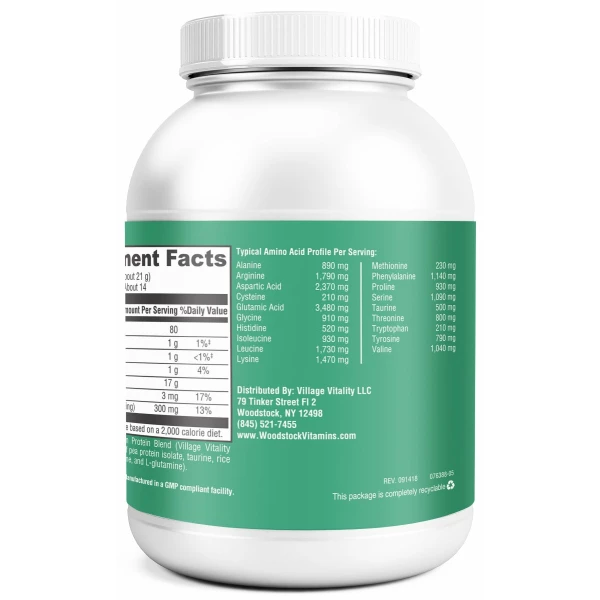
Totally vegan and highly bioavailable, Complete Plant Protein combines pea and rice to create a complete protein of unadulterated, veggie goodness. If you’re looking for a copycat formula, make sure that it, like ours, doesn’t contain sugar.
Learn More: Protein Supplements: Are You Getting Ripped Off?
3. Honorable Mention for Whey-Lovers: Vital Whey
And if you’re an omnivore who just can’t get a-whey from milk protein, that’s okay too. Our top pick for this category is Vital Whey, every day of the week.
Vital Whey is minimally processed, making it one of the rare whey protein supplements that still contains the beneficial immunoglobulins and lactoferrin from its milk source. (And that milk, of course, comes from grass-fed cows.)
Plus, it’s sweetened with monk fruit and comes in chocolate and vanilla flavors.
Protein Supplementation Done Right
So, what did the savvy shopper say about the protein powder that was too highly processed to be digested properly? “Those are some a-mean-o acids!”
Just keep that terrible joke in mind the next time you’re standing in the vitamin aisle. Find the minimally processed protein powder that’s nice to your body (and hopefully the earth, too).
If you need a spotter for the mental weight-lifting we call the research process — hop on a free Counterside Consult. Expert guidance included, protein puns and Kardashian gifs not included.
Have you caught wind of the magical potion from the ocean that’s sweeping the nation, boasting heart, skin, brain, and anti-inflammatory benefits?
It might sound fishy, but unlike other viral vitamins and trending supplements, this one isn’t a red herring. Omega-3 fatty acids — derived from the scaly sealife of the deep blue — have been studied, surveyed, and scrutinized into the ground. The results?
A resounding: This nutrient is essential, has measurable results, and beneficially impacts multiple body systems. You should know that already though — remember our recent blog on why omega-3 supplements are vital for long-term health?
(Catch up here in case you missed it.)
And now, today, we teach you how to fish. Or how to find the right omega-3 supplement, that is. We asked our captain — wellness wizard and Woodstock Vitamins founder, Dr. Neal — for the inside scoop on getting the right dose of omega-3 without wasting money or falling for far-fetched marketing tactics.
Keep reading, and we’ll make ye fishers of high-quality omega-3 supplements in no time.
In This Article
Eat Before You Treat: Omega-3 Food Sources
Okay, so maybe a fish oil supplement isn’t your idea of a special treat, but the principle stands regardless.
When it comes to successful supplementation, we should always focus on building up the foundation of our well-being before bringing in the big fish. The building blocks of that foundation are hidden within your daily habits or the lifestyle domains that are within your control: diet, sleep, exercise, stress management, and lifestyle changes.
AKA: The bottom tier of Dr. Neal’s Wellness Pyramid.
Learn More: The Wellness Pyramid: Your Roadmap to Holistic Health
So before you shell out your cold hard cash on an omega-3 supplement, focus on integrating food sources that are naturally rich in the fatty acids. A quick Google search for “foods rich in omega-3” will produce results that look like this:
- Fish (salmon, mackerel, tuna, herring, sardines)
- Nuts and seeds (chia, flaxseed, walnut)
- Seed oils (soybean, flaxseed, canola)
But don’t just dive headfirst into the seed oils (unless you want #HealthTok to dox you) — in general, we want to focus primarily on fish sources of omega-3 because of their natural EPA and DHA content.
(And if those mysterious acronyms, EPA and DHA, are new to you, don’t worry, we’re diving into the glorious waters of omega-3 contents below.)
Learn More: Debunked: 5 Myths About Omega-3 Supplements
Buying the Best Omega-3 Supplement: 3 Things to Look For
Presuming you paused reading to run to the grocery store for some fish, cooked it up, and have since integrated it as a regular part of your diet — welcome back!
Unfortunately, we’ve got bad news: Even the fishiest of healthy diets still lack optimal levels of omega-3.
But it’s not all doom and gloom. Your brain, body, and mood will still be happier being fueled by foods rich in fatty acids, and omega-3 supplements can fill in the nutritional gap you’re left with.
When it comes to reeling in the top catch of omega-3 supplements there are 3 key things to investigate before purchasing, according to Dr. Neal’s 20+ years of clinical experience:
- Dose
- Gross
- Host
1. Getting the Optimal Omega-3 Dose
We’ll give it to you straight because with omega-3 dosing, it’s sink or swim.
Anything below 2,000mg of omega-3 per day is not going to yield the incredible results you’ve read about in recent studies. (And yes, we’re aware that most supplements are suggesting people hit around 250mg per day.) But it doesn’t stop there — you’re also looking for more than just “omega-3” content in a supplement.
The omega-3 supplements that are worth their price tag will contain equally high doses of the fatty acids known as EPA and DHA, alongside the traditional omega-3 ALA.
So, your daily target dose of EPA and DHA should be around 3,000mg for successful supplementation but don’t forget to factor in your dietary intake, too.
Look for: A supplement that clearly states the amount of EPA and DHA per serving, and has flexible dosing options (ie, 1,000mg per capsule) so you can tailor how much you take each day.
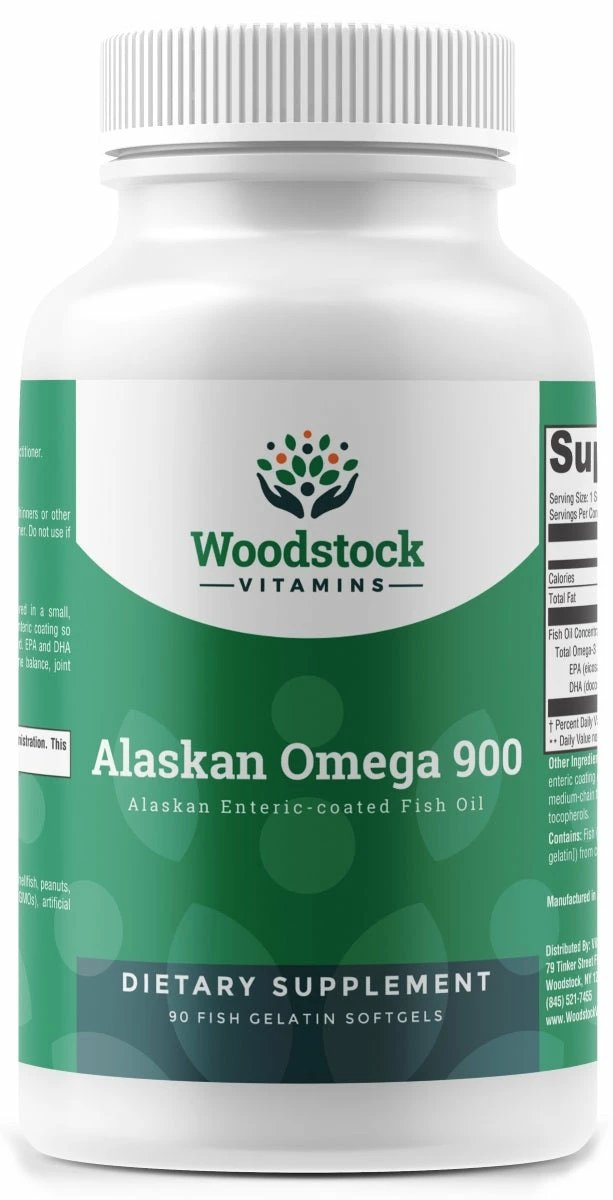
2. Avoiding the Gross Factor
As with anything that comes from the sea, there are a number of murky impurities to look out for. Why? Well, our oceans are filled with our favorite, distinctly human things: plastic and pollution.
Subsequently, fish-based omega-3 supplements can get gross in two core ways — sky-high contaminant content and rancidity.
We all know continued exposure to heavy metals and microplastics isn’t great, but rancidity can be just as devastating to our health, too. When fish oil turns sour, the anti-inflammatory benefits of the supplement are not only negated but inverted, too.
Rancidity makes the supplement pro-inflammatory.
Look for: An omega-3 supplement manufactured in a GMP-compliant facility, third-party tested for contaminants (specifically heavy metals), and refined for extended shelf life.
3. Host with the Most: Manufactures Matter
Rhyming host with dose and gross is a bit of a stretch, but at least it’s easy to remember, right?
When we say host, what we really mean is: Who sourced, processed, and sold this omega-3 supplement? Because the only way you can know for certain that you’re getting a quality supplement — sans rancidity, heavy metals, and negative environmental impact — is by buying from an ultra-transparent manufacturer.
The wellness industry is a bit like the Wild West in that way, regulations are loose and standards are looser.
But there are other fish in the sea manufacturers who hit all the key criteria for creating an omega-3 supplement that works for your wellness, your wallet, and the world, too.
Look for: A transparent manufacturer with supplements sustainably sourced from wild-caught fish for high potency and bioavailability, as well as environmental awareness.
Successful Omega-3 Supplementation Starts Here
So before you snatch up that cheap omega-3 supplement from Whole Foods, remember the three key points you need to investigate to avoid ending up with a different kettle of fish:
- Dose
- Gross
- Host
Now that you’re equipped with the skills of a seasoned fisherfolk, your omega-3 journey should be smooth sailing. Look out for lowered inflammation, improved gut health, and higher cognitive functioning ahead!
And if you need a fishing buddy — or direct guidance on your personal omega-3 supplement strategy — coast on over to a free Counterside Consult with one of our holistic health experts.
When was the last time you scarfed down a (BPA-free) can of (wild-caught) sardines for breakfast?
If it was any time in the last decade, then you can probably skip this blog. Chances are, you’re already getting your recommended intake of the fishy, fatty acid known as omega-3.
But if you’re like us and can’t quite stomach scaly squiggles in the morning, or even if you just struggle to eat two hearty servings of fish per week, the supplement sirens might be calling your name.
Omega-3 supplements have been gaining traction in the wellness world, reaching near-viral status as more and more influencers catch wind of its many, many health benefits. But is it worth the hype, or is it a red herring?
Scroll on to find out, fellow skippers! We asked the big fish, Dr. Neal — Woodstock Vitamins founder and notorious boat-rocker — to share the inside scoop on omega-3 supplements: why they’re getting popular, if they’re worth the price tag, and so on.
In This Article:
- Omega-3 supplements and the First5
- Why are omega-3s so important for health?
- Omega-3 vs. omega-6
- How to do omega-3 supplementation right
Omega-3 Supplements and the First5
No, “Omega-3 Supplements and the First5” isn’t our new band name, but it does give you a glimpse at the direction we’re headed in.
Not that you needed it — if you’ve been swimming around this side of the internet for a while, you already know how we feel about omega-3 fatty acids.
Omega-3s make up 1/5th of the First5 for a few key reasons:
- Most people aren’t getting enough omega-3s from their diet.
- Omega-3s can positively impact multiple body systems.
- The best data and research available support omega-3 supplementation.
All that should be reason enough to hightail it over to your go-to, high-quality supplement manufacturer, but actually, that’s just the hook.
Learn More: 5 Crucial Nutrients (Almost) All of Us Are Lacking
Why Are Omega-3s So Important for Health?
Here’s the line and sinker: Omega-3s play a critical role in your body’s inflammatory response.
So, if you’re not hitting the recommended intake of omega-3s, your body is going to struggle with regulating inflammation. But inflammation isn’t the Big Bad Wolf it’s made out to be (more on that below).
It’s chronic inflammation that we have to look out for, as recent research has linked it to a whole host of unpleasant things, ranging from uncomfortable symptoms to serious health issues:
- Autoimmune diseases and chronic illnesses
- Symptoms of IBS
- Cancer and tumor development
- Type 1 Diabetes
- Increased stroke risk
- Neurodevelopmental disorders (like ADHD)
But the good news is, as we continue to learn more about how chronic inflammation can wear down the body, we’re also learning how regulating inflammation can improve bodily functions.
Omega-3, the anti-inflammatory powerhouse, has been shown to have positive effects on a range of symptoms and body systems:
- Higher cognitive performance
- Improved neurocognitive functioning
- Positive changes in the gut microbiota
- Better processing of emotions in ADHD patients
- Improved symptoms of inflammatory skin disorders (acne, psoriasis, etc.)
- Positive effect on symptoms of autoimmune diseases
- Lowered risk of cardiovascular disease
Omega-3 vs. Omega-6
Despite their gleaming reputation, omega-3s aren’t the only oily fish in the sea, though.
Omega-3s work in tandem with their pro-inflammatory counterpart, omega-6s. The latter, omega-6, is responsible for creating and maintaining inflammation in the body, but before you start quivering in your hip waders, let’s reframe our understanding of inflammation.
Inflammation is an intelligent, purposeful defense mechanism of the body that helps us fight off infections and defend against harmful stimuli.
Omega-6 turns up the heat when a toxin sneaks into our bodies, and omega-3 calms the body to avoid chronic, low-level inflammation.
So, in the inflammatory response process, omega-3 and omega-6 work together in a yin and yang dance, with both nutrients playing pivotal roles.
Learn More: 5 Myths About Omega-3 Supplements
Proper Omega-3 and Omega-6 Ratio
Typically we want to see a 4:1 ratio of omega-6 to omega-3, but unfortunately, most Americans are getting closer to 20:1.
Sound fishy? Well, we can point fingers at the average Western diet of highly processed and nutritionally bankrupt food, which includes a whole lot of omega-6s and not a whole lot of omega-3s.
These fatty acids are processed by the same enzyme system, so both the omega-3s and omega-6s we ingest will be standing in line at the same gate in the body. Following this metaphor, if you have a swarm of 50 Omega-6s crowding the line, the poor little Omega-3s will be twiddling their anti-inflammatory thumbs for ages.
Ideally, we want the Omega-3 and Omega-6 to enter our bodies like a well-oiled zipper. It should be a more synchronized dance of:
Omega-3 | Omega-6 | Omega-3 | Omega-6…and so on.
This balanced influx ensures that both nutrients have a fair shot at doing their jobs effectively.
Omega-3 Supplementation: Why You Need It and How to Do It Right
Maintaining this optimal level of balance between omega-3s and omega-6s through diet alone isn’t an easy feat for most of us modern folks. We’ve got bigger fish to fry — bills to pay, meetings to slouch in, appointments to run to, kids to pick up, etc.
Omega-3 supplements, then, can fill in these nutritional gaps and keep us from developing diseases of deficiencies, when done right.
And doing omega-3 supplementation right means:
- Taking the right dose
- Taking the right form
- Taking supplements from high-quality manufacturers
Omega-3 Supplement Dose
The American Heart Association recommends at least two servings of fatty fish (or the supplement equivalent) per week. That amounts to about 500 milligrams (mg) to 1,000 mg of DHA and EPA per serving, so you’re looking at a recommendation of 1,000 to 2,000 mg per week.
But that’s just the minimum dose needed to see minimum results. You’ll likely want to be hitting the highly studied doses — which are closer to 1,000 to 3,000+ mg per day.
Omega-3 Supplement Form
It’s not just the omega-3s in omega-3 supplements that are helping your heart, skin, tummy, and brain, though. The phrase omega-3 is actually a bit of an umbrella term, encapsulating the two other omega fatty acids that play a critical role in driving down inflammation: EPA and DHA.
Higher doses of EPA and DHA will provide you with better results than supplements that have minimal doses. Point blank.
So, look for omega-3 supplements that provide clear information about the serving size of EPA and DHA per pill. That way, you know exactly how much of these powerhouses you’re getting.
We’re aiming for a dose of 3,000mg of EPA and DHA in a day, but don’t forget to factor in the omega-3 content from your diet as well.
Learn More: Debunking 5 MORE Omega-3 Supplement Myths
Omega-3 Supplement Manufacturers
Besides the omega-3, EPA, and DHA dose factor, there’s one other major component to choosing the right supplement: the gross factor.
(Dose and gross — pretty easy to remember, right? Thanks for that, Dr. Neal.)
Omega-3 supplements are almost always made from fish oil and if you haven’t heard, fish live in the ocean. These humble aquatic creatures are swimming through plastic-infested waters, chowing down on garbage and toxins due to the continued pollution of our planet.
Ick.
The fish used to make your omega-3 supplement, then, can be loaded with heavy metals and microplastics, and the oil created can turn rancid at the drop of a hat.
Both elements can directly negate the benefits of omega-3s, and rancidity in particular flips the switch from anti-inflammatory to pro-inflammatory.
So: Finding an omega-3 supplement manufacturer with meticulously defined, rigorously upheld standards for quality control and proper storage is a make-or-break detail for successful supplementation.
It’s O-Fish-ial, Omega-3 Supplements Are Worth the Hype
Omega-3 supplements aren’t just a big fish in a small, wellness-related pond.
The data, cutting-edge research, and personal experiences of Dr. Neal‘s patients all point to its critical role in maintaining long-term health in the modern age. So don’t leave your heart, brain, gut, and skin health up to salmon else — take your supplementation strategy by the gills!
And if you need a captain to steer you in the right direction, you can chat with a supplement strategist for free with a Counterside Consult. (Fish puns not included.)
Anyone remember those once-hilarious, now-cringe “Got Milk?” ads that featured celebrities sporting milk mustaches to promote strong bones? Ah, those were the (pre-oat milk) days.
Healthy bones are no joke though — except for your funny bone.
Thanks to some pretty powerful marketing campaigns like that one, most of us think of calcium as the be-all and end-all for skeletal support. You might be surprised to learn that this is actually a pretty bare-bones understanding.
Calcium’s benefits reach far beyond that — in fact, it’s everywhere. Calcium is the most abundant mineral in the human body.
While we certainly can’t deny its supportive role in slowing bone density loss, it is also essential for muscle function, nerve transmission, and even cardiovascular health via the blood vessels.
So, it’s pretty important to make sure you’re getting enough calcium, and taking a supplement can definitely help. Whether you’re cleaning out your supplement supply or looking for a new option, we’ve got you covered!
If you’re ready to make a cal(cium)culated decision about your calcium supplements, this is the place to be! News flash: not all calcium supplements are worth the hype. In fact, we’ve got a bone to pick with most of them.
In This Article:
- How much calcium do you really need?
- How to choose the right calcium supplement
- Why we love calcium hydroxyapatite
You’re Probably Not Getting Enough Calcium
Saddle up, we’re talking about everyone’s favorite micronutrient: calcium! Well, maybe it’s not exactly our favorite, but it sure is important. Micronutrient deficiencies are all too common, and calcium is no exception.
More than 40% of adults and children in the US are not getting the recommended 1000mg per day through diet alone, leading to deficiencies.
That is why you see so many different forms of calcium on the market right now, folks — supplementation has become the go-to solution, and we’re not here to harp on it.
We already did that actually, in our clickbait-esque but scientifically valid Calcium Doesn’t Work (Like You Think It Does) article.
The vitamins and minerals that support bone health, most notably calcium and Vitamin D, often need a little boost to get your skeleton the TLC it deserves and needs. When supplemented properly with the right dose, strategy, and form, calcium supplementation can be a huge boon for your bones.
It’s not part of Dr. Neal’s First5 for kicks and giggles after all!
Choosing the Right Calcium Supplement
Some argue that calcium supplements aren’t really necessary. While there is a bit of calcium controversy, we politely — but loudly — disagree.
Calcium not only slows bone density loss, but it can also be the backbone of your overall health.
If you want to properly and strategically bone up your calcium intake, though, you’ll need to choose the right calcium supplement. Don’t be fooled by those vitamin aisles with shelves full of calcium supplements.
The sad truth is, not all calcium supplements are created equal.
The two most common forms are calcium citrate and calcium carbonate. They’re marketed as the more cost-efficient and easier-to-absorb options. But here’s the kicker: they don’t have nearly enough calcium in each pill!
That, and calcium carbonate has a neutralizing effect on stomach acid, which is why it’s used in many heartburn medications. This sounds great, but calcium carbonate requires an acidic environment in order to break down and be absorbed — as Dr. Neal would say, it is its own worst enemy.
So if you want to show your bones some real love, you’ve got to be picky with your supplements.
Forms of Calcium Found in Supplements
Calcium Gluconate
If any of these calcium forms are like Batman, it’s this one. Calcium gluconate swops in to save the day when your blood calcium levels are in distress or magnesium levels are too high.
With only 9% elemental calcium, though, this isn’t your best overall supplement choice.
Calcium Lactate
If you’re on the hunt for some calcium lactate supplements, you can check your pantry. This bad boy makes its way into all sorts of snacks and meds.
With 13% elemental calcium, it’s good for your bones but is mostly used to soothe acid reflux.
Calcium Carbonate
Calcium carbonate is the big cheese with a whopping 40% elemental calcium.
But, before you get too excited, these supplements can be a bit hard on the gut and are harder to absorb.
Calcium Citrate
Calcium citrate is only 21% elemental calcium, which means you’ll be swallowing those pills more often than you’d like. You can find this in many antacids, too!
Calcium Hydroxyapatite
Microcrystalline hydroxyapatite complex (MCHC), or calcium hydroxyapatite is considered the most beneficial form of calcium. Why?
It’s not just your average calcium supplement, it’s got a whole lot more to offer. Trust us, your bones will thank you.
Why We Love Calcium Hydroxyapatite So Dang Much
What makes calcium hydroxyapatite so great? It doesn’t just contain calcium, it’s actually a triple threat.
Unlike the other calcium supplements, calcium hydroxyapatite is a complete complex, including everything you need for healthy bones and body: calcium, phosphorus, and magnesium!
Calcium hydroxyapatite, or calcium MCHC for short, is the same form of calcium that our bodies store in our bones. Is that why its absorption rate is out of this world? Or why it has been shown to slow bone density loss better than other forms of calcium?


Maybe! What matters most to us is its bioavailability and the fact it has little GI irritation compared to other, less easily absorbed forms.
If you ask us, or better yet our founder and pharmacist of 20 years, Dr. Neal, calcium hydroxyapatite is the real deal. It’s no wonder it’s our top choice for all things calcium.
Bone Up Your Standards
By now, you know that not all calcium supplements are created equal — supplements, in general, can be a gamble.
Some provide the promised nutrients, but others are simply playing pretend with poor manufacturing, less-than-effective nutrient numbers, slick marketing, and some potentially harmful or gross additives.

Don’t worry. You don’t have to opt-in to this game of supplement roulette. Do your research and you can find high-quality supplements from reputable sources (like us!).
What quality markers should you look for? That’s easy:
- Form
- Dosage
- Additional Nutrients
- Quality Assurance
Calcium Form & Dosage
Choosing the right form of calcium should be a no-brainer at this point, right? Calcium hydroxyapatite is your new best friend.
Finding the right calcium dosage is a little more complex. The dose your supplement contains should be appropriate, but you’ll also need to account for your dietary intake of calcium as well when choosing how much to take per day.
Most individuals need 1000mg per day from diet and supplementation, but if you have a calcium deficiency, you may require more.
Ultimately, you should ask your healthcare provider to help you determine the best dosage for your specific needs.
How Dr. Neal does it right: You’re getting the optimal dose of calcium, but at a recommended serving of two pills per day. So, if there’s a day when you get more calcium in your diet than usual, you can easily tailor your supplement intake by simply not taking the second dose.
Additional Nutrients
Calcium alone is great, but it needs its squad to really thrive. Look for supplements that contain the whole complex form — calcium hydroxyapatite or calcium MCHC — to get the additional proteins, minerals, and biological components to really feel it in your bones.
How Dr. Neal does it right: In addition to calcium, you’re getting about 200 mg of phosphorus. We even threw in some medium chain triglycerides (MCTs) to help your body absorb all that calcium goodness.
It’s like a VIP pass to maximum nutrition absorption and whole-picture bone health.
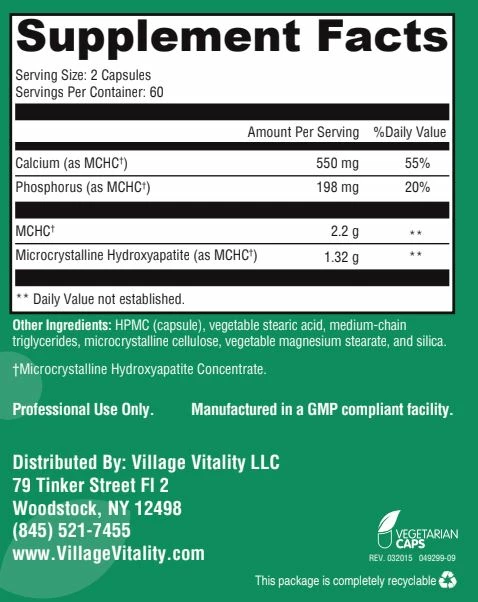
Quality assurance
Supplements are not as regulated as standard medication. Horrifying, right?
That’s why you’ll want to choose a supplement that has been tested by a third-party organization for purity, potency, and overall quality.
How Dr. Neal does it right: Our calcium hydroxyapatite supplements are third-party tested to meet quality and compliance standards. Then, because Dr. Neal is notoriously meticulous, we test it again, just so you can rest assured that your bones — and the rest of you — are well taken care of.
Dr. Neal’s Supplement Quality Standard
Our main goal, here at Woodstock Vitamins, is to bring some of the rebellious spirit of our founding town into the wellness arena. So when it comes to rules — we don’t follow them! We exceed them.
If you’ll allow us a humble brag: Our low-heat processing keeps our products fresh and locks in all the good stuff for optimal bone support. And when we say our supplements have high bioavailability, we mean it’s practically a one-way ticket to your bones. No detours, no delays.
But we don’t just want you to be healthy, we want our whole planet to be healthy, happy, and thriving.
Have you ever heard the saying, “We don’t inherit the earth from our ancestors, we borrow it from our children”?
Sustainability is crucial to our planet’s well-being and the health of future generations. That’s why we’re committed to providing products that are ethically and sustainably sourced.
Calcium & Bone Support are Vital
To boil it all down, calcium is an essential mineral for overall health and specifically, bone health — which is why it’s included in the First5. While many people don’t get enough calcium through diet alone, choosing the right calcium supplement can help bridge the gap.
Calcium hydroxyapatite has proven to be the most effective form of calcium supplement due to its inclusion of calcium, phosphorus, and magnesium.
So let’s get your bones the good stuff they need to stay strong! Meet your daily calcium goals with Woodstock Vitamins’ Calcium Hydroxyapatite supplement.
Feeling a little lost in the supplement aisle? Let’s have a chat and figure it out together! Book a free Counterside Consult to get personalized advice from an expert calcium connoisseur.
Are we really kicking off National Bone Health and Osteoporosis Prevention Month with a clickbait title? Yes, we are! Except, it’s not actually clickbait, though calcium has been a hot topic for a while now.
The mineral is popping off for good reason, as more than 40% of Americans are not meeting the requirements for calcium intake. But we’ll make no bones about it — the conversation surrounding calcium is sensationalized and lacks nuance.
Here at Woodstock Vitamins, though, we’re not ones to cower at the prospect of going against the grain, so we asked Dr. Neal to share his thoughts on the thorny matter.
Well-known wisecracker and holistic pharmacist, Dr. Neal Smoller, is our founder and resident supplement sage.
If you’re looking to win an argument about bone-building with natural health options vs. pharmaceuticals, find a different clickbait article! If you’re looking for the scientific low-down on what calcium actually does for bones and supplementation best practices — read on.
In This Article:
- What does calcium do for bones?
- Do calcium supplements actually work?
- Best calcium supplement options
- Bone support wellness practices
What Does Calcium Do for Bones?
Thanks to gaps in education and misleading marketing campaigns, most of us believe that calcium builds up our bones.
Or that taking a calcium supplement will help prevent fractures. Or both!
While calcium plays a crucial role in the skeletal system, the relationship between bones and calcium supplements isn’t so straightforward.
In reality, the process of building, strengthening, and protecting your bones is a variable one, both lengthy and multifaceted. The role that calcium supplements play in it is as such:
Calcium supplementation can slow bone density loss.
Does the distinction between something that builds bones, and that which simply slows bone density loss seem like a semantic issue?
Maybe, but it has real-world consequences, especially for those at risk for osteoporosis or osteopenia.
When we reach a calcium-deficient state, the calcium our body needs for vital functions is zapped from the bones. As a result, most people don’t see calcium deficiencies popping up on their labs; the deficiency is a slow leak from the bones outward.
So, getting an adequate amount of calcium is still an important wellness practice and daily ritual. Over the short term, low dietary calcium can contribute to bone loss.
When it comes to preventing fractures, preserving bone integrity, and reducing the pain levels of your future self, though, calcium is just one piece of the puzzle.
So, Do Calcium Supplements Actually Work?
As always, the deepest stratum of truth gives us an answer that isn’t nearly as clear-cut as we’d like it to be.
- Yes, calcium supplements — in the right forms, doses, and strategies — actually work to slow bone density loss. The effectiveness of your calcium supplementation can vary wildly though, depending on your age, the bioavailability of the product you choose, your consistency in taking it, and more.
- …No, calcium supplements don’t work for building or restoring bone loss. You’ll also be hard-pressed for tangible results if you opt for one of the cheaper, more widely available options that aren’t easily absorbed.
Learn More: Calcium Doesn’t Work?! | Dr. Neal Rants
When to Take Calcium Supplements
We use this analogy a lot when it comes to taking supplements and launching wellness practices:
“The best time to plant a tree was 20 years ago. The second best time is right now.”
It translates well in the case of calcium supplementation: The absolute best time to start preserving bone density was, probably, 20 years ago. If you’re under the age of 30, the second best time is right now.
Under the age of 30, taking a high-quality form of calcium can have a huge impact on the long-term health of your skeleton. Why? Because we, as humans, don’t actually reach peak bone mass until age 30, so bone-building practices should be in full swing from childhood to age 30.
For those who are under 30 and at risk for osteoporosis or osteopenia, that goes double.
(And hey, young folks, go tell the other young folks about this, too!)
For the older millennials and their predecessors, taking a calcium supplement is not going to offer a significant decrease in the risk of fractures, according to JAMA’s infamous 2018 meta-analysis.
By the same token, if you are over the age of 30 your doctor has, most likely, already recommended calcium supplementation. Are we saying that your doctor is wrong and that you’d be wasting money on a calcium supplement? Absolutely not.
Calcium is the most abundant mineral in the body, and taking a third-party tested, bioavailable form of calcium can support everything from your cardiovascular and nervous system to muscle function and nerve transmission.
And slow bone density loss, as you now know.
Best Calcium Supplement Options
When looking for a calcium supplement to add to your wellness strategy, the question is not, “Which calcium supplement will help me build bone?”
Rather, the inquiry should be: What form of calcium will help me maintain bone density the longest?
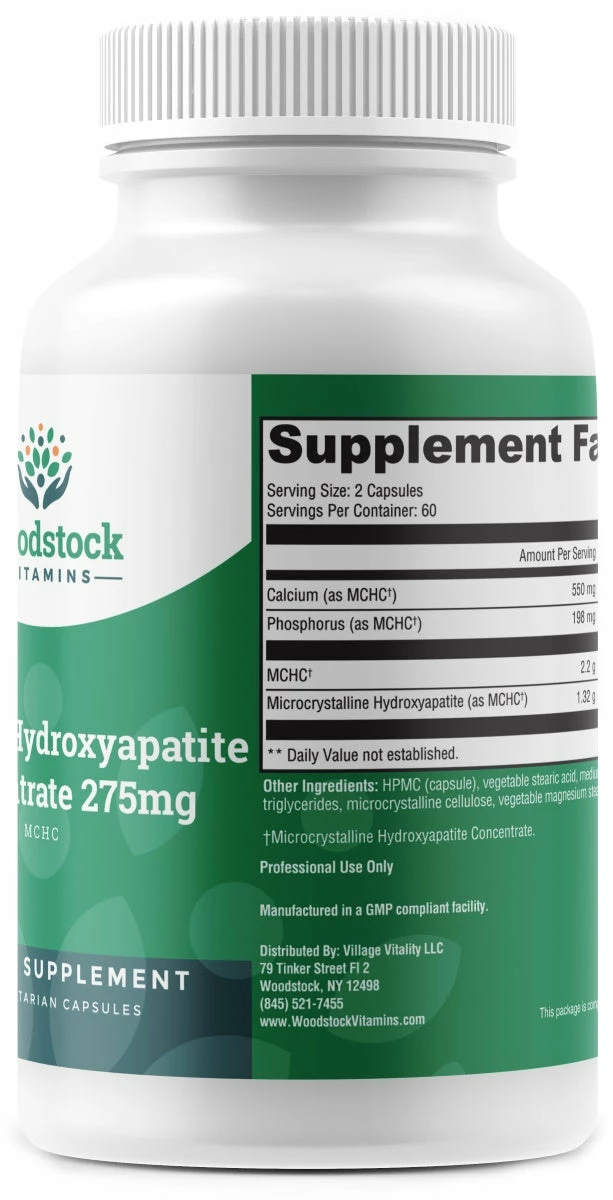

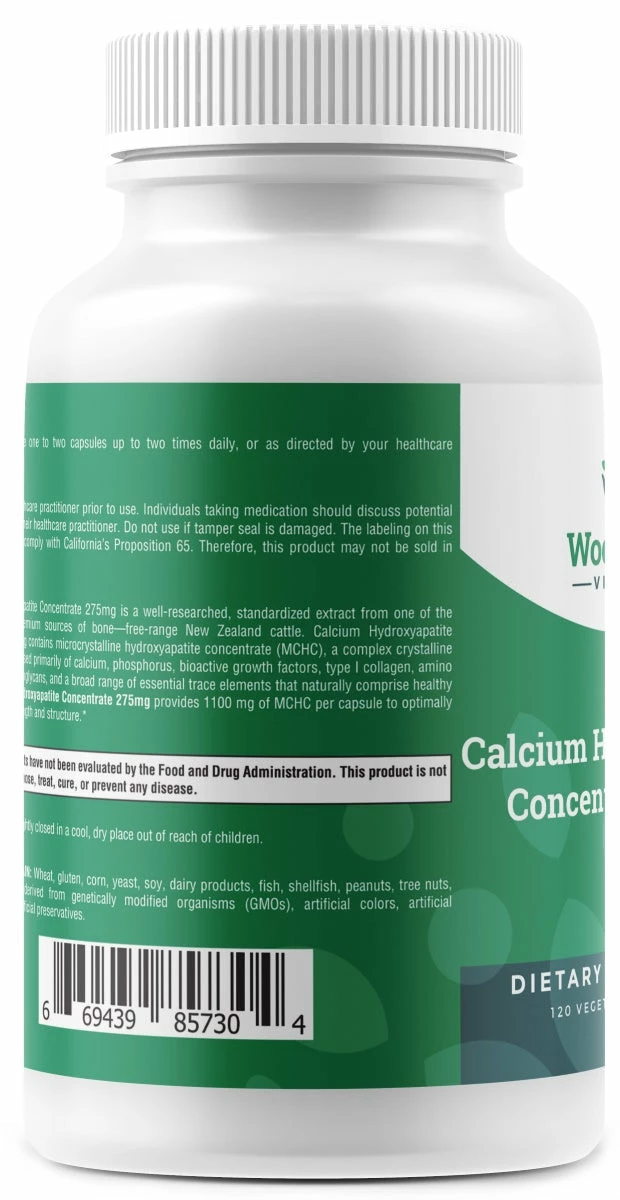
If you’re asking the latter question, one particular form of calcium stands out from the crowd of citrates and lactates.
This microcrystalline form of the mineral is the same as the one found in our bodies and causes little GI irritation compared to its competitors.
As a complete compound, calcium hydroxyapatite gets close to the bone with higher absorption rates and a multi-pronged support function. In this form, our bones take in proteins, bone components, and other minerals alongside calcium.
The result? Support for the whole bone matrix.
Pro Tip: Cheaper, lower-quality supplements like calcium carbonate might seem harmless, but poor absorption of the mineral can wreak havoc on your stomach. Calcium that sits around in the gut, rather than being properly absorbed, causes abdominal issues like constipation.
Getting the Right Dose of Calcium
If you’re hoping to politely exit the calcium-deficient club that 40% of US citizens are currently members of, then dosage should be top of mind.
Increasing your dietary calcium will only prevent bone density loss. Having a “healthy” bone density will decrease fracture risk.
-Dr. Neal Smoller
But before you take a gander at the handy chart of recommended intake levels included below, take a look at your plate!
Many of us are already receiving a portion of our recommended intake through our diets. Without factoring this in, you might end up with a dose that’s too high for your wallet and your wellness.
So when we’re trying to nail down a calcium supplement, we look for doses around 300mg – 500mg per capsule. This is lower than the recommended daily allowance, of course, because we want something that allows for user customization.
Had a lot of dairy one day? Just take one capsule. Not enough kale the next day? Take two.
The formula boils down to this: subtract your recommended daily allowance from your average dietary intake. There’s your personalized calcium dose!
Keep in mind that, for most people, 600mg of calcium is the upper limit of what your body can handle at one time. To avoid stagnant calcium in the gut, break up your intake throughout the day — i.e., one in the evening and one in the morning.
Learn More: Bone Health: Why We Always Recommend Calcium Hydroxyapatite
Bone Support Wellness Practices
Ensuring peak bone mass BEFORE the age of 30 is the single greatest thing to reduce the risk of fractures later in life.
Dr. Neal Smoller
The wellness strategies you’ll want to adopt to protect your skeletal system will depend on your unique body, history, and risk factors.
There are a few generalized tips we can share, though, that will benefit the bones of almost all people under the age of 30:
- Exercise — in the form of regular movement and weight-bearing exercise
- Improving dietary intake — through calcium-rich foods
- Supplementation — with calcium hydroxyapatite
- Minimizing risk — by avoiding smoking and reducing alcohol consumption
- Consistency — in bone-building wellness practices
- Commitment — to the long-haul process
For folks over the age of 30, or those experiencing significant bone loss, the unfortunate truth is that you might not be able to rebuild bone mass with wellness practices at this point in your life.
Fret not, though! The false dichotomy of natural wellness vs. pharmaceutical medicine is just that — false.
Wellness practices can help support health and wholeness, but when it comes to diseases like osteoporosis, prescription medications for bone density loss are what can save lives.
Celebrating National Bone Health and Osteoporosis Prevention Month
To celebrate this month of awareness — give your bones the TLC they deserve! It doesn’t matter if you’re younger and think it’s too early, or older and think it’s too late.
“The second best time is right now.”
Now that you’re fully equipped with the science behind calcium and bone building, you can start making an active effort to support the longevity of your bones.
Need more advice on how to beef up your skeleton? Don’t work your fingers to the bone researching endless options — hop on a free Counterside Consult for direct guidance.
Supplement trends and fads almost never pan out. Collagen, though, is a fantastic exception to that rule.
That doesn’t mean it is the magical, skin-tightening, fountain-of-youth-in-a-powder that the wellness industry likes to hype it up as, though.
Collagen is so great. So much so, Dr. Neal formulated his own and made the Woodstock Vitamins Collagen Peptides his top choice for omnivore protein supplementation. But there’s more to know about the illustrious powder than you might think.
In This Article:
- What collagen is
- The benefits of collagen
- How to buy the best collagen
- Why you should avoid “vegan collagen”
Collagen Basics
Collagen is a protein. It’s different from other proteins like those found in nuts, chicken, or eggs, though.
It’s the main structural protein in humans, animals, bugs, and more!
Collagen has a unique mix of amino acids, which results in a unique shape. The unique shape allows it to be used as a source for all the structures in your body: cells, skin, joints, gut lining, hair, and more.
Learn More: Choosing the Right Protein Supplement: 5 Questions to Ask
The Collagen Benefits
Our founder, Dr. Neal, has identified protein as one of his First5 nutrients.
The current rhetoric is that “Americans eat enough protein.” Maybe even too much. While this may be true on a broad scale, in his experience, most individual people aren’t aware of their daily protein requirements, and most people consulting with him take less than their required amount.
Divide your weight by 2.2. That number is a great approximation of how many grams of protein you should eat in a day.
Collagen is an awesome way to crush those protein goals. Plus, it has the added benefit of helping your gut health.
Smaller studies of collagen supplementation (compared against conventional proteins) in athletes have also shown a benefit for joint health, too.
Of course, folks gobble down collagen in hopes of having healthier hair, skin, and nails. If we look at the data, collagen doesn’t provide any advantage over other proteins for this benefit… but it still helps. Part of the reason for poor hair, skin, or nail health is because of a deficiency of protein in the diet. Collagen peptide supplementation can close any nutrient gaps in protein intake.
Learn More: Protein Supplements: Are You Getting Ripped Off?
How to Get the Best Quality Collagen
Buying collagen is way more complicated than it should be, mostly because of the popularity of the product being met by the weak regulations of the supplement industry.
We have a few general rules that follow Dr. Neal’s Supplement Quality Standard:
- Make sure the brand is compliant with manufacturing rules. This will ensure the product is actually collagen (a real problem!) and contamination doesn’t exist.
Remember, collagen is animal-based, and animals eat the grass and drink our water, and therefore will be exposed (unfortunately) to things like heavy metals. Some heavy metal content will be unavoidable.
Transparency should be the goal and the pursuit of the best-in-class manufactured product - Popular collagen brands are often owned by mega-corporations, and they probably have engaged in some general crimes against humanity at one point, or super often.
Collagen is sourced from chicken, beef, and fish, so the practices of the farm and raw material suppliers should be ethical and sustainable.
Make sure the virtues of the brand align with your vision for a sustainable world. - Don’t overpay. A quality beef-based collagen is your best value, at less than 10 cents per gram of protein.
Chicken or fish collagen are other options, but are often more expensive per gram of collagen, with no added clinical advantage.
Learn More: How Protein Supplements Are Processed (Within an Inch of Their Lives)
Can I Buy a Vegan Collagen?
If a company is selling a “collagen booster” or a “plant-based” or “vegan” collagen, run. They’re being deceptive in their marketing.
Collagen only comes from animals, period.
Those “boosters” are essentially just overpriced Vitamin C supplements. Extra vitamins that are found in the collagen synthesis pathway will NOT increase the amount of collagen your body will make.
If you are not into animal-based products, you will not be able to get any collagen. Sorry. But, you can utilize plant-based protein supplements to augment your diet and often get many of the benefits of collagen supplementation, minus the gut help.
Learn More: How Protein Supplements Are Processed (Within an Inch of Their Lives)
Incorporating Collagen Peptides Into Your Daily Nutrition
We recommend our Woodstock Vitamins Collagen Peptides as your ideal collagen supplement. Duh.
Anyone at any age can use collagen on a daily basis. It can be done on its own, mixed with water, or put into a smoothie as a healthy protein for a snack or meal replacement.
We recommend people start with no more than the single serving size of 18g of collage peptide (a single scoop of our product) per day. This can be split up to two times a day; half-scoop in the morning, half-scoop in the afternoon for example.
Collagen peptides mix well with water, but it should be noted that collagen is its “happiest” in warm liquids; it mixes super fast in tea, coffee, or soups. It doesn’t mean you can’t use a cold drink, it just means that if you do, you have to mix well!
Remember, collagen IS a protein, and supplementing both whey and collagen is generally unnecessary.
Take collagen peptides for a great protein supplementation with the added benefit of supporting digestive health. Use it as a protein source in a shake or smoothie for a meal replacement or a healthy pre- (or post!) workout snack.
- Grab some Woodstock Vitamins Collagen Peptides
- Start with 1 scoop daily. Either all at once or split up in two parts at different times of the day (breakfast and afternoon snack, for example)
- Mix your collagen with coffee, water, almond milk, your smoothie, or any of your healthy beverages.
- Be wow-ed by the benefits.
What Can I Expect from Collagen Peptides?
Part of a great Supplement Strategy is setting proper expectations. Will you have luscious, blond hair a few days after taking it? No, and especially not if you are a brunette.
You’ll feel better with extra protein in your day. At mealtime, you’ll feel more satiated and less hungry. After a couple of days, your overall well-being will change just by meeting your protein goals.
After a few days to a week, folks with common GI discomfort report feeling more settled.
The benefit to our hair, skin, or nails comes with consistent use. We should expect to notice an improvement in no sooner than 90 days, but we really need to give it a full 180 days to see the benefit.
Learn More: 5 Benefits of Collagen for Gut Health
Collagen Peptides is Vital
When starting on a wellness journey, addressing bothersome health concerns, or conquering the chaos of our current regimens, we start by optimizing Dr. Neal’s First5.
Protein is one of those First5 nutrients, and collagen is an amazing way to supplement protein to meet your daily goals.
Collagen peptides is our top choice for protein supplementation as it delivers high-quality protein at an amazing value with amazing potential benefits