





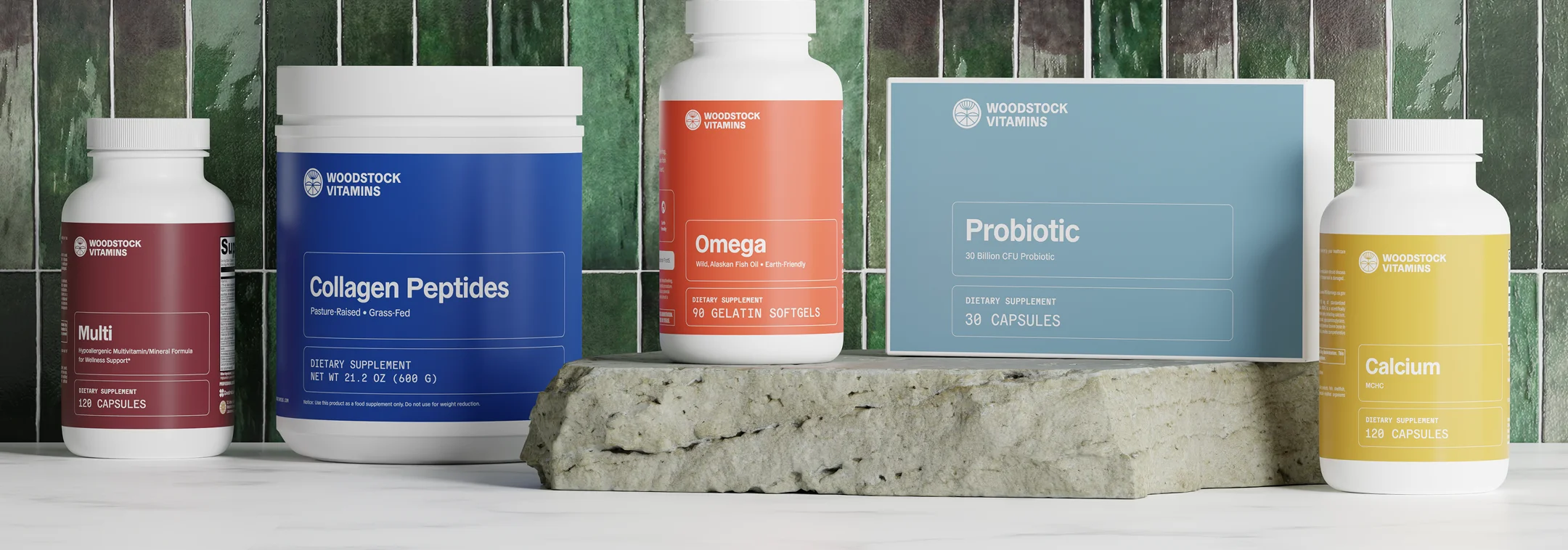


Have you heard the news? There’s a certain supplement in the spotlight right now, thanks to recently released research straight from the COSMOS.
Okay, so, it wasn’t beamed down to us from the heavens. COSMOS, which stands for COcoa Supplement and Multivitamin Outcomes Study, is a large-scale clinical trial exploring the potential benefits of both cocoa extracts and multivitamins on memory and cognition.
The data of a smaller study within the COSMOS framework has yielded surprising results regarding the effects of multivitamins on brain health. But of course, we weren’t too surprised to learn that multis can slow brain aging and improve cognitive function.
Dr. Neal has been ranting and raving about multivitamins for years now, after all.
What was surprising was the influx of articles about this study from NBC, The New York Times, and everyone in between. Turns out, we Americans are pretty concerned with maintaining optimal brain health well into our twilight years!
But before you rush to grab that Women’s One-A-Day off the nearest natural foods store shelf, there are a few things you should know about the results of this study and what it means to take multivitamins properly. For that info and more, scroll on, fellow wellness seeker.
In This Article:
- The COSMOS study and how multivitamins can affect brain health
- Why multivitamins are vital
- Three things to know about buying multivitamins
How Can Multivitamins Help Brain Health?
Here’s the short answer: Multivitamins can bolster brain health by filling dietary gaps and ensuring optimal micronutrient levels.
By doing so, multivitamins can help prevent deficiencies that can, if left unchecked, develop into diseases. Because, well, we can’t really consider ourselves healthy people if we’re suffering from one or more micronutrient deficiencies that will eventually bloom into a full-blown disease.
They may be small, but their influence on health is huge — astronomical, even.
This COSMOS trial reaffirms a long-held understanding of micronutrients and what exactly they do in the body. In it, 573 participants aged 60 and up were split into two groups.
One took a multivitamin daily for two years, and the others took a placebo. As it turns out, the unlucky schmucks in the latter group missed out on the significant improvements in memory and cognitive function that the people taking multivitamins experienced.
So, by addressing deficiencies caused by a lack of proper micronutrient intake via diet, multivitamins were able to not only support but actually improve brain health in these random boomers.
That’s (Part of) Why Multivitamins Are Vital
This study by COSMOS is important for many reasons. For example, it’s comforting to be reminded that multivitamins can help us fight back against some of the more terrifying aspects of aging — like memory loss and cognitive decline.
On the other hand, though, it’s also kind of… not that important. Studies have shown, for decades now, that multivitamins are crucial for overall health in the modern age. This new study, while interesting, isn’t groundbreaking, it’s redundant.
To be fair, the internet is so rife with misinformation about food, supplements, and wellness that most people don’t know what it actually means to be healthy these days. Hence the shell-shocked response to the idea that getting the micronutrients your body needs has a positive effect on your health.
But before we segue into an industry rant, let’s take a deeper look at what it is that makes multivitamins vital and more specifically, part of the First5. Because, in case you need reminding, they were a member of Dr. Neal’s quintessential supplement quintet long before this COSMOS study hoopla.
To make the First5 list — which may one day be a First6, 7, or 10 list — a supplement has to hit all 3 of the following marks.
First5 Criteria:
- It must be backed by mounds of clinical data and research
- It must be critical for more than one body system
- It must be something the average person is severely lacking
That last one is the kicker. Most of us, for one reason or another, aren’t getting enough micronutrients from the food we eat. Whether it’s due to a lack of access to nutritious food and food education or leaky gut and digestive issues that prevent absorption, we are all on the struggle bus.
Learn More: 5 Crucial Nutrients (Almost) All of Us Are Lacking
Getting a Multivitamin That Actually Works
You know what, though? Forget our haterade about the COSMOS study commotion. If it amplifies the message Dr. Neal has been sharing for years, then it benefits us all.
That message is, of course, that everyone needs a multivitamin. If that’s the case — that everyone and their mothers need a multivitamin — it makes sense that there are 75,000+ different multivitamin products out there. Right?
Wrong.
There are only about 2,000 helpful ingredients that those 75,000 different products could be using, max. Which leads to a lot of overlap. And it means that most of the differentiating factors you see in these different products are marketing speak, not quality markers.
We should, as modern humans, be able to pick up any multivitamin from the shelf and rest assured that it’s helping us reach our targets for micronutrients. We should, but we can’t.
Instead, if we want to take multivitamins for brain health without wasting time or money, we have to transform from an average consumer to a savvy shopper. We can do so by getting educated about the three things that make a multivitamin worth the price tag: Form, Dose, and Strategy.
1. Multivitamin Forms: Why They’re Crucial for Brain Health Optimization
Over the last 20+ years, our holistic-pharmacist-turned-Woodstock-Vitamins-founder, Dr. Neal, has compared and contrasted thousands of multivitamins, scouring the digital aisles for top-rated and underground favorites to scrutinize their supplement facts panels.
And honestly, he has NOT been impressed.
Most multivitamins use ineffective, cheap, isolated forms of vitamins, minerals, and nutrients in their formulas. In an effort to seem comprehensive, they jam-pack ingredient lists with sprinklings of micronutrients in forms that are, at best, completely ignored by your body.
So don’t fall for fancy branding and highfalutin marketing speak like “whole food” when you’re shopping for a multivitamin. Instead, do your research.
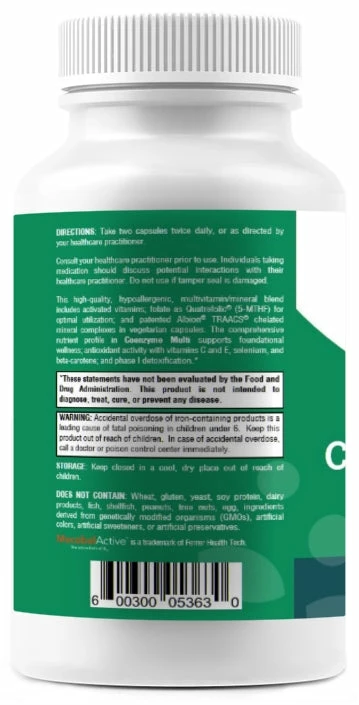
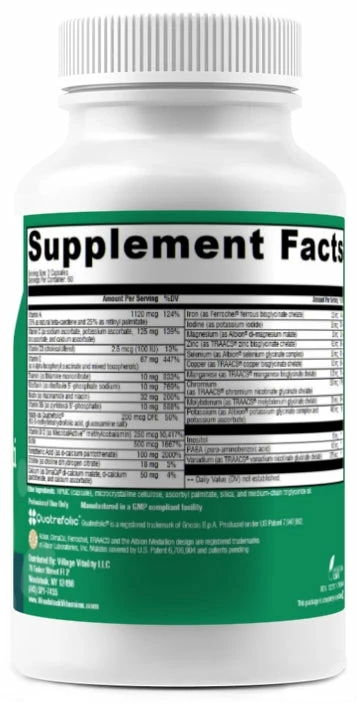
Look at the specific forms of vitamins and minerals included in a particular multivitamin supplement and get out your reading glasses if you have to. It’s imperative to make sure that every single active ingredient included is one that, according to actual science, can be absorbed and utilized by your body.
2. Multivitamin Doses for Brain Health — How to Avoid Wasting Money
But there’s more trickery afoot than just the cheap ingredients — remember that sneaky ingredient sprinkling we mentioned?
Multivitamin manufacturers will often pull this sleight of hand when marketing their products to you. They put what Dr. Neal calls fairy dust doses of vitamins and minerals in their products to swindle folks into thinking they’re getting what their brains and bodies need.
The reality is that taking these infinitesimally small doses of micronutrients does nothing to improve your health. In fact, when you factor in the stress caused by wasting money on these kinds of multivitamin supplements, they might actually do more harm than good.
So while you can microdose your mushrooms all you want (if you’re in Colorado), you shouldn’t microdose your multivitamins.
It was this unethical aspect of multivitamin marketing that was the straw that broke Dr. Neal’s science-loving back, pushing him to create his own formulation. (But don’t fact-check us on that.)
Thus, Coenzyme Multi, a multivitamin that contains not only the proper, biologically active forms of micronutrients but also the correct, data-backed doses of each god-loving ingredient, was created.
And that you can fact-check us on.

3. Strategy: What to Do Before Taking a Multivitamin for Brain Health
More bad news: There’s no single multivitamin that can save your life. Not even the best of the best multivitamins around — cough, cough, Coenzyme Multi.
That’s because, as much as we wish the opposite, multivitamins aren’t one-a-day space food that can keep our bodies in optimal health for productivity 100% of the time. The marketing might imply this, but it simply isn’t true.
What is true is that multivitamins can help improve our health — especially brain health, as we now know — when they’re building on a strong foundation of wellness. Translation: you can’t take a multivitamin while maintaining your all-cheeto diet and expect to be in good health. That’s not how it works.
So before you snatch up your own bottle of Coenzyme Multi — take a keen look at the mundane areas of your hopefully healthy life. What, in the domains of diet, sleep, exercise, stress management, and lifestyle changes, can you improve first?
Focus on bolstering your brain through movement, rest, nutrition, and environmental changes before you buy a supplement. Your brain and your wallet will thank you.
Learn More: The Wellness Pyramid: Your Roadmap to Holistic Health
It’s a No-Brainer, Right?
Are you racking your brain for a lifestyle-based wellness practice that will save you cash and benefit your noggin? Do you have half a mind to start taking a multivitamin for your brain health, but want to learn more about bioactive micronutrient forms?
Well, then, give us a call! As always, our certified-egghead, holistic brain health experts are available to talk about your particular cerebral curiosities via Counterside Consult — yes, for free.
If you haven’t caught wind of the magnesium hype yet, then you must be living under a rock. And a particularly mineral-deficient rock, at that!
Magnesium supplements, powders, lotions, and potions have risen in popularity in recent years. Slathered-up proponents of the nutrient claim muscle relaxation, decreased anxiety, improved sleep, and more as inevitable side effects of magnesium supplementation.
But, because you know we have to ask, where does the science stand? Have we been taking this humble mineral for granite?
To get crystal clear on magnesium, we turned to Dr. Neal. He might not be a geologist, but the down-to-earth Woodstock Vitamins founder and holistic health expert still rocked our world with his data-backed deep dive into the mineral.
So keep coal and carry on scrolling to learn everything you need to know about magnesium.
In This Article
- What is magnesium and why should we care
- Improving magnesium levels through diet
- What can magnesium supplements actually help with
- Which form of magnesium is best to supplement
What is Magnesium?
Despite its minute presence, magnesium wields significant influence over your physical and emotional well-being. Epitomizing the phrase “dynamite comes in small packages,” the micronutrient operates as a cofactor in over 300 enzymatic reactions in the body.
As an essential mineral, the presence of magnesium is required for a number of critical processes — involving everything from DNA synthesis and energy production to nerve function and muscle health. Not to mention blood glucose and blood pressure management, both of which magnesium levels will impact.
Its sway over your health extends even to the skeletal system, contributing to the structural development of bones and bone density maintenance. So while you only need it in small amounts, magnesium is responsible for some really big things.
But didn’t we say it impacts your emotional well-being, too?
We sure did.
Magnesium deficiency pops up in people with depression and anxiety at an alarming rate, but thankfully, the relationship between the mineral and mental health symptoms is a two-way street.
While chronic stress can drive down total mag levels, recent clinical trials have shown that supplementing the mineral can have promising effects on — if not rapid recovery from — a range of mental health experiences, depression and anxiety being the most notable.
Even treatment-resistant depression, which affects 60% of people with clinical depression, is meeting its match in magnesium supplementation.
Can I Improve Magnesium Levels Through Diet?
So, without enough mag from our diet, we’re not only risking exacerbated symptoms of depression and anxiety but also other uncomfy things like muscle cramps and fatigue in the short term. The long-term damage of magnesium deficiency is no walk in the park either, as it can increase our risk of diabetes and heart disease with severe deficiencies leading to seizures.
But wait, here’s the kicker: According to the National Institute of Health (NIH), about 50% of adults in the US don’t get the recommended daily amount of magnesium from dietary sources.
Our starting point, then, is magnesium-rich foods. Before you dive headfirst into the magnesium supplement section below, try eating more of these nutrient-dense foods with relatively high mag levels.
Food Sources of Magnesium
- Leafy green vegetables
- Spinach = 157 mg, cooked
- Kale = 47 mg per cup, cooked
- Nuts and seeds
- Almonds = 80 mg per ounce
- Cashews = 74 mg per ounce
- Pumpkin = 168 mg per ounce
- Beans and legumes
- Black beans = 120 mg, cooked
- Kidney beans = 70 mg, cooked
- Fish
- Halibut = 90 mg per 3 ounces
- Salmon = 26 mg per 3 ounces
This list might seem incomplete compared to what you’ll find on Google, but we left off two common answers for two simple reasons.
First, is fortified grains.
Often touted as an excellent source of mag and other artificially added nutrients, fortified grains lack the critical micronutrients that are found alongside these nutrients in natural sources.
Thanks to the heavy processing of fortified grains, only 16% of the natural magnesium found in whole wheat remains in the flour, and the magnesium added to bolster the nutrient density is typically isolated and synthetic.
The other food group missing from this list is dairy products, which do contain high levels of magnesium naturally. Unfortunately, they also contain a lot of calcium, which can block magnesium absorption.
Translation? Your best bets for increasing magnesium levels through diet while boosting your overall health are leafy greens, nuts and seeds, and the other healthy foods in the list above.
What Can Magnesium Supplements Actually Help With?
Even with that handy list, though, we can still fall short of our recommended magnesium levels.
Whether it’s due to fluctuating eating habits, increasingly less nutritious foods, or even leaky gut, there are plenty of distinctly human shortcomings that make magnesium supplementation crucial. So while you should still up your intake of spinach and legumes, you don’t have to eat your greens with fingers crossed.


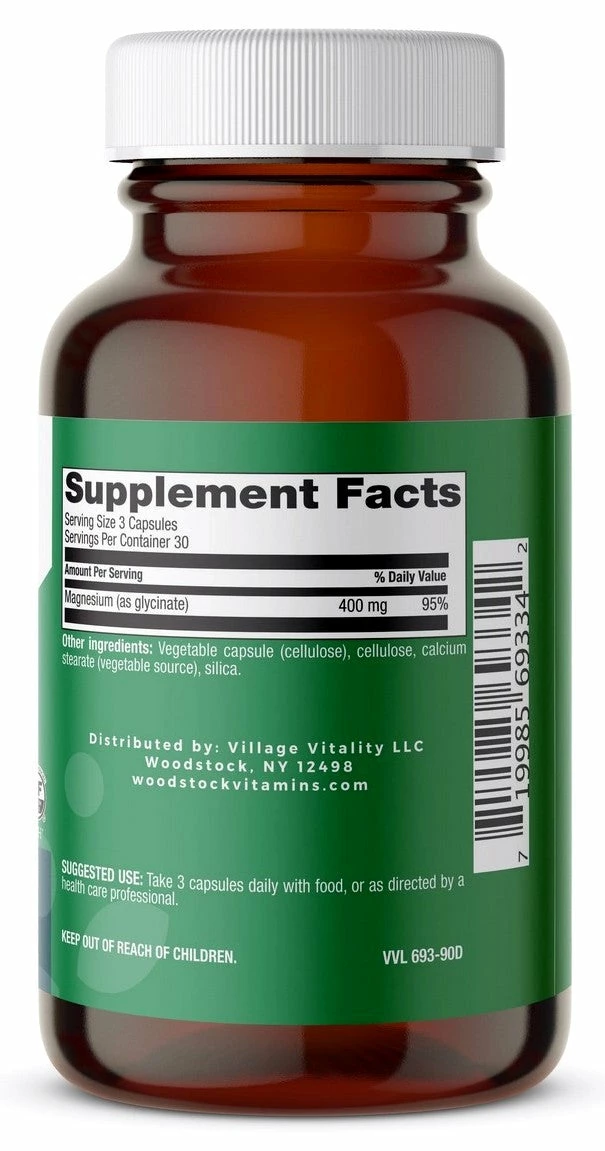
Magnesium supplements litter the aisles of just about every health foods store in the country — they’re accessible, typically affordable, and can be really helpful for deficiency-related symptoms if taken appropriately.
What are those symptoms, you may ask? The most notable ones include:
- Chronic fatigue or low energy levels: Magnesium plays a role in the production of ATP (adenosine triphosphate), which is the main source of energy for the body’s cells.
- Muscle cramps or spasms: Magnesium helps regulate muscle contractions, so if you experience frequent cramps or spasms, it could be a sign that you are not getting enough of this mineral.
- Headaches: Magnesium helps regulate neurotransmitters that play a role in the development of certain types of headaches.
- Depression or anxiety: Magnesium has been shown to have an antidepressant effect, and low levels of this mineral have been linked to an increased risk of depression and anxiety.
- Poor appetite: Magnesium is involved in the absorption of nutrients, so if you have a poor appetite or difficulty absorbing nutrients, it could be related to magnesium deficiency.
- Inflammation: Magnesium has anti-inflammatory properties, and low levels of this mineral have been linked to an increased risk of chronic inflammation and related diseases such as diabetes and heart disease.
- Insomnia: Magnesium helps regulate sleep patterns, so if you have difficulty falling or staying asleep, it could be a sign that you are not getting enough of this mineral.
Which Magnesium Supplement Should I Take?
If you’re sleepy, sleepless, or suffering from spasms, magnesium might just be the key to alleviating your symptoms naturally while also addressing root causes.
But it all depends on what kind of magnesium you take because not all forms of the mineral stack up against all issues. The most common forms of magnesium you’ll find include magnesium sulfate (Epsom salts), magnesium citrate (another salt), and magnesium glycinate (a chelated version of the mineral).
Most wellness experts will recommend chelated forms of magnesium if they know their stuff because chelates have better solubility than salt forms. This means chelated magnesium can more easily penetrate cell membranes where it interacts with proteins, enzymes, hormones, and cells to aid in their functioning.
In general, salt forms like magnesium oxide or magnesium citrate have very poor absorption. Like, VERY poor. About 5% of magnesium from mg oxide can get into the blood, and 95% of it stays in the gut.
Dr. Neal Smoller
Every once in a while, though, you might want a form of magnesium that sits around in your gut. You could be constipated, in which case a salt form like mag oxide works just fine for getting the bowels moving.
Most of us, however, want to experience the relaxing and restorative benefits of magnesium, so we want as much of the mineral hitting our bloodstreams as possible. So we turn to chelates, like magnesium glycinate, taurate, malate, or — if we want the absolute best — bisglycinate.


Magnesium bisglycinate is a chelated mag that is bound to not just one, but two glycinate amino acid molecules. With two bonded amino acids, this particular form of magnesium attracts way less water and absorbs way more efficiently.
Learn More: Understanding The Different Types of Magnesium Supplements
Magnesium the Mineral Marvel
Did you have a sneaking suspicion, at the beginning of this blog, that we were the slathered-up proponents of all things magnesium? Well then, let it be confirmed: We’re maniacs about maintaining healthy mag levels.
So whether you’re new to the magnesium bandwagon or are a long-time rider of the mineral train, give us a call! Our supplement experts and magnesium masters are always available (via our free Counterside Consults) to talk about the intricacies of your mag journey. From supplement forms and deficiency symptoms to medication interactions — we can explore it all, together.
It’s always new you this and new you that! These days, it seems like no one wants to admit that, for many, all January 3rd means is it’s the third day of the NYE hangover.
While we hope you’re not one of the unfortunate ones still nursing the aches and battling the fatigue of a missed night of sleep — if you are, you’re not alone.
For all the many benefits of deep sleep, there seem to be just as many benefits of throwing an entire night away. It’s fun, for example.
But things don’t even have to be fun to convince us modern Americans to shirk our sleeping duties. In fact, people in the U.S. are continuously getting less and less sleep — hence the wide variety of knock-out snooze supplements and miracle sleep pills on the market.
Truth is, we kind of suck at sleeping. And not just this time of year, either. Believe it or not, the perseverations on productivity, light pollution, constant noise, and endless stress we know to be hallmarks of the Industrial Age don’t lend themselves well to a restful night.
So keep your eyes open, if you can, while you scroll through this blog. Chances are, you need these 5 wellness practices from Dr. Neal to recover from New Year’s and restore natural sleeping patterns.
In This Article:
- Resetting your circadian rhythm naturally
- The importance of reducing light exposure
- Creating a sleep-conducive environment
- Daytime habits to boost nightly sleep quality
1. Take a Hike
Put down your Merrells! That’s just an illustrative and (kinda) funny title for this first tip.
While exercise can help improve your quality of sleep (more on that below), what we really mean is get out of town. Hit the road. Pack up your sh*t and go camping.
Seriously. One of the fastest and simplest ways to completely reset your circadian rhythm is to get out of the house and camp in nature for a few nights. Picture it: The morning sunlight hitting your skin when you unzip your tent, just as the sunset did when you tucked in for the night. This concentrated, consecutive exposure to the daily sun cycle works as a reset button for your body.
Why? Well, when you’re out in nature following the predetermined rhythms of waking and sleeping, your brain gets a chance to actually figure out what time is bedtime. Instead of being tricked into living a perpetual noon by the blue, glowing light of the many screens in your face.
Because it’s not really that we contemporary humans suck at sleeping. It’s that we built a world that is entirely antithetical to getting a good night’s sleep.
And since we can’t eradicate global tensions or reduce noise/light pollution overnight, the next best bet is to escape, even if only for a few days.
2. Ditch the Gadgets
But if you can’t get out of town, you can at least transform your home into a lush sanctuary for Luddites!
It shouldn’t be a surprise that our next tip is to remove the technology from your bedroom, what with our previous rant on the digital age of flashing lights and traffic sounds and all. If you’re shuddering at the thought, though, we don’t blame you.
Screentime — and all the glorious dopamine-spiking information it offers us on a never-ending tap — is super addictive. And like most things that hook our feeble human brains, it can be really detrimental to the habits we need to maintain for genuine well-being, like regular sleep.
Mistimed exposure to blue lights from screens has not only been linked to increased anxiety (which can definitely keep you up at night) but also lowered sleep quality due to suppressed melatonin production.
So go and take the TV — and cell phone, laptop, tablet, smart watches, etc. — out of your bedroom. Right now. Or, if you must, enlist a good friend to come and pry them from your sweaty palms every evening.
This includes all the gadgets and gizmos that you bought under the pretense of purchasing a quick fix for sleep issues. Because, while tracking your sleep behavior throughout the night is interesting, these devices are nothing more than highly profitable band-aids to slap on the crater-sized wound left by our societal structure that prevents deep sleep.
3. Sayonara Synthetic Stars
And when we say take the devices out of your room, we don’t mean put your phone on silent and leave it face down on the dresser.
Unfortunately, that doesn’t count. The human brain is so susceptible to the EMF radiation emitted from cell phones that it registers the waves even without the typical visual or auditory cues of an incoming text. So yes, even those “quietly delivered” late-night messages from your sleepless friends are being picked up by your brain.
But let’s go back to light because its influence on sleep quality is pretty nuts.
Preindustrial humans lived without synthetic lights for millennia, save for a few gentle fires and soft candlelight at the end there. As our bodies evolved, they adapted to the light of nature — a la the sun and moon — quite keenly because it was integral to our survival in primitive times.
Subsequently, even the smallest pinpricks of light in your bedroom can have negative effects on your sleep and overall wellness. This is especially important for menstruating people to understand, as menstruation cycles are somewhat linked to lunar phases. Or at least we think they were before we messed everything up with false stars.
While your modern eyes see the battery of light of your smoke detector, your primal brain sees a small, green moon in the distance. As a result, nightlights wreak havoc on hormone levels (for men and women), causing a cascade of symptoms related to endocrine imbalance. Women who work the night shift, for example, have a higher risk for breast and ovarian carcinoma.
4. Clean Up Your Act
So your bedroom should be like a gen z’s outlook on the future: dark. But not only that, it should be clean, too. And pretty cold.
Clinical research (and experiential evidence — ask your mom) has shown that a disorganized, uncomfortable space creates stress in the brain that can impede deep sleep. Pair your messy room with a cold-blooded housemate who keeps the thermostat at a balmy 80 degrees year-round, and you’ve got a recipe for a really crappy night’s sleep.
The optimal space for sleeping is one that feels clean, cozy, and cool — think about 60-70 degrees.
And if you want to throw a one-two punch at your insomnia, adopt a consistent bedtime routine that establishes your clean, cozy, and cool space. That might look like a short, calming yoga flow after cleaning up your piles of half-dirty laundry or like a warm bath followed by light reading. Do what works for you.
Spending 10-15 minutes in this ritual each night can help offset some of the stress and light exposure of the day, and you’d be surprised how quickly your brain becomes accustomed to it. Recent research has even shown bedtime routines to have positive effects on children, ranging from earlier sleep times and reduced awakenings to longer sleep duration.
5. Fix Your Days, Fix Your Nights
If you think about it, the whole day is kind of just one long bedtime ritual, each moment bringing us closer and closer to the bliss of being under the blankets.
Okay, maybe that’s a stretch, but the restful folks in the back would give a cheer at that if they’d heard it over their own snores. Because they, and modern clinical science, know that how you spend your day affects how you spend your nights.
Translation: If you’re not hitting the recommended targets for the lifestyle factors that influence wellness, it’s likely your sleep will be impacted, too. These factors, as seasoned readers will know well by now, are not sexy, but they are important.
They are diet, exercise, stress management, and environmental changes.
We’ve already beaten the environmental changes point to a pulp (remember all the adjustments you’re making to your bedroom per tips 1, 2, and 3?), so it’s time to take a deeper look at the others, optimizing each section as we go to improve sleep.
Diet’s Role on Sleep
We hate to say it, but we can’t deny the science — what you eat does, indeed, mess with your sleep. Not only that but the relationship between your diet and sleep is maintained via a two-way street.
High nutrient intake is linked to better sleep and higher consumption of processed foods is linked to worse sleep. Poor sleep is, in turn, linked to lowered nutrient absorption, too. So if you thought you could out-sleep your nutritionally bankrupt diet or out-eat your sleepless lifestyle, think again.
The Impact of Stress on Sleep
Despite how much our dualistic culture would like you to believe so, the mental stress you feel isn’t just all in your head. Emotional and external stress infiltrates the body, flipping on survival switches that aren’t really that helpful when the stress is your boss and not a wild animal chasing you.
By activating the HPA (or hypothalamic-pituitary-adrenal) axis, perceived stress creates a tangible, physiological effect on the body. Because when the HPA axis is dysregulated by stress, our sleeping and waking cycles go haywire.
Exercise and Sleep Connection
Did you know that people who get 30 minutes of physical activity tend to sleep an average of 15 minutes longer than those who don’t? It might seem like a minor payoff, but the fact this interaction between sleep and exercise has been captured by a clinical study is pretty neat.
Especially when you see the other studies that corroborate the findings — like this metareview on how regular exercise improves both sleep quality and duration. And no, you don’t have to be a bodybuilder to get the sleep-enhancing benefits of regular movement!
Hit the Hay, Holistic Health Seeker
As with all things whole-body health, your journey toward optimal sleep hygiene and quality will be unique to you. Take what works from these tips, and leave what doesn’t.
But if you need a veritable Sand Man to guide you towards dreamier pastures with personalized, direct advice for holistic wellness, give us a ring. As long as it’s before bedtime (EST), our Counterside Consults will be free and open, which means our holistic health experts are just a phone call away.