





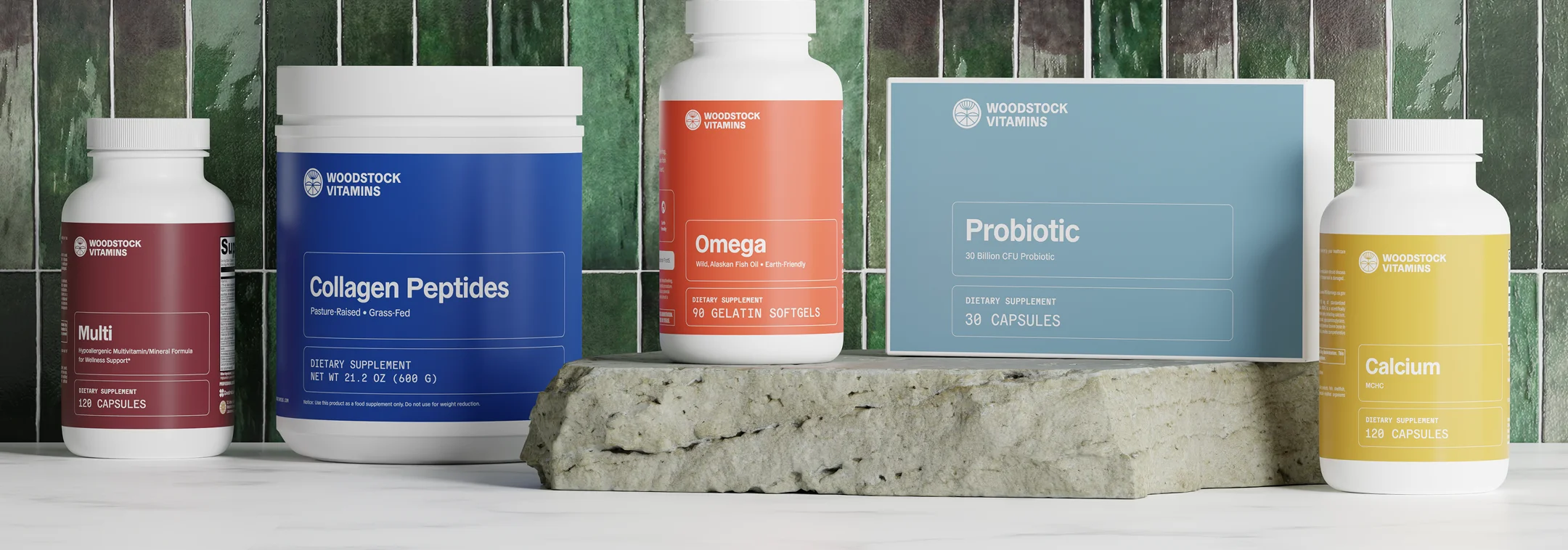


One of the best parts of getting your supplements at Woodstock Vitamins is knowing that what you’re taking for your health and wellness was formulated by a pharmacist. Dr. Neal Smoller, to be exact. He’s a holistic pharmacist and supplement strategist with over 20 years of experience in the pharmacy setting. But having a supplement formulated by a pharmacist isn’t the only definition of pharmacist-formulated. There are other factors that play a role in this important term. Here’s why having a pharmacist create your supplements is such an asset.
What Pharmacist-Formulated Actually Means
In a nutshell, “pharmacist formulated” means a product that was developed or designed with input from a licensed pharmacist. In our case, that’s Dr. Neal. He used his 20+ years of running a pharmacy that prescribes medications to give him the knowledge of how ingredients, nutrients, and substances interact in the body to help create a great supplement.
Safety First
When it comes to supplements, not all of them are made safely or with high-quality ingredients. That’s where having a pharmacist formulate your supplements makes a big difference. We focus on the Supplement Quality Standard, a rigorous framework that focuses on supplement manufacturing safety, quality, fair pricing, and sustainable, ethical ingredients. This is what sets great supplements apart from cheap, ineffective duds. Pharmacists are trained in drug interactions and dosing to ensure supplements avoid harmful combinations or ineffective ingredients. A pharmacist prioritizes safety and quality, in contrast to supplements not made by health professionals.
Science Forward
Unlike other formulations, supplements formulated by Dr. Neal are based on science. Pharmacists obtain doctoral degrees, which often means they have learned how to read, analyze, and even write scientific papers. A pharmacist-formulated supplement is often made to address a specific need (e.g., sleep support, digestion, skin health) based on scientific research. This is a big contrast to other formulators who use misleading claims, marketing buzzwords, or hype.
Fair Pricing
While many supplement brands are thinking about how to keep their product as cheap to make as possible and padding their margins, pharmacists like Dr. Neal are thinking about fair pricing for their supplements. They’re concerned with the dose of their supplement and if their customers are going to think the capsule is a horse pill or not. They’re thinking about third-party testing their ingredients and the cost to make sure their supplements are safe. They’re thinking about ingredient interactions and what’s going to sit well in the stomachs of their customers. Pharmacist-formulated supplements come with that additional thoughtfulness around pricing, fairness, ethics, and what’s truly going to be valuable to their customers, not just what’s valuable to their bottom lines.
Important Considerations
While “pharmacist-formulated” is a sign that a supplement may be of interest, it doesn’t mean it’s FDA-approved. It is still widely used in marketing and can convey a range of quality, safety, and efficacy results. So be mindful of which pharmacist formulated your supplement and their methodology. At Woodstock Vitamins, we aim to bring you the highest quality essential nutrients, with ethically-sourced ingredients and manufactured safely. You can learn more about Dr. Neal and our Supplement Quality Standards here.
Woodstock Vitamins isn’t just another supplement brand. We know that’s what everyone says. But honestly, if we’re not here to convince you that you need a million unnecessary supplements in your medicine cabinet right now, then why are we even here? What is it that we seek to solve, and why are we hell-bent on being the ones to solve it? Here’s the rundown on why Woodstock Vitamins exists and what it means for you and your health journey.
The Elephant in the Room: The Supplement Industry Sorta Stinks
We can all agree that something is fishy about the supplement industry. Why are there thousands of supplements in the United States, and yet people are still sick, tired, and riddled with health issues? The answer is two-fold: companies want to profit off of you, and most supplements don’t actually work.
There are too many products, protocols, and marketing out there that people are just straight up confused. What should they be taking for their health concerns? And who can they trust? Brands are overpromising what their products do while underdelivering. Companies are choosing profit (and making lots of it!) off you and your confusion. The worst part is that it’s intentionally deceptive. At the end of the day, when your medicine cabinet is full of supplements, and nothing is moving the needle, guess who’s left carrying the bag? You. For many people, the supplement industry is the Wild West, and no one knows where the sheriff is.
That’s why Woodstock is bringing something different to the table. You see, Dr. Neal Smoller, our founder, holistic pharmacist, and supplement strategist, is one of the most vocal critics of the supplement industry. After serving in a pharmacy setting for nearly two decades and selling some of the country’s most popular supplements, he peeked underneath the hood of the supplement industry, and he didn’t like what he saw.
What he witnessed were brands who shrouded their mediocre formulations with hype, shiny packaging, inconsistent quality, and little transparency. He got tired of selling people supplements that did nothing for their long-lasting health and wanted to create his own brand, one that would actually transform people’s health and not just say that it does.
When Dr. Neal created Woodstock Vitamins, he had three main goals:
- Bring supplements to a higher quality standard (more on this later)
- Create formulations based on actual science instead of trends
- To cut out what he calls the “BS” in supplements and give people foundational nutrients instead
That’s the meat and potatoes of why we’re here and what makes us different. But that’s not all.
Helping People Get Foundational Nutrients; Not Just “Nice to Haves”
There’s one more thing we’re obsessed with here at Woodstock, and that’s offering our customers the foundational nutrients they need for total body health. That means we don’t offer trendy, hard to pronounce supplements from far distant regions of the world because they’re “cool” and “trendy”.
Instead, we actually want you to take fewer supplements, but the right supplements. Those with the essential nutrients that work in multiple systems of the body, like your nervous, digestive, immune, and cardiovascular systems. These few supplements are what we call The First5. They are the first, foundational nutrients you need to get your body to work at its peak.
These five supplements, we argue, contain the nutrients you need before anything else. So instead of spinning your wheels buying supplements that don’t work and don’t move the needle on your health goals, we exist to provide you with the truly essential nutrients your body is asking for:
With these five supplements in your health routine, you’re setting the foundation for years of long-lasting health. And that’s what we’re here to help you achieve: simpler supplements for longer-lasting wellness.
Holding Your Supplements to a Higher Standard
Building off of the earlier section, the supplement industry stinks. We know this. There are lots of poor formulations out there, using unsustainably-sourced ingredients, that negatively affect your health and hit you hard in the wallet. We wanted to hold supplements to a higher standard. One that focused on:
- Science-backed formulations
- Sustainably-sourced ingredients
- Safe manufacturing
- Fair pricing
- Testing for purity and quality
That’s where the Supplement Quality Standard comes in. A rigorous set of standards created by Dr. Neal himself to ensure that every single supplement that comes out of Woodstock Vitamins is well-formulated, manufactured safely, fairly priced, and made with people, animals, and the planet in mind. We offer the standards that other supplement brands do not, so you can finally trust that what you’re putting into your body is going to do the job and be good for your wallet and the planet.
[SQS graphic]
We Don’t Sell Supplements — We Offer Solutions for a Long, Healthy Life
Dr. Neal didn’t create Woodstock Vitamins to trick you into wasting your money on another health trend. He made it so you could finally have high-quality supplements that fill the nutrient gaps your body needs to thrive. We do that by creating supplements that affect nearly every system in the body in a way that builds the foundation for total-body health. So when you shop around our site or read our blog articles, you can trust that we’re giving you science-backed, no B.S. health information and solutions that will actually help you reach your health goals this year and beyond.
When it comes to supplements, less is more. That must sound strange coming from a supplement company, but hear us out on this. The truth is, most people don’t need more supplements — they need just the essentials. Instead, they’re buying the wrong supplements. Too many products, too much overlap, and no coherent goal in mind. We’re not here to make you feel bad about it, but we are here to help you straighten out your supplement stack and use fewer, better supplements instead of many useless ones. So, why should someone focus on the essentials? We’re so glad you asked.
The Gap Most People are Filling Incorrectly
When people start supplementing, it’s usually because they heard some miracle supplement is good for them or will solve some problem that their doctor brought up at their last check-up. So they go to a vitamin shop, pharmacy, or someone’s supplement website and start looking for a cure-all. While the intention is good, the method isn’t.
Even “healthy people seem to supplement the wrong way. Eating well can still leave some predictable nutritional gaps behind. And it’s not because their diet is bad, but because our modern food supply has left us with nutrient-poor meals, depleted soils, and lifestyle patterns that make nutritional gaps nearly universal.
Something like 90% of Americans are deficient in an essential nutrient. And that holds true for foundational nutrients like omega-3s, probiotics, calcium, and micronutrients. It’s not an accident; it really is a product of a sedentary, nutrient-deplete lifestyle that follows most Americans. But what can we really do about it? The answer isn’t to take more and more supplements, but rather, to focus on the foundational ones.
What “Foundational” Actually Means
Foundational nutrients are essential vitamins, minerals, and elements that work on multiple body systems simultaneously to support total body health. These nutrients have the strongest scientific-basis and are strongly recommended by healthcare professionals across the spectrum. They also work to fill gaps that diet alone cannot.
Foundational supplements are different than ones that “solve” a specific problem or make you feel good about using them. Foundational supplements work with body systems. Immune, cardiovascular, skeletal, muscular, and everything in between. While there’s nothing wrong with supplementing for specific issues, why hyper-fixate on one health concern when you can target multiple at the same time and support total-body health? We think that’s a better and smarter way to supplement.
Why Most People Skip the Foundational Nutrients
Most people skip the unsexy calcium supplements. Why? Because they’re not exciting. They don’t promise a dramatic transformation overnight. You won’t become superhuman and avoid going to the doctor. They’re slow, steady, and methodical, and for many people, that’s just not as enticing.
And the supplement industry is no help, either. The industry doesn’t push foundational nutrients because the margins aren’t as good as trendy supplements. They would much rather market a “cure-all” supplement from this one specific extract from a magical tree in the Amazon with an entire marketing team behind it, than to push a good well-formulated multivitamin. So most people don’t really hear about the unsexy, but important nutrients that come from foundational supplementation. That’s why we’re obsessed with talking about them here at Woodstock Vitamins. We think the essentials aren’t sexy, but they’re smart, and they really do make a difference in your health.
Less Is Truly More
When it comes to supplements, we’re not trying to sell you stuff you don’t need. We’re trying to help you get the foundational nutrients your body is begging for. The ones that truly unlock total body health from the inside out. If you already have omega-3s, protein, calcium, probiotics, and a multivitamin that you love in your supplement stack, awesome. But if you don’t have your bases covered, it could be time to finally get the essentials in before adding anything else. After all, you’re supplementing so you can feel your best and live better. So start with the foundations.
Not sure which of our foundational supplements you need for your health goals? Take the quiz.
Consumers often struggle to make informed decisions about supplements due to limited guidance, marketing noise, and inconsistent product quality. The First Five is a focused supplement framework developed by Dr. Neal Smoller, our founder and holistic pharmacist with over two decades of clinical experience.
These five nutrients were selected based on three evidence-based criteria:
- They are difficult to obtain in adequate amounts from diet alone
- They support multiple physiological systems
- They are supported by extensive clinical research
This science-backed framework is designed to help you address nutritional gaps efficiently and avoid unnecessary supplementation.
In This Article:
Common Challenges in Supplement Use
Most wellness seekers face at least one of the following roadblocks when trying to improve their health through supplements. They’re typically:
- Overwhelmed by too many choices and contradictory information
- Struggling with persistent symptoms like inflammation, sleep disruption, low energy, and digestive discomfort
- Or sick of wasting time and money on low-quality or unnecessary supplements
The First Five was designed to cut through this noise, reduce guesswork, and help you focus on what’s most essential.
How the First Five Help
Here’s a breakdown of the five essential nutrients, including their core benefits, optimal forms, and evidence-based dosing recommendations.
1. Omega-3 Fatty Acids
- Form: Alaskan fish oil
- Critical Components: EPA and DHA
- Recommended Dose: 2,000–3,000 mg daily
Omega-3s play a central role in regulating inflammation, supporting cognitive function, improving gut health, protecting the cardiovascular system, and more.
Modern diets are disproportionately high in omega-6 fats (pro-inflammatory) and low in omega-3s (anti-inflammatory), often leading to systemic inflammation. Most Americans consume omega-6 to omega-3 at a 20:1 ratio, but an ideal balance is closer to 4:1.
2. Probiotics
- Form: High-survivability blend
- Critical Components: Clinically validated strains
- Recommended Dose: 30 billion CFUs daily
Probiotics support gut health by restoring the balance of beneficial bacteria in the digestive system — an essential function for guts under constant threat from stress, medications, and poor diet.
A healthy microbiome also influences immune health, nutrient absorption, and even mental health conditions like depression. However, not all probiotics are effective! Strain selection and survivability are critical.
3. Bone Support (Calcium + Vitamin D3)
- Form: Calcium Hydroxyapatite and Cholecalciferol (vitamin D3)
- Critical Components: 1,000–1,200 mg calcium, 1,000–2,000 IU vitamin D3
- Recommended Dose: Daily
Vitamin D3 facilitates calcium absorption and supports immune health. Calcium hydroxyapatite — a highly bioavailable form or a form of the nutrient that is easily utilized by the body — strengthens the bone matrix and contributes to nerve function, muscle contraction, and blood clotting.
Together, these nutrients are essential for maintaining skeletal integrity and reducing the risk of fractures, especially as we age. 95% of Americans are not meeting daily requirements for vitamin D according to data from the National Health and Nutrition Examination Surveys, and most are unable to get adequate calcium through diet alone.
4. Protein (Collagen Peptides)
- Form: Collagen Peptides
- Critical Components: Grass-fed, bovine source
- Recommended Dose: 20g daily
Collagen is the most abundant protein in the body, accounting for about 30% of the body’s total protein content. It is a structural protein, meaning it serves as a scaffold that supports the body’s connective tissues.
Collagen provides the protein and amino acid building blocks our bodies need to maintain muscle mass, support bone health, and promote skin integrity. While general protein supplements like whey or plant-based options can be helpful, collagen is uniquely suited for connective tissue repair and long-term structural support.
5. Multivitamins
- Form: Full-spectrum micronutrient formula
- Critical Components: Combination of vitamins and minerals
- Recommended Dose: Varies by individual need
Even with a balanced diet, it’s difficult to consistently meet micronutrient needs.
A high-quality multivitamin fills common nutritional gaps and supports metabolic health, cognitive function, and immune resilience. Look for multivitamin formulations with transparent labeling, active forms of nutrients (e.g., methylated B vitamins), and dosing appropriate to your health status and concerns.
Strategic Supplementation Starts Here
You may not need all five nutrients — it depends on your current lifestyle, diet, and health concerns. But most people will benefit from at least one or more of these essentials. The First Five are not intended to replace healthy habits, but to enhance and support them.
For personalized guidance on how to build your supplement foundation, schedule a free consultation with our expert team. We’ll help you identify nutrient gaps, assess lifestyle factors, and develop a sustainable plan tailored to your goals.
Optimize what matters most. Start with the First Five.
In today’s fast-paced world where deadlines loom, to-do lists are endless, and every moment is consumed by productivity, it’s no surprise that our wellness often takes a back seat. Between work, family, and the chaos of modern life, finding time to prioritize health optimization can feel near impossible.
But here’s the good news: You don’t need hours to carve out time to research each and every supplement you take.
Actually, what you need is a science-backed, sustainable supplement strategy. With the right strategic approach, even the busiest professionals can get the health benefits they need without the headaches. Read on for Dr. Neal‘s 3 simple steps to creating a supplement strategy that works for you — without adding more work to your plate.
In This Article:
- Why Do I Need a Supplement Strategy in the First Place?
- A Caveat: Lifestyle Factors Come First
- Dr. Neal’s 3 Steps to Creating a Supplement Strategy
Wait, Why Do I Need a Supplement Strategy in the First Place?
If you’ve strolled down a supplement aisle in the last few years then we don’t need to tell how overwhelming that experience can be.
Every vitamin, nutrient, and so-called miracle compound has multiple options. Garbage powders with multimillion-dollar branding campaigns sit on the same shelves as clinically-verified supplements. Wellness influencers have folks in a tizzy over this new herb or that electrolyte mix nearly every week.
Paired with the lack of meaningful regulations around supplement safety, and you have a recipe for the perfect, money-wasting disaster. All because you wanted to optimize your health!
The wellness industry is projected to reach a whopping $9 trillion by 2028. It’s an incredibly profitable arena to be in these days because, well, a lot of people feel like crap.
But just because you don’t feel your best (yet!), doesn’t mean you have to be swindled by the snake oil salesmen. Once equipped with a personalized supplement strategy, you’ll become immune to the marketing speak that confuses thousands of well-intended wellness seekers every year.
3 Steps to Creating a Personalized Supplement Strategy
Before diving into supplements, remember that no amount of supplements can replace the fundamentals. The foundation of your wellness starts with the basics: diet, sleep, exercise, stress management, and lifestyle changes.
AKA, the Wellness Pyramid.
Because it’s true that supplements, when taken strategically, can help fill the inevitable gaps in our nutrition. And bolster our health against the stressors and toxins of our modern lives.
But, as we always say, you can’t out-supplement a nutritionally bankrupt diet or totally sedentary lifestyle! Once you’re working on these areas, you’re ready for these 3 steps to strategic supplementation.
1. Define Your Why
Without a clear picture of what you’re hoping to accomplish with a particular supplement, you’re more susceptible to the well-branded bunk that over-promises and under-delivers.
Or, as Dr. Neal so eloquently intones, it’s easy to become a “hope-ium addict.”
The reason why you take a supplement shouldn’t be just “general health,” either. Your why should be set in stone long before you choose which brand to purchase from or what dose to take. Whether you’re looking to address a common nutrient deficiency — à la the First5 — or overcome a specific health concern, the core goals of your supplementation need to be defined.
2. Figure Out Your What
What is it that will actually help you reach your health goals? As in, what has been proven to be effective according to the verified research and scientific data we have available.
Thankfully, when it comes to addressing nutrient deficiencies, the first what of this process has been simplified with the First5. After decades of research and clinical experience, Dr. Neal determined the 5 most common nutrient deficiencies that are impacting the health and wellness of Americans every day.
Omega-3. Probiotics. Protein. Bone Support. Multivitamins.
The next set of whats to ask yourself stems from these essential nutrients. What brand, what dose, what timeline, etc. Because, unfortunately, it’s not as simple as picking up any omega-3 supplement you see in the store if you want to see real, lasting results.
3. Determine Your When
Speaking of timelines… Did you know that most supplements work by offering a cumulative effect to your body?
Even when a supplement is backed by science or selling like hotcakes, it will still take time to have a palpable result. So, instead of giving up after a month or adding in new supplements for more tangible results: BE PATIENT.
Before adding any new vitamin or nutrient into your supplement strategy, set clear and realistic expectations on the timeline. Define your when and take your supplement consistently during that timeframe.
Our recommendation? Pick a date 3-6 months from now, and check in with yourself when that day comes up. If you’re still not seeing results after 3-6 months of steady use, then you can freak out.
A Supplement Strategy That Works for You, Not the Other Way Around
Need help establishing a realistic timeline for your supplement? Curious about why 95% of Americans are deficient in vitamin D? Want to know which dose of omega-3 will actually boost your brain health?
All your questions and more are answered on this humble, health-centered blog. So click around a little! Or, for more personalized advice, give one of our supplement experts a call. Our Counterside Consults are always open and always free.
While the pace of our modern world reaches unforeseen speeds, Thanksgiving still draws ever nearer, offering us a little moment of rest and restoration on the horizon.
During this feast-filled season, it’s important to remember that like a well-prepared holiday meal, your supplement routine also deserves a thoughtful strategy. After all, with just one day to express all your gratitude for the year, you wouldn’t just dive headfirst into the cranberry sauce, right?
No! Your carefully curated plate will contain a proportionate blend of meats, treats, and delectable eats to maximize the gorging experience. Your supplement strategy should be equally meticulous, varied, and strategic.
But with the smorgasbord of marketing tactics and misinformed hype surrounding supplements, a calculated approach isn’t as easy as pumpkin pie.
Thankfully, we have Dr. Neal — holistic pharmacist and supplement savant — to talk turkey about the vitamins, minerals, and nutrients your body needs to truly thrive. And here’s a spoiler alert: The answer isn’t just taking more supplements.
In fact, Dr. Neal wants you to take fewer supplements! It’s what makes him a great health advocate and a terrible supplement salesman. Read on to learn how and why to form a supplement strategy that works for your wellness and your wallet.
In This Article:
- 3 reasons modern shoppers need a supplement strategy
- Lifestyle factors to optimize first
- 3 steps for launching your supplement strategy
3 Reasons You Need a Supplement Strategy ASAP
If there’s one thing we’re not thankful for this year, it’s the overwhelming digital clutter that makes learning about and achieving holistic health nearly impossible.
But don’t get us wrong, we’re not Luddites. In fact, we have “contemporary science and medical technology advancements” at the top of our gratitude lists!
Our beef is with the lack of meaningful regulations in both the holistic and allopathic health spheres.
The wellness industry alone was worth 15.5 billion dollars in 2024 — pair that financial incentive with virtually nonexistent industry standards, and you’ve got a recipe for highly profitable snake oil.
Well-branded bunk sits on the same shelves as scientifically verified supplements that can actually help address nutritional gaps and support whole-body wellness. So modern consumers and wellness seekers have to be extraordinarily discerning when it comes to choosing supplements if they want to avoid:
- Wasting money
- Damaging their health
- Hurting the planet
An evidence-based supplement strategy can combat these potential negatives in a few key ways:
- By doing your own research, you can sidestep the industry’s attempt to profit off your confusion. In turn, you’ll avoid wasting money and your desire to feel healthier will no longer be a sales point, but a strength.
- On top of protecting your wallet, supplement research and strategy can help you protect your health by weeding out the low-quality supplements that can actually do more harm — with harmful additives, rancid ingredients, and heavy metals content — than good.
- Instead of getting swept up in unsustainable supplement trends and so-called miracle pills, you can preserve the integrity of your body and the planet by choosing clinically backed, ethically sourced supplements, vitamins, and herbs.
Gone are the days of buying supplements based on your neighbor’s recommendation or yesterday’s trending TikTok. After all, if you haven’t got your health, then you haven’t got anything.
Learn More: 4 Steps to Buying the Right Supplements in 2026
A Caveat: Lifestyle Factors Come Before Supplementation
Before we get into the nitty-gritty of launching a successful supplement strategy, we’d be remiss not to mention our guiding principle and framework for whole-person health.
The Wellness Pyramid.
Formulated by Dr. Neal after 20+ years of educating the public on holistic, or whole-being, wellness, this handy little visualization tool makes this complicated topic simple. Simple doesn’t mean easy in this context, but it does mean uncomplicated, straightforward, and transparent.
The foundation of your wellness — and the Wellness Pyramid, of course — is built with the most mundane, unsexy, and yet extraordinarily important aspects of life. That is: diet, sleep, exercise, stress management, and lifestyle changes.
If we want to actually experience the benefits of supplementation, we have to get these ducks in a row first. You can’t out-supplement a nutritionally bankrupt diet or totally sedentary lifestyle, as we always say!
So if you’re looking for a fool-proof, data-backed way to improve your health and prevent disease start with holistic nutrition, deep sleep, consistent movement, stress reduction, and lifestyle adaptations. It’s only once you’ve optimized those areas of your life that you’ll truly get the advantages of supplements.
Learn More: The Wellness Pyramid: Your Roadmap to Holistic Health
3 Steps for Creating Your Supplement Strategy
Now that you’ve spent, presumably, a few weeks or months getting the 5 lifestyle domains ironed out and are ready to tackle strategic supplementation — welcome back!
Supplements, when done right, can help fill the inevitable gaps in our nutrition and bolster our health against the stressors of our modern lives. Without them, we’d be eating a whole lot of sea creatures to meet the recommended daily omega-3 intake, and who wants to live in a world like that?
The key point in that last paragraph is the when done right part, because, as we’ve just learned, not all supplements are created equal. And, more importantly, not all supplements are right for all people, of all walks of life.
In order to create a supplement strategy that won’t break the bank or break down your health, start with these three simple steps:
1. Find Your “Why”
And no, your “why” isn’t just “general health.”
The reason why you take a supplement should be set in stone long before you choose which brand to buy from or how long to take it. (Those steps come later.) Whether it’s to address a common nutrient deficiency — à la the First5 — or to conquer a particular health concern, the core goals of your supplementation process need to be defined.
Without a clear picture of what you’re hoping to accomplish, it’s easy to fall prey to panacea pills that over-promise and under-deliver. Or, as Dr. Neal says, it’s easy to become a hope-ium addict.
Instead, start with explicit goals and areas of focus.
For Example:
If you struggle with brain fog and focus issues, your goal would be to improve neurological health and cognition. You’d start with the 5 lifestyle domains that impact your brain health in serious ways and improve the quality of your diet, sleep, exercise, stress management, and environmental factors.
Then, you’d address the most likely deficiencies affecting your brain health: omega-3, protein, multivitamins/minerals, and probiotics. From there, you can offer your brain an additional boost with natural nootropics like lion’s mane, NAC, or adrenal support supplements.
Learn More: No More Resolutions: Set a Vision for the New Year
2. Figure Out Your “What”
What’s up? What’s cooking?
The what part of your journey will involve a lot of questions and personal veins of inquiry. It’s in this stage of the supplement strategy journey that you start figuring out what’s what and what’s worthless. That is, what brands are worth buying from, what forms of vitamins and minerals are most bioavailable, and what supplements should be prioritized.
Because, unfortunately, it’s not enough to just buy the first vitamin D you see at the grocery store if your doctor tells you you’re low in it. If you want vitamins that are what they say they are, you’ll need to research the sources, forms, and science of each specific, branded supplement.
For Example:
If you’re planning to purchase an omega-3 supplement or one-a-day multivitamin to support your brain health and alleviate brain fog, there are several “what’s” you’ll need to delineate before handing over your cold hard cash.
From what (hopefully ethical and sustainable) source is the omega-3 fish oil derived? What forms of B vitamins are included in the multi? What health conditions of yours (like the MTFHR gene, maybe?) could be affecting your ability to absorb or convert these nutrients?
Learn More: Multivitamins for Brain Health: 3 Things to Know Before Buying
3. Define Your “When”
Supplements, for all their unsung glory, aren’t band-aids or instant fixes.
In fact, most supplements work by offering a cumulative effect to the body — one that is often subtle, and always a little slow. Before adding any supplement, new or old, to your strategic routine, it’s critical to set very clear, very realistic expectations on the timeline.
Just because a particular supplement is backed by science, touted by professionals, or selling like hotcakes doesn’t mean it won’t take time to have a palpable effect. Instead of giving up after a month or adding in a new supplement because you aren’t seeing tangible results — be patient.
Pick a date 3 months or 6 months from when you started a supplement. Define your “when” and if you don’t see results at the end of that data-backed timeframe, then you can freak out.
For Example:
After setting your goals, completing research on health conditions, and becoming an expert in bioavailability, you’re finally ready to actually purchase your omega-3 supplement. But how long should you take it? Is it a forever kind of thing?
Call a supplement strategist — like one of our experts — to establish a timeline that makes sense based on your unique set of life circumstances! The best way to launch your supplement strategy is with the help of an experienced pro who has, essentially, four white horses for the journey.
Want to ring us up right now? As you wish.
In a perfect world, our bodies would happily feast on a well-balanced diet, absorbing all the essential nutrients they need to function. But, let’s face it, reality often has other plans.
Our chaotic contemporary lifestyles, filled with fast-and-easy, processed foods, can lead to malnourishment even on the best days. Hence, our obsession with the modern-day superheroes we call supplements.
Last week, we talked about Dr. Neal’s concept of thriv-ival. Remember tip #5 for staying well in this whacked-out world?
“Get strategic about your supplements.”
Because, while these simple capsules can fill in the nutritional gaps and save us from diseases of deficiency by providing crucial compounds that are lacking in our candy-forward diets… It’s not as easy to strategically integrate supplements as it may seem!
So, we asked Dr. Neal, holistic pharmacist of 20 years and supplement savant, to break down the nutrients that we humans actually need to thrive. Because, if we’re honest, it’s perilously easy to waste money and time on cheap or ineffective supplements.
Scroll on, wellness warrior, to meet the five nutrients — AKA the vital5 — that will soon become the building blocks of your very own, personally tailored supplement strategy. (And learn why they’re vital, which forms to take, and the doses that make a difference!)
In This Article:
- 3 things to know about supplementation
- How Dr. Neal formulated the vital5
- vital5 nutrients to optimize before anything else
Beware the Supplement Band-Aid: 3 Mindset Shifts
We’ve all been there: caught up in the quick-fix mentality, hoping that a handful of magical pills will magically transform us into Greek gods and goddesses without lifting a finger.
Who could blame us? When you feel like crap, or your health just isn’t where you’d like it to be, you’ll try anything.
But here’s the harsh truth — supplements are not Band-Aids. They can’t plaster over a lifestyle that’s been built on junk food, Netflix binges, and staying up until 3 a.m. staring at cat memes. That just simply isn’t how it works.
(We’re not judging though; we’ve learned this from experience!)
Supplements aren’t the protagonists in your wellness story. They’re the supporting characters and they need to be chosen strategically after you’ve worked on improving the 5 lifestyle domains in your control.

Taking supplements before optimizing your sleep, diet, stress management, etc., is a bit like going to the gym and lifting random weights, hoping to transform into a bodybuilder overnight.
So, let’s set the record straight — if you want to avoid wasting money and supplement your lifestyle strategically, there are three things you have to know:
- Supplements should complement our wellness practices, not replace them.
- They enhance our efforts and have a cumulative effect, not an overnight cure.
- And most importantly, they should be chosen based on real science, not the latest influencer endorsement.
Remember, the wellness industry is like the Wild West, with loose regulations and even looser standards. Knowledge is power, then, and being an informed supplement consumer will save you from drowning in a sea of snake oil and empty promises.
Before popping that pill or gulping down that elixir, ask yourself: Why am I taking this? Is there solid research backing it up? Does it align with my specific needs and goals?
Learn More: The Wellness Pyramid: Your Roadmap to Holistic Health
Dr. Neal’s vital5 — The 5 Nutrients We Need the Most
Once you’ve committed to the lifestyle changes necessary for your, unique wellness journey, it’s time to start supplementing strategically with the nutrients you’re most likely still low on — we call them the vital5.
When Dr. Neal set to formulating this simple set of critical components, it was to answer the question he heard nearly every day in his 20 years of practice: “What supplement should I take?”
The wisecracking wellness wizard realized that most modern folks are inundated with marketing tactics and misinformation — the vital5, then, puts the power back in the hands of the individual by cutting through the chaos.

The three criteria points Dr. Neal chose to delineate the vital nutrients from the not-so-vital ones are:
1. They are difficult to get the right amounts, even in the healthiest diets.
Here’s a truth bomb: it’s cheaper (in dollars AND calories) to use quality supplements than it is to buy all the food necessary to get these nutrients naturally.
We’re not saying skip the kale and munch on pills instead, but let’s be real about it — keeping up with a nutritionally perfect diet isn’t always a piece of cake.
2. They benefit not just one, but several body systems.
These nutrient powerhouses — omega-3s, probiotics, bone support, protein, and multivitamins — are the foundation of health and wellness, affecting everything from our brains and bones to digestion and endocrine systems.
So, when it comes to buying supplements, investing in these five nutrients will give you the most bang for your buck.
3. They have strong evidence to support their benefit
Dr. Neal chose, quite specifically, the nutrients that have the most data-dense background. Each one has been studied, scrutinized, and put through the wringer that is the modern scientific method.
Because, at its core, the philosophy of the vital5 is to help individuals sift through the BS and find what actually works, based on the cold, hard evidence available.
This list of vital nutrients was designed to address the nutritional optimization gap — AKA the chasm between where we are nutritionally, and where our body needs us to be to function properly and thrive.
So keep in mind that it’s not just about taking the right vitamins and minerals. It’s about choosing the right supplement manufacturer, the right form of the vitamin or mineral, and the right dose, too.
Meet the vital5: Nutrients to Optimize Before Anything Else
1. Omega-3
- Form: Alaskan Fish Oil
- Critical Components: Omega-3, EPA, DHA
- Dose: 2,000-3,000mg daily
Omega-3 has been in the spotlight lately, most likely for its unparalleled effect on mental clarity and cognitive functioning. We humans tend to like our brains, and just about anything that makes our brains work a little better.
But it’s not just for that topmost organ — omega-3s play a pivotal role in combatting inflammation, improving joints, boosting eye health, and supporting the heart all thanks to its essential nature as a fatty acid.


You see, most of us are getting a little too much of this fatty acid’s pro-inflammatory counterpart — omega-6s — from our diets, and not enough of the anti-inflammatory agent, omega-3. Inflammation, in the right amounts, helps our bodies fend off illnesses and infections, but it can do more damage than good in excess.
Most Americans over-consume omega-6 fats and under-consume omega-3. We like to see a ratio of 4:1 omega-6 to omega-3, but we’re closer to 20:1.
Dr. Neal Smoller
Using supplementation to balance your omega-3 and omega-6 intake, then, is the key to a healthy inflammatory response all throughout the body.
Learn More: Omega-3 Supplement Buying Guide: 3 Things to Look For
2. Probiotics
- Form: High-survivability formulation
- Critical Components: Combination of acidophilus and Bifidus bacteria strains
- Dose: 15 Billion CFUs per day
Was it Hippocrates or Dr. Oz who said, “All disease begins in the gut,”?
Whoever it was hit the nail on the head – gut health is the gateway to overall health, and probiotics are our digestive system’s greatest allies.
Here’s the gist: Probiotics are microorganisms, but not all microorganisms are probiotics. And, by the same token, not all probiotics you find in the store include the bacterial strains that actually benefit the human body.
Beneficial strains of probiotics can flourish in the gut, populating nooks and crannies with microscopic friends that balance the digestive system.
The normal flora, or the collection of microorganisms that live in and on us, is under constant attack — from stress, diet, medications, and more.
Dr. Neal Smoller
And here’s where the science comes in: Probiotics are not just some mystical potions conjured up by a wandering weirdo. They’re backed by a mountain of research that would make even the most skeptical scientist give a nod of approval.
Plus, probiotics don’t just start and stop at the gut. They boost the immune system, bolster the brain, and can even have an impact on your mood and mental health.
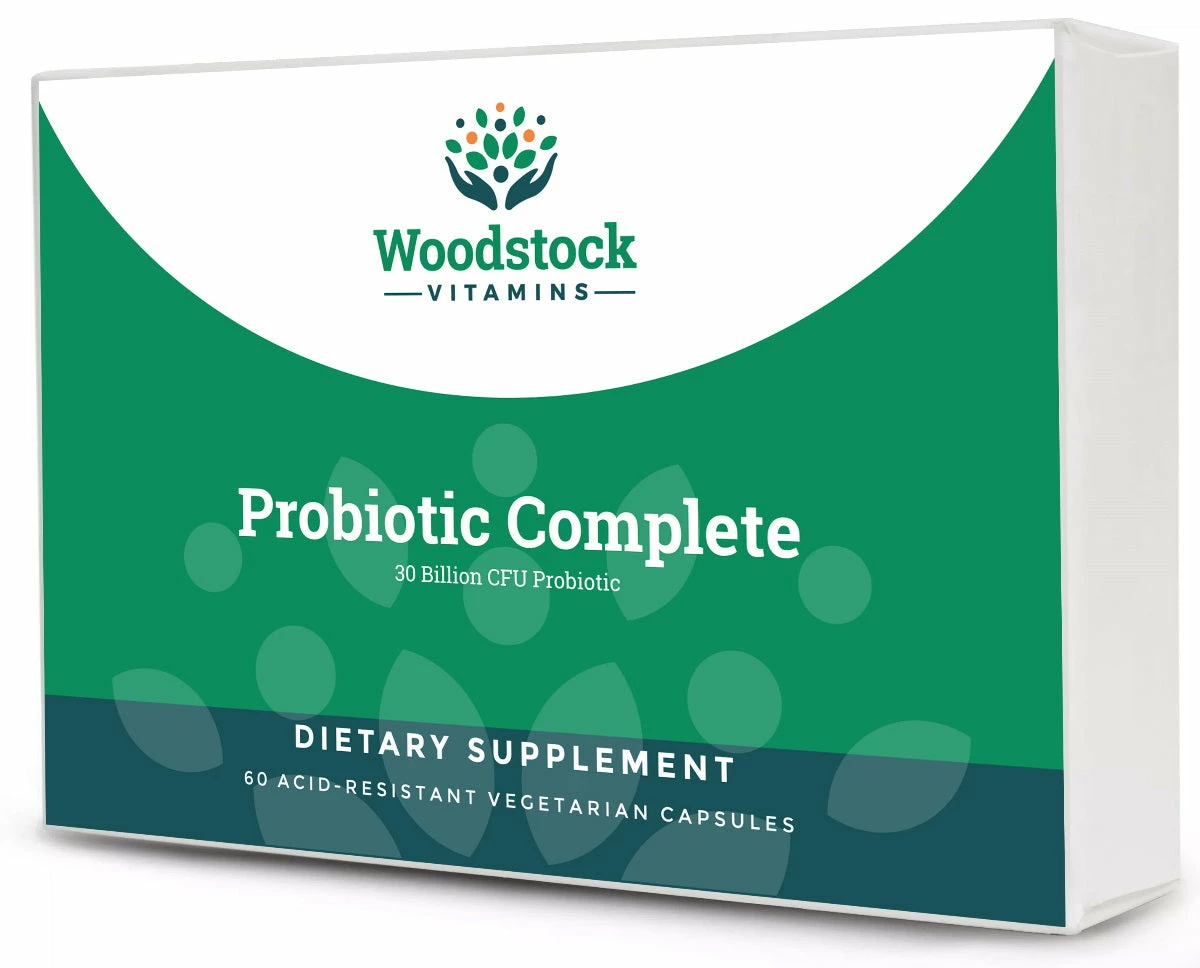
But, just like you wouldn’t trust a self-proclaimed guru peddling miracle cures on a late-night infomercial, you shouldn’t trust any old bacteria claiming to be a probiotic. Make sure you dig deep and find the specific strains proven to have a beneficial effect on humans!
Learn More: Be Proactive: How Can Probiotics Improve Your Health?
3. Bone Support – AKA Calcium and Vitamin D3
- Form: Calcium and Vitamin D
- Critical Components: Calcium hydroxyapatite and cholecalciferol
- Dose: 1,000 to 1,200mg of calcium daily; 1000-2000 IU of Vitamin D daily

Ah, bone health, the foundation upon which we stand tall and strut our stuff.
First up for supporting your ever-important skeletal system, we have sunshine in a bottle — vitamin D. When you bask in the glorious rays of sunlight, they interact with a protein on the skin called 7-dehydrocholesterol (or 7-DHC) and convert it into vitamin D.
It’s like your body’s own little sun-kissed magic trick.
But, you don’t want just any old vitamin D. You want vitamin D3 (cholecalciferol) and you want about 1000-2000 IU (International Units) per day.
Learn More: Vitamin D: Sunshine Supplement for Bones, Blood, and The Blues

Vitamin D levels in America are low, on average, compared to the rest of the world. As we’ve seen with COVID-19, low vitamin D levels increase our risk for respiratory infections.
Dr. Neal Smoller
Vitamin D also helps our bodies absorb calcium, and everyone knows calcium is good for your bones. This mineral maestro creates the building blocks of your skeleton, laying the foundation for strong and healthy bones.
Calcium isn’t just about building bones, though, it’s also essential for various body functions. It helps with muscle contractions, nerve signaling, and even blood clotting.
But here’s the twist: your body can’t produce Calcium on its own. You can either take calcium or you can draw calcium from within your body. And most people aren’t getting enough from diet alone.

Now, you’ll probably hear that you should be taking calcium carbonate or calcium citrate. We disagree. We prefer calcium hydroxyapatite. Why? Because it provides more than just calcium — it includes all the natural nutrients necessary to support the whole bone matrix.
You want to aim for a daily dose of 1,000 to 1,200 milligrams (mg) of calcium hydroxyapatite.
Learn More: Bone Health: Why We Always Recommend Calcium Hydroxyapatite
4. Protein, Or More Specifically, Collagen
- Form: Collagen peptides
- Critical Components: Grass-fed, bovine source
- Dose: 10 to 20g per day
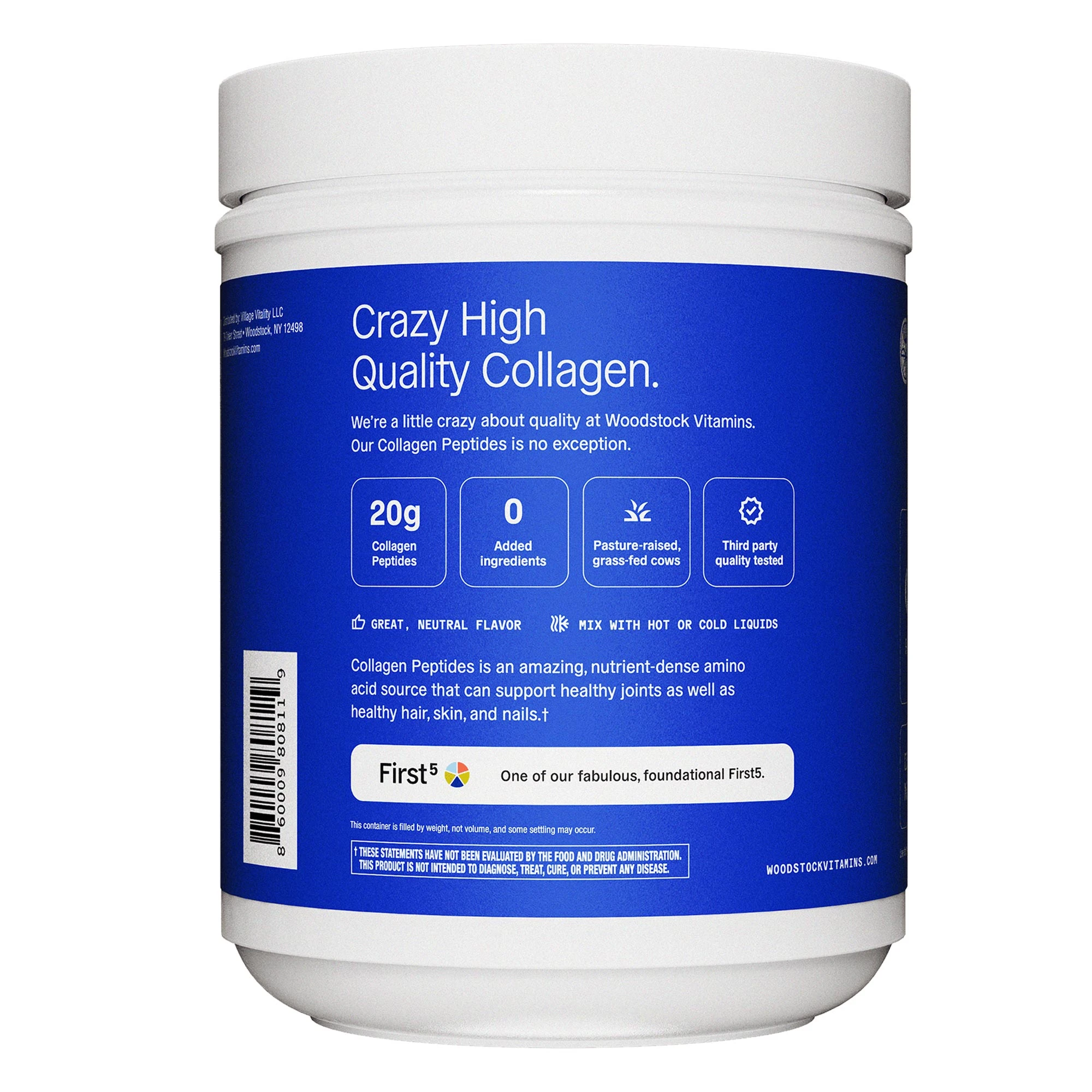
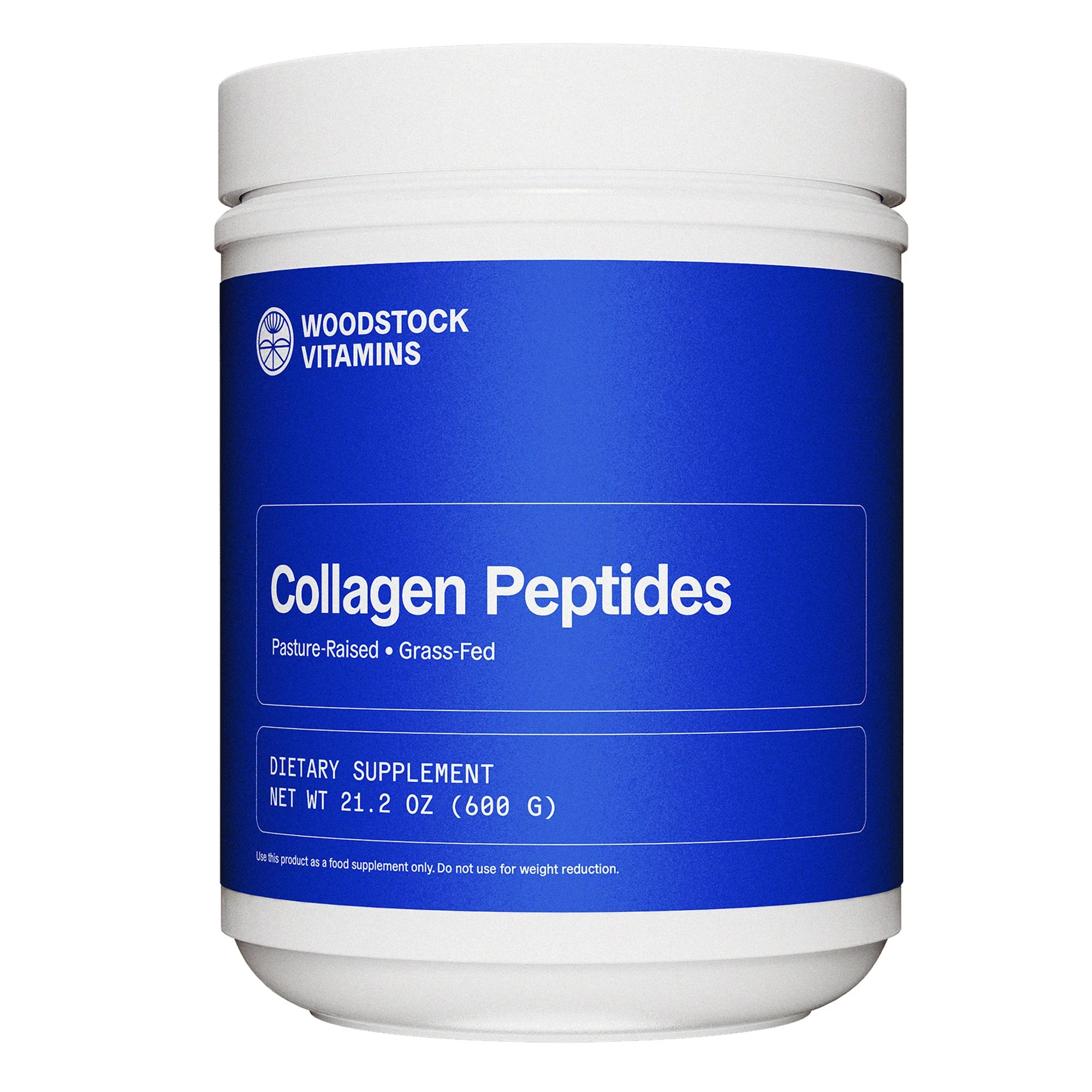
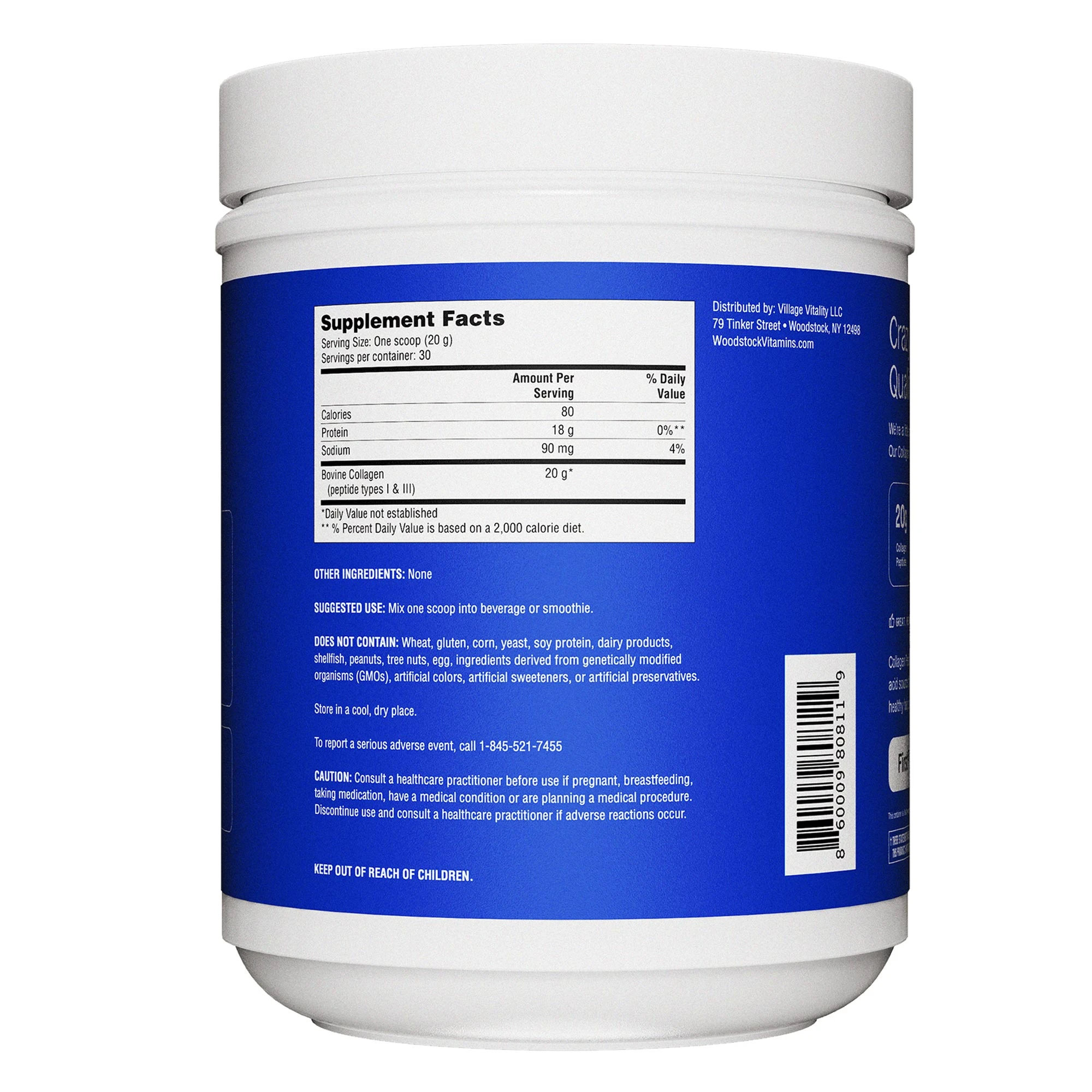
Let’s flex those muscles and start digging a little deeper into protein!
Protein supplements are like the muscle-building shortcut, providing you with a concentrated dose of amino acids that your body can readily absorb. It’s like giving your muscles a direct line to the gains department.
Now, when it comes to protein supplements, you’ve got options.
First up, we have the classic whey protein, derived from milk. We’ve got plant-based options too, like pea protein, hemp protein, or a blend of various plant sources. They all offer a protein punch that would make Popeye jealous.
But if you, like us, only want the best of the best — then the only real option is collagen protein.
But hey, before you start chugging collagen peptide protein shakes like there’s no tomorrow, remember that balance is key. While supplements can be a fantastic addition to your fitness routine, they shouldn’t overshadow the importance of a well-rounded diet.
If you want that boost, aim for an extra 10 to 20 grams per day of grass-fed collagen peptides.
Learn More: Choosing the Right Protein Supplement: 5 Questions to Ask
5. Multivitamins (and Minerals)
- Form: Full-spectrum of micronutrients
- Critical Components: Combination of vitamins and minerals
- Dose: Varies for different demographics


Our bodies are like finely tuned machines, and to keep them running smoothly, they need a balanced mix of nutrients. But, despite our best intentions, it’s not always easy to get the full spectrum of vitamins and minerals from our diet alone. Life gets busy, taste buds get picky, and sometimes the salad just doesn’t cut it.
Enter multivitamins, the all-in-one solution to fill those nutritional gaps and keep you firing on all cylinders.
Now, you might be thinking, “But do multivitamins actually work?” The short answer is yes. Extensive research has delved into the effectiveness of multivitamins, and while the results can vary depending on individual needs and lifestyles, they generally show positive outcomes.
Learn More: Choose the Best Multivitamin Supplement: Dr. Neal’s Do’s and Don’ts
Here’s where it gets a little confusing. Multivitamins come in all shapes and sizes, and they’re marketed to specific demographics and specific needs. Plus, when it comes to dosages, there’s no one-size-fits-all answer.
Proper dosages can vary depending on age, gender, and more. To determine the right dose for you, consider factors like:
- Your diet
- Lifestyle
- Health concerns or risk factors
And, here’s the most important part: seek guidance from your reliable posse of healthcare experts — physicians, pharmacists, dieticians, or our squad of knowledgeable folks — to pinpoint the ideal dosage tailored to your one-of-a-kind situation.
Learn More: Multivitamin Lineup: Comparing Our Top Multivitamins
Lay the Foundation for a Long, Healthy Life
Finding the right supplements in our cluttered digital world of sales pitches and virtually nonexistent regulations has never been easy. That’s why our whole thing here at Woodstock Vitamins is centered on making it easier.
So, TL;DR: If you’re ready to create a sustainable foundation for your wellness, start with these 5 nutrients. But, remember, the vital5 is just the first — but still very important — step in your supplement strategy.
If you want to lay a solid foundation for overall health that lasts long after you hit your goals, you’ll want to follow a holistic, or whole-body, path.
Either way, we’re here to help make reaching (and maintaining) your long-term health goals easier to manage. Don’t believe us? Hop on a free Counterside Consult for direct, personalized guidance from a real, human specialist.
Attention all vitamin hoarders!
It’s that time of the year again when the birds chirp, flowers bloom, and your collection of allergy-busting supplements starts to resemble a hoarder’s stash. Get ready to face the music, because spring has finally arrived and it’s high time to declutter your supplement cabinet.
Don’t worry, though, because you’re not alone
It’s easy to get carried away when buying vitamins and supplements; we all tend to think that each new purchase will be the one that magically fixes our problems. But if we’re honest with ourselves — and we always are here in Woodstock World — half the time we forget what these supplements are supposed to do.
The other half of the time, we forget that they exist altogether.
Hanging on to musty minerals and expired supplements is pretty gross, but it doesn’t have to be. We asked our founder and resident medical myth-buster, Dr. Neal Smoller, the best way to deep clean supplement cabinets, strategize wellness practices, and hit the ground running this spring.
Luckily for all of us, he went full Marie Kondo. Read on to learn how to properly read vitamin labels and play the supplement game to perfection this season.
In This Article:
- Understanding vitamin and supplement labels
- Supplement expiration dates
- Will expired supplements and vitamins hurt you?
- 4 steps for deep cleaning your supplement cabinet
Understanding Vitamin and Supplement Labels
Ah, yes, the thrilling world of vitamin and supplement labels!
Who doesn’t love deciphering tiny font sizes and arcane ingredient lists, all while trying to decide if the product is even worth the price of admission? It’s like a puzzle where the stakes are your health and wallet – what’s not to like?
Except for the deceptive practices and marketing tactics of the health and wellness industry, that is.
The first step to strategizing your supplement approach is to, believe it or not, understand what your supplements do and how to use them properly. It shouldn’t be a difficult process, but with loose regulations and even looser industry ethics, it gets complicated.
Listen: Multivitamins: Whole Food? More Like Whole Fraud | Wellness Upside Down Podcast Ep. 17
Supplement Expiration Dates: Myth or Must-have?
Do we really need expiration dates on their vitamins and supplements anyway? It’s not like those pills go bad or anything, right?
Wrong.
Vitamins, like foods and memes, can pass their prime in the blink of an eye. Mold and muck aside, though, there’s another reason why expiration dates should be respected and, dare we say, even appreciated.
Expiration dates are not actually required to be on a supplement bottle or even determined by a manufacturer. If that seems a little nuts, it’s because it is. Legally, the manufacturer is only obligated to provide a manufacture date to the consumer, and there’s a big difference.
In order to nail down an expiration date, a supplement manufacturer would have hoop after hoop of tedious and expensive testing to jump through. With no pressing legalities requiring this costly performance, most chose to opt out.
Basically, if a manufacturer goes through the trouble of determining an expiration date, you’ll want to alley-oop that sucker into the trash when the day comes.
(Except, don’t actually do that, listen to this episode of the Wellness Upside Down podcast for safe medical disposal practices instead.)
Potency Decline vs. Expirations
Boiled down, though, supplement expiration dates are simply a measure of potency. In fact, many manufacturers will arbitrarily assign an expiration date as a result of a cost-benefit analysis.
So, even with expiration dates, it’s not all black and white. Isn’t that just fantastic?
A supplement legally expires when it no longer contains at least 100% of the labeled claim. So, if a supplement says it has 3mg of Melatonin, then it needs to have 3mg of Melatonin right through the expiration date.
This expiration date is actually very strict. Technically, if a product has 99% potency, then it is expired. We can all rest easy knowing that our supplements are legally required to contain at least 100% of what they claim.
To complicate things further, however, companies often put in more than 100% of the labeled claim since it can have more, just not less.
Does that mean it’s bad to take expired supplements? Or is it just pointless?
Will Expired Supplements and Vitamins Hurt You?
Short answer: No. Expired products will not spontaneously morph into something harmful.
When a supplement product decays, it just becomes less effective. It’s that simple — your supplements won’t turn into some kind of mutant monster and attack you in the middle of the night.
With that said, there are other variables to consider. Expiration dates are a measure of potency over time, as we now know, but supplement storage can play into the lifespan of your vitamins as well.
- Storage conditions – Can you guarantee that your medicine cabinet is in a controlled temperature and not in humidity exceeding 40%? Temperature and humidity are the two main things that break down drugs and pharmaceuticals.
- Storage container – Have you moved your supplements into another container? While this is okay, try avoiding having them sit there for more than two weeks or so.
Since expiration date tests are run in ideal storage conditions under controlled temperatures, it’s important to take that into consideration when reading them.
4 Steps for Deep Cleaning Your Supplement Cabinet
We all know the horrors of precariously stacked, mismatched Tupperware collections, but the real danger lurks in our supplement cabinets.
If you’re tired of peeking behind the door and being bombarded by a sea of expired bottles and half-empty containers, it’s time to implement a supplement strategy.
Because, just like a good skincare routine or a workout plan, your supplement routine deserves some TLC, too. Take these 4 easy steps to hear, and you’ll have a beautifully organized cabinet to call home about.
1. Let Go.
It hurts, we know. Especially when you’ve spent cold hard cash on valuable vitamins. Was it all for naught?
It was not — pun intended. The first step is letting go, decluttering your space, and making room for the simplified strategy you’re just about to implement.
2. Create a Supplement Strategy.
If you want to play the game, you’ve got to have a game plan.
According to our whole-picture health approach, built by Dr. Neal after 20 years as a practicing pharmacist, there are 3 tiers to supplements. Organized by priority and evidence, they are:
- First5 – the 5 nutrients most people are low in and almost everyone would benefit from (omega-3, probiotics, bone support, protein, and multivitamins).
- Supplements that you need (allergies, reflux, or any other supplement that would prevent a personal or real health issue).
- Supplements that you want – things that you heard were good.
3. Weed Out the Flops.
Don’t just add all the vitamins you learn about on TikTok or Goop to your cart! Do your research and weed out the suspect supplements.
Even the best, most carefully curated branding can’t compete with genuine quality and effectiveness.
Listen: Supplement Strategy | Wellness Upside Down Podcast Ep. 4
4. Launch Your Strategy, Commit, and Get Support.
Vitamins and supplements work best when we actually take them. Follow through with the momentum created from your deep cleaning, and commit fully to your supplement strategy.
But first, get in touch with a professional to review your supplement plan.
A Need for a New Standard
Essentially, the supplement industry is the Wild West when it comes to regulating quality. As consumers, we’re left to navigate the misinformation and hype on our own.
It’s confusing, overwhelming, and time-consuming.
It might even feel downright impossible to know if you’ve made the right choice when it comes to stocking — or cleaning out — your supplement cabinet. In order to unlock the real power of supplements, we need tools that break through the double smokescreen of sloppy regulations and slick marketing.
Learn More: The Supplement Quality Standard
So let’s build a supplement strategy for you, together, based on evidence instead of hype! Schedule a free Counterside Consult for all the one-on-one guidance you need to welcome a healthier, more organized you this season.