





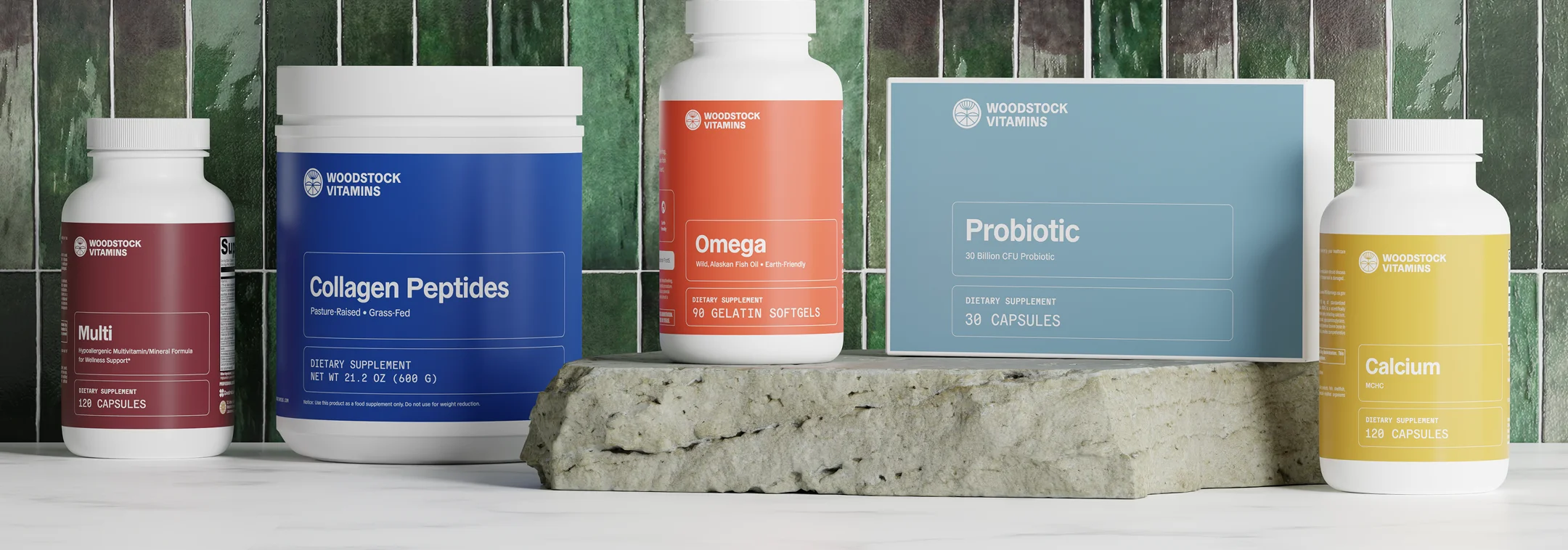


Everyone says more is more when it comes to supplements. But is it? When a concern comes up, the instinct is to buy something new for it. Low energy? Add B vitamins to cart. Poor sleep? Grab magnesium. Joint discomfort? Try Collagen. Immune support? More vitamin C and zinc are needed. When you repeat that process enough times, the cabinet fills with bottles that each seem reasonable on their own. Months later, the routine is more complicated, more expensive, and often no more effective than when it started. This isn’t a willpower problem or a discipline problem. It’s a structural one. Adding supplements on top of a missing foundation doesn’t compound. It stalls your progress. Here’s why more isn’t more and what you should do instead.
The Assumption That Doesn’t Hold Up
The logic behind “more” feels sound on the surface: more nutrients, more coverage, more bases covered. But the body isn’t a checklist. Nutrients don’t work in isolation, nor in a vacuum. They depend on a baseline of foundational nutrients that impact nearly every body system and fill the gaps diet leaves behind.
When that nutritional baseline is missing, a newly added, more targeted product isn’t going to build upon your health goals. It’s operating without the groundwork that gives it a system to work within. The result is a routine that looks thorough on paper and doesn’t move the needle in practice.
Why Foundations Matter
A nutritional foundation isn’t about finding the “perfect” supplement. It’s about ensuring that the nutrients with the broadest impact—the ones many people don’t consistently get enough of through diet alone—are adequately covered before moving on to more targeted goals.
Foundational nutrients support processes that happen every day:
- Energy production
- Muscle function
- Bone health
- Immune function
- Nervous system signaling
- Cellular repair
- Protein synthesis
- Hormone production
When those systems are well supported, the body is generally in a better position to respond to more specific interventions. That doesn’t mean every targeted supplement suddenly becomes dramatically more effective. It means they’re no longer trying to compensate for a more basic nutritional gap.
What Happens Without a Foundation
Here’s how routines typically drift away from what’s actually useful.
Redundancy Without Coverage
One of the most common patterns is overlap. A multivitamin, greens powder, immune blend, and recovery formula may all contain some of the same vitamins and minerals, while still leaving genuinely under-consumed nutrients insufficient. In other words, you can end up taking multiple products that all emphasize similar ingredients while missing the nutrients that actually deserve priority. The cabinet looks complete. The nutritional foundation isn’t.
Chasing Symptoms Instead of Systems
Many supplements are marketed around individual concerns. One product promises better focus. Another promises better sleep. Another promises joint comfort. Another immunity. Each addresses a single outcome. But those outcomes don’t exist independently. Sleep influences recovery. Recovery influences exercise performance. Exercise affects energy. Energy affects cognitive function. Nutrition supports every one of those systems simultaneously. When the foundation isn’t covered, it’s easy to spend months treating individual symptoms without improving the broader physiological environment that supports them all.
Less Clarity on What Moved the Needle
The more products that enter a routine without a clear purpose, the harder it becomes to evaluate what’s actually helping. If energy improves, was it the new magnesium? Better sleep? More consistent vitamin D? The extra protein? Something unrelated entirely? Likewise, if nothing changes, it’s impossible to know whether the routine needs more time, fewer products, or a completely different approach. Every unnecessary addition makes the reasoning weaker. Simple routines create clearer feedback.
Cost Without Better Results
Supplement spending often grows much faster than benefit. It’s easy to spend hundreds of dollars each month assembling products aimed at increasingly narrow goals while overlooking the nutrients with the strongest evidence for broad, everyday health. A foundation-first approach does the opposite. It prioritizes nutrients that support multiple body systems, have substantial research behind them, and are commonly under-consumed. Only after that foundation is established does it make sense to ask whether something more specialized is likely to provide additional value.
Abandoning Supplements Too Early
Complex routines don’t usually fail because they’re ineffective. They fail because they’re difficult to maintain. You’ve got morning pills, evening pills, products that need food, products that need an empty stomach, products before workouts, products after workouts, and the list goes on. Even the most motivated people eventually miss days, then weeks, then stop altogether. Consistency matters more than complexity. A routine that someone follows for years will almost always outperform a theoretically perfect routine that lasts six weeks.
The Hidden Cost of Constantly Adding
There’s another downside that often goes unnoticed. Every new supplement changes expectations. Instead of asking, “Am I covering the basics?” people begin asking, “What’s the next thing I should add?” The routine gradually becomes centered around accumulation rather than evaluation. More bottles become a substitute for better decision-making. This creates an endless cycle of optimization without much actual progress. Sometimes the best next step isn’t another supplement. It’s simplifying the routine enough to identify what’s actually providing value.
The Case for Foundation-First
The nutrients that belong in a foundation share several characteristics. They’re commonly under-consumed, even among people who generally eat well. They support multiple physiological systems rather than one narrow function. They’ve been studied extensively and have evidence supporting long-term, daily use when intake is inadequate.
And they’re relevant to a broad portion of the population—not because everyone is deficient, but because dietary intake often falls short of recommended levels. That combination is what makes them worth prioritizing before anything else. Not because targeted supplements don’t have a place. Not because personalization doesn’t matter. But because specialization only makes sense once the fundamentals are in place.
Consistency Beats Constant Optimization
It’s tempting to think better results come from finding increasingly specialized solutions. In reality, many of the biggest gains come from consistently doing the basics well. A routine built on a solid nutritional foundation—and followed day after day—is usually more valuable than a larger collection of products taken inconsistently.
This isn’t the least ambitious approach. It’s the one most aligned with how long-term health behaviors actually succeed. Foundations aren’t meant to be exciting. They’re meant to be effective.
Where This Leaves You
None of this means additional, more targeted supplements are the wrong idea. For the right person, with the right goal, at the right time, they can absolutely make sense. But they’re rarely the right first step. Start with the nutrients that provide the broadest support, establish consistency, and then evaluate whether there’s a clear reason to add something more specific.
Foundation first. Everything else second. Not because more is inherently bad, but because more without a foundation underneath it rarely produces the results people are actually looking for. If you’re not sure whether your own routine has that foundation in place, start with the quiz. It’s the fastest way to identify what’s actually missing before adding anything else.
Buying supplements has become a national sport. Thousands of people stand in the supplement aisle or scroll online and scan every bottle that promises miraculous results overnight. They add to cart, try it out, and after a few weeks, feel let down by the lack of results.
From the outside, one bottle of fish oil looks about as trustworthy as the next, but it isn’t. The supplement category has limited oversight, unchecked marketing claims, and enormous variation in quality within the exact same product type. Two bottles of the same nutrient, sitting next to each other on the same shelf, can be built to completely different standards — and nothing on the label will tell you that at a glance.
That’s the problem this guide solves. Not by telling you which brand to trust, but by giving you the actual questions to ask before anything goes in your cart or your body.
We evaluate every product we sell against four dimensions: Science, Compliance, Virtue, and Value, the main components of our Supplement Quality Standard (SQS). You don’t need to work here to use this framework. Here’s how to run it yourself, on anything.
Science: Is this backed by evidence, or just a study citation?
A lot of labels lean on the word “studied” like it settles the question. The real questions are about what was studied, at what dose, and whether that has anything to do with what’s actually in the bottle. When it comes to science, different studies point to different conclusions. We’re not asking you to be an expert in supplement science, but there are a few things to check for to ensure you’re reading evidence for a supplement’s efficacy that makes sense.
Check for:
- The dose on the label matches doses used in published research — not a fraction of it
- The ingredient itself (not just the broader category) has evidence behind it — “omega-3” isn’t specific enough; you want EPA and DHA amounts called out
- The product isn’t relying on a single small study to justify a big claim
- Claims describe what a nutrient does in the body — not what it does to a diagnosed condition. If a claim requires naming a disease to make sense, that’s a sign to look elsewhere
Red flag: A “proprietary blend” with no individual ingredient amounts listed. If a brand won’t tell you how much of something is actually in there, assume it’s less than you’d want.
Compliance: Is this made the way it says it’s made?
This is the part most people skip entirely, because it isn’t visible on the label. It’s visible in what the brand is willing to show you. Compliance ensures that the supplement was made in a safe, clean, and certified facility and that it’s tested for quality and effectiveness. Many brands skip this step, and without explicit mention of where they manufacture their supplement and how it’s made, you could be ingesting something that’s incredibly unsafe. Here are a few things to check for before you buy.
Check for:
- Manufactured in a cGMP-compliant facility (this should be stated, not implied)
- Third-party tested for potency and contaminants — and the brand can point to how, not just claim it
- Label accuracy — what’s on the label matches what’s in the capsule, in the amounts stated
- Sourcing is traceable. If you ask where an ingredient comes from, there’s a real answer
Red flag: Vague language like “pure” or “natural” standing in for actual testing information. Neither word has a regulatory definition in this category. They describe nothing. Ask what a brand actually tests for instead of what it calls itself.
Virtue: What does a brand do when nobody is watching?
Quality isn’t only about what’s in the formula. It’s the decisions a brand makes when a shortcut wouldn’t have shown up anywhere a customer could see it. It matters where a brand gets its ingredients and whether they were ethically sourced. If they’re using animal ingredients, were they fished or farmed in a way that benefits people and the planet? Most brands don’t want to reveal the dark underbelly of their sourcing and ingredients. But you can do your due diligence by checking for some key components.
Check for:
- Ethical sourcing that holds up under a specific question, not a general claim
- Ingredient amounts that reflect what the research supports — not what’s cheapest to include
- No filler ingredients added just to bulk out a capsule
- A brand that will tell you what it turned down, not just what it sells
Red flag: A brand whose entire quality pitch is a single word on the front of the bottle — “clean,” “premium,” “pure” — with nothing underneath it. Real virtue is specific. It survives a follow-up question.
Value: Is the price connected to anything real?
Value isn’t the lowest number on the shelf. An underdosed product isn’t a bargain — it’s a product that doesn’t do the job, priced to look like it does. Value is about being honest. Does the price of the supplement match the quality, or is it overpriced and overrated? You should be able to check for a few things to ensure that you’re being charged a fair rate for a supplement and not getting ripped off in the process.
Check for:
- The dose is high enough to matter and move the needle
- The price reflects the ingredient quality and testing — not just the packaging
- There’s no unnecessary ingredient inflation — a longer label isn’t a better one
- You’re not paying extra for a claim that has no science behind it
Red flag: A “22-in-1” formula priced like a specialty product. More ingredients at fractional doses usually means less of what actually matters, spread thinner.
Run the Checklist Before You Buy
Remember the four components of the Supplement Quality Standard: science, compliance. Virtue and value. In that order. A product that’s all bark and no bite on any one of these four components isn’t a deal — it’s a decision you’ll probably regret in three months, when the bottle’s still two-thirds full, and nothing’s changed.
This isn’t a checklist you run once and forget. It’s how we think about every product before it ever reaches our shelves, and it’s worth thinking the same way before anything reaches yours.
If you’d rather skip the aisle-by-aisle audit and start from a foundation that’s already been through this process, that’s what the First5 is for. All of the First5 are run through the SQS to ensure you’re getting simpler, more effective supplements that are sustainably sourced and a good value. But not every part of the First5 might be right for you. Get your own personalized supplement recommendations by finding your foundation here.
For decades, the supplement industry has sold a comforting idea: one bottle, one pill, one habit, and you’re covered. Multivitamin in the morning, box checked, done thinking about it. It’s a tidy story. It’s also the wrong question. No single supplement can provide a person’s complete nutrition — even if they want it to. Building an intentional supplement stack where a few good supplements support multiple systems in the body.
The Multi-As-Everything Fallacy
A multivitamin is built to do one job well: fill small, broad gaps across a wide range of vitamins and minerals at modest doses that meet your daily value. That’s a legitimate and important job. It is not the same job as closing five distinct, well-documented nutrient gaps that most people’s diets leave wide open.
Here’s the math problem hiding inside the one-a-day mindset. A multivitamin formulated to cover 23 nutrients at sensible doses simply doesn’t have room — physically, in a capsule someone will actually swallow — for a gram of EPA and DHA, or 30 billion CFU from targeted probiotic strains, or 700mg of calcium paired with real Vitamin D3, or a meaningful dose of collagen peptides. Trying to cram all of that into one pill doesn’t produce a better multivitamin. It produces an enormous pill nobody takes consistently, at doses too small to matter for any single nutrient.
That’s the fallacy in one sentence: a single pill can’t replace five distinct nutrient priorities, because it was never designed to carry the dose any one of them requires.
Why the First5 Are Separated on Purpose
Woodstock Vitamins built the First5 — Omega, Probiotic, Calcium+D, Collagen, and Multi — around a simple rule: each nutrient earned its place because it’s broadly under-consumed, backed by strong evidence, relevant to multiple body systems, and meant for long-term daily use. Those five criteria are also why they can’t be flattened into one formula.
Each of the First5 works through a different mechanism, at a different dose, often needing a different delivery format entirely:
- Omega needs enough EPA and DHA — real gram-level amounts — to matter, in a form the body can actually absorb.
- Probiotic needs live, targeted strains that survive stomach acid to reach the gut. That’s a delivery problem a standard tablet doesn’t solve.
- Calcium+D needs a calcium dose large enough to matter, paired with Vitamin D3, because calcium absorption depends on it.
- Collagen isn’t a vitamin or mineral at all — it’s a structural protein, and it needs to be dosed in grams, not milligrams, to supply the amino acid profile connective tissue actually uses.
- Multi does what a multivitamin does best: covers the broad vitamin and mineral gaps at sensible, Daily-Value doses.
None of these substitute for each other. A well-formulated Multi helps support baseline nutritional gaps. It was never built to also help support cardiovascular health, a balanced gut microbiome, and connective tissue in the same swallow.
The Category Illusion
The “all-in-one” pitch is appealing precisely because it promises to make a decision disappear. One choice, made once, and you’re finished. That’s a comforting story — and it’s exactly the kind of story the supplement industry tells to keep things simple to sell, not simple to actually work.
The honest version is less tidy but more useful: most people aren’t under-supplemented because they’re missing one magic formula. They’re under-supplemented because a handful of specific, well-evidenced nutrients are missing from a typical diet, and no single pill is built to close all of those gaps in workable amounts.
That’s not a reason to feel behind. It’s a reason to stop looking for the one pill and start looking at the handful of specific gaps that are actually there.
Foundation, Not Accumulation, is Key
To be clear, the answer to “a multivitamin isn’t everything” is not “add more supplements.” The First5 exists precisely to prevent that spiral — five nutrients, chosen because the evidence says they matter broadly, not an invitation to start collecting bottles.
A Multi is a reasonable place to start. It’s a poor place to stop, if the goal is actually closing the gaps that most affect how people feel and function over time. The right question was never “which one pill does everything?” It’s “which of the specific nutrient gaps do I actually need to close?”
That’s the question the First5 was built to answer. Find your foundation with the Woodstock Vitamins quiz, or read more about the reasoning behind the First5.
If you’ve ever wondered what the difference is between a cabinet full of supplements and an intentional supplement stack, it’s this: a stack is a collection, and the First5 is a foundation. Let us explain.
That distinction sounds small but isn’t. Anyone can collect bottles of supplements for hair, skin, gut, and digestion, but a stack is a select group of supplements that have specific intentions that work together in unison. It’s the difference between adding a new supplement versus choosing an intentional product. This distinction is the reason the First5 was never meant to be read as a bundle of five products sitting next to each other on a shelf. But instead, as a stackable, cohesive group of products that work with nearly every major body system to bring out longer-lasting, total body health.
What a Stack Actually Is
Ask anyone you know to describe their “stack,” and you’ll get a list. A greens powder here, a nootropic there, and whatever a friend swore by. Each item earned its place for its own reason, on its own timeline, usually with its own separate story about why it got added.
That’s not a criticism of the people building their supplement regimen this way. It’s a description of how the category trains people to think. More products means more combinations, and even more personalization dressed up as precision. The underlying logic isn’t “what does the evidence say I’m missing” — it’s “what haven’t I tried yet.”
A stack can be extensive and still be directionless. Nothing about having twelve bottles on the counter tells you whether any of them are the right place to start.
The First5 Asks a Different Question
The First5 didn’t begin with a list of products. It began with a question: which nutrients are broadly under-consumed, well-supported by real evidence, relevant to multiple body systems, and worth taking consistently over the long term?
Run every nutrient in the category through that filter, honestly, and the field narrows fast. Most ingredients fail at least one of those four tests — they’re niche, they’re trendy, they’re single-system, or the evidence doesn’t hold up outside of a press release. What’s left is a short list. Not because five is a tidy marketing number, but because five is what the evidence actually supports as foundational.
That’s the reordering that matters. A stack starts with the product and works backward to a justification. The First5 starts with the criteria and works forward to whichever nutrients survive them.
Order Isn’t Arbitrary Here
In a stack, order is usually whatever you added most recently, or whatever’s cheapest to swap out. In the First5, the order reflects the weight of the evidence behind each nutrient — it’s fixed because the reasoning behind it doesn’t change from one marketing cycle to the next.
That’s a meaningful difference in how the two ideas function. A stack can be rearranged on a whim because nothing was holding it together in the first place. The First5 holds its shape because the criteria that built it haven’t moved.
A Framework Tells You What to Do With New Information
This is where the difference matters most in practice. A stack has no mechanism for handling something new. A trending ingredient shows up, and the only available response is to add it because adding is the whole operating model.
A framework responds differently. When something new comes along, the question isn’t “should I add this too?” It’s “does this meet the same bar the First5 already meets?” Most of the time, it doesn’t — and that’s fine. Not making the cut doesn’t mean a nutrient is useless. It means it isn’t foundational, which is a different and much narrower decision.
That’s also why the First5 is described as a living model rather than a fixed list. The model can evolve if the evidence genuinely shifts. What it won’t do is expand just because something new showed up and asked nicely.
Fewer Moving Parts, Not Fewer Standards
None of this is an argument that five is a magic number, or that nothing outside the First5 has value. It’s an argument about where to start and what to trust as the base of a routine. Foundational nutrients earn that role by clearing a high bar consistently — not by being new, not by being trendy, not by being marketed as personalized.
Once that foundation is in place, there’s room for a more individual layer — supplements that make sense for a specific health picture — and beyond that, room for the things a person simply wants to try. But that ordering only holds if the foundation was built on a framework in the first place. Skip that step, and what looks like a personalized plan is really just a stack with better branding.
Start With the Foundation, Not the List
The First5 isn’t asking anyone to memorize five products. It’s asking a simpler question first: are you building on a foundation, or are you just accumulating? Answer that honestly, and the rest of the decision gets a lot easier. Not sure where your own foundation stands? Take the quiz to see which of the First5 nutrients matter most for you
There’s a moment almost everyone hits eventually: nothing feels like it’s working, so you add something. A new bottle. A new blend. Something with a bolder label than the last one. It feels like progress, but it rarely is. “More” is the industry’s default answer to almost every problem. It’s also, most of the time, the wrong one. Let us explain.
The “More” Reflex and Why It Doesn’t Compound
Adding a product on top of a shaky nutritional foundation doesn’t create momentum or lead to good results. It creates noise. If your baseline nutrient gaps are still open, a new supplement or product isn’t building on anything. Your progress ends up being imaginary.
This is the quiet failure behind most crowded supplement cabinets. It’s not laziness or a lack of effort. It’s a structural mistake. It’s treating supplementation like a collection to have instead of a foundation to build up. Ten half-used bottles rarely outperform two or three thoughtfully taken ones with consistency. That’s because the ten were never really working together in the first place. They were working around each other. Remember, results don’t compound when the thing underneath them keeps shifting.
What Compounding Actually Looks Like
Compounding requires two things: the right starting points and time spent not disrupting them.
In nutrition, that means closing the gaps that are broadly under-consumed and are foundational to total body health. These are the nutrients most diets miss regardless of how careful someone is, and then giving the body a consistent baseline to work from. Omega-3s help support brain and cardiovascular health. Calcium and Vitamin D help support bone strength and density over time. A balanced gut microbiome, supported by the right probiotic strains, plays a role in digestion and broader system function. None of that shows up as a single dramatic before-and-after. It shows up as a baseline that holds month after month, instead of resetting every time a routine changes.
That’s the part the industry rarely tells you: benefits compound. They don’t spike and then crash. A formula that promises a fast, singular turnaround is, by definition, promising something a nutrient can’t deliver on its own. The honest version is slower and less exciting to put on a label — and it’s the one that actually holds up over time.
Why the Foundation Has to Come First
This is the reasoning behind the First5: five nutrients that are broadly under-consumed even in strong diets, backed by a meaningful body of evidence, relevant across multiple body systems, and appropriate for long-term daily use. Everything else — however well-formulated and interesting from a research perspective — is secondary until that baseline is in place.
Layering something promising on top of an open gap doesn’t get you further ahead. It just means you’re optimizing on top of a hole. Foundation first isn’t a slogan. It’s the only sequence that lets anything after it actually work.
Restraint Is Part of the Strategy
We say no to more products more often than we say yes to them — on purpose. A well-marketed add-on that isn’t yet earned doesn’t belong in a starting recommendation, no matter how good the story behind it sounds. Situational supplements have a place, but only after consistency with the foundation is already established. Not before. Not instead of.
This is a different posture than most of the category takes, and it’s a deliberate one. A crowded cabinet isn’t a sign of a serious wellness practice. A short list, taken consistently, usually is.
What This Looks Like in Practice
Start with the foundation, not the newest thing on the shelf. If you’re not sure where your own gaps are, Find Your Foundation walks you through it. It’s built to identify which of the First5 belong in your starting point, not to hand you a shopping list. From there, the work is mostly about showing up: the same handful of things, taken the same way, for long enough that they can actually do what they’re formulated to do.
This is what turns supplementation from a stack of purchases into an actual practice — one you commit to because the foundation is right, not because you found one more thing to add to the pile. Fewer supplements. Better decisions. Results that build instead of fade.
Most supplement routines aren’t built — they’re accumulated. A bottle here because a friend recommended it. A powder there because an ad found you at the right moment. A few months later, the cabinet is full, and half of it goes untouched. Not because any single product was wrong, but because nothing was ever put in order.
A sustainable routine isn’t about which products you own. It’s about the sequence you add them in and the role they play. Get the order right, and a supplement routine becomes something you barely think about — a few minutes a day sets the foundation for months of intentional supplementation. Get the order wrong, and even good products turn into unused bottles collecting dust in your cabinet. Here’s how to build it the right way, one layer at a time.

Start With What We All Need: The First5
Every sustainable routine starts in the same place — not with your specific goals, your labs, or your latest curiosity, but with the foundation nearly everyone is missing regardless of any of that. This is Component 1 of a real supplement strategy: what we ALL need.
That foundation is the First5 — five nutrients that are broadly under-consumed even in strong diets, backed by a deep body of evidence, and built for long-term, daily use rather than a quick fix:
- Omega — helps support brain, heart, and joint health
- Probiotic — helps support a balanced gut microbiome
- Calcium+D — helps support bone strength and structure
- Collagen — helps support skin, joints, bones, and connective tissue
- Multi — helps support the nutrient gaps most diets leave behind
Not everyone needs all five. The First5 isn’t a checklist to complete — it’s a set of gaps to check against your own life. If you’re not sure which of the five actually apply to you, that’s exactly what Find Your Foundation is for. It won’t hand you a personalized health plan, and it isn’t meant to. Its one job is to tell you where your foundation has real gaps, so you’re not guessing.
This is the step people are most tempted to skip, usually because it feels too basic to matter. It’s also the step that determines whether everything you add later actually works. A supplement that targets a specific concern can’t do much if the foundation underneath it is missing. Foundation first, always — not because it’s exciting, but because it’s what everything else depends on.
Turn the Foundation Into a Daily Habit
A foundation only works if it’s actually taken. This is where most routines quietly fail — not from a bad product, but from a routine that never became automatic.
A few things make it stick:
- Anchor it to something you already do. Keep your First5 next to your coffee maker, your toothbrush, or wherever your morning already lands. The goal isn’t a new ritual; it’s attaching the new habit to one that’s already unbreakable.
- Same time, same place. Consistency beats precision. Taking your foundation at roughly the same time every day matters more than taking it at the “optimal” time.
- Keep it visible. Out of sight is out of routine. A cabinet is where good intentions go to be forgotten.
- Give it weeks, not days. Foundational nutrients work by closing gaps that built up over years. Expecting an overnight shift sets you up to quit right before it starts working. Let the habit run before you judge the results.
If this is the only layer you ever build, that’s a complete, defensible routine. For a lot of people, a solid foundation is enough. The layers below are for those whose picture is a little more specific.
Layer In What YOU Need
Once your foundation is steady — not perfect, just consistent — some people have a health picture that calls for more. This is Component 2 of a real supplement strategy: what YOU need.
This layer is personal by design. It’s shaped by your health history, your labs, your lifestyle — the kind of picture a quiz can’t responsibly capture and shouldn’t try to. This is where Dr. Neal’s guidance on DrNealSmoller.com comes in. His role is to help you understand your own picture and what, if anything, belongs beyond the foundation. Woodstock Vitamins’ role is to make sure that foundation is solid enough to build on when you get there.
The mistake to avoid here is skipping to this layer before the first one is locked in. A targeted addition can’t compensate for a missing foundation; it just adds a second thing to be inconsistent about.
Add What You Want Once the First Two Are Earned
The last layer is Component 3: what you want. This is where situational add-ons and newer, less-established supplements belong — the ones you’re curious about, want to try, or have read about somewhere.
This layer isn’t off-limits. It’s just last, and for a reason: it’s the layer with the least evidence behind it, so it should never be competing for space with the layers that have the most. A few ground rules keep it from undoing everything above it:
- Never first. If your foundation isn’t consistent yet, this layer waits.
- One at a time. Adding a single new product lets you actually notice how it fits your routine. Adding three at once just recreates the cabinet problem you were trying to avoid.
- Earned, not automatic. This layer exists for real situations, not because a product showed up in your feed. If you can’t say what gap it’s closing, it doesn’t belong yet.
Getting to this layer isn’t a failure of the first two — it’s what the first two were built to support.
The Order Is the Strategy
None of this is complicated on its own. What makes a routine sustainable is doing these three things in order, and not letting excitement about layer three pull you past layers one and two.
Build your foundation. Then your needs. Then your wants. In that order, every time, because a strategy isn’t a list of products. It’s a filter for deciding what earns a place in your routine, and when. If you haven’t found your foundation yet, that’s the only place to start: Find Your Foundation.
Most supplement labels are written to be glanced at, not read. The front of the bottle is nothing but bold claims, a clean font, a word like “premium” doing a lot of heavy lifting. The back is where the actual information lives, and almost nobody reads it the way it deserves to be read.
Dr. Neal Smoller does. Pharmacist training doesn’t go away just because the product in front of him is a supplement instead of a prescription. The same questions apply: What’s actually in here? In what amount? In what form? And does any of that match what the front of the bottle is implying?
Here’s that lens, broken down into something you can use the next time you’re standing in an aisle or scrolling a supplement’s shop page.
Start With the Serving Size — Not the Numbers Below It
Before you look at a single nutrient amount, check two things at the top of the panel: serving size and servings per container.
This is the most common place labels create an impression that isn’t quite true. A bottle might list an impressive dose of an ingredient. But if that dose requires three capsules, and the “serving size” is three capsules, a 90-capsule bottle is actually a 30-day supply, not the 90-day supply the price made you assume. Worse, some labels list the per-serving amount in a way that makes a two-capsule product look like it delivers the dose of one capsule.
This framing means every other number on the label has to be read in the context of “per how many capsules, how often.”
What to check: Does the serving size match how the product is actually meant to be taken — once a day, as a foundational supplement — or does it require stacking multiple capsules to hit the dose mentioned on the front of the bottle?
The Ingredient List: Order, Form, and Amount
Ingredients on a Supplement Facts panel are typically listed in descending order by weight. That’s useful, but the more important question is the form, not just the presence, of an ingredient.
Two products can list “calcium” and mean very different things. Calcium carbonate is cheap and common, but it depends on stomach acid for absorption and can cause digestive discomfort. Calcium hydroxyapatite behaves differently in the body and is absorbed more consistently. Same nutrient, same word on the label — different outcome.
This pattern repeats across nearly every category:
- Omega-3: ethyl ester vs. triglyceride form changes how much of it your body actually absorbs.
- Minerals: chelated forms (bound to an amino acid) are typically absorbed more efficiently than non-chelated forms.
- B vitamins: activated, methylated forms (like methylcobalamin) don’t require your body to do an extra conversion step that some people are genetically less efficient at.
A label that just says “Vitamin B12” without specifying the form is telling you less than it appears to.
What to check: Does the label name the specific form of each nutrient, not just the nutrient itself? If it doesn’t, that’s a gap worth noticing — not necessarily a dealbreaker, but a sign to look closer.
Proprietary Blends: The Single Biggest Red Flag on the Shelf
If you only take one habit from this article, take this one: be skeptical of any “proprietary blend,” “complex,” or “matrix” that lists a group of ingredients followed by a single combined amount.
A proprietary blend might say “Energy Complex: 500mg” and then list eight ingredients underneath it. What you don’t get is how much of each individual ingredient is in that 500mg. It could be one dominant cheap ingredient padded out with trace amounts of the expensive, well-studied ones — and you have no way to know, because the label isn’t required to tell you.
This matters because dose is the whole game. An ingredient with strong research behind it is only meaningful at the dose that research actually used. Hidden behind a blend, you can’t tell whether you’re getting a real dose or a token amount that exists mostly so the ingredient can appear on the front of the bottle.
What to check: Are individual ingredients and their individual amounts listed — or are they buried inside a named blend with one combined number?
Daily Value vs. Studied Dose
You’ll often see a “% Daily Value” (%DV) next to a nutrient. That percentage is based on general nutritional adequacy — the amount needed to prevent classic deficiency. It is not the same as the dose used in the research behind a specific benefit.
For some nutrients, 100% DV is a reasonable, sufficient target — this is generally true for a well-formulated multivitamin, where the goal is filling baseline gaps, not chasing a therapeutic dose. For others, the dose that shows up consistently in research is meaningfully higher than 100% DV, and a product dosed only to hit the DV number is, functionally, underdosed for the result implied on the bottle.
What to check: Is this a “fill the gap” nutrient, where 100% DV is the right target — or a “this is the dose the research actually used” nutrient, where the DV number isn’t the relevant one? Knowing the difference is most of the battle.
The Words That Are Doing No Work at All
Certain words exist almost entirely to create a feeling, not to convey information. None of them are regulated in any way that requires the brand to prove anything:
- “Natural” has no enforced definition for supplements.
- “Pure” and “Clean” are vague quality claims with nothing standardized behind them.
- “Premium” describes a price point, not a formulation.
- “Doctor recommended” or “clinically proven” imply a level of substantiation that’s rarely specific to the actual product in your hand — research on an ingredient is not the same as research on this formula, at this dose, made this way.
None of these words are illegal. They’re just noise. A well-formulated product doesn’t need them, because it can point to something specific instead: an exact dose, a named form, a sourcing standard, a testing certification. If a label leans on feeling-words instead of specifics, that’s information too.
What to check: For every claim-word on the front of the bottle, ask: what specific fact on the back of the bottle backs this up? If there isn’t one, the word is decoration.
Third-Party Testing: The Seal That Actually Means Something
Supplements are not reviewed by the FDA before they go to market the way medications are. That makes third-party testing one of the only real verification layers in the category — and one of the most overlooked things on a label.
Look for an actual certification mark from an independent testing body (such as USP, NSF, or a named third-party lab), not just the phrase “tested for purity” with nothing to back it. A brand stating that it tests its products is not the same as a brand submitting to outside verification it doesn’t control.
What to check: Is there a real, named third-party certification or just a sentence claiming quality with no outside party attached to it?
Inactive Ingredients Count, Too
It’s easy to scan past the bottom of the label — fillers, binders, coatings, flow agents — because they’re not the “point” of the product. They should still get a look. If a capsule contains unnecessary artificial colors, excessive fillers, or coatings with no functional purpose, that’s a formulation choice, and it tells you something about how carefully the rest of the product was put together. If it’s in the capsule, it has to belong there.
What to check: Are the inactive ingredients minimal and purposeful, or is there a long list of things with no clear reason to be there?
The Disclaimer Isn’t a Red Flag — It’s the Opposite
A lot of people see this sentence on a label and read it as a hedge, or even a confession that the product doesn’t work:
“These statements have not been evaluated by the Food and Drug Administration. This product is not intended to diagnose, treat, cure, or prevent any disease.”
It’s actually the opposite. That disclaimer is required by law on legitimate structure/function claims — statements about how a nutrient supports normal body function. Its presence means a brand is making the kind of claim it’s legally allowed to make. What should concern you more is a brand making claims that sound like they treat or cure something specific, with or without a disclaimer attached, because no supplement is allowed to make that claim, disclaimer or not.
What to check: Is the disclaimer present on a product making structure/function claims? Good, that’s the system working as intended. Is a product implying it treats a specific condition? That’s the actual problem, regardless of what disclaimer is or isn’t nearby.
A Two-Minute Label Checklist
Next time you’re evaluating a product — ours or anyone else’s — run it through this list:
- Serving size: Does it match how the product is actually meant to be taken?
- Form: Is the specific form of each nutrient named, not just the nutrient?
- Blends: Are individual amounts listed, or hidden inside a combined “complex”?
- Dose: Is this a fill-the-gap nutrient (where %DV is the right target) or a research-dose nutrient (where %DV likely isn’t enough)?
- Claim words: Does every feeling-word on the front have a specific fact backing it up on the back?
- Testing: Is there a real, named third-party certification?
- Inactives: Are fillers and binders minimal and purposeful?
None of this requires a science degree. It requires slowing down for about two minutes and reading the label the way it’s actually meant to be read — as the most honest part of the package, once you know what you’re looking at.
This is the same lens behind every product Woodstock Vitamins makes. If you want the longer version of where it comes from, read What It Means to Have Neal in Your Corner. If you’d rather skip ahead to where your own foundation should start, find your foundation.
Most foundational nutrients work gradually. Some people notice changes in energy, sleep, or digestion within a few weeks, but meaningful benefits typically develop over 4–12 weeks of consistent use. Supplements support your body over time — consistency matters more than quick results.
Pharmacist-formulated means every product is designed with clinical judgment — not marketing trends. We focus on evidence-based ingredients, well-researched forms, and meaningful doses, while avoiding unnecessary extras. The goal is simple: products that actually support your health and fit into real life.
Many supplements can be taken safely with medications, but some combinations may interact. Because Woodstock Vitamins products are pharmacist-formulated, we encourage you to review your supplements with your pharmacist or healthcare provider — especially if you take prescription medications or have a medical condition.
Welcome. For everyone who’s supplement-curious or supplement-overwhelmed, we recommend starting with the First5 — five core nutrients that are commonly missing from even the best diets, and that almost everyone would benefit from. Closing one or all of these gaps has a profound impact on how you feel today and on long-term health. To find your foundation, take the Woodstock Quiz — it identifies which of the First5 you actually need.
No. The First5 are foundational nutrients that many people are missing, but your needs may vary. Some people benefit from all five; others only need one or two. Our goal is to help you focus on what your body actually needs — not take more supplements than necessary.
One of the best parts of getting your supplements at Woodstock Vitamins is knowing that what you’re taking for your health and wellness was formulated by a pharmacist. Dr. Neal Smoller, to be exact. He’s a holistic pharmacist and supplement strategist with over 20 years of experience in the pharmacy setting. But having a supplement formulated by a pharmacist isn’t the only definition of pharmacist-formulated. There are other factors that play a role in this important term. Here’s why having a pharmacist create your supplements is such an asset.
What Pharmacist-Formulated Actually Means
In a nutshell, “pharmacist formulated” means a product that was developed or designed with input from a licensed pharmacist. In our case, that’s Dr. Neal. He used his 20+ years of running a pharmacy that prescribes medications to give him the knowledge of how ingredients, nutrients, and substances interact in the body to help create a great supplement.
Safety First
When it comes to supplements, not all of them are made safely or with high-quality ingredients. That’s where having a pharmacist formulate your supplements makes a big difference. We focus on the Supplement Quality Standard, a rigorous framework that focuses on supplement manufacturing safety, quality, fair pricing, and sustainable, ethical ingredients. This is what sets great supplements apart from cheap, ineffective duds. Pharmacists are trained in drug interactions and dosing to ensure supplements avoid harmful combinations or ineffective ingredients. A pharmacist prioritizes safety and quality, in contrast to supplements not made by health professionals.
Science Forward
Unlike other formulations, supplements formulated by Dr. Neal are based on science. Pharmacists obtain doctoral degrees, which often means they have learned how to read, analyze, and even write scientific papers. A pharmacist-formulated supplement is often made to address a specific need (e.g., sleep support, digestion, skin health) based on scientific research. This is a big contrast to other formulators who use misleading claims, marketing buzzwords, or hype.
Fair Pricing
While many supplement brands are thinking about how to keep their product as cheap to make as possible and padding their margins, pharmacists like Dr. Neal are thinking about fair pricing for their supplements. They’re concerned with the dose of their supplement and if their customers are going to think the capsule is a horse pill or not. They’re thinking about third-party testing their ingredients and the cost to make sure their supplements are safe. They’re thinking about ingredient interactions and what’s going to sit well in the stomachs of their customers. Pharmacist-formulated supplements come with that additional thoughtfulness around pricing, fairness, ethics, and what’s truly going to be valuable to their customers, not just what’s valuable to their bottom lines.
Important Considerations
While “pharmacist-formulated” is a sign that a supplement may be of interest, it doesn’t mean it’s FDA-approved. It is still widely used in marketing and can convey a range of quality, safety, and efficacy results. So be mindful of which pharmacist formulated your supplement and their methodology. At Woodstock Vitamins, we aim to bring you the highest quality essential nutrients, with ethically-sourced ingredients and manufactured safely. You can learn more about Dr. Neal and our Supplement Quality Standards here.
When it comes to supplements, less is more. That must sound strange coming from a supplement company, but hear us out on this. The truth is, most people don’t need more supplements — they need just the essentials. Instead, they’re buying the wrong supplements. Too many products, too much overlap, and no coherent goal in mind. We’re not here to make you feel bad about it, but we are here to help you straighten out your supplement stack and use fewer, better supplements instead of many useless ones. So, why should someone focus on the essentials? We’re so glad you asked.
The Gap Most People are Filling Incorrectly
When people start supplementing, it’s usually because they heard some miracle supplement is good for them or will solve some problem that their doctor brought up at their last check-up. So they go to a vitamin shop, pharmacy, or someone’s supplement website and start looking for a cure-all. While the intention is good, the method isn’t.
Even “healthy people seem to supplement the wrong way. Eating well can still leave some predictable nutritional gaps behind. And it’s not because their diet is bad, but because our modern food supply has left us with nutrient-poor meals, depleted soils, and lifestyle patterns that make nutritional gaps nearly universal.
Something like 90% of Americans are deficient in an essential nutrient. And that holds true for foundational nutrients like omega-3s, probiotics, calcium, and micronutrients. It’s not an accident; it really is a product of a sedentary, nutrient-deplete lifestyle that follows most Americans. But what can we really do about it? The answer isn’t to take more and more supplements, but rather, to focus on the foundational ones.
What “Foundational” Actually Means
Foundational nutrients are essential vitamins, minerals, and elements that work on multiple body systems simultaneously to support total body health. These nutrients have the strongest scientific-basis and are strongly recommended by healthcare professionals across the spectrum. They also work to fill gaps that diet alone cannot.
Foundational supplements are different than ones that “solve” a specific problem or make you feel good about using them. Foundational supplements work with body systems. Immune, cardiovascular, skeletal, muscular, and everything in between. While there’s nothing wrong with supplementing for specific issues, why hyper-fixate on one health concern when you can target multiple at the same time and support total-body health? We think that’s a better and smarter way to supplement.
Why Most People Skip the Foundational Nutrients
Most people skip the unsexy calcium supplements. Why? Because they’re not exciting. They don’t promise a dramatic transformation overnight. You won’t become superhuman and avoid going to the doctor. They’re slow, steady, and methodical, and for many people, that’s just not as enticing.
And the supplement industry is no help, either. The industry doesn’t push foundational nutrients because the margins aren’t as good as trendy supplements. They would much rather market a “cure-all” supplement from this one specific extract from a magical tree in the Amazon with an entire marketing team behind it, than to push a good well-formulated multivitamin. So most people don’t really hear about the unsexy, but important nutrients that come from foundational supplementation. That’s why we’re obsessed with talking about them here at Woodstock Vitamins. We think the essentials aren’t sexy, but they’re smart, and they really do make a difference in your health.
Less Is Truly More
When it comes to supplements, we’re not trying to sell you stuff you don’t need. We’re trying to help you get the foundational nutrients your body is begging for. The ones that truly unlock total body health from the inside out. If you already have omega-3s, protein, calcium, probiotics, and a multivitamin that you love in your supplement stack, awesome. But if you don’t have your bases covered, it could be time to finally get the essentials in before adding anything else. After all, you’re supplementing so you can feel your best and live better. So start with the foundations.
Not sure which of our foundational supplements you need for your health goals? Take the quiz.
We’ve already said our piece about New Year’s resolutions — how and why exactly we think they stink. But, if we’re being honest, there is one pact we think every wellness seeker should make with themselves this year.
And that is: To stop wasting money on vitamins and supplements.
Does that mean we think you should stop buying supplements altogether? Not quite. Although Dr. Neal is constantly encouraging folks to take fewer — hence why he makes a great holistic health advocate and a terrible supplement salesman.
We just mean that, in the year of our lord 2026, there’s no reason for you or your friends to overspend on underwhelming supplements made with cheap, ineffective ingredients.
Because the 14 mega corporations who own the vast majority of supplement brands might be clever with their million-dollar marketing schemes, but we can be cleverer! Or, at the very least, we can be more discerning of the skeevy sales tactics that inundate the natural health industry.
So before you new-year-new-you yourself into an overflowing supplement cabinet and an empty wallet, read through these 4 steps to buying supplements in 2026. Fresh from Dr. Neal’s boat-rocking, middle-path-walking desk.
In This Article:
- Laying a foundation for supplementation
- Creating a supplement strategy
- Finding the right supplement brands
- Getting comfy with the supplement facts panel
1. Do the Foundational Work First
The easiest way to avoid wasting money on supplements is to simply not need them in the first place. Pretty straightforward, right?
We’re being a little reductive here, considering that even the healthiest American eaters can still suffer from deficiencies thanks to rapidly declining food quality. But the point stands — you’re less likely to go bankrupt on unnecessary supplements if you focus on the basics first.
The basics of health are, of course, the lifestyle domains that make up the foundation of your well-being. Diet, exercise, sleep, stress management, and environmental changes.
Packaged in this simple, accessible concept we call the Wellness Pyramid, these mundane areas of everyday existence play a major role in your overall health and quality of life. If we ignore these basic building blocks, we can incur deficiencies, chronic inflammation, higher risk of disease, mental health difficulties, and more.
Because, as we oft say around these parts, you can out-supplement a Cheeto-based diet. Or, another one of our favorites, you can’t omega-3 your way through a sedentary lifestyle.
Start your supplementation journey a little closer to home by first clearing out the toxins, limiting beliefs, and unhelpful habits from your mental and physical spaces. Then focus on integrating more joy, gentle movement, nutritious food, and restorative rest into your life.
Summary
- Address health concerns and reduce disease risk through diet, sleep, exercise, stress management, and lifestyle changes before taking supplements
Learn More: The Wellness Pyramid — Your Roadmap to Holistic Health
2. Create a Strategy
It should go without saying… But we better not catch you buying vitamins and supplements willy-nilly in 2024!
Instead of buying based on hype, wield your hard-earned cash as an extension of your intelligence and buy supplements that make sense for your personal supplement strategy. Because supplements and vitamins, like their pharmaceutical counterparts, interact with your body, your other supplements, and your food in different ways.
And, if we buy into the hoopla around a particular vitamin or herb without doing our research, we can end up with overlapping nutrients, canceled-out compounds, and money down the drain.
Every supplement strategy is unique, but every good supplement strategy is rooted in science.
Start building your supplement strategy with the vitamins and nutrients that most people are deficient in, according to clinical research. The 5 most common nutrient deficiencies we can tackle first are also known as Dr. Neal’s First5.
Omega-3, probiotics, protein, bone support, and multivitamins.
After optimizing your intake of these 5 elements through diet and supplementation, check in with yourself before adding in more. You might just find, for example, that getting adequate amounts of probiotics and protein makes your gut issues and brain fog nonexistent.
No sea moss needed.
Keep moving forward by adding additional high-quality, data-backed supplements into your routine to target specific health concerns or conditions. Then, the next time you see a so-called miracle cure on TikTok, you can decide if and how it fits into your science-based supplement strategy.
Summary
- Boost intake of 5 most common nutrient deficiencies first
- Add additional, science-backed supplements to address specific health concerns
Learn More: Why You Need a Supplement Strategy — Plus 3 Steps to Get Started
3. Find Your Brands
It’s true that supplements and vitamins have never been more accessible than they are in 2026. But this is a blessing and a curse.
Why? Well, because slick branding and clever marketing speak reign supreme in the world of supplement sales. Which is due, in part, to the fact the wellness industry has even looser regulations than that of traditional pharmaceuticals.
Plus, the natural health market was already worth over 15.5 billion dollars in 2024.
There’s quite a lot of money to be made off unwitting consumers who turn to supplements in hopes of simply feeling better and healthier. Is it totally unfair that wellness seekers have to get an unaccredited degree in supplement speak just to avoid buying cheap crap?
It is.
But it’s also empowering to use your influence as a consumer to support ethical brands!
While it might take a little longer than shopping directly from your Instagram ads, it pays in the long run to buy from companies that prioritize safety and efficacy, environmental sustainability, and transparency. Thankfully, most supplement companies with rigorous standards will be upfront about these values.
Because it can be quite expensive and laborious to have strict quality control from source to shelf, and it’s not legally required. So in 2026, look for the supplement brands that don’t take the easy outs.
They’ll be the ones using data-backed, bioavailable ingredients from sustainable and traceable sources. And if they’re really great, they’ll have actual humans you can talk to about your supplements just a phone call away.
Summary
- Buy supplements from reputable brands that are GMP-certified and employ third-party testing
- Avoid supplement brands that source from unethical, unsustainable, or unknown origins
4. Get Comfortable with the Supplement Facts Panel
One of the most important things to understand before buying vitamins and supplements is that the front label is, like influencer campaigns and viral videos, part of a meticulous marketing scheme.
You might think that the front of a vitamin bottle is legally required to be based on reality, but that’s not really the case. If we want the cold hard facts about what a supplement is and does, we’ll have to venture to the dark side of the bottle.
The Supplement Facts Panel. Or SFP, for short.
The SFP can be an overwhelming place to be, what with those tiny fonts and 13-letter-long vitamin names. Who wants to clog up the Whole Foods aisle reading through every unpronounceable ingredient in their Women’s Daily Multi? Not us.
But we, unlike the front label of vitamin bottles, are grounded in reality, and we know that there could be trickery afoot if there’s money to be made.
So 2026 is going to be the year of overcoming our fear of the dreaded SFP and getting educated on vitamin forms — which ones work, which ones are crap, and which ones could actually be detrimental to our health.
Here are a few key things to look for on the SFP before buying:
- Pixie-Dusting: When a company fluffs up the ingredient list with minuscule amounts of nutrients to make the product seem more comprehensive.
- The Practically-Laxatives: When a company puts cheap, ineffective forms of a nutrient in their formula that passes through the digestive tract almost entirely unabsorbed.
- Serving Size Sleight of Hand: When a company makes a product seem like a great deal, until you realize you have to take 4 capsules per day and one bottle will last two weeks.
Summary
- Research the bioavailability and proper doses of nutrient forms before buying
- Remember that the front of a supplement label is marketing, not fact
- Learn to read the SFP to avoid being duped, even from reputable brands
Or, Call an Expert
Above all, we want you to have autonomy over your health. That starts with knowing what you’re putting into your body — be it supplements, food, or medications — and why.
But if you skimmed this blog and felt the panic start to creep in, let’s take a deep breath together. The world of supplements and whole-person health can be overwhelming and wrought with misinformation. Thankfully, you don’t have to navigate it alone!
If you want to ignore all that blabber about bioavailable nutrients and, instead, just ask Dr. Neal to translate the SFP of your favorite vitamin into English, we can do that too. Our supplement experts are always available via our always-free Counterside Consults.
Consumers often struggle to make informed decisions about supplements due to limited guidance, marketing noise, and inconsistent product quality. The First Five is a focused supplement framework developed by Dr. Neal Smoller, our founder and holistic pharmacist with over two decades of clinical experience.
These five nutrients were selected based on three evidence-based criteria:
- They are difficult to obtain in adequate amounts from diet alone
- They support multiple physiological systems
- They are supported by extensive clinical research
This science-backed framework is designed to help you address nutritional gaps efficiently and avoid unnecessary supplementation.
In This Article:
Common Challenges in Supplement Use
Most wellness seekers face at least one of the following roadblocks when trying to improve their health through supplements. They’re typically:
- Overwhelmed by too many choices and contradictory information
- Struggling with persistent symptoms like inflammation, sleep disruption, low energy, and digestive discomfort
- Or sick of wasting time and money on low-quality or unnecessary supplements
The First Five was designed to cut through this noise, reduce guesswork, and help you focus on what’s most essential.
How the First Five Help
Here’s a breakdown of the five essential nutrients, including their core benefits, optimal forms, and evidence-based dosing recommendations.
1. Omega-3 Fatty Acids
- Form: Alaskan fish oil
- Critical Components: EPA and DHA
- Recommended Dose: 2,000–3,000 mg daily
Omega-3s play a central role in regulating inflammation, supporting cognitive function, improving gut health, protecting the cardiovascular system, and more.
Modern diets are disproportionately high in omega-6 fats (pro-inflammatory) and low in omega-3s (anti-inflammatory), often leading to systemic inflammation. Most Americans consume omega-6 to omega-3 at a 20:1 ratio, but an ideal balance is closer to 4:1.
2. Probiotics
- Form: High-survivability blend
- Critical Components: Clinically validated strains
- Recommended Dose: 30 billion CFUs daily
Probiotics support gut health by restoring the balance of beneficial bacteria in the digestive system — an essential function for guts under constant threat from stress, medications, and poor diet.
A healthy microbiome also influences immune health, nutrient absorption, and even mental health conditions like depression. However, not all probiotics are effective! Strain selection and survivability are critical.
3. Bone Support (Calcium + Vitamin D3)
- Form: Calcium Hydroxyapatite and Cholecalciferol (vitamin D3)
- Critical Components: 1,000–1,200 mg calcium, 1,000–2,000 IU vitamin D3
- Recommended Dose: Daily
Vitamin D3 facilitates calcium absorption and supports immune health. Calcium hydroxyapatite — a highly bioavailable form or a form of the nutrient that is easily utilized by the body — strengthens the bone matrix and contributes to nerve function, muscle contraction, and blood clotting.
Together, these nutrients are essential for maintaining skeletal integrity and reducing the risk of fractures, especially as we age. 95% of Americans are not meeting daily requirements for vitamin D according to data from the National Health and Nutrition Examination Surveys, and most are unable to get adequate calcium through diet alone.
4. Protein (Collagen Peptides)
- Form: Collagen Peptides
- Critical Components: Grass-fed, bovine source
- Recommended Dose: 20g daily
Collagen is the most abundant protein in the body, accounting for about 30% of the body’s total protein content. It is a structural protein, meaning it serves as a scaffold that supports the body’s connective tissues.
Collagen provides the protein and amino acid building blocks our bodies need to maintain muscle mass, support bone health, and promote skin integrity. While general protein supplements like whey or plant-based options can be helpful, collagen is uniquely suited for connective tissue repair and long-term structural support.
5. Multivitamins
- Form: Full-spectrum micronutrient formula
- Critical Components: Combination of vitamins and minerals
- Recommended Dose: Varies by individual need
Even with a balanced diet, it’s difficult to consistently meet micronutrient needs.
A high-quality multivitamin fills common nutritional gaps and supports metabolic health, cognitive function, and immune resilience. Look for multivitamin formulations with transparent labeling, active forms of nutrients (e.g., methylated B vitamins), and dosing appropriate to your health status and concerns.
Strategic Supplementation Starts Here
You may not need all five nutrients — it depends on your current lifestyle, diet, and health concerns. But most people will benefit from at least one or more of these essentials. The First Five are not intended to replace healthy habits, but to enhance and support them.
For personalized guidance on how to build your supplement foundation, schedule a free consultation with our expert team. We’ll help you identify nutrient gaps, assess lifestyle factors, and develop a sustainable plan tailored to your goals.
Optimize what matters most. Start with the First Five.
In today’s fast-paced world where deadlines loom, to-do lists are endless, and every moment is consumed by productivity, it’s no surprise that our wellness often takes a back seat. Between work, family, and the chaos of modern life, finding time to prioritize health optimization can feel near impossible.
But here’s the good news: You don’t need hours to carve out time to research each and every supplement you take.
Actually, what you need is a science-backed, sustainable supplement strategy. With the right strategic approach, even the busiest professionals can get the health benefits they need without the headaches. Read on for Dr. Neal‘s 3 simple steps to creating a supplement strategy that works for you — without adding more work to your plate.
In This Article:
- Why Do I Need a Supplement Strategy in the First Place?
- A Caveat: Lifestyle Factors Come First
- Dr. Neal’s 3 Steps to Creating a Supplement Strategy
Wait, Why Do I Need a Supplement Strategy in the First Place?
If you’ve strolled down a supplement aisle in the last few years then we don’t need to tell how overwhelming that experience can be.
Every vitamin, nutrient, and so-called miracle compound has multiple options. Garbage powders with multimillion-dollar branding campaigns sit on the same shelves as clinically-verified supplements. Wellness influencers have folks in a tizzy over this new herb or that electrolyte mix nearly every week.
Paired with the lack of meaningful regulations around supplement safety, and you have a recipe for the perfect, money-wasting disaster. All because you wanted to optimize your health!
The wellness industry is projected to reach a whopping $9 trillion by 2028. It’s an incredibly profitable arena to be in these days because, well, a lot of people feel like crap.
But just because you don’t feel your best (yet!), doesn’t mean you have to be swindled by the snake oil salesmen. Once equipped with a personalized supplement strategy, you’ll become immune to the marketing speak that confuses thousands of well-intended wellness seekers every year.
3 Steps to Creating a Personalized Supplement Strategy
Before diving into supplements, remember that no amount of supplements can replace the fundamentals. The foundation of your wellness starts with the basics: diet, sleep, exercise, stress management, and lifestyle changes.
AKA, the Wellness Pyramid.
Because it’s true that supplements, when taken strategically, can help fill the inevitable gaps in our nutrition. And bolster our health against the stressors and toxins of our modern lives.
But, as we always say, you can’t out-supplement a nutritionally bankrupt diet or totally sedentary lifestyle! Once you’re working on these areas, you’re ready for these 3 steps to strategic supplementation.
1. Define Your Why
Without a clear picture of what you’re hoping to accomplish with a particular supplement, you’re more susceptible to the well-branded bunk that over-promises and under-delivers.
Or, as Dr. Neal so eloquently intones, it’s easy to become a “hope-ium addict.”
The reason why you take a supplement shouldn’t be just “general health,” either. Your why should be set in stone long before you choose which brand to purchase from or what dose to take. Whether you’re looking to address a common nutrient deficiency — à la the First5 — or overcome a specific health concern, the core goals of your supplementation need to be defined.
2. Figure Out Your What
What is it that will actually help you reach your health goals? As in, what has been proven to be effective according to the verified research and scientific data we have available.
Thankfully, when it comes to addressing nutrient deficiencies, the first what of this process has been simplified with the First5. After decades of research and clinical experience, Dr. Neal determined the 5 most common nutrient deficiencies that are impacting the health and wellness of Americans every day.
Omega-3. Probiotics. Protein. Bone Support. Multivitamins.
The next set of whats to ask yourself stems from these essential nutrients. What brand, what dose, what timeline, etc. Because, unfortunately, it’s not as simple as picking up any omega-3 supplement you see in the store if you want to see real, lasting results.
3. Determine Your When
Speaking of timelines… Did you know that most supplements work by offering a cumulative effect to your body?
Even when a supplement is backed by science or selling like hotcakes, it will still take time to have a palpable result. So, instead of giving up after a month or adding in new supplements for more tangible results: BE PATIENT.
Before adding any new vitamin or nutrient into your supplement strategy, set clear and realistic expectations on the timeline. Define your when and take your supplement consistently during that timeframe.
Our recommendation? Pick a date 3-6 months from now, and check in with yourself when that day comes up. If you’re still not seeing results after 3-6 months of steady use, then you can freak out.
A Supplement Strategy That Works for You, Not the Other Way Around
Need help establishing a realistic timeline for your supplement? Curious about why 95% of Americans are deficient in vitamin D? Want to know which dose of omega-3 will actually boost your brain health?
All your questions and more are answered on this humble, health-centered blog. So click around a little! Or, for more personalized advice, give one of our supplement experts a call. Our Counterside Consults are always open and always free.
While the pace of our modern world reaches unforeseen speeds, Thanksgiving still draws ever nearer, offering us a little moment of rest and restoration on the horizon.
During this feast-filled season, it’s important to remember that like a well-prepared holiday meal, your supplement routine also deserves a thoughtful strategy. After all, with just one day to express all your gratitude for the year, you wouldn’t just dive headfirst into the cranberry sauce, right?
No! Your carefully curated plate will contain a proportionate blend of meats, treats, and delectable eats to maximize the gorging experience. Your supplement strategy should be equally meticulous, varied, and strategic.
But with the smorgasbord of marketing tactics and misinformed hype surrounding supplements, a calculated approach isn’t as easy as pumpkin pie.
Thankfully, we have Dr. Neal — holistic pharmacist and supplement savant — to talk turkey about the vitamins, minerals, and nutrients your body needs to truly thrive. And here’s a spoiler alert: The answer isn’t just taking more supplements.
In fact, Dr. Neal wants you to take fewer supplements! It’s what makes him a great health advocate and a terrible supplement salesman. Read on to learn how and why to form a supplement strategy that works for your wellness and your wallet.
In This Article:
- 3 reasons modern shoppers need a supplement strategy
- Lifestyle factors to optimize first
- 3 steps for launching your supplement strategy
3 Reasons You Need a Supplement Strategy ASAP
If there’s one thing we’re not thankful for this year, it’s the overwhelming digital clutter that makes learning about and achieving holistic health nearly impossible.
But don’t get us wrong, we’re not Luddites. In fact, we have “contemporary science and medical technology advancements” at the top of our gratitude lists!
Our beef is with the lack of meaningful regulations in both the holistic and allopathic health spheres.
The wellness industry alone was worth 15.5 billion dollars in 2024 — pair that financial incentive with virtually nonexistent industry standards, and you’ve got a recipe for highly profitable snake oil.
Well-branded bunk sits on the same shelves as scientifically verified supplements that can actually help address nutritional gaps and support whole-body wellness. So modern consumers and wellness seekers have to be extraordinarily discerning when it comes to choosing supplements if they want to avoid:
- Wasting money
- Damaging their health
- Hurting the planet
An evidence-based supplement strategy can combat these potential negatives in a few key ways:
- By doing your own research, you can sidestep the industry’s attempt to profit off your confusion. In turn, you’ll avoid wasting money and your desire to feel healthier will no longer be a sales point, but a strength.
- On top of protecting your wallet, supplement research and strategy can help you protect your health by weeding out the low-quality supplements that can actually do more harm — with harmful additives, rancid ingredients, and heavy metals content — than good.
- Instead of getting swept up in unsustainable supplement trends and so-called miracle pills, you can preserve the integrity of your body and the planet by choosing clinically backed, ethically sourced supplements, vitamins, and herbs.
Gone are the days of buying supplements based on your neighbor’s recommendation or yesterday’s trending TikTok. After all, if you haven’t got your health, then you haven’t got anything.
Learn More: 4 Steps to Buying the Right Supplements in 2026
A Caveat: Lifestyle Factors Come Before Supplementation
Before we get into the nitty-gritty of launching a successful supplement strategy, we’d be remiss not to mention our guiding principle and framework for whole-person health.
The Wellness Pyramid.
Formulated by Dr. Neal after 20+ years of educating the public on holistic, or whole-being, wellness, this handy little visualization tool makes this complicated topic simple. Simple doesn’t mean easy in this context, but it does mean uncomplicated, straightforward, and transparent.
The foundation of your wellness — and the Wellness Pyramid, of course — is built with the most mundane, unsexy, and yet extraordinarily important aspects of life. That is: diet, sleep, exercise, stress management, and lifestyle changes.
If we want to actually experience the benefits of supplementation, we have to get these ducks in a row first. You can’t out-supplement a nutritionally bankrupt diet or totally sedentary lifestyle, as we always say!
So if you’re looking for a fool-proof, data-backed way to improve your health and prevent disease start with holistic nutrition, deep sleep, consistent movement, stress reduction, and lifestyle adaptations. It’s only once you’ve optimized those areas of your life that you’ll truly get the advantages of supplements.
Learn More: The Wellness Pyramid: Your Roadmap to Holistic Health
3 Steps for Creating Your Supplement Strategy
Now that you’ve spent, presumably, a few weeks or months getting the 5 lifestyle domains ironed out and are ready to tackle strategic supplementation — welcome back!
Supplements, when done right, can help fill the inevitable gaps in our nutrition and bolster our health against the stressors of our modern lives. Without them, we’d be eating a whole lot of sea creatures to meet the recommended daily omega-3 intake, and who wants to live in a world like that?
The key point in that last paragraph is the when done right part, because, as we’ve just learned, not all supplements are created equal. And, more importantly, not all supplements are right for all people, of all walks of life.
In order to create a supplement strategy that won’t break the bank or break down your health, start with these three simple steps:
1. Find Your “Why”
And no, your “why” isn’t just “general health.”
The reason why you take a supplement should be set in stone long before you choose which brand to buy from or how long to take it. (Those steps come later.) Whether it’s to address a common nutrient deficiency — à la the First5 — or to conquer a particular health concern, the core goals of your supplementation process need to be defined.
Without a clear picture of what you’re hoping to accomplish, it’s easy to fall prey to panacea pills that over-promise and under-deliver. Or, as Dr. Neal says, it’s easy to become a hope-ium addict.
Instead, start with explicit goals and areas of focus.
For Example:
If you struggle with brain fog and focus issues, your goal would be to improve neurological health and cognition. You’d start with the 5 lifestyle domains that impact your brain health in serious ways and improve the quality of your diet, sleep, exercise, stress management, and environmental factors.
Then, you’d address the most likely deficiencies affecting your brain health: omega-3, protein, multivitamins/minerals, and probiotics. From there, you can offer your brain an additional boost with natural nootropics like lion’s mane, NAC, or adrenal support supplements.
Learn More: No More Resolutions: Set a Vision for the New Year
2. Figure Out Your “What”
What’s up? What’s cooking?
The what part of your journey will involve a lot of questions and personal veins of inquiry. It’s in this stage of the supplement strategy journey that you start figuring out what’s what and what’s worthless. That is, what brands are worth buying from, what forms of vitamins and minerals are most bioavailable, and what supplements should be prioritized.
Because, unfortunately, it’s not enough to just buy the first vitamin D you see at the grocery store if your doctor tells you you’re low in it. If you want vitamins that are what they say they are, you’ll need to research the sources, forms, and science of each specific, branded supplement.
For Example:
If you’re planning to purchase an omega-3 supplement or one-a-day multivitamin to support your brain health and alleviate brain fog, there are several “what’s” you’ll need to delineate before handing over your cold hard cash.
From what (hopefully ethical and sustainable) source is the omega-3 fish oil derived? What forms of B vitamins are included in the multi? What health conditions of yours (like the MTFHR gene, maybe?) could be affecting your ability to absorb or convert these nutrients?
Learn More: Multivitamins for Brain Health: 3 Things to Know Before Buying
3. Define Your “When”
Supplements, for all their unsung glory, aren’t band-aids or instant fixes.
In fact, most supplements work by offering a cumulative effect to the body — one that is often subtle, and always a little slow. Before adding any supplement, new or old, to your strategic routine, it’s critical to set very clear, very realistic expectations on the timeline.
Just because a particular supplement is backed by science, touted by professionals, or selling like hotcakes doesn’t mean it won’t take time to have a palpable effect. Instead of giving up after a month or adding in a new supplement because you aren’t seeing tangible results — be patient.
Pick a date 3 months or 6 months from when you started a supplement. Define your “when” and if you don’t see results at the end of that data-backed timeframe, then you can freak out.
For Example:
After setting your goals, completing research on health conditions, and becoming an expert in bioavailability, you’re finally ready to actually purchase your omega-3 supplement. But how long should you take it? Is it a forever kind of thing?
Call a supplement strategist — like one of our experts — to establish a timeline that makes sense based on your unique set of life circumstances! The best way to launch your supplement strategy is with the help of an experienced pro who has, essentially, four white horses for the journey.
Want to ring us up right now? As you wish.
Gather around girls, ghosts, and ghouls! Today we’re venturing to the dark side of the wellness world to celebrate the spookiest week of the year.
Because, if you ask us… There’s nothing scarier than the costumes we see cheap vitamins and bunk supplements skulking around in!
If our exposé on how environmental toxins affect your health wasn’t enough to make you sleep with one eye open, this post surely will be. From the wretched origins of your favorite vitamins to the horrifying truth about herbal supplements, we’re pulling all the marketing machinations from their crypts and into the light.
Thankfully we have the medical myth-buster and notorious loudmouth, Dr. Neal, to offer expert advice for navigating (and surviving!) the treacherous terrain of supplement sales tactics.
Grab a trusted safety blanket and read on!
In This Article:
- Meet the mega-corporations that own your favorite supplement brands
- Learn what the organic label on vitamins really means
- Herbal supplements: safe or not?
The Illusion of Free Choice
Did you already know that strolling down the supplement aisle of your local health foods store was akin to walking through a haunted house of mirrors?
If not, don’t blame yourself. Most of us modern consumers are fooled by the myriad of names, logos, brand colors, and mission statements into thinking that there are scads of supplement companies to choose from.
The frightening reality of the matter is that just 14 mega corporations own all the hundreds of vitamin brands you see on the shelf. It’s true. Corporations like Nestle and Clorox, dressed up as Pure Encapsulations and Rainbow Light Vitamins, are the villainous faces unmasked by us meddling kids.
The supplement industry was valued at roughly 163.9 billion just last year. So it should come as no surprise that these profit-driven global syndicates want a piece of the pie. For health and wellness seekers, though, that means the shopping process isn’t so sweet.
Choosing a pure, potent supplement isn’t about picking the brands with green labels any more.
To find the vitamins and nutrients that are what they say they are, consumers need to deep-dive the ethics of their chosen companies. (Preferably before handing over their hard-earned cash.)
The Organic Standards Graveyard
Shining out like a beacon, the USDA Organic Seal has become something like a lighthouse for health-conscious folks across the country. Since the late 90’s, savvy consumers have sought brands that carry this illustrious label, under the presumption that organic means…organic.
Unfortunately, that’s not really the case.
The NOSB, or National Organic Standards Board, which was created to oversee the regulations hasn’t actually reduced the number of synthetic chemicals permitted in so-called organic foods and supplements — they’ve increased it.
“More than 250 non-organic substances are now allowed in organic foods, up from 77 in 2002.”
Dr. Neal Smoller
And we have the corporations that moonlight as board members for the NOSB to thank for that!
Companies like Whole Foods Market and General Mills have used their voting rights to push for more chemicals — and even herbicides — to be allowed in organic foods and products in order to protect their financial investments in the supplement industry.
Strict manufacturing standards and safety regulations result in higher testing and production costs and, subsequently, lower profits. Translation: It’s cheaper and easier to cut corners.
So don’t be fooled by this clever disguise! Instead, scrutinize organic products as carefully as you would non-organic.
In some cases, buying a supplement from a small, trusted brand might be safer than buying one with the organic seal and a million-dollar marketing plan.
The Herbal Anti-Heroes
Perhaps the most terrifying aspect of the natural health industry’s dark underbelly is that, in it, a highly profitable, highly polarizing dichotomy has been created.
Natural vs. synthetic, traditional vs. modern, herbal vs. pharmaceutical, us vs. them, hero vs. villain. It’s a prolific and profitable sales tactic known as oppositional marketing or oppositional brand loyalty.
In essence: If we’re the kind of people inclined to choose natural products, we must hate all forms of modern, non-traditional medicine. If we’re the kind of people who prefer allopathic medicine, we must forsake all forms of herbal or holistic healing interventions.
No nuance allowed.
So herbs are, depending on which side you fall on, seen as either miracle cure-alls with no negative side effects or useless, overhyped hippie junk. The truth, gang, lies somewhere in between these contrasting beliefs.
Let’s break it down into fun-sized bites:
- YES, herbal compounds have been used as food and medicine throughout the history of human civilization. If you’re alive today, it’s because your ancestors ate plants, drank teas, and prepared extracts of herbal compounds to recover from illnesses.
- NO, not every so-called superfood herb is what it seems to be. Modern research is still struggling to validate the historical claims of many herbs. The necessary funding and interest in the scientific community are lacking.
- YES, there are herbs and herbal extracts with benefits that have been scientifically proven through rigorous testing and clinical research. It’s not all bunk and to claim such is to teeter into anti-science territory.
- NO, herbal products and supplements aren’t inherently healthier than non-herbal products or synthetic vitamins. Some have contraindications with medications while others can be addictive. All plants, like humans, are only as “healthy” as the environments around them. Even herbal allies like ashwagandha and ginkgo can contain horrifying amounts of heavy metals from the toxic soils in which they grow.
Our main issue with herbal supplements is not a matter of their efficacy or importance. It’s that most supplement companies don’t test the raw materials they receive from suppliers. This means that herbal products, like other supplements and vitamins, can be dyed, duped, or disguised by any number of masked manufacturing practices.
The turmeric capsules you bought for their lovely, vibrant color, for example? They might be shining gold due to malachite yellow, a coppery dye additive that’s also a banned substance.
So heavy metals can leech into your herbal products from soil, solvents during extraction, and dyes or additives during production. By the time it reaches your eager hands, your herbal supplement might be more trick than treat.
Seeing Through the Nefariousness of “Natural” Products
Okay, so maybe this blog won’t keep you up at night like Friday the 13th or Hereditary will. But the lack of choice, education, and regulations in the supplement sphere is pretty scary, no?
That’s why our whole jam here at Woodstock Vitamins is facing our fears head-on — looking behind the curtain of slick branding to reveal the phonies for what they are.
Because you shouldn’t have to traverse this haunted house of health products alone! Explore our other myth-busting manifestos or hop on a free Counterside Consult for direct guidance. Our supplement strategists and holistic wellness experts promise not to tease you if you jump or squeal at the marketing tactics that go bump in the night.
In a perfect world, our bodies would happily feast on a well-balanced diet, absorbing all the essential nutrients they need to function. But, let’s face it, reality often has other plans.
Our chaotic contemporary lifestyles, filled with fast-and-easy, processed foods, can lead to malnourishment even on the best days. Hence, our obsession with the modern-day superheroes we call supplements.
Last week, we talked about Dr. Neal’s concept of thriv-ival. Remember tip #5 for staying well in this whacked-out world?
“Get strategic about your supplements.”
Because, while these simple capsules can fill in the nutritional gaps and save us from diseases of deficiency by providing crucial compounds that are lacking in our candy-forward diets… It’s not as easy to strategically integrate supplements as it may seem!
So, we asked Dr. Neal, holistic pharmacist of 20 years and supplement savant, to break down the nutrients that we humans actually need to thrive. Because, if we’re honest, it’s perilously easy to waste money and time on cheap or ineffective supplements.
Scroll on, wellness warrior, to meet the five nutrients — AKA the vital5 — that will soon become the building blocks of your very own, personally tailored supplement strategy. (And learn why they’re vital, which forms to take, and the doses that make a difference!)
In This Article:
- 3 things to know about supplementation
- How Dr. Neal formulated the vital5
- vital5 nutrients to optimize before anything else
Beware the Supplement Band-Aid: 3 Mindset Shifts
We’ve all been there: caught up in the quick-fix mentality, hoping that a handful of magical pills will magically transform us into Greek gods and goddesses without lifting a finger.
Who could blame us? When you feel like crap, or your health just isn’t where you’d like it to be, you’ll try anything.
But here’s the harsh truth — supplements are not Band-Aids. They can’t plaster over a lifestyle that’s been built on junk food, Netflix binges, and staying up until 3 a.m. staring at cat memes. That just simply isn’t how it works.
(We’re not judging though; we’ve learned this from experience!)
Supplements aren’t the protagonists in your wellness story. They’re the supporting characters and they need to be chosen strategically after you’ve worked on improving the 5 lifestyle domains in your control.

Taking supplements before optimizing your sleep, diet, stress management, etc., is a bit like going to the gym and lifting random weights, hoping to transform into a bodybuilder overnight.
So, let’s set the record straight — if you want to avoid wasting money and supplement your lifestyle strategically, there are three things you have to know:
- Supplements should complement our wellness practices, not replace them.
- They enhance our efforts and have a cumulative effect, not an overnight cure.
- And most importantly, they should be chosen based on real science, not the latest influencer endorsement.
Remember, the wellness industry is like the Wild West, with loose regulations and even looser standards. Knowledge is power, then, and being an informed supplement consumer will save you from drowning in a sea of snake oil and empty promises.
Before popping that pill or gulping down that elixir, ask yourself: Why am I taking this? Is there solid research backing it up? Does it align with my specific needs and goals?
Learn More: The Wellness Pyramid: Your Roadmap to Holistic Health
Dr. Neal’s vital5 — The 5 Nutrients We Need the Most
Once you’ve committed to the lifestyle changes necessary for your, unique wellness journey, it’s time to start supplementing strategically with the nutrients you’re most likely still low on — we call them the vital5.
When Dr. Neal set to formulating this simple set of critical components, it was to answer the question he heard nearly every day in his 20 years of practice: “What supplement should I take?”
The wisecracking wellness wizard realized that most modern folks are inundated with marketing tactics and misinformation — the vital5, then, puts the power back in the hands of the individual by cutting through the chaos.

The three criteria points Dr. Neal chose to delineate the vital nutrients from the not-so-vital ones are:
1. They are difficult to get the right amounts, even in the healthiest diets.
Here’s a truth bomb: it’s cheaper (in dollars AND calories) to use quality supplements than it is to buy all the food necessary to get these nutrients naturally.
We’re not saying skip the kale and munch on pills instead, but let’s be real about it — keeping up with a nutritionally perfect diet isn’t always a piece of cake.
2. They benefit not just one, but several body systems.
These nutrient powerhouses — omega-3s, probiotics, bone support, protein, and multivitamins — are the foundation of health and wellness, affecting everything from our brains and bones to digestion and endocrine systems.
So, when it comes to buying supplements, investing in these five nutrients will give you the most bang for your buck.
3. They have strong evidence to support their benefit
Dr. Neal chose, quite specifically, the nutrients that have the most data-dense background. Each one has been studied, scrutinized, and put through the wringer that is the modern scientific method.
Because, at its core, the philosophy of the vital5 is to help individuals sift through the BS and find what actually works, based on the cold, hard evidence available.
This list of vital nutrients was designed to address the nutritional optimization gap — AKA the chasm between where we are nutritionally, and where our body needs us to be to function properly and thrive.
So keep in mind that it’s not just about taking the right vitamins and minerals. It’s about choosing the right supplement manufacturer, the right form of the vitamin or mineral, and the right dose, too.
Meet the vital5: Nutrients to Optimize Before Anything Else
1. Omega-3
- Form: Alaskan Fish Oil
- Critical Components: Omega-3, EPA, DHA
- Dose: 2,000-3,000mg daily
Omega-3 has been in the spotlight lately, most likely for its unparalleled effect on mental clarity and cognitive functioning. We humans tend to like our brains, and just about anything that makes our brains work a little better.
But it’s not just for that topmost organ — omega-3s play a pivotal role in combatting inflammation, improving joints, boosting eye health, and supporting the heart all thanks to its essential nature as a fatty acid.


You see, most of us are getting a little too much of this fatty acid’s pro-inflammatory counterpart — omega-6s — from our diets, and not enough of the anti-inflammatory agent, omega-3. Inflammation, in the right amounts, helps our bodies fend off illnesses and infections, but it can do more damage than good in excess.
Most Americans over-consume omega-6 fats and under-consume omega-3. We like to see a ratio of 4:1 omega-6 to omega-3, but we’re closer to 20:1.
Dr. Neal Smoller
Using supplementation to balance your omega-3 and omega-6 intake, then, is the key to a healthy inflammatory response all throughout the body.
Learn More: Omega-3 Supplement Buying Guide: 3 Things to Look For
2. Probiotics
- Form: High-survivability formulation
- Critical Components: Combination of acidophilus and Bifidus bacteria strains
- Dose: 15 Billion CFUs per day
Was it Hippocrates or Dr. Oz who said, “All disease begins in the gut,”?
Whoever it was hit the nail on the head – gut health is the gateway to overall health, and probiotics are our digestive system’s greatest allies.
Here’s the gist: Probiotics are microorganisms, but not all microorganisms are probiotics. And, by the same token, not all probiotics you find in the store include the bacterial strains that actually benefit the human body.
Beneficial strains of probiotics can flourish in the gut, populating nooks and crannies with microscopic friends that balance the digestive system.
The normal flora, or the collection of microorganisms that live in and on us, is under constant attack — from stress, diet, medications, and more.
Dr. Neal Smoller
And here’s where the science comes in: Probiotics are not just some mystical potions conjured up by a wandering weirdo. They’re backed by a mountain of research that would make even the most skeptical scientist give a nod of approval.
Plus, probiotics don’t just start and stop at the gut. They boost the immune system, bolster the brain, and can even have an impact on your mood and mental health.
But, just like you wouldn’t trust a self-proclaimed guru peddling miracle cures on a late-night infomercial, you shouldn’t trust any old bacteria claiming to be a probiotic. Make sure you dig deep and find the specific strains proven to have a beneficial effect on humans!
Learn More: Be Proactive: How Can Probiotics Improve Your Health?
3. Bone Support – AKA Calcium and Vitamin D3
- Form: Calcium and Vitamin D
- Critical Components: Calcium hydroxyapatite and cholecalciferol
- Dose: 1,000 to 1,200mg of calcium daily; 1000-2000 IU of Vitamin D daily

Ah, bone health, the foundation upon which we stand tall and strut our stuff.
First up for supporting your ever-important skeletal system, we have sunshine in a bottle — vitamin D. When you bask in the glorious rays of sunlight, they interact with a protein on the skin called 7-dehydrocholesterol (or 7-DHC) and convert it into vitamin D.
It’s like your body’s own little sun-kissed magic trick.
But, you don’t want just any old vitamin D. You want vitamin D3 (cholecalciferol) and you want about 1000-2000 IU (International Units) per day.
Learn More: Vitamin D: Sunshine Supplement for Bones, Blood, and The Blues

Vitamin D levels in America are low, on average, compared to the rest of the world. As we’ve seen with COVID-19, low vitamin D levels increase our risk for respiratory infections.
Dr. Neal Smoller
Vitamin D also helps our bodies absorb calcium, and everyone knows calcium is good for your bones. This mineral maestro creates the building blocks of your skeleton, laying the foundation for strong and healthy bones.
Calcium isn’t just about building bones, though, it’s also essential for various body functions. It helps with muscle contractions, nerve signaling, and even blood clotting.
But here’s the twist: your body can’t produce Calcium on its own. You can either take calcium or you can draw calcium from within your body. And most people aren’t getting enough from diet alone.

Now, you’ll probably hear that you should be taking calcium carbonate or calcium citrate. We disagree. We prefer calcium hydroxyapatite. Why? Because it provides more than just calcium — it includes all the natural nutrients necessary to support the whole bone matrix.
You want to aim for a daily dose of 1,000 to 1,200 milligrams (mg) of calcium hydroxyapatite.
Learn More: Bone Health: Why We Always Recommend Calcium Hydroxyapatite
4. Protein, Or More Specifically, Collagen
- Form: Collagen peptides
- Critical Components: Grass-fed, bovine source
- Dose: 10 to 20g per day
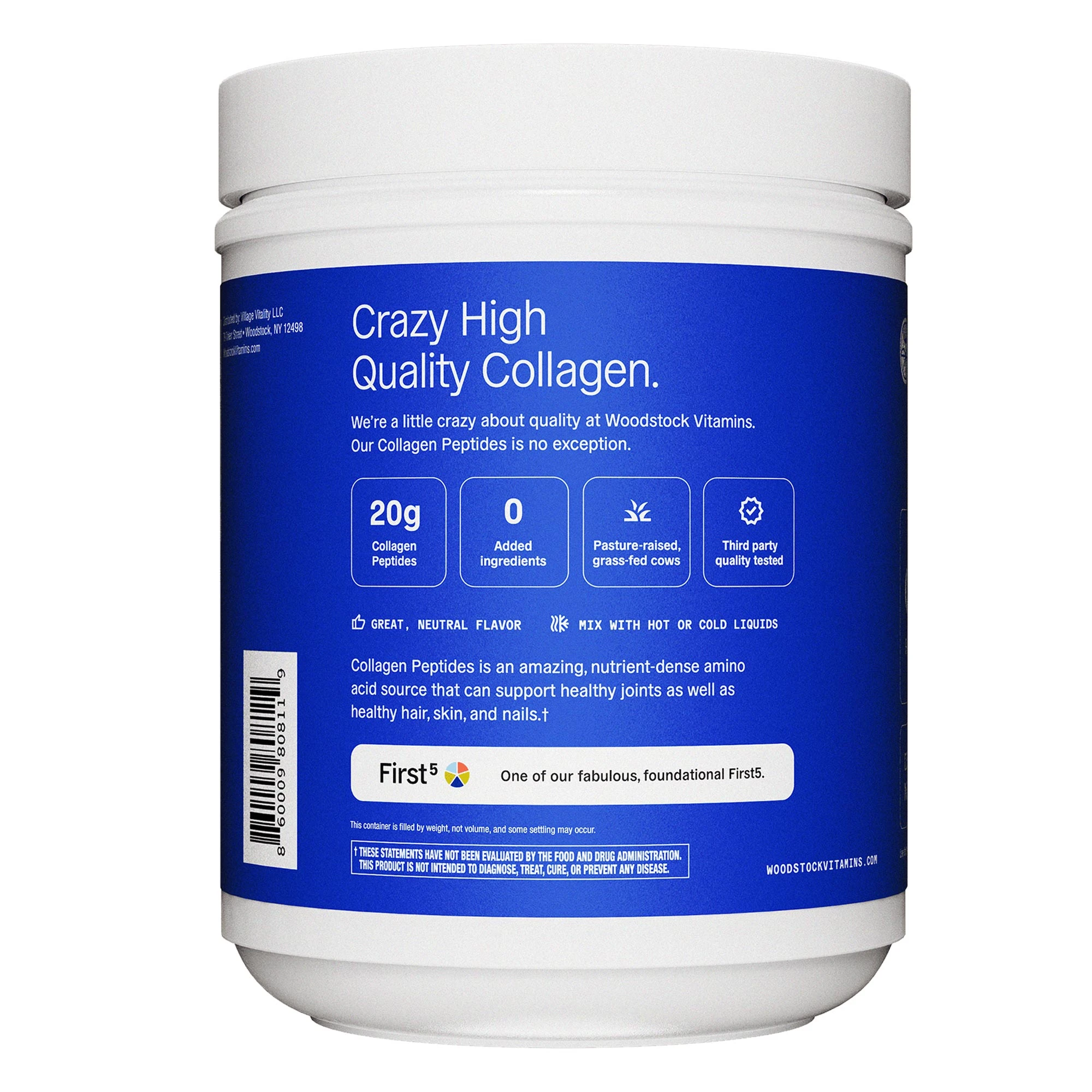
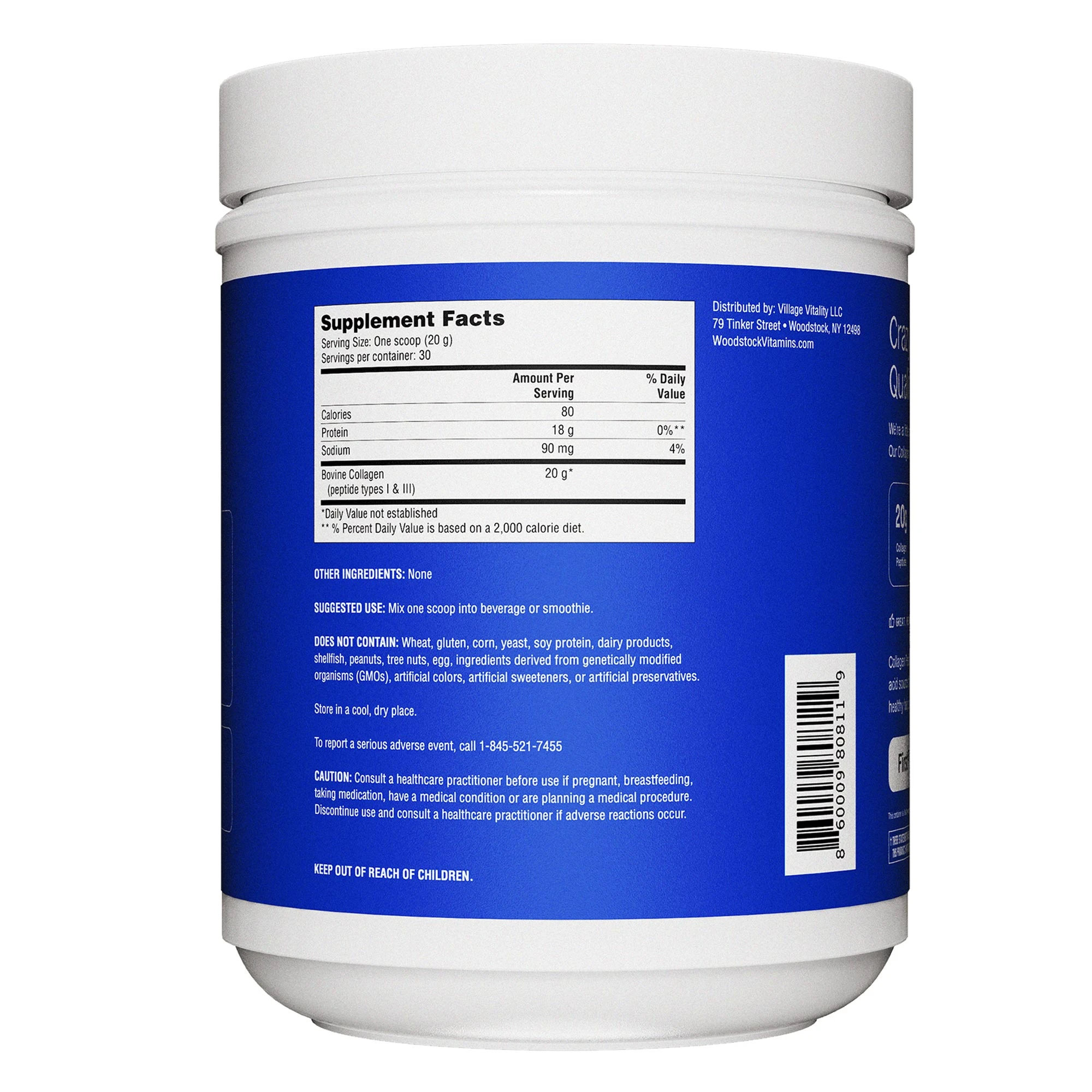
Let’s flex those muscles and start digging a little deeper into protein!
Protein supplements are like the muscle-building shortcut, providing you with a concentrated dose of amino acids that your body can readily absorb. It’s like giving your muscles a direct line to the gains department.
Now, when it comes to protein supplements, you’ve got options.
First up, we have the classic whey protein, derived from milk. We’ve got plant-based options too, like pea protein, hemp protein, or a blend of various plant sources. They all offer a protein punch that would make Popeye jealous.
But if you, like us, only want the best of the best — then the only real option is collagen protein.
But hey, before you start chugging collagen peptide protein shakes like there’s no tomorrow, remember that balance is key. While supplements can be a fantastic addition to your fitness routine, they shouldn’t overshadow the importance of a well-rounded diet.
If you want that boost, aim for an extra 10 to 20 grams per day of grass-fed collagen peptides.
Learn More: Choosing the Right Protein Supplement: 5 Questions to Ask
5. Multivitamins (and Minerals)
- Form: Full-spectrum of micronutrients
- Critical Components: Combination of vitamins and minerals
- Dose: Varies for different demographics


Our bodies are like finely tuned machines, and to keep them running smoothly, they need a balanced mix of nutrients. But, despite our best intentions, it’s not always easy to get the full spectrum of vitamins and minerals from our diet alone. Life gets busy, taste buds get picky, and sometimes the salad just doesn’t cut it.
Enter multivitamins, the all-in-one solution to fill those nutritional gaps and keep you firing on all cylinders.
Now, you might be thinking, “But do multivitamins actually work?” The short answer is yes. Extensive research has delved into the effectiveness of multivitamins, and while the results can vary depending on individual needs and lifestyles, they generally show positive outcomes.
Learn More: Choose the Best Multivitamin Supplement: Dr. Neal’s Do’s and Don’ts
Here’s where it gets a little confusing. Multivitamins come in all shapes and sizes, and they’re marketed to specific demographics and specific needs. Plus, when it comes to dosages, there’s no one-size-fits-all answer.
Proper dosages can vary depending on age, gender, and more. To determine the right dose for you, consider factors like:
- Your diet
- Lifestyle
- Health concerns or risk factors
And, here’s the most important part: seek guidance from your reliable posse of healthcare experts — physicians, pharmacists, dieticians, or our squad of knowledgeable folks — to pinpoint the ideal dosage tailored to your one-of-a-kind situation.
Learn More: Multivitamin Lineup: Comparing Our Top Multivitamins
Lay the Foundation for a Long, Healthy Life
Finding the right supplements in our cluttered digital world of sales pitches and virtually nonexistent regulations has never been easy. That’s why our whole thing here at Woodstock Vitamins is centered on making it easier.
So, TL;DR: If you’re ready to create a sustainable foundation for your wellness, start with these 5 nutrients. But, remember, the vital5 is just the first — but still very important — step in your supplement strategy.
If you want to lay a solid foundation for overall health that lasts long after you hit your goals, you’ll want to follow a holistic, or whole-body, path.
Either way, we’re here to help make reaching (and maintaining) your long-term health goals easier to manage. Don’t believe us? Hop on a free Counterside Consult for direct, personalized guidance from a real, human specialist.
The infamous Prop 65 has had supplement savants quivering their boots since its inception in the late 80s.
Short for the Safe Drinking Water and Toxic Enforcement Act, Prop 65 was passed as a California state law to address growing concerns about gross stuff sneaking into foods, drinks, supplements, cleaning solutions, etc.
The gross stuff is toxins, heavy metals, chemicals that cause cancer or reproductive harm, and the like. Now, on the opposite coast and almost 40 years later, we experience this scenario with relative frequency:
“I looked at your collagen and I saw this warning!”
“I let out an audible gasp, fell off my chair, dropped my coffee, and lost the remote… Things just aren’t right in my home anymore!”
(As the rebels in the wellness industry, we’ve been known to have this effect on people.)
We, the Woodstock Vitamins team, believe unwaveringly in transparency. Our whole thing is making it easier for individuals to achieve their health goals through high-quality supplements and even higher-quality education.
But choosing the right supplements requires a solid understanding of labels — what matters, what doesn’t, what’s fact, what’s marketing fiction, and so on.
So we asked Woodstock Vitamins founder and practicing holistic pharmacist of 20 years, Dr. Neal Smoller, for the run-down on the California law. Keep reading to learn from the wise-cracking Wellness Wizard about the good, the bad, and the ugly of Prop 65.
And, of course, why it’s quite alright to use our collagen peptides despite that ghastly warning…
In This Article:
- What is Proposition 65?
- The good, the bad, and the ugly of Prop 65
- Are supplements with Prop 65 labels safe to take?
- How do heavy metals get into supplements?
What is Prop 65?
Proposition 65 — one of the many controversial components of California’s legislative landscape.
We like to think of this humble law as the state’s guardian angel who means well but is easily spooked. The proposition requires all manufacturers selling in the Golden State to alert consumers to the potential dangers lurking in their everyday products.
So, in 1986, Prop 65 set in motion two things: a new convention for labeling practices in California, and a new standard for acceptable levels of carcinogenic components.
The Prop 65 limits for heavy metals in supplements, for example, are as follows:
In its most shining form, the goal of Prop 65 is simply to make sure shoppers in Cali are informed and making empowered purchases.
In practice, however, the overwhelming amount of information made available by Prop 65 has caveats that have garnered criticism. One being that the limits to toxin exposure are in amount per day — neither amount per serving nor cumulative exposure are factored in.
That, and the fact that these standards are comparatively aggressive. (Key word being comparatively.)
Alongside the standards set by the United States Pharmacopeia (USP), a government organization, and the trade organization called American Herbal Products Association (AHPA), Prop 65’s decrees don’t seem so strict!
Except for lead — Prop 65 has a lead risk level that is 12-20 times lower than what other groups have set. Is that an issue?
In our industry-informed and health-forward opinion, no. There’s nothing wrong with wanting less exposure to heavy metals, especially during pregnancy!
But, when it comes to critiquing Prop 65, there are a few aspects of the Haterade upon which we will sip.
Prop 65: The Good, The Bad, The Ugly
The Good
Prop 65 provides unparalleled transparency for consumers.
Ingredient and compound quality information should be accessible to all humans who eat, drink, breathe, or otherwise ingest these products — no ifs, ands, or buts.
It’s important to understand what is going into your body, especially if you’re building up the foundation of your wellness.
The Bad
Prop 65 requires a notice, not transparency.
Wait, what? Are we contradicting ourselves? Very well then — we contain multivitamins and multitudes.
Prop 65 does alert consumers to the potential dangers hidden within, but it doesn’t actually offer the opportunity to build a true, apples-to-apples comparison of products or services. To do that, we’d need to see significantly more detail on those labels about how much of which compounds are detected.
Is it 10x the established safe harbor levels for lead? Is it slightly above the standard for cadmium exposure?
Without a Criminal Minds-level investigation into each product, we’ll never know.
The Ugly
The inundation of Prop 65 notices has numbed us.
For folks in California especially, the flood of identical labels slapped on everything from diesel engine exhaust to Starbucks Refreshers has, unsurprisingly, led to widespread desensitization.
For the rest of us outside of the Golden State, Prop 65 labels land in one of two ways:
- They stir up a tizzy of panic and confusion.
- They bounce off the concrete wall of our indifference.
The other ugly part? There are health and wellness brands out there that don’t give two hoots about violating the statutes of Prop 65. By creating special labels for sales in California and truncated labels for sales in other states, these ne’er-do-wells pirate profits from reputable companies all the time.
“Your collagen has a Prop 65 label, but theirs doesn’t — Woodstock Vitamins collagen must have higher levels of heavy metals!”
Yeah, that, or some supplement manufacturers aren’t playing by the rules.
Are Supplements with Prop 65 Labels Safe to Take?
Yes, definitely.
As counterintuitive as it may seem, supplements with a Prop 65 label might actually be safer to take than those without. That label, while pesky at times, means the manufacturer has quality at the forefront of their production process.
But do your own vetting — as much as we’d like a black-and-white answer, we rarely get one in the wellness world.
Some great companies have bad products; some bad companies have great reputations. Even bad companies can have a Prop 65 label on a product that’s safe, too! All these things can be true at once.
With vast swaths of gray areas, label lies, and no comprehensive measure of quality in the wellness industry though — how does a health-conscious hero find supplements that are rigorously tested for purity and quality?
Our best answer is… You have to hunt them down.
Look for verifiable transparency and unique quality markers that go above and beyond industry-laid standards. Here at Woodstock Vitamins, that looks like our Supplement Quality Standard, created by Dr. Neal.
Learn More: Quantifying Quality | Dr. Neal Smoller
We don’t mean to toot our own horns, but our Supplement Quality Standard functions as both a framework for consumers to judge quality and a benchmark to push industry standards to higher, safer, and healthier levels.
Are There Heavy Metals in Woodstock Vitamins Collagen?
YES!
We’re not exclaiming because we’re excited about heavy metals, we’re exclaiming because we’re committed to keeping it real — even if it means contradicting every marketing tactic in the playbook.
Here’s the skinny: All beef-based collagen powders will have levels of heavy metals that necessitate a Prop 65 label.
Our collagen in particular is one of the cleanest options for modern consumers, but what really sets it apart is that we’re constantly improving our supplements and formulas.
Case in point: Our current collagen has a lower heavy metal amount than our last!
When Dr. Neal has time to develop the next set — in between educating the masses and making waves in the wellness industry — you can bet your buttons it’ll be better than the current version, too.
Woodstock Vitamins Collagen: An In-Depth Look
It’s one thing to say our collagen is one of the best on the market, and it’s another to prove it. So let’s get real, real transparent with our current lot of protein-packed peptides.
4/6/23 Analysis of Collagen Peptides Lot 04CH2000035
The image below is cut and pasted directly from a lab analysis conducted just a few weeks ago.
As requested by Dr. Neal, this is the second analysis of the finished product, and the third analysis all together if you include the one provided by the raw material supplier.
But before you frantically scroll back to the Prop 65 or USP safe levels graphs above, keep in mind that PPB is not the same as micrograms per day (mcg).
Some supplement manufacturers and wellness companies will bank on the fact that most consumers won’t understand the numbers and acronyms littering the graphs provided. That’s not the case here.
Instead, we’re going to translate the above analysis into real-world numbers. We know that what matters is how much of a heavy metal you’re being exposed to with each dose — that’s how you’ll be able to calculate your daily exposure.
Bottom line: Our collagen peptides are adorned with a Prop 65 label solely because the lead content of one serving is slightly higher than the ultra-aggressive reproductive toxicant level set by California.
Essentially, you could eat a full 6 servings of Woodstock Vitamins collagen peptides before you bump up against the considerably meticulous AHPA guidelines for heavy metals.
Please don’t do that, though.
OMG, Am I Exceeding My Daily Heavy Metals Exposure Limit?!?!
Feeling panicked about the heavy metals that may or may not be accumulating in your body? You’re not alone!
One of the exclamations we hear most often goes to the tune of: “Oh crap, there are daily limits?! How do I know if I’m going over?”
The first step is to not take more than 5 servings a day of our collagen peptides. Pretty easy, actually.
The second step is to take a good, long look at your supplement cabinet because there’s a reason Dr. Neal has long promoted moderation in, well, everything! There are dangers inherent to taking too many supplements.
One that is rarely thought of is the total exposure to contaminants — naturally occurring or otherwise — over time.
You can (and probably should) evaluate the types of foods you eat and the products you ingest to determine what your real exposure is. This requires 3 things:
- Transparency.
- A calculator.
- A sh*tload of patience.
How Do Heavy Metals Get in Supplements?
But wait, let’s wind it back a little bit. How did all these heavy metals get into your supplements in the first place? Have foods, supplements, tap water, etc., always been this toxic?
Yes and no.
Heavy metals are natural elements — they’re a part of our world just as much as the bees and wildflowers we cherish so much this time of year. Because of this, or perhaps in spite of it, no one is immune to heavy metal exposure and accumulation.
At the same time, though, most exposure to heavy metals results from human-centric endeavors — mining, industrial production like coal-burning power plants and petroleum combustion, agricultural activities, and so on.
Sure, a volcanic eruption can crank up heavy metals exposure levels, but mostly, this is happening because we’ve torched the planet.
From the 1950s onward, we humans seemed to think, “Hey, our backyards and lakes are a great place to put all this toxic waste we’ve been creating!”
As a result, we have acid rain, pollution, and increased heavy metal contamination in basically everything we eat or put in our bodies.
Being Transparent Shouldn’t Hurt Us
It bears repeating that being radically transparent could make people avoid our products.
“That Neal guy’s got lead in his product! Run away!!!!”
But we’re willing to risk it because even the most scrupulous of research deep-dives into different collagen options won’t yield accurate results for consumers.
Here’s why:
A. There are products that are collagen in name only.
- Bone broth collagen technically has collagen, but it is not nearly as concentrated as collagen peptides — don’t fall for this clever phrasing.
- All marine or chicken sources will have lower collagen amounts, and therefore lower amounts of heavy metals — it’s not an accurate comparison.
B. Plus, Prop 65 is just one piece of the puzzle.
- While a product may have nearly no lead, it could still have greater heavy metal content than would normally be acceptable — without transparency from the manufacturer, you’ll probably never know.
- Prop 65 is just one set of standards set by one state — consumers need to compare numbers against other standard bodies alongside Prop 65.
As consumers, we need to get a lot better at math, research, and data analysis to truly understand what we’re putting into our bodies.
But, if you ask us, it shouldn’t be that difficult.
So we’re willing to share the nitty-gritty details about our collagen peptides and various products, in the hopes that our small acts of rebellion will begin to turn the tides of the supplements industry.
The Woodstock Vitamins Commitment
Luckily, our team is led by a purity pit bull — voraciously working towards elevated standards and education in the industry and beyond. Hence the Supplement Quality Standards that other manufacturers might call overkill.
Because, when it comes to your health and well-being, we don’t think anything is overkill.
Click around to learn more about the Woodstock Vitamins standard and Dr. Neal’s holistic approach to wellness, or hop on a Counterside Consult to discuss the intricacies of your supplement strategy — Prop 65 labels and all.
Attention all vitamin hoarders!
It’s that time of the year again when the birds chirp, flowers bloom, and your collection of allergy-busting supplements starts to resemble a hoarder’s stash. Get ready to face the music, because spring has finally arrived and it’s high time to declutter your supplement cabinet.
Don’t worry, though, because you’re not alone
It’s easy to get carried away when buying vitamins and supplements; we all tend to think that each new purchase will be the one that magically fixes our problems. But if we’re honest with ourselves — and we always are here in Woodstock World — half the time we forget what these supplements are supposed to do.
The other half of the time, we forget that they exist altogether.
Hanging on to musty minerals and expired supplements is pretty gross, but it doesn’t have to be. We asked our founder and resident medical myth-buster, Dr. Neal Smoller, the best way to deep clean supplement cabinets, strategize wellness practices, and hit the ground running this spring.
Luckily for all of us, he went full Marie Kondo. Read on to learn how to properly read vitamin labels and play the supplement game to perfection this season.
In This Article:
- Understanding vitamin and supplement labels
- Supplement expiration dates
- Will expired supplements and vitamins hurt you?
- 4 steps for deep cleaning your supplement cabinet
Understanding Vitamin and Supplement Labels
Ah, yes, the thrilling world of vitamin and supplement labels!
Who doesn’t love deciphering tiny font sizes and arcane ingredient lists, all while trying to decide if the product is even worth the price of admission? It’s like a puzzle where the stakes are your health and wallet – what’s not to like?
Except for the deceptive practices and marketing tactics of the health and wellness industry, that is.
The first step to strategizing your supplement approach is to, believe it or not, understand what your supplements do and how to use them properly. It shouldn’t be a difficult process, but with loose regulations and even looser industry ethics, it gets complicated.
Listen: Multivitamins: Whole Food? More Like Whole Fraud | Wellness Upside Down Podcast Ep. 17
Supplement Expiration Dates: Myth or Must-have?
Do we really need expiration dates on their vitamins and supplements anyway? It’s not like those pills go bad or anything, right?
Wrong.
Vitamins, like foods and memes, can pass their prime in the blink of an eye. Mold and muck aside, though, there’s another reason why expiration dates should be respected and, dare we say, even appreciated.
Expiration dates are not actually required to be on a supplement bottle or even determined by a manufacturer. If that seems a little nuts, it’s because it is. Legally, the manufacturer is only obligated to provide a manufacture date to the consumer, and there’s a big difference.
In order to nail down an expiration date, a supplement manufacturer would have hoop after hoop of tedious and expensive testing to jump through. With no pressing legalities requiring this costly performance, most chose to opt out.
Basically, if a manufacturer goes through the trouble of determining an expiration date, you’ll want to alley-oop that sucker into the trash when the day comes.
(Except, don’t actually do that, listen to this episode of the Wellness Upside Down podcast for safe medical disposal practices instead.)
Potency Decline vs. Expirations
Boiled down, though, supplement expiration dates are simply a measure of potency. In fact, many manufacturers will arbitrarily assign an expiration date as a result of a cost-benefit analysis.
So, even with expiration dates, it’s not all black and white. Isn’t that just fantastic?
A supplement legally expires when it no longer contains at least 100% of the labeled claim. So, if a supplement says it has 3mg of Melatonin, then it needs to have 3mg of Melatonin right through the expiration date.
This expiration date is actually very strict. Technically, if a product has 99% potency, then it is expired. We can all rest easy knowing that our supplements are legally required to contain at least 100% of what they claim.
To complicate things further, however, companies often put in more than 100% of the labeled claim since it can have more, just not less.
Does that mean it’s bad to take expired supplements? Or is it just pointless?
Will Expired Supplements and Vitamins Hurt You?
Short answer: No. Expired products will not spontaneously morph into something harmful.
When a supplement product decays, it just becomes less effective. It’s that simple — your supplements won’t turn into some kind of mutant monster and attack you in the middle of the night.
With that said, there are other variables to consider. Expiration dates are a measure of potency over time, as we now know, but supplement storage can play into the lifespan of your vitamins as well.
- Storage conditions – Can you guarantee that your medicine cabinet is in a controlled temperature and not in humidity exceeding 40%? Temperature and humidity are the two main things that break down drugs and pharmaceuticals.
- Storage container – Have you moved your supplements into another container? While this is okay, try avoiding having them sit there for more than two weeks or so.
Since expiration date tests are run in ideal storage conditions under controlled temperatures, it’s important to take that into consideration when reading them.
4 Steps for Deep Cleaning Your Supplement Cabinet
We all know the horrors of precariously stacked, mismatched Tupperware collections, but the real danger lurks in our supplement cabinets.
If you’re tired of peeking behind the door and being bombarded by a sea of expired bottles and half-empty containers, it’s time to implement a supplement strategy.
Because, just like a good skincare routine or a workout plan, your supplement routine deserves some TLC, too. Take these 4 easy steps to hear, and you’ll have a beautifully organized cabinet to call home about.
1. Let Go.
It hurts, we know. Especially when you’ve spent cold hard cash on valuable vitamins. Was it all for naught?
It was not — pun intended. The first step is letting go, decluttering your space, and making room for the simplified strategy you’re just about to implement.
2. Create a Supplement Strategy.
If you want to play the game, you’ve got to have a game plan.
According to our whole-picture health approach, built by Dr. Neal after 20 years as a practicing pharmacist, there are 3 tiers to supplements. Organized by priority and evidence, they are:
- First5 – the 5 nutrients most people are low in and almost everyone would benefit from (omega-3, probiotics, bone support, protein, and multivitamins).
- Supplements that you need (allergies, reflux, or any other supplement that would prevent a personal or real health issue).
- Supplements that you want – things that you heard were good.
3. Weed Out the Flops.
Don’t just add all the vitamins you learn about on TikTok or Goop to your cart! Do your research and weed out the suspect supplements.
Even the best, most carefully curated branding can’t compete with genuine quality and effectiveness.
Listen: Supplement Strategy | Wellness Upside Down Podcast Ep. 4
4. Launch Your Strategy, Commit, and Get Support.
Vitamins and supplements work best when we actually take them. Follow through with the momentum created from your deep cleaning, and commit fully to your supplement strategy.
But first, get in touch with a professional to review your supplement plan.
A Need for a New Standard
Essentially, the supplement industry is the Wild West when it comes to regulating quality. As consumers, we’re left to navigate the misinformation and hype on our own.
It’s confusing, overwhelming, and time-consuming.
It might even feel downright impossible to know if you’ve made the right choice when it comes to stocking — or cleaning out — your supplement cabinet. In order to unlock the real power of supplements, we need tools that break through the double smokescreen of sloppy regulations and slick marketing.
Learn More: The Supplement Quality Standard
So let’s build a supplement strategy for you, together, based on evidence instead of hype! Schedule a free Counterside Consult for all the one-on-one guidance you need to welcome a healthier, more organized you this season.