





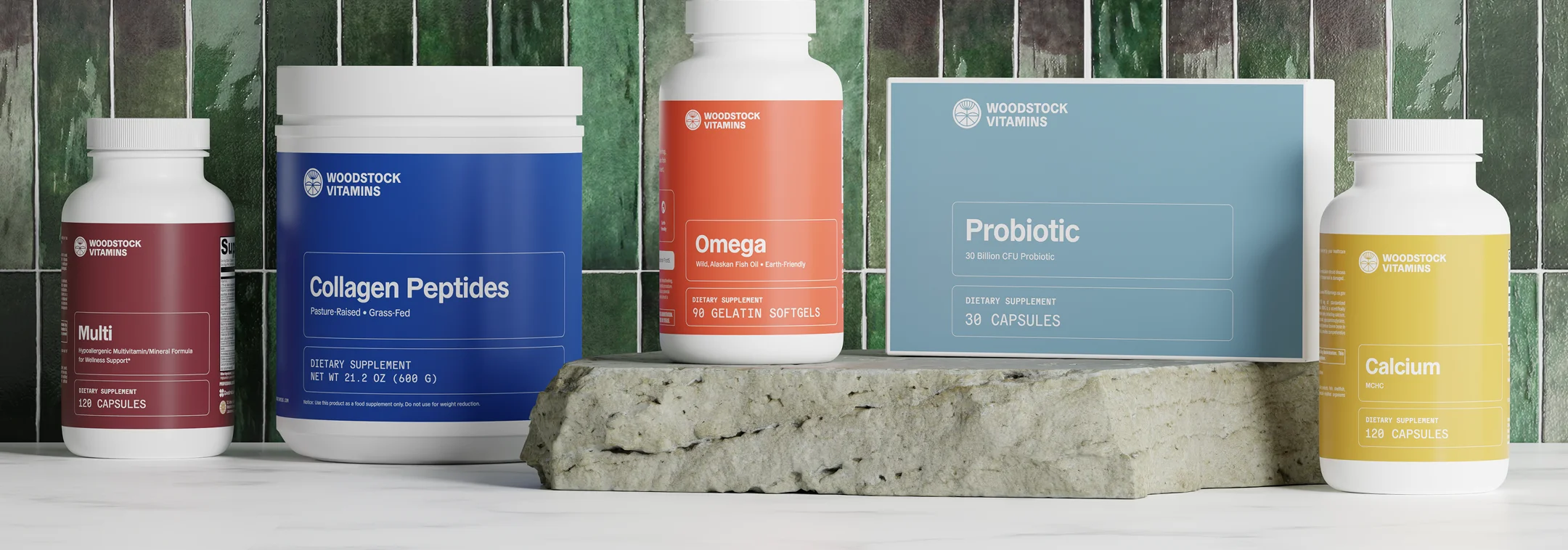

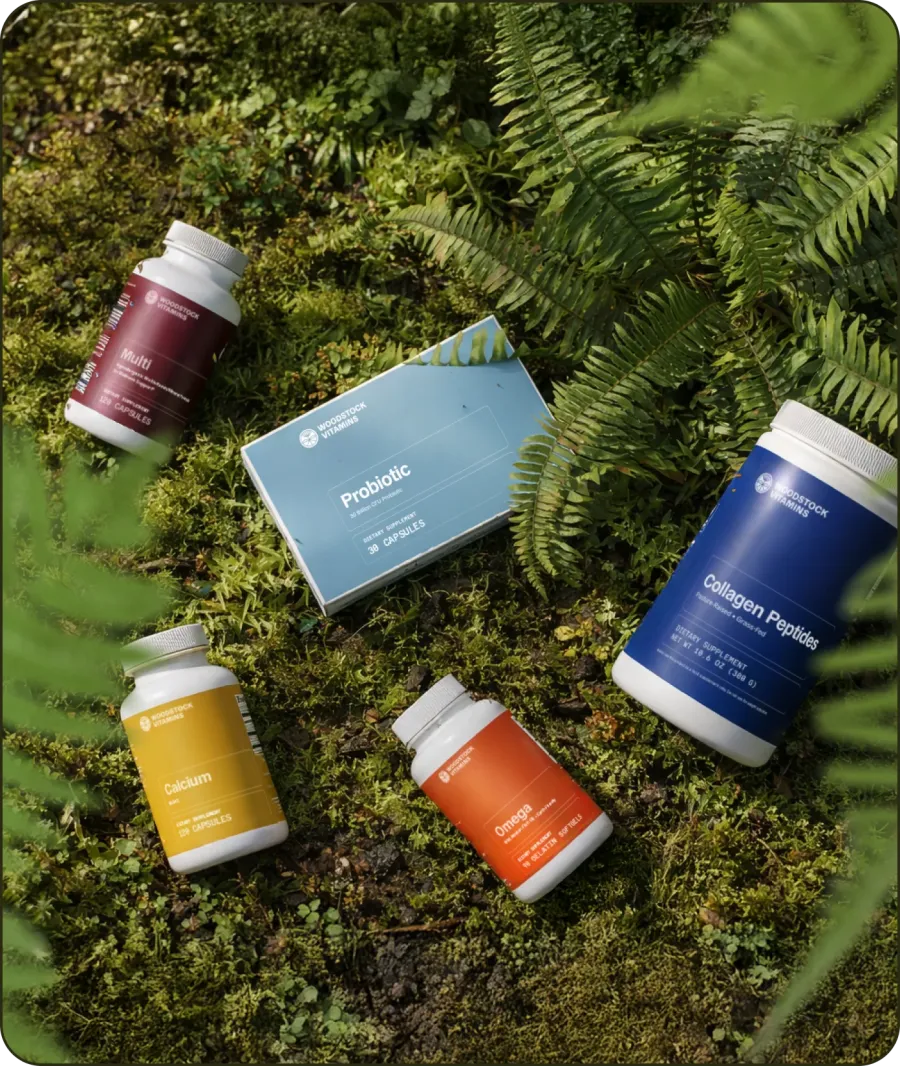
Gather around girls, ghosts, and ghouls! Today we’re venturing to the dark side of the wellness world to celebrate the spookiest week of the year.
Because, if you ask us… There’s nothing scarier than the costumes we see cheap vitamins and bunk supplements skulking around in!
If our exposé on how environmental toxins affect your health wasn’t enough to make you sleep with one eye open, this post surely will be. From the wretched origins of your favorite vitamins to the horrifying truth about herbal supplements, we’re pulling all the marketing machinations from their crypts and into the light.
Thankfully we have the medical myth-buster and notorious loudmouth, Dr. Neal, to offer expert advice for navigating (and surviving!) the treacherous terrain of supplement sales tactics.
Grab a trusted safety blanket and read on!
In This Article:
- Meet the mega-corporations that own your favorite supplement brands
- Learn what the organic label on vitamins really means
- Herbal supplements: safe or not?
The Illusion of Free Choice
Did you already know that strolling down the supplement aisle of your local health foods store was akin to walking through a haunted house of mirrors?
If not, don’t blame yourself. Most of us modern consumers are fooled by the myriad of names, logos, brand colors, and mission statements into thinking that there are scads of supplement companies to choose from.
The frightening reality of the matter is that just 14 mega corporations own all the hundreds of vitamin brands you see on the shelf. It’s true. Corporations like Nestle and Clorox, dressed up as Pure Encapsulations and Rainbow Light Vitamins, are the villainous faces unmasked by us meddling kids.
The supplement industry was valued at roughly 163.9 billion just last year. So it should come as no surprise that these profit-driven global syndicates want a piece of the pie. For health and wellness seekers, though, that means the shopping process isn’t so sweet.
Choosing a pure, potent supplement isn’t about picking the brands with green labels any more.
To find the vitamins and nutrients that are what they say they are, consumers need to deep-dive the ethics of their chosen companies. (Preferably before handing over their hard-earned cash.)
The Organic Standards Graveyard
Shining out like a beacon, the USDA Organic Seal has become something like a lighthouse for health-conscious folks across the country. Since the late 90’s, savvy consumers have sought brands that carry this illustrious label, under the presumption that organic means…organic.
Unfortunately, that’s not really the case.
The NOSB, or National Organic Standards Board, which was created to oversee the regulations hasn’t actually reduced the number of synthetic chemicals permitted in so-called organic foods and supplements — they’ve increased it.
“More than 250 non-organic substances are now allowed in organic foods, up from 77 in 2002.”
Dr. Neal Smoller
And we have the corporations that moonlight as board members for the NOSB to thank for that!
Companies like Whole Foods Market and General Mills have used their voting rights to push for more chemicals — and even herbicides — to be allowed in organic foods and products in order to protect their financial investments in the supplement industry.
Strict manufacturing standards and safety regulations result in higher testing and production costs and, subsequently, lower profits. Translation: It’s cheaper and easier to cut corners.
So don’t be fooled by this clever disguise! Instead, scrutinize organic products as carefully as you would non-organic.
In some cases, buying a supplement from a small, trusted brand might be safer than buying one with the organic seal and a million-dollar marketing plan.
The Herbal Anti-Heroes
Perhaps the most terrifying aspect of the natural health industry’s dark underbelly is that, in it, a highly profitable, highly polarizing dichotomy has been created.
Natural vs. synthetic, traditional vs. modern, herbal vs. pharmaceutical, us vs. them, hero vs. villain. It’s a prolific and profitable sales tactic known as oppositional marketing or oppositional brand loyalty.
In essence: If we’re the kind of people inclined to choose natural products, we must hate all forms of modern, non-traditional medicine. If we’re the kind of people who prefer allopathic medicine, we must forsake all forms of herbal or holistic healing interventions.
No nuance allowed.
So herbs are, depending on which side you fall on, seen as either miracle cure-alls with no negative side effects or useless, overhyped hippie junk. The truth, gang, lies somewhere in between these contrasting beliefs.
Let’s break it down into fun-sized bites:
- YES, herbal compounds have been used as food and medicine throughout the history of human civilization. If you’re alive today, it’s because your ancestors ate plants, drank teas, and prepared extracts of herbal compounds to recover from illnesses.
- NO, not every so-called superfood herb is what it seems to be. Modern research is still struggling to validate the historical claims of many herbs. The necessary funding and interest in the scientific community are lacking.
- YES, there are herbs and herbal extracts with benefits that have been scientifically proven through rigorous testing and clinical research. It’s not all bunk and to claim such is to teeter into anti-science territory.
- NO, herbal products and supplements aren’t inherently healthier than non-herbal products or synthetic vitamins. Some have contraindications with medications while others can be addictive. All plants, like humans, are only as “healthy” as the environments around them. Even herbal allies like ashwagandha and ginkgo can contain horrifying amounts of heavy metals from the toxic soils in which they grow.
Our main issue with herbal supplements is not a matter of their efficacy or importance. It’s that most supplement companies don’t test the raw materials they receive from suppliers. This means that herbal products, like other supplements and vitamins, can be dyed, duped, or disguised by any number of masked manufacturing practices.
The turmeric capsules you bought for their lovely, vibrant color, for example? They might be shining gold due to malachite yellow, a coppery dye additive that’s also a banned substance.
So heavy metals can leech into your herbal products from soil, solvents during extraction, and dyes or additives during production. By the time it reaches your eager hands, your herbal supplement might be more trick than treat.
Seeing Through the Nefariousness of “Natural” Products
Okay, so maybe this blog won’t keep you up at night like Friday the 13th or Hereditary will. But the lack of choice, education, and regulations in the supplement sphere is pretty scary, no?
That’s why our whole jam here at Woodstock Vitamins is facing our fears head-on — looking behind the curtain of slick branding to reveal the phonies for what they are.
Because you shouldn’t have to traverse this haunted house of health products alone! Explore our other myth-busting manifestos or hop on a free Counterside Consult for direct guidance. Our supplement strategists and holistic wellness experts promise not to tease you if you jump or squeal at the marketing tactics that go bump in the night.
Okay, so, maybe you eat a few too many cookies and a few too few veggies on a regular basis. As long as you pop a multivitamin every day, you should be fine, right?
Wrong.
Multivitamins aren’t really the one-a-day space food that they’re made out to be. For all our advancements in the technological age, the science behind these supplements is actually pretty obsolete.
And yet, multivitamins are still a crucial component of an intelligent supplement strategy. So how do we tailor our expectations to be based on the clinical data of reality, without getting caught up in marketing schemes for these so-called superfood panaceas?
Any time we need to get to the deepest stratum of truth about a supplement, we turn to Dr. Neal, notorious wellness wizard and holistic health advocate of 20+ years.
Read on, fellow wellness seeker, to learn about a food-first approach to micronutrients and how to buy the best multivitamin to fill the gaps in our still-human diets.
In This Article:
- Improving your diet before supplementing multivitamins
- How to choose the best multivitamin supplement
- What to avoid when buying a multivitamin
- What to look for when choosing your multi
Food First: Supplementing Multivitamins Won’t Make You Healthier
Before we dive in, let’s get one thing straight. You don’t have to give up your cookies.
Why? Because a food-first mentality isn’t the same thing as a fad diet or fanatical fasting. Rather, it’s a shift in mindset away from what we’ve been taught by the sales tactics of the supplement industry.
It can be boiled down as such: You can’t out-supplement a nutritionally bankrupt diet.
It’s true — regardless of what you’ve heard from health influencers, no amount of vitamins, supplements, oils, or potions can make up for a diet that lacks a diverse range of nutritious foods.
That’s why Dr. Neal created the Wellness Pyramid after 20 years of explaining: yes supplements are great, but no they aren’t the key to immortality. The Wellness Pyramid simplifies this really complex thing — holistic, or whole-being, health — into a compact graphic that illustrates this principle.
We start, then, at the bottom of the pyramid, laying the groundwork for genuine, long-term health. The 5 foundational domains are diet, sleep, exercise, stress management, and lifestyle changes.
Most applicable in the realm of multivitamins is diet.
Walking the Middle Path of Nutrition
But you don’t have to go full paleo or cut out your favorite treats. You can if you want, but most of us…don’t really want to do that.
So, instead, we walk the middle path, making manageable changes and taking everything in moderation — including moderation. That looks something like:
- Eating more whole, fresh foods and fewer processed foods.
- Getting 1-2 cups of fruits and veggies (each!) per day.
- Balancing meals with all 3 macronutrients (healthy fats, complex carbs, and protein).
- Eating small, frequent meals and having snacks every few hours to maintain healthy energy levels, blood sugar, metabolism, and brain functioning.
Not so bad, right? Once you’ve optimized your diet — and done some work in the other 4 foundational domains, too — you can take multivitamins confidently, knowing you’re not wasting money on well-branded bunk.
How to Choose the Right Multivitamin Supplement
Except… Creating a multivitamin supplement strategy that actually works isn’t as simple as fixing your diet first.
While that is the non-negotiable first step, once you cross that hurdle, the next stumbling block involves finding a multivitamin with the appropriate forms and doses of critical nutrients. This part should be easy, but thanks to the loose regulations and even looser standards of the wellness industry, it’s not.
So before you shell out your hard-earned cash, check out Dr. Neal’s insider tips for buying the best multivitamin supplement available.
Multivitamin Buying — The Don’ts:
Don’t Buy Demographic-Specific Multivitamins
We’ve all seen them — multivitamins for women, multivitamins for men, multivitamins for children, seniors, vegans, dog owners, hair models, skydivers, the list goes on.
At first blush, it might seem like a great idea to buy a multivitamin with specific nutrients for your specific demographic or health concern. You’re not crazy for thinking that.
The issue lies in the fact that most of the supposedly targeted nutrients included are only added to give the illusion of a powerful formula. These kinds of gimmicky vitamins almost never include the proper forms and doses of the compounds listed, and they come from bottom-of-the-barrel sources.
Learn More: Multivitamins for Women, Men, Seniors, & Teens | Dr. Neal
Don’t Just Buy the Multivitamin with the Most Ingredients
You should avoid multivitamins that brag about ungodly numbers of different nutrients for essentially the same reasons you should avoid demographically branded multis.
More doesn’t always equal better; there’s a limit to what you can fit in a capsule.
And we should know, what with our proprietary supplement formulations and all! Typically, when you see a multivitamin with a supplement facts panel as long as your receipt, you’ll only be getting minuscule amounts of the nutrients listed.
Like, 1-5mg. Seriously.
It’s not just that these supplements contain low doses and are therefore less effective — they’re useless without the proper, clinically studied doses of the nutrients contained.
Learn More: 3 Spooky Supplement Marketing Tactics Unmasked
Multivitamin Buying — The Do’s:
Do Your Research on Nutrient Forms Before Buying
Most people think that getting any form of a vitamin is better than getting no form of the vitamin. That’s not really the case.
Take calcium, as one simple, yet emblematic example. We always recommend calcium hydroxyapatite because it’s the same form of calcium that’s found right there in our bones. This makes it super bioavailable and easy to absorb.
Other, cheaper forms of calcium are more difficult to absorb. But the real concern lies in the fact that unabsorbed calcium in your gut can cause major tummy issues.
Even the most comprehensive-seeming supplements, when examined a little closer, can be seen cutting corners to save on manufacturing costs.
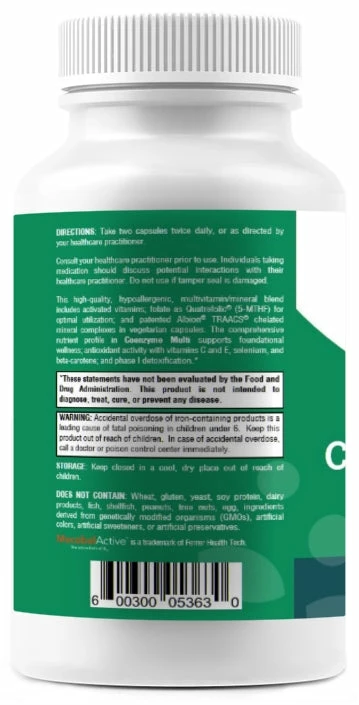
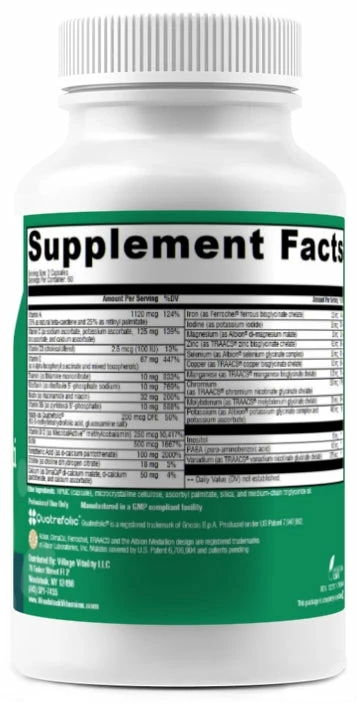
They’ll use folic acid instead of tetrahydrofolate. They’ll use pyridoxine instead of P5P. None of the B vitamins are in their methylated state. Minerals are in their most basic form as if they were scraped off a rock and put right into the capsule.
Dr. Neal Smoller
So when choosing a multivitamin, look for the supplements that use the most bioavailable form of each nutrient — no ifs, ands, or buts.
Do Examine the Doses Included
Yep, we’re circling back to multivitamin doses again because the importance of it cannot be stressed enough.
When it comes to dosage, manufacturers are banking on the fact that you haven’t done your research and don’t know how much of each nutrient your body needs. They’re counting on you to see multivitamins as cure-alls, despite the fact the formulas have way less of each active ingredient than a stand-alone supplement would have.
The doses are so low, we call them “Fairy Dusted” doses. They just sprinkled a little ingredient in there so they can make the claim on the label.
Dr. Neal Smoller
To be a savvy shopper of multivitamin supplements, you have two choices:
- Investigate the clinical data and scientific findings on the proper doses of each and every vitamin, nutrient, herbal compound, antioxidant, etc., included.
- Buy your supplements from a reputable manufacturer that prioritizes efficacy and evidence-based formulations at equitable retail prices.

A Multi-Pronged Attack on Multivitamin Marketing Schemes
Multivitamins, when done right, can be the boost your body needs to support your healthy diet and reach optimal health.
When done wrong, they’re a bad investment at best and a dangerous gamble with low-quality ingredients at worst.
But you don’t have to worry about getting swindled by skeevy marketing tactics of supplement suppliers anymore, right!? Equipped with Dr. Neal’s integral do’s and don’ts for buying multis, you’re a veritable multivitamin maestro.
And if you need a copilot to help navigate the world of futuristic superfood space supplements, just give us a call. Chat with one of our supplement strategists for free via Counterside Consult anytime, anywhere.
Picture this: It’s 2AM, you’re exhausted, and every time you start to slip off to sleep, that little tickle in your throat drags you back into the waking world just in time to…COUGH!
That’s right, friends, cold and flu season is officially underway.
With the drop in temperatures comes a drop in immune system functioning — which means sniffles, sneezes, and snot-nosed mouth-breathing will soon follow. But before you reach for the DayQuil and Redbull, we’re here to tell you there’s another way.
While it might not be as cool as a caffeine and acetaminophen cocktail, a holistic cold care plan can keep you from getting sick as a dog, instead of just masking the symptoms.
And, when done right, this approach can keep you from getting sick in the first place.
Get back to enjoying the cozy weather and mindblowing foliage this season has to offer — sniffle-free and sleeping through the night. Read on, wellness seeker, to learn the nitty gritty of preventing illness and strategically implementing cold remedies from Dr. Neal and his 20+ years of clinical experience.
In This Article:
- Cold prevention tips to keep from getting sick
- Supplements for cold symptoms
- Clear congestion with supplements
- Best herbs for cough
Cold Prevention: A Holistic Approach to Not Getting Sick
“Is Dr. Neal really saying he’s discovered how to prevent the common cold?”
Well, yes, kinda! While we can’t fully eradicate the virus with these simple yet powerful tools, we can use Dr. Neal’s strategic approach to minimize our chances of getting sick. The fundamentals of holistic preventative care are reducing exposure and having a solid foundation for overall health.
Reducing Exposure Looks Like:
- Washing your hands
- Not hanging out with sick people
- Wearing a mask in public (particularly in confined spaces)
Other helpful tricks include staying away from children — who, bless their hearts, are virulent carriers of cold and flu germs — getting enough rest, and upping your fluid intake.
Now, this may sound too good to be true, and it is true that even the most careful prevention practices aren’t infallible, but these tips will go a long way in keeping that cold at bay.
Prevention is most effective when it works in conjunction with strong overall health, though — it’s not a magic pill. So if you’re sleeping 3-4 hours a night and subsisting solely off Taco Bell and gas station sushi (no judgment, we’ve all been there!), then even the Boy in the Bubble’s prevention plan won’t be enough.
Prevent Colds with a Strong Foundation of Wellness
It’s not just poor sleep and plastic food, though. Lack of exercise, chronic stress, and exposure to environmental toxins can all make us more susceptible to illness.
Building a strong foundation for your health, then, begins in the mundane: diet, sleep, exercise, stress management, and (everyone’s favorite) lifestyle changes. A truly holistic approach to cold prevention has to factor in all 5 of these domains — don’t waste your time with anything less.
Learn More: The Wellness Pyramid: Your Roadmap to Holistic Health
Because — and here’s a secret the wellness industry doesn’t want you to know — the only real way to boost your immune health and ward off colds is to optimize these 5 crucial areas of your life. Don’t believe all the Vitamin C hype, almost nobody is actually deficient.
While certain deficiencies, like Vitamin A, can increase your chances of getting sick, it’s significantly more efficient to target the nutritionally bankrupt diet that results in those deficiencies than to supplement them directly.
Pro Tip: If you feel like you’re rocking all five domains and still really want to take a supplement for immune health, try out probiotics! Not antibiotics, which won’t actually help you with a cold.
Learn More: Be Proactive: How Can Probiotics Improve Your Health?
Holistic Cold Remedies for Getting Better, Faster
It usually starts with a scratchy throat, a runny nose, or sinus buildup behind the eyes — uh oh, here comes the cold!
Even with all of Dr. Neal’s tips under your belt, prevention tricks aren’t 100% effective 100% of the time. So what do we do when the viral bugs make it through all our staunchly prepared defenses?
Timing is crucial when it comes to holistic cold treatment: Dr. Neal always says the first 24-48 hours are the make-or-break period for catching these symptoms early and determining how badly you get sick, if at all.
So where do you start if time’s running out?!
Well, first — scroll back up to the Wellness Pyramid. Nothing will zap that cold faster than rest, fluids, proper nutrition, good sleep, and stress management. If you’ve got all those checked off the list, though, there are a couple more things that can tip the scales in your favor.
Best Cold Remedy for the First 24 Hours
On days one and two of feeling the symptoms creeping in, your best bet is zinc lozenges.
These lozenges work by targeting the viral molecules accumulating in the back of your throat: by coating them consistently with zinc, we can force them out of the throat and down into the much more resilient gut.


Slowly dissolve one lozenge six times a day, making sure to go 15 minutes without food or drink afterward to give it the best chance to work. It’s important to keep in mind, though, that an oral zinc supplement does not offer the same benefits — the topical application is key to dislodging the cold bugs.
If the zinc does the trick, great! You’re welcome 🙂
If not — time to move on to the big guns.
Herbal Remedies for Colds in the First 72 Hours
First up: Echinacea.
Yeah, yeah, we’ve seen the studies that say echinacea won’t help with a cold — we just don’t agree.
While it’s true that most products miss the mark, choosing a carefully formulated high-dose echinacea like Quick Defense and taking two capsules five times a day starting within 72 hours of your first symptoms can rapidly reduce inflammation caused by the virus, as well as the symptoms themselves.


While we’re at it, we’ll also bring out one of the most ancient treatments of all — warm tea! The fluids help you stay hydrated and flush all that gunk out of your system, while the heat helps alleviate swelling in the upper respiratory tract.
Some of Dr. Neal’s favorite teas for a sick day are:
- White Tea
- Lemongrass
- Ginger
- Elderflower
- Elderberry
Add a little raw ginger and honey to any of these for an extra zing, and you’re well on your way to kicking the cold to the curb.
Supplements for Cold Symptoms
As our immune system kicks into overdrive to fight off the infection, the rest of the body gets to feel really crappy for its efforts. Which means it’s time for symptom management. The cold symptoms we all complain about are generally coughing, sore throat, fever and aches, and congestion.
If we’re able to tackle even one or two of these, the cold gets just that much easier to manage.
Herbs for Sinus Congestion
Clearing congestion can be a real pain in the nose but it doesn’t need to be.
Although traditional decongestants such as Sudafed can be effective, they work by constricting blood vessels all over the body which can result in elevated blood pressure and heart rate. Because we’re holistic rebels here at Woodstock Vitamins, we prefer to skip the vasoconstrictors in favor of clinically-backed, all-natural herbal formulas, like Sinus Blaster.
Learn More: Breathe Easy with Sinus Blaster: Herbal Sinus Relief Solution
Formulated to clear congestion via plant-based aromatics, Sinus Blaster works directly on the sinuses while leaving all your other blood vessels alone. And because the herbal constituents work in tandem with the body’s processes, this non-drowsy tincture offers genuine, long-term relief instead of a band-aid for the symptoms.
Be warned — it does have a powerful taste, but what good medicine doesn’t?
Combine With: Natural decongestant spays like Xlear; wellness practices like neti pot nasal rinses and sleeping with a humidifier.
Herbs for Cough and Chest Congestion
The cough reflex is an invaluable component of the body’s ability to clear infection by keeping the lungs free of mucus and fluid… But sometimes, we just need to shut it off for a while.
Our first plan of attack is always Bronchial Syrup: loaded with powerhouse decongestant herbs like slippery elm, wild cherry bark, and horehound, Dr. Neal designed this formula specifically to target chest and lung symptoms, including coughs and upper respiratory tract congestion.
The proprietary blend of cooling and moisturizing herbal extracts in our Bronchial Syrup coats your innards, calming inflammation so you can stop hacking and get back to sleep. But make sure to pump up your fluid intake and keep that humidifier running for best results.
Combine With: Consistent hydration; wellness practices like sleeping with your head and neck elevated.
Home Remedies for Fever and Aches
We’re earthy-crunchy to the core, but as far as fevers and aches go, there really isn’t anything more effective than a correctly dosed and administered protocol of acetaminophen or ibuprofen.
When taken according to your doctor’s or pharmacist’s instructions, the dose will be low enough and the duration short enough that there is little to no risk of long-term concerns. But take these OTC options with food and avoid aspirin if you can. Asprin acts as a blood thinner and can increase the risk of Reye’s syndrome, especially in children with a viral infection.
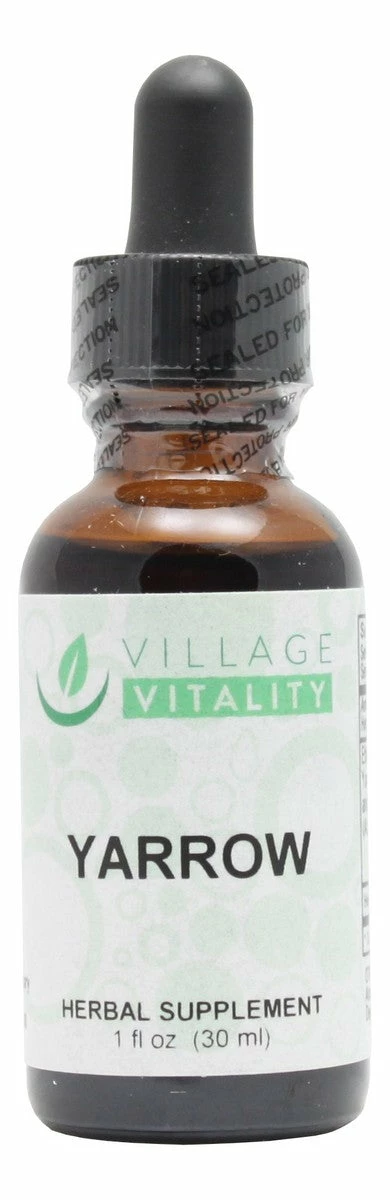
And, if your heart is completely set on natural options, both yarrow and willow bark herbal supplements will work to reduce fever and achiness.


Natural Cold Remedies are Pretty Sick
Nobody is completely immune to the scourge of the common cold. But with Dr. Neal’s clinical experience and down-to-earth wellness wisdom at your side, it’s quite a bit less fearsome, right?
By fine-tuning your overall health, following Dr. Neal’s fundamentals of prevention, and nipping symptoms in the bud with focused treatment, you’ll be sturdier than ever come cold season. An ounce of prevention goes a long way, and an ounce of Sinus Blaster goes even further!
Want more cold remedies for your sniffle season toolkit? Shimmy on over to a free Counterside Consult to chat with Dr. Neal about your mucus in detail.
Before we dive headfirst into spooky season, there’s another holiday, albeit sugar-free, that needs celebrating first.
National Children’s Health Day!
Though it came and went on the first Monday of this month, kids’ health is perennially important. Because, well, we talk a lot about how adults can restore and regain wellness, but wouldn’t it be so much better if we never lost it in the first place?
For all things health, we turn to Wellness Wisecracker of 20+ years, Dr. Neal — also known as Super Dad to his four lovely youngsters.
By working with the limitations of childhood tastes and tempers instead of against them, we can instill rock-solid, science-backed habits that lead to long-term, whole-person health. No gummies, gimmicks, or gut-churning red dye-40 syrups necessary.
Read on to learn Dr. Neal’s core tenets of holistic wellness for kids so you can raise healthy toddlers, teens, and everything in between.
In This Article:
- The Wellness Pyramid for kids
- Diet and nutritional habits for healthy children
- How sleep and exercise impact kids
- Stress management and mental well-being for children
The Wellness Pyramid for Kids: Holistic Children’s Health
We can’t expect kids to understand the importance of wellness or get excited about the benefits of building a healthy life. Heck, most of us grown-ups still throw tantrums about exercise, diet, and sleep, too.
We can, however, expect our kids to be little sponges, mirrors, copycats. Whatever metaphor you want to use there will work — children see, children do.
So as we look at the Wellness Pyramid from a kid’s point-of-view, keep in mind that the best thing we can do for the youngins is to make these lifestyle factors a fun and easy part of normal, everyday life.
Because children are always watching and picking up on our cues, patterns, and feelings, especially those surrounding mealtime, bedtime, and playtime.
Learn More: The Wellness Pyramid: Your Roadmap to Holistic Health
1. Diet: Build Good Nutrition Habits
We know the last thing a tired, busy parent wants to hear is that they need to spend more time and effort on their kid’s meals.
But the corporations churning out plastic-wrapped foods marketed to overwhelmed parents know that, too. In fact, they bank on it… Literally. So here’s the unfortunate truth: even the greenest of the green-washed pre-packaged eats are less healthy than real food.
And, here’s the worst part — there’s a lot at stake for your kid. Children at risk for nutritional deficiencies aren’t able to perform at top capacity in school and suffer long-term in the realm of mental health.
Plus, for children with ADHD, diet can play a major role in either quelling or aggravating the symptoms of the common neurodevelopmental disorder.
The good news is that the reverse relationship between a high-quality diet and boosted mental health, improved school performance, and mitigated ADHD symptoms has been studied, too. Teaching our kids that we eat to fuel our fires can be a make-or-break factor in your child’s quality of life.
Focus on: Sharing the importance of whole, fresh foods; balancing macronutrients (carbs, fat, protein) in every meal; enjoying snacks sparingly but without guilt.
2. Exercise: Encourage Regular Movement
New parents and modern guardians might be shocked to learn this, but we used to say, “Run the kids like dogs,” to help with sleep issues. Why?
Because physical activity — exercise, movement, and play — is critical for your child’s overall health and well-being. Not only has it been linked to improved school performance and better social integration, but it can also help prevent depression and anxiety.
If you want your child to develop properly and happily, get those suckers outside. Run, jump, and play with your kids regularly, making sure to expose them to plenty of sunlight (with sunscreen!) and fresh, green grass.
(Green schoolyards and playgrounds — AKA natural spaces designed more like a park and less like a parking lot — have been shown to have a whole host of physical and emotional benefits for kids.)
So get your kiddos moving and grooving outdoors, please, the wellness of our future generation depends on it.
3. Sleep: Prioritize Restorative Sleep Patterns
High-quality sleep, that is sleep that meets the parameters for depth and duration, is one of the integral building blocks to a long, healthy life for your kid.
Luckily, one of the major side effects of enhancing your child’s nutrient intake and exercise frequency is better sleep. And, when our kids sleep better, we all sleep better!
On the other hand, getting inadequate sleep can increase the risk for long-term health issues — mental and physical. The consequences of insufficient sleep in kids range from impulsivity, anxiety, depression, and impaired cognitive functions to lower muscular endurance and cardiovascular health.
Learn More: Sleep Better: B.S. Free Guide to Holistic Sleep Support
Dr. Neal’s tried-and-true, clinically-verified do’s and don’ts for improving your child’s sleep quality are:
Do:
- Create a consistent sleep routine for the household.
- Limit water and sugar intake before bed.
- Feed them a light amount of healthy protein and fat.
Don’t:
- Eat sugary treats or chug water before bed.
- Approach sleep arbitrarily or inconsistently.
- Leave screens on at bedtime — limiting blue light and stimulation is crucial.
So more stuff like apple slices with peanut butter for dessert, and less iPad time in bed.
4. Mental Health: Support a Healthy Experience of Life
Speaking of devices — it might be time to rethink the all-access passes to dopamine-spiking Stimulation Overload World we’ve given our kids via technology.
Dr. Neal’s inner circle of psychiatric practitioner friends — and the latest research — are pointing to the connection between mental illness, device addiction, and social media. What they’re seeing is that, instead of priming our children for the real world, unlimited access to the internet is setting them up for depression, anxiety, inappropriate behavioral eating habits, and more.
So when it comes to preserving the spark that makes childhood so special, device detachment is the big thing.
That being said, it’s never too early to actually bolster and improve your kid’s mental health with meditation and mindfulness practices, too.
In fact, Dr. Neal believes that we could solve the American mental health crisis in a single generation by making meditation training a part of all public (and private) schooling. As lofty as the goal might seem, the reality of its benefits makes the difficulty of achieving it seem inconsequential.
In educational settings, mindfulness-oriented meditation practices have been shown to better children’s cognitive functioning, emotional regulation, and social capabilities — all in one fell swoop.
Teaching a Future Generation of Health Heroes
Wait, did they skip right over the 5th aspect of the lifestyle domains?
We sure did.
The lifestyle changes component of the Wellness Pyramid is where we lower our exposure to external or environmental stressors. Kids just aren’t going to be doing a whole lot of that.
But you can do it for them! Lower the toxin burden their bodies have to carry by following Dr. Neal’s guidelines for limiting the number of carcinogens and endocrine disruptors in your home.
After all, it’s up to us, folks. It’s our job to raise a generation that’s better than the preceding ones — hopefully much, much better.
They say it takes a village, though, so feel free to call our crew of health experts to chat about children’s health via Counterside Consult.