






Magnesium is all the rage these days.
Whether on the advice of a trusted professional, the recommendation of a friend, or on the strength of really effective marketing, people all across the country are happily and confidently using magnesium supplements.
The problem is most of those magnesium supplements are failing them in a big way. Ineffective nutrient forms, bogus prices, falsified benefits, and potential side effects can afflict even the most popular, well-branded magnesium supplements.
What’s a wellness seeker to do?
Keep reading, and we’ll uncover the crucial differences of common magnesium supplements so you can find the mag that will actually work for you.
In This Article
- Why magnesium oxide is not a good supplement option
- Magnesium forms and absorption rates
- The best form of magnesium supplement available
- Our top recommendations for magnesium supplements
The Most Popular Magnesium Shouldn’t Be: Magnesium Oxide
No, magnesium oxide is NOT a “good” magnesium supplement.
- It’s the most sold magnesium, sea to shining sea, despite better options being available.
- It’s the one most conventional doctors will tell you to take, despite the science.
- It’s the one found in most “high-end” magnesium supplements, despite the ingredient being dirt cheap.
To understand our general distaste (literally and metaphorically) for magnesium oxide (and its ilk), we have to understand more about the “forms” of magnesium.
Learn More: Making Magnesium Supplements Easy | Dr. Neal Smoller
What is a “Form” of Magnesium?
Magnesium is a mineral. Minerals do not exist freely in nature. That is, you can’t buy bottled magnesium.
Minerals must be stuck to something else to be chemically stable. You can buy a bottle of magnesium oxide, magnesium malate, or magnesium citrate.
When we talk about the different types of magnesium, we really mean the “form,” as in “salt form” or “chelate form.”
Here are examples of popular magnesium types (or forms):

What a mineral is stuck to will influence a number of its properties, but in particular two important ones:
- The amount of the mineral you get at one time (the amount per capsule, for example).
- How much of that dose gets into the blood, and how much stays in the gut.
Magnesium Absorption, Explained
If you read any article ranking high in Google, they’ll tell you all magnesium is “easily absorbed by the gut.” Not true.
In general, salt forms like magnesium oxide or magnesium citrate have very poor absorption. Like, VERY poor. About 5% of magnesium from mag oxide or citrate get into the blood, and 95% of it stays in the gut.
If you want your magnesium in your gut, magnesium oxide or citrate are FANTASTIC.
Most of us don’t, though.
When magnesium is in the gut, it causes water to rush into the colon, resulting in faster, more watery bowel movements.
If you’re constipated, magnesium is a fine option. Note: fine, not optimal.
When magnesium is “stuck” to a larger compound, such as an amino acid—the building blocks of proteins—the amount absorbed goes WAY up.
We’re talking nearly half, or more, gets absorbed. Which is about 10x more than magnesium oxide.
You get WAY more absorption with the chelate, and way more magnesium in places you actually need it.
Note: You can get GI side effects like diarrhea from all forms of magnesium if you consume too much of it!
What’s the Best Form of Magnesium?
Technically, this is a trick question. Which form is the best form of magnesium depends on what you’re using the magnesium for.
Here’s how you simplify it:
- If you’re looking to support your digestive tract (usually to increase bowel movement frequency or change the consistency), citrate or oxide are the ideal forms of magnesium
- If you’re looking for any benefit outside of your GI tract, the chelate form is best.

Electrolytes: The Exception
Electrolytes are a small exception to the rule “chelates are preferred for supplementation.”
We generally prefer magnesium citrate, a magnesium salt, in electrolyte mixes because:
- The amount of magnesium needed for electrolyte replacement is much lower than needed for nutritional supplementation.
- Since the dose is lower, you’ll be less likely to trigger GI events with magnesium citrate in a simple electrolyte formula.
- The citrate form is very water-soluble, which makes it great for rehydration formulas.
- Citric acid (citrate of magnesium citrate) itself is a weak electrolyte.
Why “Calm”-ing Magnesium Products are Misleading
This is a Supplement Facts Panel for a VERY popular “Calm” product sold in gummy form:

We can see that the main form is magnesium citrate. As we said, at less than 10% absorption, that’s a fantastic laxative.
Most “calm” or relaxation powders are simply magnesium in their least absorbable forms. Excellent for constipation. Bad for sleep.
Woodstock Vitamins Magnesium Options
We have a comprehensive lineup of magnesium supplements to meet any use case you may have.
Easy Magnesium
Our heavy hitter is Easy Magnesium. It’s magnesium bisglycinate, which is magnesium bound to not 1, but 2 amino acids (that are both glycinate molecules). It delivers 125mg of elemental magnesium per capsule and has some of the best absorption of all magnesium options.


We have Easy Magnesium in powder form, and we call it Easy Mag Plus. This has a cocktail of magnesium chelates, including l-threonate and malate. It is available in a flavorless formula and mixed berry flavor!
Magnesium Glycinate
Magnesium Glycinate is our number 2 choice for magnesium supplementation. Slightly different than Easy Magnesium, with slightly less absorption, but not a noticeable amount.
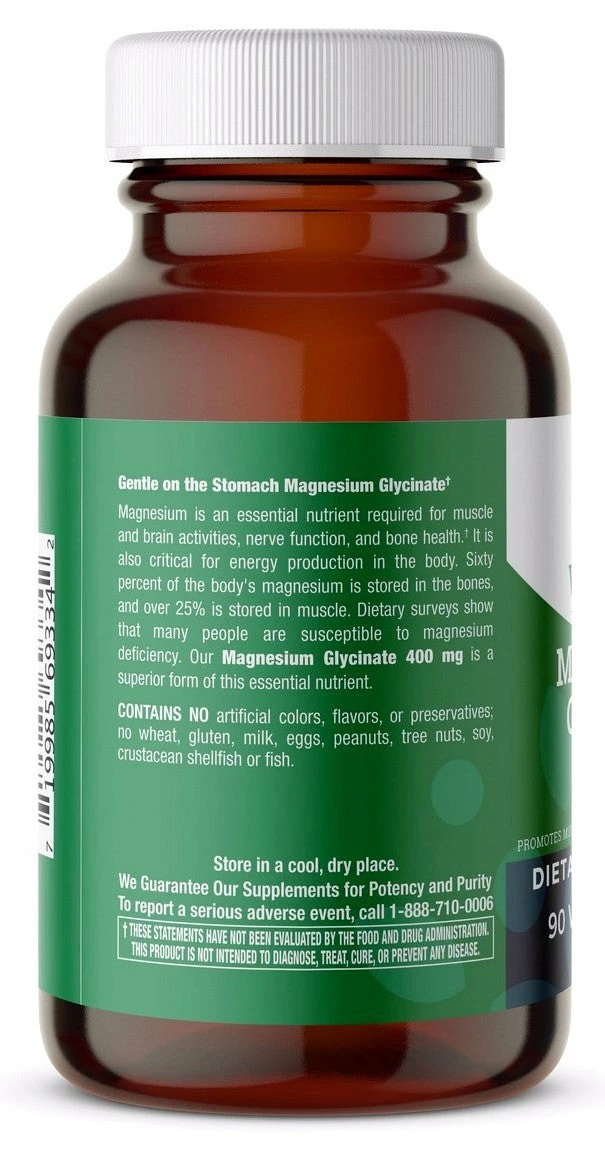

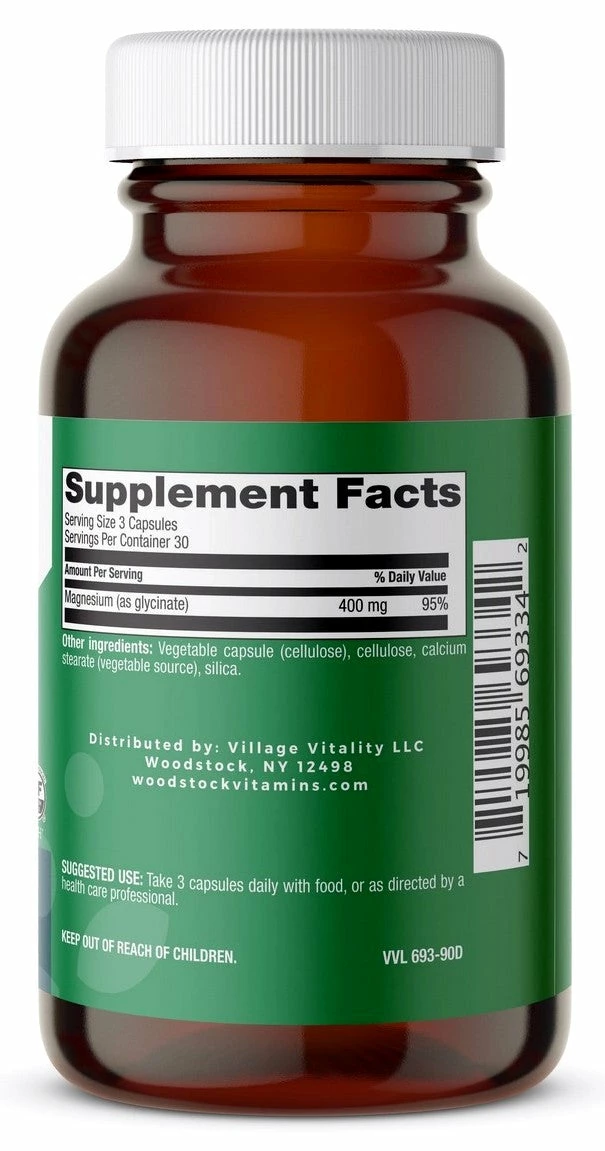
The biggest difference is how the product is labeled; to get the 400mg on the label, you need a full serving size, which is 3 capsules. It’s a tad confusing, and that’s what makes it our second choice.
Mega Magnesium
If you look at this Supplement Facts Panel, you might wonder why we recommend Mega Magnesium as our third-best magnesium.

This is a chelate magnesium with a twist. If you look carefully, it has magnesium citrate in its magnesium blend, meaning you will receive a small (but not negligible) dose of magnesium citrate.
Some people WANT both a gentle nudge to the gut AND absorption into the blood, so this product satisfies both. We recommend it really only in that situation.
Magnesium Citrate
For folks who are looking for Digestive Support, we recommend our Magnesium Citrate. Alternatively, our GI Regularity product is magnesium citrate with Triphala and aloe for total digestive support.
Magnesium Potassium Citrate
If you’re in need of a solid electrolyte formula, look no further than Magnesium Potassium Citrate.
What does Woodstock Vitamins Recommend for Magnesium?
Since there are different reasons to use the different forms of magnesium, we have recommendations that match your unique, specific needs.
For optimal magnesium levels, sleep support, calming and relaxation effects, and more: Easy Magnesium (Magnesium Glycinate as 2nd choice)
Digestive support: GI Regularity
And for electrolyte support: Magnesium Potassium Citrate
Supplement trends and fads almost never pan out. Collagen, though, is a fantastic exception to that rule.
That doesn’t mean it is the magical, skin-tightening, fountain-of-youth-in-a-powder that the wellness industry likes to hype it up as, though.
Collagen is so great. So much so, Dr. Neal formulated his own and made the Woodstock Vitamins Collagen Peptides his top choice for omnivore protein supplementation. But there’s more to know about the illustrious powder than you might think.
In This Article:
- What collagen is
- The benefits of collagen
- How to buy the best collagen
- Why you should avoid “vegan collagen”
Collagen Basics
Collagen is a protein. It’s different from other proteins like those found in nuts, chicken, or eggs, though.
It’s the main structural protein in humans, animals, bugs, and more!
Collagen has a unique mix of amino acids, which results in a unique shape. The unique shape allows it to be used as a source for all the structures in your body: cells, skin, joints, gut lining, hair, and more.
Learn More: Choosing the Right Protein Supplement: 5 Questions to Ask
The Collagen Benefits
Our founder, Dr. Neal, has identified protein as one of his First5 nutrients.
The current rhetoric is that “Americans eat enough protein.” Maybe even too much. While this may be true on a broad scale, in his experience, most individual people aren’t aware of their daily protein requirements, and most people consulting with him take less than their required amount.
Divide your weight by 2.2. That number is a great approximation of how many grams of protein you should eat in a day.
Collagen is an awesome way to crush those protein goals. Plus, it has the added benefit of helping your gut health.


Smaller studies of collagen supplementation (compared against conventional proteins) in athletes have also shown a benefit for joint health, too.
Of course, folks gobble down collagen in hopes of having healthier hair, skin, and nails. If we look at the data, collagen doesn’t provide any advantage over other proteins for this benefit… but it still helps. Part of the reason for poor hair, skin, or nail health is because of a deficiency of protein in the diet. Collagen peptide supplementation can close any nutrient gaps in protein intake.
Learn More: Protein Supplements: Are You Getting Ripped Off?
How to Get the Best Quality Collagen
Buying collagen is way more complicated than it should be, mostly because of the popularity of the product being met by the weak regulations of the supplement industry.
We have a few general rules that follow Dr. Neal’s Supplement Quality Standard:
- Make sure the brand is compliant with manufacturing rules. This will ensure the product is actually collagen (a real problem!) and contamination doesn’t exist.
Remember, collagen is animal-based, and animals eat the grass and drink our water, and therefore will be exposed (unfortunately) to things like heavy metals. Some heavy metal content will be unavoidable.
Transparency should be the goal and the pursuit of the best-in-class manufactured product - Popular collagen brands are often owned by mega-corporations, and they probably have engaged in some general crimes against humanity at one point, or super often.
Collagen is sourced from chicken, beef, and fish, so the practices of the farm and raw material suppliers should be ethical and sustainable.
Make sure the virtues of the brand align with your vision for a sustainable world. - Don’t overpay. A quality beef-based collagen is your best value, at less than 10 cents per gram of protein.
Chicken or fish collagen are other options, but are often more expensive per gram of collagen, with no added clinical advantage.
Learn More: How Protein Supplements Are Processed (Within an Inch of Their Lives)
Can I Buy a Vegan Collagen?
If a company is selling a “collagen booster” or a “plant-based” or “vegan” collagen, run. They’re being deceptive in their marketing.
Collagen only comes from animals, period.
Those “boosters” are essentially just overpriced Vitamin C supplements. Extra vitamins that are found in the collagen synthesis pathway will NOT increase the amount of collagen your body will make.
If you are not into animal-based products, you will not be able to get any collagen. Sorry. But, you can utilize plant-based protein supplements to augment your diet and often get many of the benefits of collagen supplementation, minus the gut help.
Learn More: How Protein Supplements Are Processed (Within an Inch of Their Lives)
Incorporating Collagen Peptides Into Your Daily Nutrition
We recommend our Woodstock Vitamins Collagen Peptides as your ideal collagen supplement. Duh.
Anyone at any age can use collagen on a daily basis. It can be done on its own, mixed with water, or put into a smoothie as a healthy protein for a snack or meal replacement.
We recommend people start with no more than the single serving size of 18g of collage peptide (a single scoop of our product) per day. This can be split up to two times a day; half-scoop in the morning, half-scoop in the afternoon for example.
Collagen peptides mix well with water, but it should be noted that collagen is its “happiest” in warm liquids; it mixes super fast in tea, coffee, or soups. It doesn’t mean you can’t use a cold drink, it just means that if you do, you have to mix well!
Remember, collagen IS a protein, and supplementing both whey and collagen is generally unnecessary.
Take collagen peptides for a great protein supplementation with the added benefit of supporting digestive health. Use it as a protein source in a shake or smoothie for a meal replacement or a healthy pre- (or post!) workout snack.
- Grab some Woodstock Vitamins Collagen Peptides
- Start with 1 scoop daily. Either all at once or split up in two parts at different times of the day (breakfast and afternoon snack, for example)
- Mix your collagen with coffee, water, almond milk, your smoothie, or any of your healthy beverages.
- Be wow-ed by the benefits.
What Can I Expect from Collagen Peptides?
Part of a great Supplement Strategy is setting proper expectations. Will you have luscious, blond hair a few days after taking it? No, and especially not if you are a brunette.
You’ll feel better with extra protein in your day. At mealtime, you’ll feel more satiated and less hungry. After a couple of days, your overall well-being will change just by meeting your protein goals.
After a few days to a week, folks with common GI discomfort report feeling more settled.
The benefit to our hair, skin, or nails comes with consistent use. We should expect to notice an improvement in no sooner than 90 days, but we really need to give it a full 180 days to see the benefit.
Learn More: 5 Benefits of Collagen for Gut Health
Collagen Peptides is Vital
When starting on a wellness journey, addressing bothersome health concerns, or conquering the chaos of our current regimens, we start by optimizing Dr. Neal’s First5.
Protein is one of those First5 nutrients, and collagen is an amazing way to supplement protein to meet your daily goals.
Collagen peptides is our top choice for protein supplementation as it delivers high-quality protein at an amazing value with amazing potential benefits
One of the biggest health concerns our customers share with us here at Woodstock Vitamins is that they’re struggling with poor sleep.
Sleep is a crucial aspect of a healthy life, and makes up one of the five lifestyle domains in my Wellness Pyramid — a visual representation of daily wellness practices that directly impact our immediate long-term health.
We all need to sleep better. And I’m not the best at getting perfect sleep, either. I can help you, but there’s no helping me with all these great TV shows to watch.
To sleep better, we may need a little assistance. There are a number of supplement options available to us that work exceptionally well, and some commonly use ingredients we should avoid.
Today we uncover my three favorite sleep support supplements — and two that should be avoided at all costs.
In This Article:
- Simplifying sleep supplements
- The top three supplements for sleep
- Two sleep supplements we do NOT recommend
How to Sleep Well
In case you missed it, or it’s just been a while, take a second to revisit the original Dr. Neal podcast, “The Big Mouth Pharmacist,” and listen to sleep expert Dr. Neil Stanley teach us how to sleep well before we dive in.
Learn More: Sleep Better: B.S. Free Guide to Holistic Sleep Support
Simplifying Sleep Supplements
To understand sleep support supplements and to prevent accidentally taking duplicate products, it helps to understand the type of sleep supplement you’re using.
Sleep support supplements can fit into a few bins:
- Herbal products that have relaxing, sedating, or calming effects on the body
- Micronutrients (vitamins, minerals, and others) that can induce relaxation
- Melatonin products
It’s best to stick to one category and one supplement, dose it appropriately, and see how it goes.
Learn More: Sleep Supplements: 5 Lesser-Known Sleep Aids
The Three Sleep Supplements We Recommend at Woodstock Vitamins
CBD
CBD is an herbal supplement that has a relaxing effect on the body.
Why we love it:
- It starts acting quickly in the body and doesn’t linger or cause a hangover effect
- It’s easy to really dial in the dose for an individual
- Studies show CBD reduces the need for prescription sleep and anxiety medicines
- We’ve had A LOT of success stories using it with patients
Unfortunately, we’re not legally allowed to sell this online yet, so if you’re interested in our high potency, high quality, and high-value CBD product, reach out to us by phone: (845) 521-7455.
Magnesium
Magnesium is a vital micronutrient; it’s a trace mineral that’s important for over 300 functions in the body. Taking a dose of a well-formulated magnesium product has a relaxing effect on people.
Why we love it:
- Many folks are a bit shy of their recommended magnesium intake through diet alone, so supplementing helps to close or eliminate that gap
- The effects are reported to be more subtle than herbal options, with fewer side effects than prescription sleep medicine
- There’s no risk of physical dependence or addiction, since magnesium is non-habit-forming, as compared to prescription options
Here at Woodstock Vitamins, we always encourage chelated versions (such as formulated in our Easy Magnesium), and no more than 500mg of magnesium at a time.
Learn More: Understanding The Different Types of Magnesium Supplements
Valerian
Before the CBD frenzy shook the nation, valerian was our most potent herbal sleep support supplement. It exhibits a pretty profound relaxation benefit.
(The only problem is that it takes about an hour to kick in, and the effects can linger into the next day.)
Why we love it:
- Valerian root has an efficient, natural sedative effect
- Its effects last in the 4-8 hour range, as reported by observational studies.
- It’s far less expensive than CBD
Our valerian capsules are a great herbal option for someone looking for sleep support and want something a bit more powerful than magnesium, but not as expensive (or cannabis-derived) as CBD.
Honorable Mentions
Our top three aren’t the only options for some much-needed ZZZZ support:
- 5HTP – 5HTP is an amino acid that acts as a precursor to serotonin. Some patients report relaxation, and when used at bedtime, they report better sleep, too. We lean on our 5HTP, a controlled-release formulation of 5HTP.
- Lavender Essential Oil – Sometimes the best help isn’t a pill you take! Lavender is an herbal compound that works aromatically, causing a relaxation that tickles an evolutionary “sleeping bone.” This is a great non-medical option we offer that could be used with — or without — any of the other options. French lavender is our affordable, thoroughly tested, quality essential oil.
- Holy Basil – Holy Basil is an herb used for stress and mood support that creates calm in many people who use it. It’s a little different acting than valerian; it’s less potent and shorter acting. It might be the right choice if valerian packs too much of a punch for you. We promote the Holy Basil Liquid Veggie Caps for a more comprehensive extract.
Learn More: 5 Things to Do (Not Take) for Better Sleep
The Two Sleep Supplements We Don’t Recommend
Not all supplements are winners. In fact, some can be outright bad for you. Here are two that we’ll pick on today, and for good reason:
Tryptophan
Tryptophan is a micronutrient; specifically, it’s an amino acid, and amino acids make up protein. The most famous tryptophan-containing protein is turkey.
The story goes, “The reason you get so sleepy on Thanksgiving is because of the large doses of tryptophan you are eating.” The response is, no it’s not, that’s silly. It’s the 5,000 calories ingested in an hour.
There’s more tryptophan in chicken, and the only reason you fall asleep from chicken is because you ate an entire tackle box from Popeye’s.
Our problem with tryptophan supplements is that they don’t really work, and they’re promoted based on an American folk story. They won’t hurt, at least not at the doses recommended for sleep support (500mg), but they are almost always a waste of money!
Melatonin
Most people don’t expect to see this on my list of sleep supplement rejects, but here it is. I cover the reasons why extensively over at the Dr. Neal blog.
In short, melatonin is NOT a sleep hormone. It’s a darkness hormone.
It tells your brain “It’s dark now.” Your brain then says, “It’s nighttime,” and starts the sleep process.
This is great if your brain needs help knowing when it’s dark. Like if you travel, or even for shift workers. Melatonin, when used correctly, can be a huge help.
For the rest of us, we’re often taking it FAR after our brain thinks darkness has started. This causes our sleep/wake cycle to be shifted out, often as far as 4 hours. This creates a hangover effect the next day, disrupts daytime productivity, and then completely rewires all of your body’s internal clocks.
In other countries, melatonin is respected at the level it deserves. It’s prescription-only almost everywhere except in the US, and doses are normally 1mg or less. Compare that to the 3, 5, or 10mg most of us have taken.
The sedative benefits of melatonin are not worth the health risks.
Our Sleep Supplements are a Snore… Thankfully!
In building a Supplement Strategy for sleep support, I would encourage everyone to follow a pharmacist’s common advice:
Start low. Go slow. But, go.
Take the lowest possible dose. Make changes in doses cautiously. But, don’t be afraid to make those changes.
Finally, if one thing doesn’t work, stop using it. Don’t pile on multiple things because you’re not getting the results you want. Sleep supplements, though over the counter and readily available, can be dangerous, especially if mixed together with other similar compounds, medicines, or alcohol.
It’s important to understand that just because a supplement is “good for sleep,” doesn’t mean it is a good option or a harmless one.
Avoid melatonin because it could be a problem. Avoid tryptophan because it’s wack. Check out CBD as your first option, magnesium or valerian if you don’t want to pack such a punch.