






The One Protein Source You’re Missing: Why Collagen Peptides Are Foundational For Total-Body Health

Collagen peptides are like the Swiss Army Knife of supplements. They do a whole lot, inside and out, yet they don’t get much publicity for the foundational nutrients they provide. Collagen peptides’ benefits range from rejuvenating skin health to growing lean muscle mass to supporting gut health. Still, many people are missing the essential amino acids they supply.
That’s why Dr. Neal Smoller, supplement strategist, holistic pharmacist, and founder of Woodstock Vitamins, has been advocating for supplementing with collagen peptides for years. He’s talked about why choosing the right protein supplement is so important to total-body health. We’re going to expand upon his idea, and by the end of this article, you’ll understand why the protein found in collagen peptides is so foundational and how to choose the right protein source for you.
How Collagen Peptides Support The Body
Collagen peptides are special in that they provide a full spectrum of amino acids and 20g of protein (at least our Collagen does). This nutrient profile comes with a whole host of benefits, like:
- Supporting skin structure and elasticity (1)
- Maintaining joint health (2)
- Contributing to bone structure (3)
- Promoting muscle growth (4)
- Improving sleep quality (5)
- Supporting gut health (6)
- Contributing to healthy BMI and metabolism (7)
From your skin, gut, joints, and muscles, collagen peptides aren’t “optional”. They’re a fundamental part of total-body health. Learn more here: Why Our Collagen Peptides is Vital.
The Different Forms of Protein
Most people don’t know this, but “protein” isn’t a monolith. There are several types of protein:
- Structural Proteins: These offer the support and framework for the body (this includes collagen peptides)
- Enzymatic Proteins: These speed up chemical reactions like digestion (these include lactase).
- Hormonal Proteins: These are chemical messengers that communicate in the body (this includes insulin).
- Defensive Proteins: These help protect the body from viruses and pathogens (these include antibodies).
- Transport Proteins: These move compounds around the body (think hemoglobin in the blood).
- Contractile Proteins: These play a role in muscle movement (including actin and myosin).
- Storage Proteins: These store nutrients (think of the casein that’s found in milk)
But not all protein sources are created equal. Some protein sources have more amino acids, others have less. Some are more bioavailable than others. And the list goes on. Here are the three main sources of protein:
- Animal Protein: Considered a complete protein with all nine essential amino acids and plus some (this includes meat, fish, dairy, and eggs).
- Plant Protein: Found in plant-based sources like beans, lentils, nuts, and seeds. This often requires combining different sources to get the full spectrum of amino acids.
- Protein Powder & Supplements: Fast and slow-acting protein sources like whey, casein, pea, and soy that can offer a full spectrum of amino acids or need to be combined with other sources.
Fortunately, with Collagen, you won’t have to worry about getting enough protein to boost your health. Featuring 20g of protein and all nine essential amino acids, this 100% bovine (cow-based) collagen peptides supplement covers your bases.
How Much Protein Do I Need?
How much protein you need per day depends on your gender, weight, movement routine, and health goals. Generally speaking, protein should account for 10-35% of your daily calories if you’re shooting for a 2,000-calorie diet. To make it easy, the formula for the right amount of protein is: Your body weight in lbs x 0.5-0.6 = grams of protein.
While there is no widespread “protein deficiency” in the United States, people still may not be getting the right protein. You’ll need a source that covers your essential amino acid needs and is easily absorbed by the body. Learn more about different protein sources here: How Protein Supplements Are Processed (Within an Inch of Their Lives).
The Different Types of Collagen
Did you know there are over 28 different types of collagen? But three types constitute the vast majority of collagen that are responsible for skin integrity, joint health, and bone integrity.
- Type I: The most common form of collagen, which is responsible for providing strength and structure to skin, joints, bones, and ligaments. It also plays a role in skin elasticity and may help reduce the appearance of wrinkles.
- Type II: This form is mainly found within the body in your cartilage. This type plays an important role in joint flexibility and shock absorption.
- Type III: This type is often found with type I in your muscles, skin, blood vessels, and organs. This type plays a role in the body’s wound healing process.
Of these three types, there are different sources of collagen that may be easier to absorb and more helpful for the body.
- Bovine (Cow): This is what our Collagen is made of, and it mainly contains Types I and III collagen. This makes it especially beneficial for skin and connective tissues.
- Marine (Fish): This form is very bioavailable and provides Type I collagen. This source makes it useful for supporting healthier skin, hair, and nails.
- Chicken: This form is rich in Type II collagen and plays a role in maintaining joint and cartilage health.
Collagen Tested for Quality & Purity
One of the biggest hesitations around collagen supplements and protein powders in general is heavy metals. It’s been well documented that an estimated 70% of protein powders studied exceed safe levels of metals like lead, arsenic, cadmium, and mercury. Fortunately, our Collagen is third-party tested for heavy metals like lead, cadmium, and mercury as well as contaminants like E. coli, Salmonella, yeast, and mold. Testing is a huge component of choosing a protein supplement with confidence. It’s a good idea to give yourself peace of mind by knowing your protein powder has been rigorously tested for heavy metals.
What to Look For When Buying Protein Supplements
As mentioned earlier, not all protein sources are the same. And the same goes for protein supplements. Some contain fillers, too much sodium, questionable ingredients, and the list goes on. Here are a few things to look for when buying a protein supplement:
- Sustainability: Is it made from sustainable sources like grass-fed, free-range cows or conventionally grown with pesticides?
- Processing: Was it minimally processed or refined to no end?
- Fillers: Does it contain artificial colors, sweeteners, or thickeners?
- Contaminants: Was it third-party tested for heavy metals and contaminants?
- Sodium: Is there added sodium that could affect your health in negative ways?
- Caffeine: Does it contain caffeine to boost its properties, or is it caffeine-free?
- Hormones: Does it contain steroids or testosterone? And do you want that in your protein supplement?
What goes in your body matters. Doing your due diligence to peek under the hood of a protein supplement and see how it’s made will pay dividends towards your health goals. Dive deeper into what to look for with protein supplements here: Protein Supplements: Are You Getting Ripped Off?
When to Expect Results
Collagen peptides are not a one-and-done kind of supplement. Consistent intake yields the best results, particularly for your gut, skin, joints, and muscles. Studies show that it takes as little as 8 weeks of continuous use to see results from collagen peptides. So, stick with it — even if you don’t see immediate results — and you’ll be rewarded with the amazing health benefits mentioned earlier.

Where Collagen Fits into Your Health Foundation
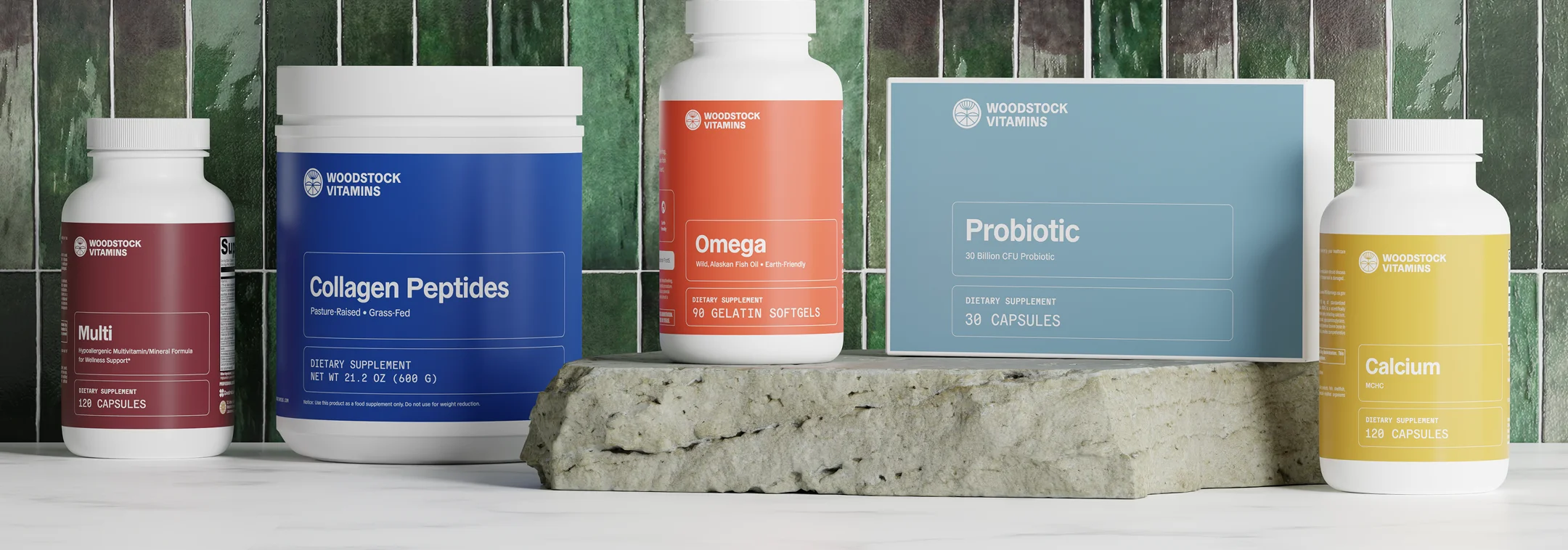
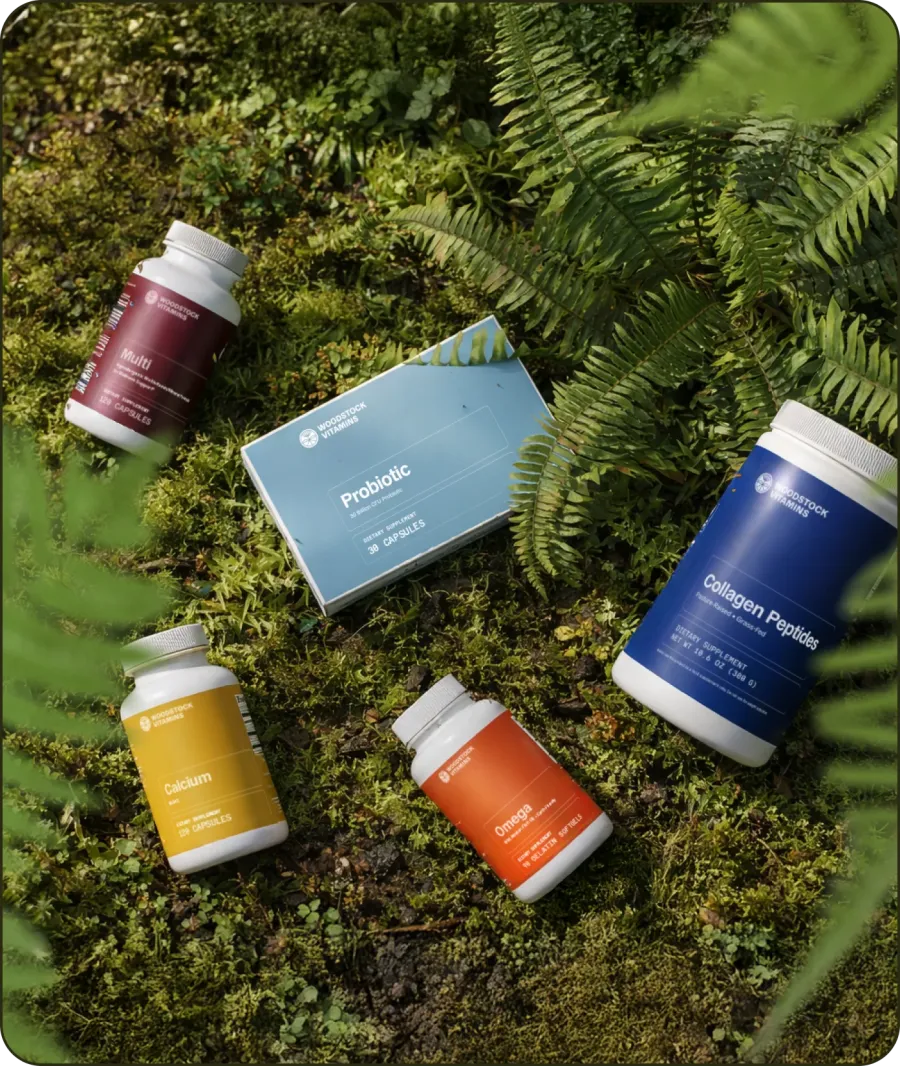
At Woodstock Vitamins, we believe in building your health on a solid foundation. Yes, you can fill your body and medicine cabinet with tons of nice-sounding, unnecessary supplements. But why would you when you can get your foundational nutrients solid instead? That’s the logic behind Collagen and all of the First 5.
That’s why Collagen is part of our First5 framework — five foundational inputs most people lack:
In this First5 line-up, Collagen covers your:
- Skin, hair, and nails
- Digestive and gut integrity
- Muscle and joint health
- Weight and metabolic goals
- Sleep quality
These amazing health benefits are why Collagen has been included in our First5. But we always recommend getting all five to cover all of your bases from head to toe.
The Bottom Line
When it comes to total body health, collagen peptides are a powerful way to support your body from the inside out. But most of us don’t get the right form of protein into our diets. That affects everything from how we sleep to whether our gut properly absorbs nutrients. Protein is not “optional”; it’s foundational. Rebuilding your health from the inside out starts with what you put in your body, and our Collagen is a good place to begin. Learn more about Collagen and our other First5 here.
You don't need more products. You need a clear place to start.
You don't need to rush. You don't need to figure it out alone. Two minutes with the quiz and you'll know exactly where your foundation has gaps — and what to do about it.