






Collagen peptides are like the Swiss Army Knife of supplements. They do a whole lot, inside and out, yet they don’t get much publicity for the foundational nutrients they provide. Collagen peptides’ benefits range from rejuvenating skin health to growing lean muscle mass to supporting gut health. Still, many people are missing the essential amino acids they supply.
That’s why Dr. Neal Smoller, supplement strategist, holistic pharmacist, and founder of Woodstock Vitamins, has been advocating for supplementing with collagen peptides for years. He’s talked about why choosing the right protein supplement is so important to total-body health. We’re going to expand upon his idea, and by the end of this article, you’ll understand why the protein found in collagen peptides is so foundational and how to choose the right protein source for you.
How Collagen Peptides Support The Body
Collagen peptides are special in that they provide a full spectrum of amino acids and 20g of protein (at least our Collagen does). This nutrient profile comes with a whole host of benefits, like:
- Supporting skin structure and elasticity (1)
- Maintaining joint health (2)
- Contributing to bone structure (3)
- Promoting muscle growth (4)
- Improving sleep quality (5)
- Supporting gut health (6)
- Contributing to healthy BMI and metabolism (7)
From your skin, gut, joints, and muscles, collagen peptides aren’t “optional”. They’re a fundamental part of total-body health. Learn more here: Why Our Collagen Peptides is Vital.
The Different Forms of Protein
Most people don’t know this, but “protein” isn’t a monolith. There are several types of protein:
- Structural Proteins: These offer the support and framework for the body (this includes collagen peptides)
- Enzymatic Proteins: These speed up chemical reactions like digestion (these include lactase).
- Hormonal Proteins: These are chemical messengers that communicate in the body (this includes insulin).
- Defensive Proteins: These help protect the body from viruses and pathogens (these include antibodies).
- Transport Proteins: These move compounds around the body (think hemoglobin in the blood).
- Contractile Proteins: These play a role in muscle movement (including actin and myosin).
- Storage Proteins: These store nutrients (think of the casein that’s found in milk)
But not all protein sources are created equal. Some protein sources have more amino acids, others have less. Some are more bioavailable than others. And the list goes on. Here are the three main sources of protein:
- Animal Protein: Considered a complete protein with all nine essential amino acids and plus some (this includes meat, fish, dairy, and eggs).
- Plant Protein: Found in plant-based sources like beans, lentils, nuts, and seeds. This often requires combining different sources to get the full spectrum of amino acids.
- Protein Powder & Supplements: Fast and slow-acting protein sources like whey, casein, pea, and soy that can offer a full spectrum of amino acids or need to be combined with other sources.
Fortunately, with Collagen, you won’t have to worry about getting enough protein to boost your health. Featuring 20g of protein and all nine essential amino acids, this 100% bovine (cow-based) collagen peptides supplement covers your bases.
How Much Protein Do I Need?
How much protein you need per day depends on your gender, weight, movement routine, and health goals. Generally speaking, protein should account for 10-35% of your daily calories if you’re shooting for a 2,000-calorie diet. To make it easy, the formula for the right amount of protein is: Your body weight in lbs x 0.5-0.6 = grams of protein.
While there is no widespread “protein deficiency” in the United States, people still may not be getting the right protein. You’ll need a source that covers your essential amino acid needs and is easily absorbed by the body. Learn more about different protein sources here: How Protein Supplements Are Processed (Within an Inch of Their Lives).
The Different Types of Collagen
Did you know there are over 28 different types of collagen? But three types constitute the vast majority of collagen that are responsible for skin integrity, joint health, and bone integrity.
- Type I: The most common form of collagen, which is responsible for providing strength and structure to skin, joints, bones, and ligaments. It also plays a role in skin elasticity and may help reduce the appearance of wrinkles.
- Type II: This form is mainly found within the body in your cartilage. This type plays an important role in joint flexibility and shock absorption.
- Type III: This type is often found with type I in your muscles, skin, blood vessels, and organs. This type plays a role in the body’s wound healing process.
Of these three types, there are different sources of collagen that may be easier to absorb and more helpful for the body.
- Bovine (Cow): This is what our Collagen is made of, and it mainly contains Types I and III collagen. This makes it especially beneficial for skin and connective tissues.
- Marine (Fish): This form is very bioavailable and provides Type I collagen. This source makes it useful for supporting healthier skin, hair, and nails.
- Chicken: This form is rich in Type II collagen and plays a role in maintaining joint and cartilage health.
Collagen Tested for Quality & Purity
One of the biggest hesitations around collagen supplements and protein powders in general is heavy metals. It’s been well documented that an estimated 70% of protein powders studied exceed safe levels of metals like lead, arsenic, cadmium, and mercury. Fortunately, our Collagen is third-party tested for heavy metals like lead, cadmium, and mercury as well as contaminants like E. coli, Salmonella, yeast, and mold. Testing is a huge component of choosing a protein supplement with confidence. It’s a good idea to give yourself peace of mind by knowing your protein powder has been rigorously tested for heavy metals.
What to Look For When Buying Protein Supplements
As mentioned earlier, not all protein sources are the same. And the same goes for protein supplements. Some contain fillers, too much sodium, questionable ingredients, and the list goes on. Here are a few things to look for when buying a protein supplement:
- Sustainability: Is it made from sustainable sources like grass-fed, free-range cows or conventionally grown with pesticides?
- Processing: Was it minimally processed or refined to no end?
- Fillers: Does it contain artificial colors, sweeteners, or thickeners?
- Contaminants: Was it third-party tested for heavy metals and contaminants?
- Sodium: Is there added sodium that could affect your health in negative ways?
- Caffeine: Does it contain caffeine to boost its properties, or is it caffeine-free?
- Hormones: Does it contain steroids or testosterone? And do you want that in your protein supplement?
What goes in your body matters. Doing your due diligence to peek under the hood of a protein supplement and see how it’s made will pay dividends towards your health goals. Dive deeper into what to look for with protein supplements here: Protein Supplements: Are You Getting Ripped Off?
When to Expect Results
Collagen peptides are not a one-and-done kind of supplement. Consistent intake yields the best results, particularly for your gut, skin, joints, and muscles. Studies show that it takes as little as 8 weeks of continuous use to see results from collagen peptides. So, stick with it — even if you don’t see immediate results — and you’ll be rewarded with the amazing health benefits mentioned earlier.

Where Collagen Fits into Your Health Foundation
At Woodstock Vitamins, we believe in building your health on a solid foundation. Yes, you can fill your body and medicine cabinet with tons of nice-sounding, unnecessary supplements. But why would you when you can get your foundational nutrients solid instead? That’s the logic behind Collagen and all of the First 5.
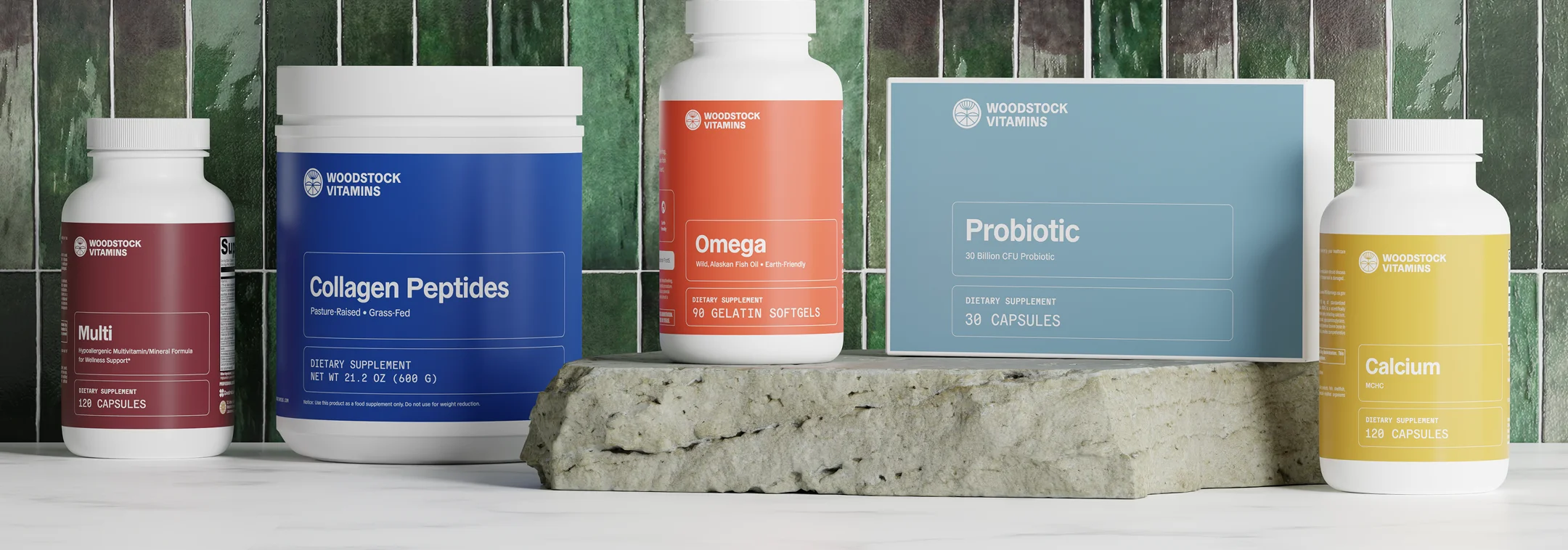
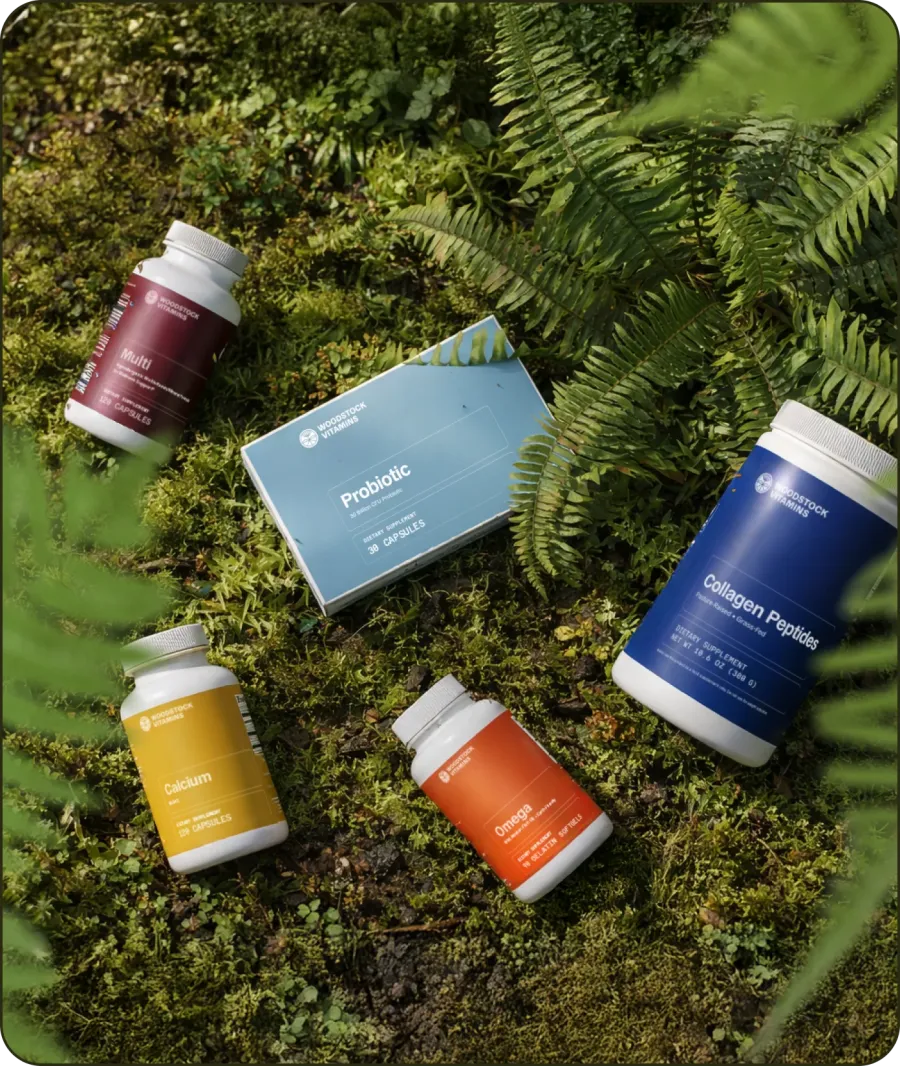
That’s why Collagen is part of our First5 framework — five foundational inputs most people lack:
In this First5 line-up, Collagen covers your:
- Skin, hair, and nails
- Digestive and gut integrity
- Muscle and joint health
- Weight and metabolic goals
- Sleep quality
These amazing health benefits are why Collagen has been included in our First5. But we always recommend getting all five to cover all of your bases from head to toe.
The Bottom Line
When it comes to total body health, collagen peptides are a powerful way to support your body from the inside out. But most of us don’t get the right form of protein into our diets. That affects everything from how we sleep to whether our gut properly absorbs nutrients. Protein is not “optional”; it’s foundational. Rebuilding your health from the inside out starts with what you put in your body, and our Collagen is a good place to begin. Learn more about Collagen and our other First5 here.
Probiotics: we know they’re found in yogurt, fermented foods, and the like. But are they really essential for total-body health? We think they are, but here’s the problem: not all probiotics work like you think they will. Probiotic supplements, in particular, are built on a number. Thirty billion Colony Forming Units (CFUs). Fifty billion. A hundred billion. But that doesn’t mean they work. That number of CFUs per product is almost meaningless — and the brands selling it know it. If you’re already taking a probiotic, there’s a good chance it isn’t doing what you think it is. Not because probiotics don’t work — they do. But most formulas are built around the wrong metric entirely.
While Dr. Neal Smoller, supplement strategist, 20+ year pharmacist, and founder of Woodstock Vitamins, thinks probiotics are foundational for total body health, which probiotic you choose can make all the difference. Here’s what actually determines whether a probiotic works and how to choose the right one to move the needle.
The CFU Marketing Problem
How many times have you gone to your local supplement aisle only to be confused about which probiotic to pick up? As mentioned earlier, more CFUs don’t always mean more benefits. But marketing teams and supplement brands try to spin it that way. The truth is, quality is better than quantity. Choosing the right strains of probiotics can have a bigger effect on your health than choosing 100 million CFUs from the wrong strains. We stand by four of the top-researched strains when it comes to getting the most out of your probiotic supplement.

The Four Most-Researched Probiotic Strains in the World
Out of the hundreds of probiotic strains out there, four strains made the cut in Probiotic — not because they’re popular, but because they’re the most studied. Those strains are Bifidobacterium Lactis, Lactobacillus Acidophilus, Lactobacillus Plantarum, and Bifidobacterium Longum. The difference between a formula built on these four and a formula built on thirty generic strains isn’t the CFU count. It’s efficacy. These strains have been shown to support:
- Digestive health (1)
- Easy bowel movements (2)
- Sleep quality (3)
- Mood and mental well-being (4)
- Immune function (5)
- Healthy weight management (6)
Probiotics aren’t optional; they’re foundational — and the gap in the efficacy of your probiotic strains depends on how well the supplement you’re using is formulated.
When Probiotics Help
When it comes to probiotics, more isn’t always better. In fact, more strains can actually mean fewer CFUs or smaller doses. But there is a good amount of probiotics that you want to get every day to maintain total-body health. Our Probiotic contains 30 million CFUs — not because bigger is better, but because that’s the dose the research behind our four strains actually supports. This quantity is ideal for maintaining good gut health while helping to address some longer-term digestive issues. Probiotics in higher doses are designed for people struggling with:
- Disruptive digestive problems
- Gut barrier issues
- Severe mood imbalances
- Skin issues that just won’t clear up
If you aren’t experiencing symptoms like these, that’s no problem. Probiotics can still be a useful part of your health routine, but keep in mind that 30 million CFU supplements are made for gut and digestive issues that linger and need more support.
When Probiotics Don’t Help
Probiotics are not a cure-all. Science hasn’t shown us that problems like irritable bowel issues, some autoimmune conditions, or large-scale gut damage can be solved with a probiotic alone. But probiotics do support a foundational health regimen that makes other interventions more effective, like supporting the absorption of vitamins and minerals, leading to benefits that span beyond gut and digestion. That’s why Probiotic is part of the First5; it works in synergy to support other nutrients like Omega, Collagen, Calcium+D, and a Multi to get absorbed and get to work.
Quality Makes a Difference with Probiotics
One of the biggest hesitations around probiotic supplements is quality and contaminants, particularly from lower-quality formulations. Fortunately, you don’t have to worry about that with our Probiotic; it’s third-party tested (like all of our First5) for heavy metals like lead, cadmium, and mercury, as well as contaminants like E. coli, Salmonella, yeast, and mold. Testing is a huge component of choosing the right probiotic supplement with confidence. It’s a good idea to give yourself peace of mind by knowing your probiotics have been rigorously tested for unwanted contaminants and heavy metals.
What to Look For When Buying Probiotic Supplements
Not all probiotics maintain their potency and effects. Some require refrigeration; others don’t. Some may contain contaminants, while others are rigorously tested. There are quite a few things to look out for when choosing a probiotic, like:
- Strains: Which strains does it feature, and are they scientifically proven and well-studied?
- Number of CFUs: Is it too little, like >10 million, or too much, like < 50 million?
- CFU count at expiration: Does the manufacturer promise the CFU count will still be good at the time of expiration?
- Quality and testing: Was it third-party tested for heavy metals and contaminants?
- Sustainability: Is the supplement manufactured ethically, and does it feature sustainably sourced ingredients?
- Shelf stability vs. refrigeration: Does it need to be refrigerated, or is it not required?
What goes into your body really matters. Do your due diligence to peek under the hood of a probiotic supplement and see how it’s made.
When to Expect Results
Probiotics are not a one-and-done kind of supplement. Probiotics work over time, not overnight. What that looks like in practice: some people notice digestive changes within weeks. Real gut restoration is a months-long process — which is exactly why consistency matters more than loading up on CFUs. Studies show that short-term benefits like support for digestive issues can be felt within a few days or weeks of probiotic use. Long-term benefits like improved gut health, smoother bowel movements, and overall well-being can be seen in weeks or months
Where Probiotics Fit into Your Health Foundation
The supplement industry benefits from complexity. WV doesn’t. Probiotic is in the First5 because the evidence put it there — not because it sounds good on a label. That’s the logic behind Probiotic and all of the First5.
That’s why Probiotic is part of our First5 framework — five foundational inputs most people lack:
In this First5 line-up, Probiotic covers your:
- Gut and digestive health
- Mental wellbeing
- The body’s immune response
- Natural weight management
- Mood and sleep
These amazing health benefits are why Probiotic has been included in our First5. But we always recommend getting all five to cover all of your bases from head to toe.
The Bottom Line
Most people spend years cycling through probiotics that don’t work because they’re choosing by CFU count instead of strain. Now you know what to actually look for. If you want to know where to start for your specific situation — gut issues, immune support, sleep, mood — take the quiz. Three minutes is all you need to get clarity on what’s in your First5 foundation and if Probiotic is right for you.
Everyone wants a sleep hack. The one supplement, gadget, or “secret” that finally delivers a full night’s sleep with little to no lifestyle changes. But here’s the uncomfortable truth: most sleep struggles aren’t caused by a lack of something. More often, they’re the result of habits that quietly work against your body’s natural sleep cycle every single day.
But there’s good news. This means improving your sleep doesn’t always require buying another product or completely overhauling your lifestyle. Sometimes, the biggest improvements come from removing the obstacles that are already standing in the way. Before you add anything to your nighttime routine, try subtracting these five habits first.
1. Stop Scrolling Right Up Until Lights Out
For many of us, checking our phones before bed has become automatic. A few emails turn into an hour of social media scrolling. Before you know it, it’s much later than you planned on going to bed, and your mind is completely wired.
The problem is the blue-enriched light from phones, tablets, and laptops tells your brain it’s still daytime. That signal can delay the natural release of melatonin, the hormone that helps regulate your sleep-wake cycle. When melatonin production is pushed back, falling asleep can become more difficult—even if you’re feeling tired.
There’s also the mental side of screen time. Reading work emails, scrolling through headlines, or engaging with stimulating content keeps your brain active at the exact moment you’re trying to wind it down.
Do this instead: Create a simple “screen sunset”. Put your phone away 30 to 60 minutes before bed, dim the lights, and give your brain permission to shift into nighttime mode. If you use your phone as an alarm clock, consider charging it across the room or outside the bedroom altogether.
2. Stop Pretending Your 3 p.m. Coffee Doesn’t Count
Coffee gets all the attention, but caffeine shows up in more places than you might expect—including tea, soda, energy drinks, chocolate, and even some pre-workout supplements.
What surprises many people is how long caffeine sticks around. While everyone metabolizes it a little differently, caffeine can remain in your system for several hours after you drink it. That afternoon pick-me-up may still be affecting your nervous system well into the evening, making it harder to fall asleep or stay asleep through the night. You may not even notice the connection because you’ve become accustomed to it.
Do this instead: Experiment with setting a caffeine cutoff in the early afternoon. Give it a week or two before deciding whether it makes a difference. Sleep improvements often happen gradually, and consistency is what allows your body to respond.
3. Stop Napping Like It’s a Second Job
Naps aren’t the enemy. In fact, a brief daytime nap can improve alertness, mood, and concentration when used intentionally. The challenge comes when naps become long, late, or unpredictable.
Your body naturally builds “sleep pressure” throughout the day—the biological drive that helps you feel ready for bed at night. A long afternoon nap can reduce that pressure, making bedtime feel less appealing and leaving you lying awake wondering why you’re suddenly wide awake. It’s an easy cycle to fall into: poor sleep leads to long naps, which lead to poorer sleep the next night.
Do this instead: If you need a nap, aim for about 20 to 30 minutes earlier in the day. Think of it as a quick recharge, not a substitute for a full night’s sleep.
4. Stop Treating the Weekend Like a Sleep Reset Button
After a busy week, sleeping in on Saturday feels earned. Unfortunately, your internal clock doesn’t always agree.
Our bodies thrive on consistency. Going to bed and waking up at dramatically different times from one day to the next can confuse your circadian rhythm, making Sunday night feel strangely restless and Monday morning especially difficult.
It’s sometimes called “social jet lag” because your body experiences a similar kind of disruption—even though you never left home. While one late night won’t undo your progress, regularly shifting your schedule by several hours can make it much harder to establish healthy sleep patterns.
Do this instead: Try to keep your wake-up time within about an hour of your usual schedule, even on weekends. If you need extra rest, consider going to bed a little earlier instead of sleeping far later.
5. Stop Reaching for the Supplement Aisle Before You’ve Handled the Basics
This may sound surprising coming from a supplement company, but it’s worth saying anyway. No supplement can consistently outwork habits that undermine sleep every night.
If you’re exposing yourself to bright light before bed, drinking caffeine late in the day, taking lengthy evening naps, and changing your sleep schedule every weekend, adding a capsule to your routine probably won’t address the root cause. That’s not to say supplements don’t have a place.
Once you’ve built a solid sleep routine, nutritional support may help fill genuine gaps or complement healthy habits. But supplements work best as part of a strong foundation—not as a replacement for one.
Do this instead: Focus on the fundamentals first. Create a consistent bedtime routine. Limit evening screen time. Watch your caffeine intake. Keep your schedule steady. Once those habits are in place, you’ll have a much clearer picture of whether additional nutritional support makes sense.
Small Changes Add Up
Better sleep rarely comes from one dramatic change. More often, it’s the result of small decisions repeated day after day. Turning off your phone a little earlier. Choosing water instead of another cup of coffee. Keeping your wake-up time consistent. Letting your body follow the rhythm it was designed to follow. None of these habits are flashy, but together they can have a meaningful impact on how rested you feel.
The best place to start isn’t by asking, “What should I add?”
It’s by asking, “What’s getting in the way?”
That’s the philosophy behind the First5 approach: build your health from the foundation up. Once the basics are in place, every other healthy choice has a better chance to work.
Curious about where your own foundation stands? Take our quiz to discover which foundational areas may deserve your attention first—and build from there.
If you search “best supplements for sleep,” here’s what you’ll find: melatonin. Valerian root. Magnesium gummies in five flavors. Herbal blends with fourteen ingredients and a dream-cloud on the label. What you won’t find. at least not easily, is the honest answer.
Most sleep supplements are built backwards. They target the symptom while ignoring the system. And the system, it turns out, depends heavily on something the sleep supplement category rarely talks about: what you’re already taking, or not taking, every day.
Sleep is not a switch. It is a biological process. One that relies on nutritional inputs, hormonal signaling, and a nervous system that has been supported (or undersupported) for months. Fix the inputs, and sleep tends to follow. Chase the symptom without addressing the inputs, and the gummies help on Tuesday and nothing on Friday, and you’re back to searching again.
This is the article the sleep supplement category doesn’t want you to read.
Why Sleep Is a Biological Process, Not a Product Problem
Here is what happens when you sleep well: your body cycles through multiple stages — light sleep, deep slow-wave sleep, and REM — in predictable 90-minute windows. During deep sleep, your body repairs tissue, consolidates memory, and regulates hormones. During REM, your brain processes emotion and cements learning. These stages require a nervous system that can downshift, a gut that is functioning well, and a body that has the raw materials it needs to produce the signaling molecules — serotonin, melatonin, GABA — that drive the process.
Those raw materials come from nutrients. Specific nutrients. And most people aren’t getting enough of them.
The sleep supplement category has decided that the answer is to add more products. The problem with that logic is the same problem with most supplement logic: it skips the foundation entirely. It goes straight to optimization before anyone has checked whether the baseline is covered.
The baseline is where sleep is often quietly broken, and the baseline is where the First5 comes in.
The Foundational Nutrients That Support Sleep Quality
Before you add a sleep supplement to your cabinet, the honest question is whether your foundation is actually in place. Several of the First5—the nutrients most people miss and that affect multiple body systems—have a direct, meaningful relationship with how you sleep.

Probiotic: The Superstar for Sleep
This one surprises people. A probiotic is not what most people reach for when they can’t sleep. But it should be one of the first things they consider.
The gut-sleep connection is one of the most underappreciated relationships in the body. Your gut microbiome plays a direct role in producing serotonin, the precursor to melatonin, the hormone that governs your sleep-wake cycle. Research into the microbiome-melatonin pathway continues to develop, but what is already clear is this: gut health and sleep quality are not separate systems. They are deeply intertwined.
A disrupted gut microbiome can compromise serotonin production, which can compromise melatonin signaling, which makes quality sleep harder to achieve and harder to sustain. A well-formulated probiotic — one built around strain specificity rather than raw CFU numbers — helps support a balanced gut microbiome. That foundation supports the gut-brain connection, which supports sleep.
This is not a sleep supplement. It is a foundational supplement with meaningful sleep implications. That distinction matters.
Calcium + D: The Often-Overlooked Connection
Calcium is associated with bones. What most people don’t know is that calcium also plays a role in muscle relaxation and nerve signaling — two things that matter considerably when your body is trying to downshift into sleep. And Vitamin D, which is required for calcium absorption, has its own separate relationship with sleep quality through its role in immune modulation and overall systemic balance.
Vitamin D insufficiency is common — even in people with otherwise strong diets and reasonable sun exposure. Closing that gap helps support bone health, immune function, and the kind of systemic stability that sleep depends on.
Omega-3: The Long-Game Nutrient
EPA and DHA — the omega-3 fatty acids in a well-formulated fish oil — help support brain health and the body’s normal regulatory processes. Quality sleep is, at its core, a brain health practice. The long-term consistency of omega-3 supplementation supports the same systems that, over time, support more stable sleep.
This is not “take omega-3 tonight and sleep better.” It is “a body that is better nourished at the foundational level tends to function better across system and sleep is one of them.” That is a slower, less marketable story. It is also the true one.
Why Most Sleep Supplements Miss the Mark
The sleep supplement category has a specific problem: it sells the feeling of doing something without fixing the underlying thing.
Melatonin is the most instructive example. It is not a sleep aid in the traditional sense; it is a hormonal signal. It tells your body what time it is. For jet lag, for shift workers, for specific circadian disruptions, it has real utility. As a nightly sleep supplement for someone who is simply struggling to sleep, the question is rarely “am I short on melatonin?” The question is “why is my melatonin not signaling correctly?” — and that question leads back to the gut, to nutritional gaps, to light exposure and cortisol rhythms.
Herbal blends have a similar pattern. Valerian, passionflower, and lemon balm have some evidence for relaxation support, though the evidence base is modest and the quality variance in products is enormous. They can be worth exploring. But they belong in Component 3 of a supplement strategy: they are what you want, after what you need is locked in.
Taking a 14-ingredient sleep blend while your foundational nutrition is incomplete is the supplement equivalent of renovating the guest room before fixing the foundation. It might make things temporarily more comfortable. It does not fix the structure.
Magnesium: The Most Common Add-On for Sleep and How to Think About It
Magnesium deserves its own honest treatment, because unlike most sleep supplements, the evidence for it is real.
Magnesium plays a role in over 300 enzymatic reactions in the body. It is involved in muscle relaxation, nerve function, and the regulation of the nervous system’s stress response. Magnesium glycinate, in particular, has been studied for its relationship with sleep quality, specifically its role in supporting the GABA pathway, which is the inhibitory signaling system that helps the nervous system calm down.
Intake of magnesium is low across populations. For people who are already doing the foundational work, magnesium is a legitimate next step for sleep support.
But the form matters. Magnesium oxide — the cheapest and most common form — is not the right answer here. Magnesium glycinate is the form with the most relevant evidence for sleep and relaxation support, and it is better tolerated by most people.
The one thing to be aware of: Magnesium is an add-on, not a foundation. It is not in the First5 because it does not meet the threshold for a foundational-first recommendation. But for someone who has the First5 in place and is looking for additional sleep support, it is the most evidence-grounded next step in this category.
The right order is: foundation first, then magnesium. Not the other way around.
What Else Actually Matters
Supplements — even the right ones, taken consistently — support a practice. They do not replace one. And for sleep specifically, the lifestyle inputs are substantial enough that ignoring them while focusing on supplements is a real mistake.
Light
Your circadian rhythm is governed by light. Bright light in the morning, ideally natural light within an hour of waking, helps anchor your sleep-wake cycle. Blue light from screens in the two hours before bed disrupts melatonin signaling in a way that no supplement fully counteracts.
Timing
Your body sleeps better on a consistent schedule. Going to bed and waking at the same time, including weekends, is one of the most consistently supported interventions in sleep research. The supplement industry will not sell you this because it is free.
Temperature
Core body temperature drops during sleep onset. A cool room, around 65–68°F for most people, facilitates that drop. Warmth before bed (a shower, a bath) followed by a cooler environment can help accelerate the transition.
Consistency over intervention
The supplement industry trains people to think in terms of products they take when they have a problem. Sleep doesn’t work that way. The body responds to sustained inputs over time: consistent nutrition, sleep timing, and light exposure. The people who sleep best are usually not the people with the most elaborate supplement protocol. They are the people who have done the boring foundational work and kept doing it.
The Honest Starting Point for Better Sleep
If you are struggling with sleep, the most useful question is not “which sleep supplement should I add?” It is “is my foundation in place?”
That means: are you getting the nutrients that most people are missing — the ones that help support the nervous system, the gut, the brain, and the hormonal signaling that sleep depends on? If not, that is the starting point.
The First5 is that starting point. A well-formulated probiotic — built around strain specificity, not CFU marketing — is the most relevant piece for sleep specifically. Calcium+D and Omega round out the foundation in ways that matter for the systems sleep depends on. Once the foundation is genuinely in place, magnesium glycinate is the most evidence-grounded add-on for sleep support. Not before.
This is not the answer the sleep supplement aisle wants you to hear. But it is the answer that actually moves the needle. Start with the foundations, and good sleep will follow.