






Strong Bones & Joints: Why Structure Requires a Foundation

Most people don’t think about their skeleton until something reminds them to. A knee that aches on stairs. A frame that feels less sturdy than it used to. A bone density scan that comes back lower than expected, seemingly out of nowhere.
Bone and joint health is a long, quiet process that starts decades before anyone notices a problem, and the supplement industry’s response to that process has mostly been to oversimplify it. Take calcium and the problem’s solved.
It isn’t that simple, and treating it that simply is part of why so many people end up with a cabinet full of bone-health products and very little change in how their bones and joints feel. Strong structure isn’t built by one mineral working alone. It’s built by a foundation — several nutrients working together, consistently, over years.
Bone Loss Starts Earlier Than You’d Think
Bone is living tissue. It’s constantly being broken down and rebuilt in a process called remodeling, and for most of early adulthood, rebuilding keeps pace with breakdown. That balance doesn’t hold forever.
For most people, peak bone mass is reached by their late twenties to early thirties. After that, the balance gradually tips — breakdown starts to outpace rebuilding, slowly, every year, for the rest of life. This isn’t a malfunction. It’s the normal trajectory of human bone.
What changes the slope of that decline is largely about who’s paying attention and when. Women experience an acceleration around menopause, when declining estrogen speeds up bone loss considerably. But men aren’t exempt; they simply tend to notice later after decades of a slower decline. Low dairy intake, limited sun exposure, sedentary habits, and certain medications can all steepen the curve at any age.
The point isn’t to alarm anyone. It’s to be honest about timing: if you wait until your joints hurt or a scan flags a problem to think about bone and joint health, you’ve been losing ground for a long time already. Foundational nutrition matters most when nothing feels wrong yet because that’s when it’s doing the most work.
The Calcium Myth: Why More Isn’t the Answer
Calcium gets credit for being the bone nutrient, and that reputation isn’t bad; it’s just incomplete. The myth is that taking more calcium, on its own, rebuilds bone. It doesn’t work that way.
Calcium’s primary role is maintaining bone structure that’s already there, not generating new structure out of nothing. And calcium absorbed without the right supporting nutrients often isn’t absorbed well at all. It can pass through the body largely unused. Megadosing calcium doesn’t fix this. It just means more calcium passing through unused, with little additional benefit and some evidence of added risk at very high intakes.
The dose matters more than people expect. Research consistently points to roughly 700mg of calcium as a sound daily target for most adults closing a dietary gap. More isn’t automatically better here. Matching the dose to what the evidence actually supports is.
Form matters too. Calcium Hydroxyapatite, Calcium Carbonate, and Calcium Citrate are absorbed differently, and the differences aren’t trivial. They affect how much of what’s on the label actually becomes available to your body. A supplement that looks identical on a nutrition facts panel can perform very differently once it’s swallowed.
Calcium is necessary. It has just never been sufficient on its own, and the industry has not been especially eager to say so.
Why Calcium and Vitamin D Work as a System
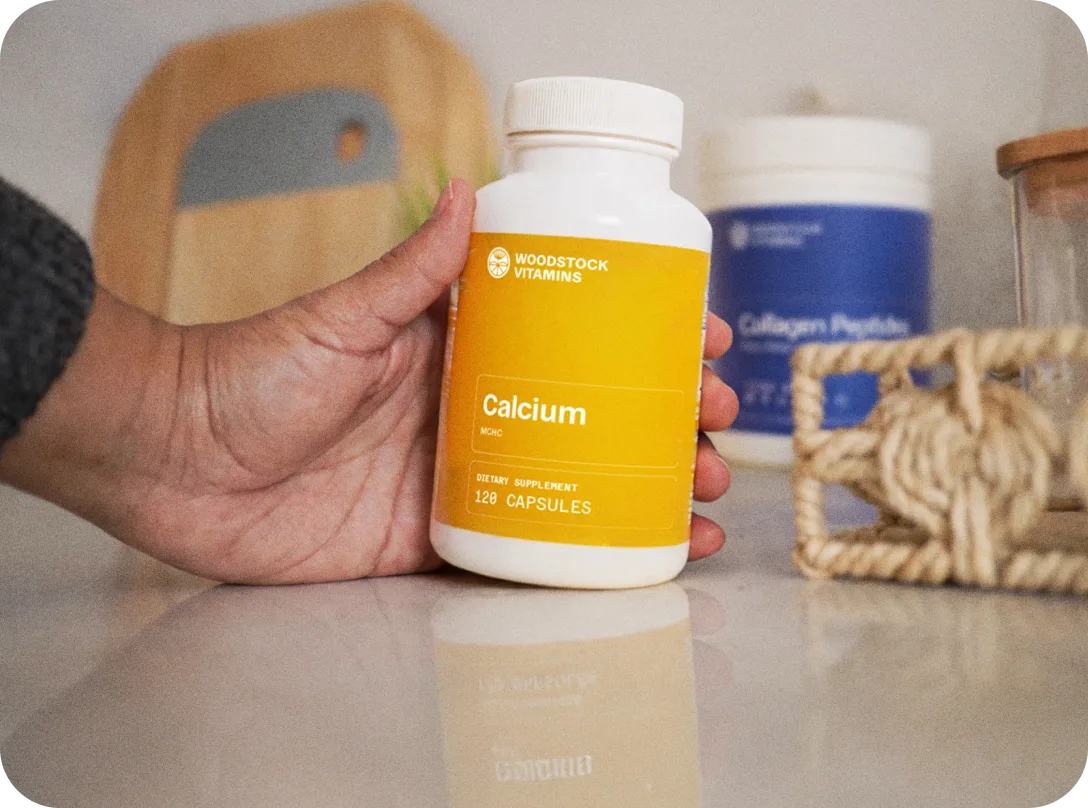
Here’s the part that calcium-only marketing leaves out: calcium absorption is vitamin D-dependent. Without adequate vitamin D, the body’s ability to absorb calcium from the gut is severely limited, no matter how much calcium you’re taking.
This isn’t a minor footnote. It’s the reason Calcium+D exists as a pairing rather than two separate decisions. Vitamin D regulates how much of the calcium you consume actually gets absorbed and put to use. Calcium without D is a nutrient with nowhere to go. D without calcium has nothing to help direct.
Vitamin D’s role goes beyond absorption, too. It plays a part in muscle function and immune regulation, both of which connect back to structural health in their own way. A body that can’t build adequate muscle around a joint puts more strain on that joint over time. This is why we don’t talk about calcium and D as two separate supplements that happen to ship together. They’re one system, and the system is the point.
Why Omega Supports Joint Comfort
Bone gets most of the attention in this conversation, but joints are a different structure with different needs. Omega-3 fatty acids are part of how the body manages the wear and tear that comes with daily movement.
EPA and DHA, the two primary omega-3s, help support the body’s natural inflammatory response — the process that governs how the body handles everyday physical stress, including the kind that accumulates in joints from years of use. They’re also a structural component of synovial fluid, the fluid that lubricates joints and allows them to move smoothly against each other.
This is a different mechanism than calcium’s. Calcium and D build and maintain bone structure. Omega supports the tissue and fluid systems around the joints that keep that structure moving comfortably. Bone and joint health get talked about as one topic, but they’re really two systems that benefit from different foundational inputs, which is exactly why a single-ingredient approach to either one falls short.
The Collagen Connection: Cartilage, Connective Tissue, and Bone Matrix
Collagen is the most abundant protein in the human body, and it’s also the most overlooked piece of the bone-and-joint conversation; probably because “protein” doesn’t sound like a bone nutrient.
Bone isn’t pure mineral. It’s a matrix, a structural framework, largely made of collagen, with calcium and other minerals deposited into it. Cartilage, the tissue that cushions joints, is also largely collagen. So is the connective tissue that holds the whole structural system together.
Collagen production declines with age, and most people aren’t closing that gap through diet. This is a different problem than not getting enough protein in general. Most people don’t get enough protein, period — and even people who do eat enough protein have usually eliminated the specific foods (bone broth, organ meats, skin-on cuts) that once supplied collagen-rich amino acids as a matter of course. Modern diets simply don’t include them anymore. A protein-adequate diet and a collagen-adequate diet are not the same thing, and closing one gap doesn’t close the other.
For bone and joint health specifically, that matters because the mineral side of the equation — the calcium, the vitamin D has nothing to attach to without a sound structural matrix underneath it. Collagen is that matrix.
What Else Helps
Supplements support a structural practice. They don’t replace one. Weight-bearing exercise is the single most direct signal the body has for maintaining bone density. Bone responds to mechanical load by staying strong, and it responds to its absence by weakening. Walking, resistance training, and any activity that puts load through the skeleton all count.
Diet matters beyond the specific nutrients already covered — adequate overall protein and a variety of whole foods give the body more to work with. Sun exposure plays a role in the body’s own vitamin D production, though for many people, especially in northern climates or during winter months, it isn’t enough on its own. And movement variety — not just one repeated motion — helps joints stay mobile across their full range rather than just the range they’re used most often. None of this is a substitute for the nutritional foundation. It’s the other half of it.
Where Bone & Joint Health Fits Into Your Foundation
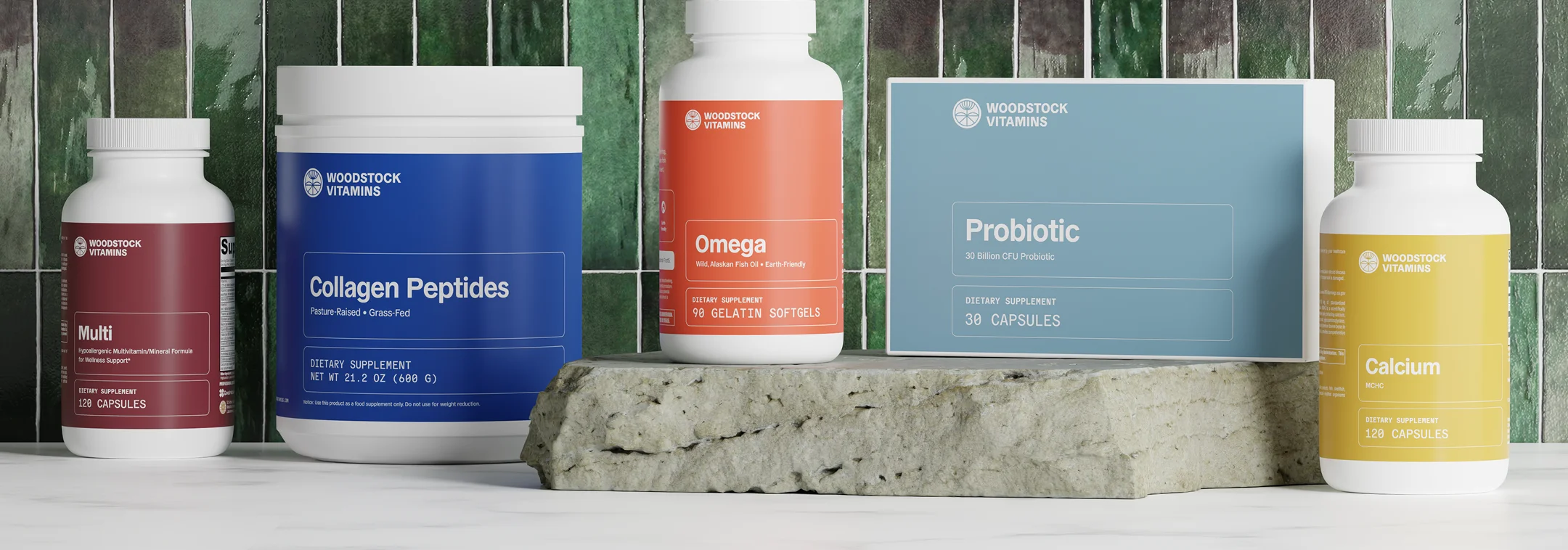
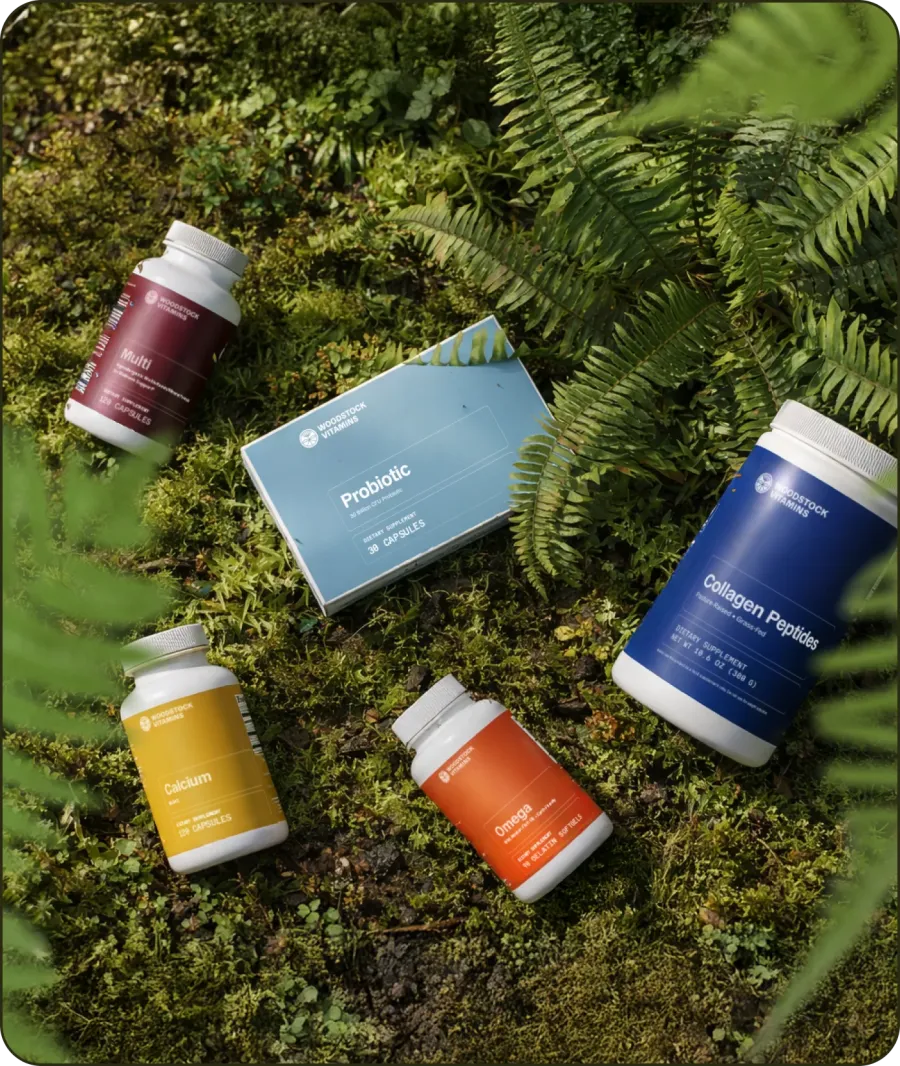
Calcium+D, Omega, and Collagen each address a different layer of structural health: mineral maintenance, joint comfort and lubrication, and the connective framework that holds everything together. None of the three does the other’s job. That’s exactly why they belong together rather than as a single product chosen in isolation.
This is the foundation-first approach in practice. Most people don’t need to start by chasing a niche joint supplement or a trendy bone-density ingredient. They need the structural basics in place first — consistently, for the long haul — because that’s what gives any further optimization something solid to build on.
If you’re not sure where your own foundation has gaps, the quiz is built to help you find out — not by diagnosing anything, but by identifying where your First5 foundation needs to start.
You don't need more products. You need a clear place to start.
You don't need to rush. You don't need to figure it out alone. Two minutes with the quiz and you'll know exactly where your foundation has gaps — and what to do about it.