







Omega-3 and Brain Health: How EPA and DHA Support Your Brain for the Long Run

Most people can tell you fish oil is “good for your brain.” Far fewer could tell you why — or which of the two main omega-3s, EPA or DHA, is doing the work, or what “good for your brain” is actually supposed to mean. That gap matters, because it’s exactly the kind of vague claim the supplement industry has trained people to accept without asking for the mechanism behind it.
So let’s ask for the mechanism.
Two Fatty Acids, Two Different Jobs
Omega-3 is shorthand for a family of fatty acids, but only two of them do meaningful, well-documented work in the brain: eicosapentaenoic acid (EPA) and docosahexaenoic acid (DHA). A third, ALA, comes from plant sources like flaxseed and walnuts, but the body converts it to EPA and DHA so inefficiently that it isn’t a reliable source on its own.
DHA is the structural one. It’s built directly into the membranes of brain cells — specifically concentrated at synapses, the junctions where neurons communicate with each other. One study puts a number on it: DHA accounts for roughly 20 to 30 percent of the fat content of the brain. That’s not a trace nutrient playing a minor supporting role. That’s a primary building material.
EPA works differently. It’s less concentrated in brain tissue itself, but it plays a role in the body’s broader signaling and regulatory processes — the kind of foundational, systemic support that affects how well everything else, brain included, is able to function. The two aren’t interchangeable, and formulas that report a single “omega-3” number without breaking out EPA and DHA are hiding the one detail that actually matters.
Why the Body Can’t Just Make Its Own
Here’s the part that makes omega-3 a genuine dietary gap rather than a marketing invention: DHA and EPA are conditionally essential. The body can produce small amounts from ALA, but the conversion rate is low enough that diet is, practically speaking, the only reliable input. If DHA is a structural component the brain rebuilds and maintains over a lifetime, and the body can’t manufacture enough of it on its own, then what you eat — or don’t eat — becomes a direct input into brain structure. That’s a different claim than “omega-3 is healthy.” It’s a specific, mechanistic reason why intake matters.
And most people’s intake doesn’t come close. Most U.S. adults consume somewhere between 70 and 100 milligrams of EPA and DHA per day — well under the 250 to 500 milligrams per day range referenced by multiple health and nutrition organizations. Most Americans simply don’t eat enough oily fish, and land-based diets don’t otherwise supply meaningful amounts of EPA or DHA. This isn’t a reason to panic — it’s a reason to understand where the gap actually comes from. For most people, it’s a structural feature of a modern diet, not a personal failure.
What the Research Shows — and What It Doesn’t
This is where a lot of supplement marketing gets sloppy, so it’s worth being precise.
The strongest, most consistent evidence for EPA and DHA is mechanistic and observational: we know how these fats are used in the brain, and population-level research associates diets higher in omega-3s with better markers of brain aging. Where the evidence gets more mixed is in supplementation trials aimed specifically at reversing or slowing decline that’s already underway.
The honest truth: omega-3 supplementation is not a late-stage rescue tool, and any brand implying otherwise is overselling what a bottle of fish oil can do. That’s not a reason to dismiss EPA and DHA. It’s a reason to place them correctly: as a structural input the brain has been quietly relying on for your entire life, not a targeted fix deployed after something has already gone wrong.
This is the distinction that matters. A nutrient doesn’t need a dramatic clinical trial result to belong in your foundation. It needs to be something your brain is already built from, that your diet isn’t reliably supplying, and that supports normal function over the long run. EPA and DHA clear that bar on mechanism alone.
The Foundation Argument, Not the Miracle Argument
This is really a story about timing and expectations. DHA doesn’t get deposited once and stay put — brain cell membranes turn over, and the fat available to rebuild them comes from what’s circulating in the body. That’s an ongoing, daily process, which means omega-3 status isn’t something you fix in a month and move on from. It’s closer to a maintenance requirement, similar to how bone remodels or how muscle relies on a steady supply of protein.
That’s precisely why omega-3 belongs among the foundational nutrients, not among the situational ones. It’s not chasing a symptom. It’s supporting a structure the brain depends on continuously, closing a gap that a typical American diet leaves open by a wide margin, and doing so through a plausible, well-documented mechanism rather than a marketing claim.
Where This Fits
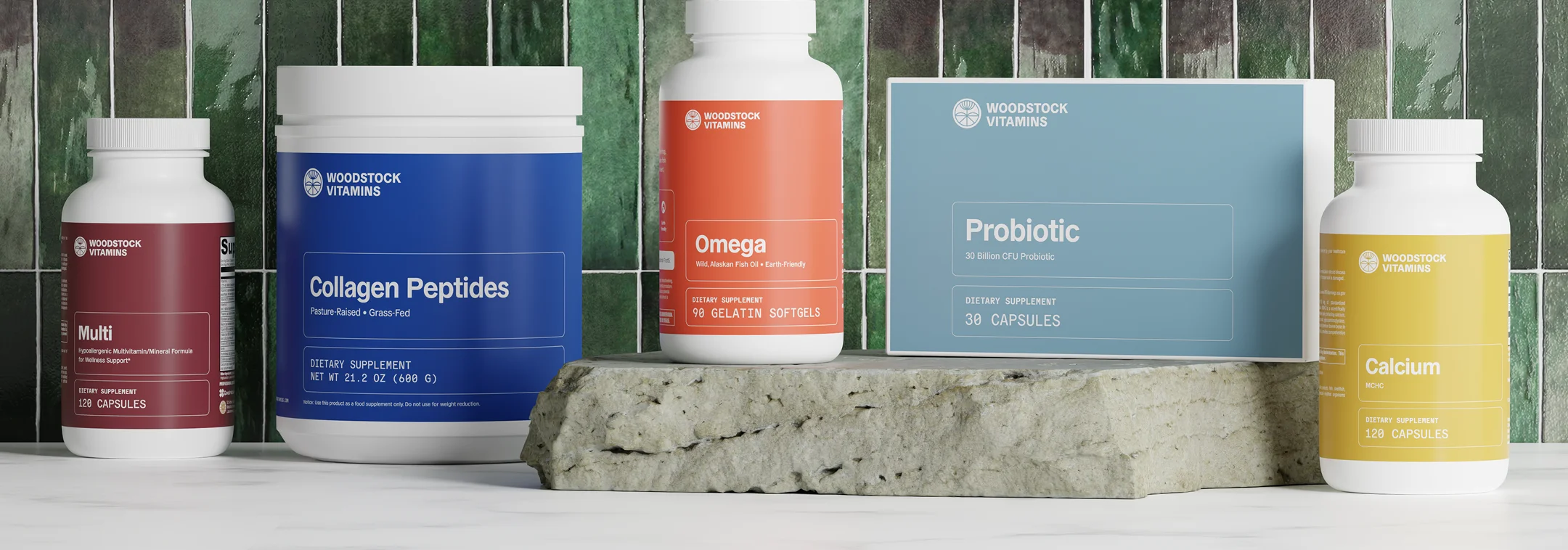
If brain health is the concern that brought you here, EPA and DHA are a reasonable place to start — not because one supplement solves cognitive health, but because this is a documented structural gap that diet alone rarely closes. Omega is our pharmacist-formulated answer to that gap, built around a meaningful EPA and DHA dose from wild-caught, third-party tested sourcing. You can read the full case for what to look for in any fish oil — dose, form, and sourcing — in The Omega-3 Gap: Why Most Fish Oils Miss the Mark, or see how brain health fits into a complete foundation in Building Consistent Brain Health.
Foundations aren’t glamorous. They’re just the thing everything else stands on. If you’re not sure where your own foundation is missing something, take the quiz and find out what to prioritize first.
You don't need more products. You need a clear place to start.
You don't need to rush. You don't need to figure it out alone. Two minutes with the quiz and you'll know exactly where your foundation has gaps — and what to do about it.