






Mental Health Myths: What Supplements Actually Do (and Don’t) for Mood

The supplement aisle has a lot of opinions about your mood. Ashwagandha will “melt” your stress away. This gummy is a “happy pill.” That tincture will “fix your brain chemistry” by Tuesday. Most of it is marketing dressed up as science.
That doesn’t mean nutrition has nothing to do with how you feel — it does. But the gap between what’s true and what’s sold is wide, and it’s worth closing. Here are the myths we hear most, and what’s actually going on underneath them.
A quick note before we start: this article covers nutritional support for everyday stress and occasional low mood — the kind everyone deals with. It is not about diagnosed anxiety, depression, or any other clinical condition. If that’s what you’re navigating, a supplement is not the tool for the job — a licensed professional is. (Dr. Neal covers clinical mental health topics over at DrNealSmoller.com — that content lives there, not here.)
Myth #1: This supplement can treat my anxiety or depression
No supplement is designed to diagnose, treat, cure, or prevent anxiety, depression, or any other mental health condition — and any brand implying otherwise is making a claim it can’t back up. Clinical mental health conditions deserve clinical care: a doctor, a therapist, a treatment plan.
What nutrition can do is support the biological systems that everyday stress and mood run on. That’s a meaningfully different claim, and it’s the one we’re willing to stand behind.
Myth #2: If it’s natural, it’s automatically safe for my mood
“Natural” tells you where an ingredient came from. It doesn’t tell you what it does in your body, at what dose, or how it interacts with anything else you’re taking — including prescription medications for mood or anxiety. Some of the most aggressively marketed “calm” ingredients have real interaction risks that rarely make it onto the front of the bottle.
If you’re on any medication, that’s a conversation for your pharmacist or doctor before it’s a decision made in a supplement aisle.
Myth #3: There’s one ingredient that will fix my mood.
This is the miracle-supplement trap, and mood is where it shows up hardest because feeling better is the thing everyone wants fastest. But mood isn’t governed by one pathway or one nutrient. It’s connected to sleep, blood sugar, gut function, inflammation, and a handful of foundational nutrients working together, day after day.
A single trendy ingredient layered onto a shaky foundation is asking a lot of one bottle. That’s not how we’d build it, and it’s not how Neal would build it for you in person.
Myth #4: Mood supplements work like a switch — take it and feel different today
Foundational nutrition doesn’t work on a light-switch timeline, and mood support is no exception. The nutrients most connected to everyday stress resilience — omega-3s, vitamin D, the gut-brain relationship — do their work through weeks and months of consistency, not a single dose before a hard day. If something promises same-day mood transformation, that’s the marketing talking, not the biology.
Myth #5: I eat fine, so my mood has nothing to do with my diet
Even solid diets can leave real gaps — and a few of those gaps happen to sit close to mood regulation. EPA, the omega-3 most studied for its role in everyday mood support, is one most people simply don’t get enough of from food. Vitamin D, particularly for anyone who spends most daylight hours indoors, is another common shortfall. And the gut-brain connection — the ongoing conversation between your digestive system and your nervous system — means gut balance plays a bigger role in how you feel day-to-day than most people realize.
None of these close the whole picture on their own. Together, they’re part of the foundation everyday stress resilience is built on.
Myth #6: Mood supplements are only for people with a diagnosed condition
Not true, and it’s a myth worth retiring. Everyday stress — the kind that comes from work, sleep debt, and a full plate — has a real, non-clinical toll on the body. Supporting your foundational nutrition isn’t reserved for people with a diagnosis. It’s for anyone whose “everyday” is asking more of them than their nutrition is currently supplying.
Where to start
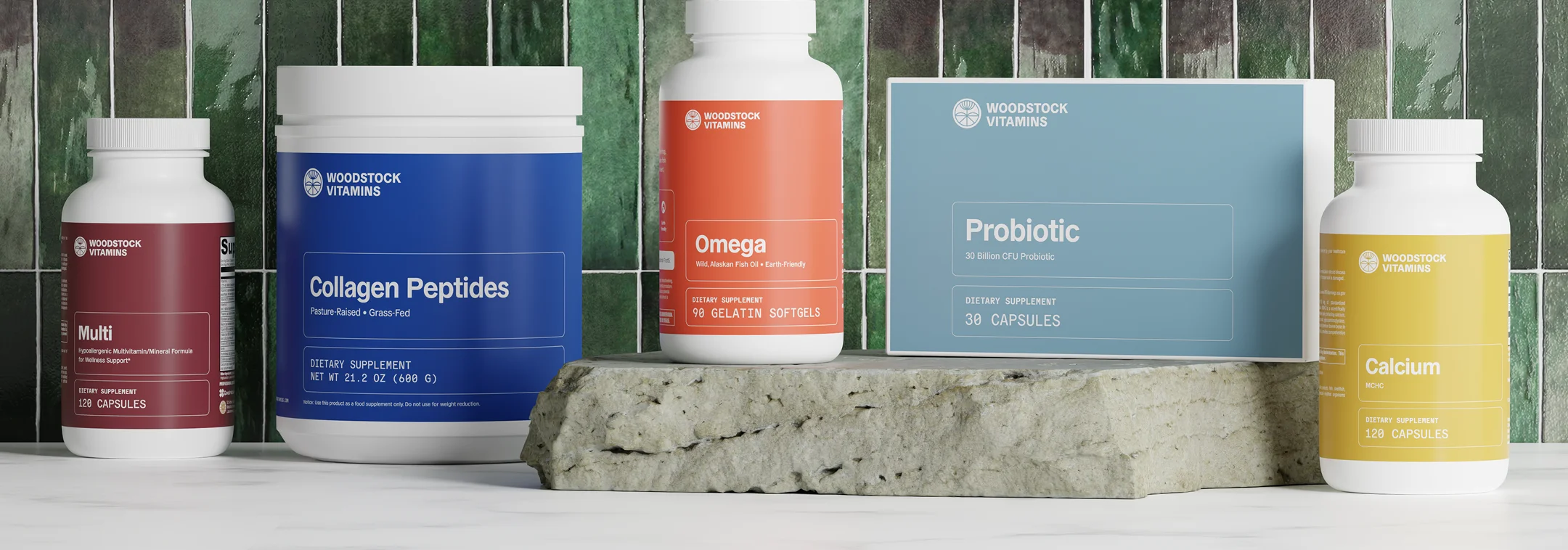
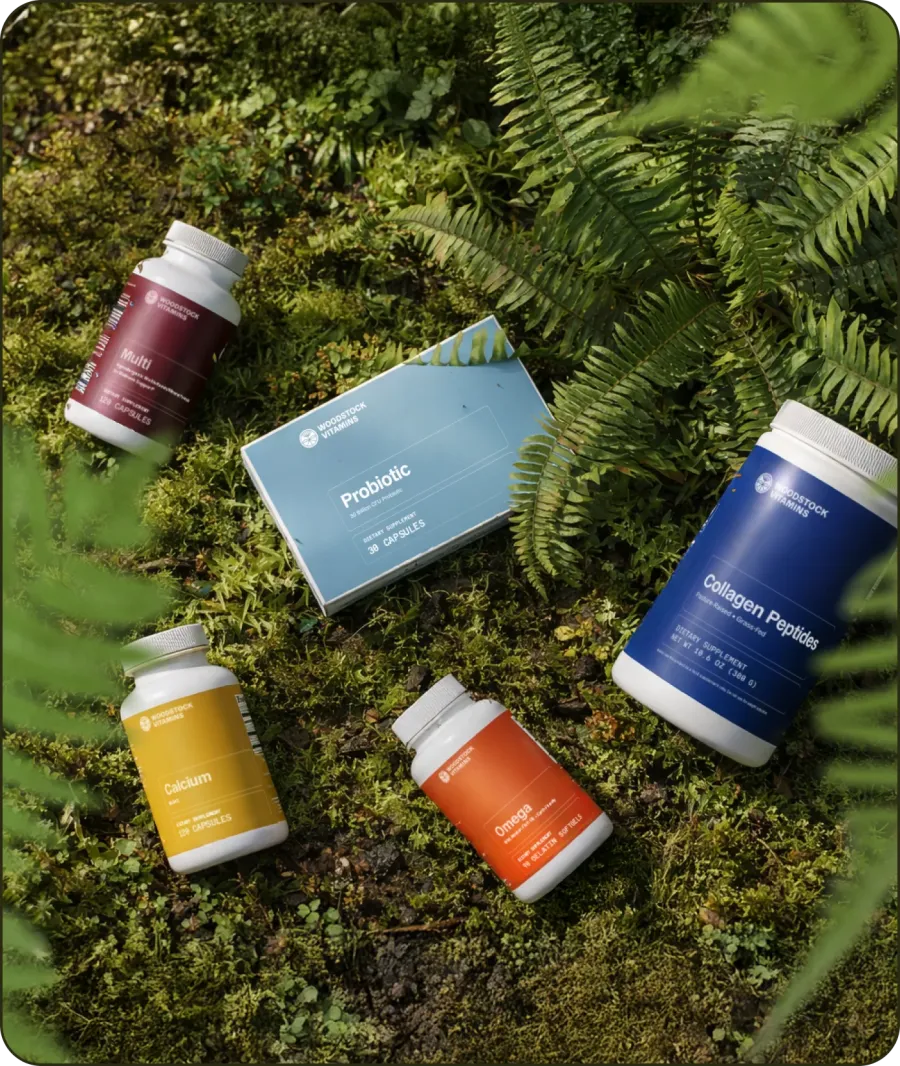
We don’t sell a “destress” blend, and we’re not going to pretend one ingredient solves this. Our approach starts with the same foundation we’d recommend for anyone: Omega, Probiotic, Calcium+D, and Multi — the combination most connected to the systems everyday stress and mood run on. Get the foundation right first. Anything more targeted comes after, not instead.
Not sure where your foundation actually has gaps? The quiz takes two minutes and gives you a specific, evidence-based starting point — no guessing required.
Want the fuller picture on stress and foundational nutrition? Read [Stress Adaptation: Why Your Foundation Matters Before Any Stress Supplement].
You don't need more products. You need a clear place to start.
You don't need to rush. You don't need to figure it out alone. Two minutes with the quiz and you'll know exactly where your foundation has gaps — and what to do about it.