





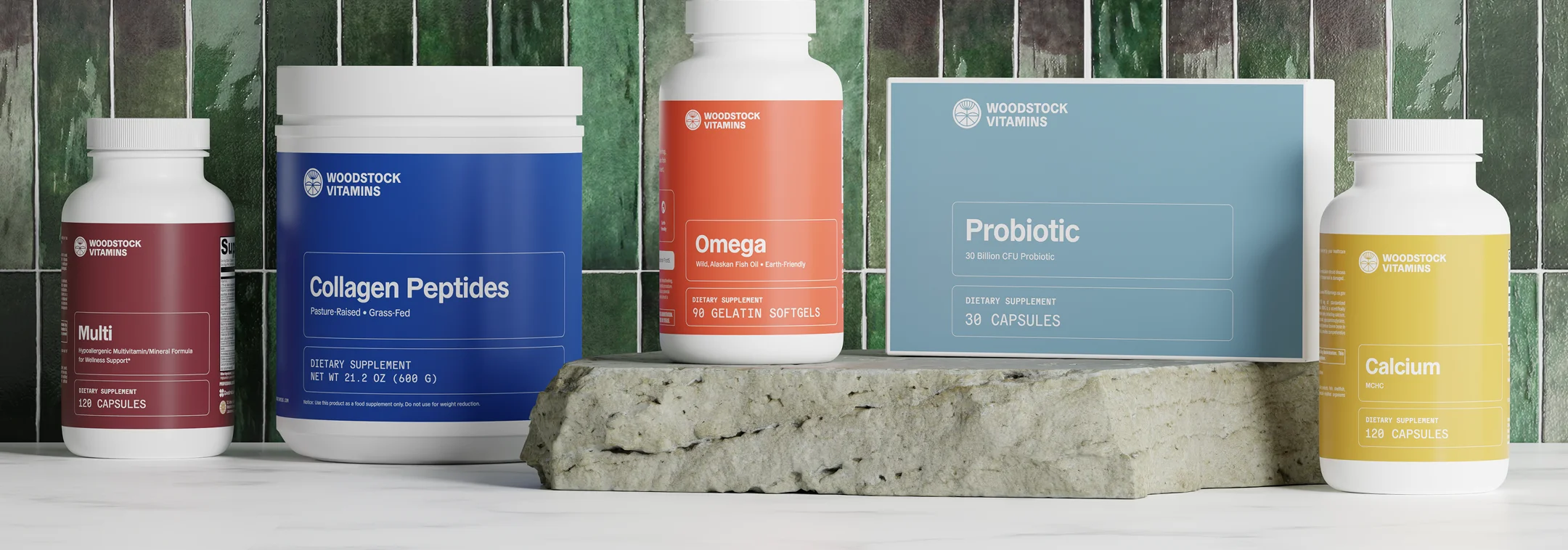


Probiotics: we know they’re found in yogurt, fermented foods, and the like. But are they really essential for total-body health? We think they are, but here’s the problem: not all probiotics work like you think they will. Probiotic supplements, in particular, are built on a number. Thirty billion Colony Forming Units (CFUs). Fifty billion. A hundred billion. But that doesn’t mean they work. That number of CFUs per product is almost meaningless — and the brands selling it know it. If you’re already taking a probiotic, there’s a good chance it isn’t doing what you think it is. Not because probiotics don’t work — they do. But most formulas are built around the wrong metric entirely.
While Dr. Neal Smoller, supplement strategist, 20+ year pharmacist, and founder of Woodstock Vitamins, thinks probiotics are foundational for total body health, which probiotic you choose can make all the difference. Here’s what actually determines whether a probiotic works and how to choose the right one to move the needle.
The CFU Marketing Problem
How many times have you gone to your local supplement aisle only to be confused about which probiotic to pick up? As mentioned earlier, more CFUs don’t always mean more benefits. But marketing teams and supplement brands try to spin it that way. The truth is, quality is better than quantity. Choosing the right strains of probiotics can have a bigger effect on your health than choosing 100 million CFUs from the wrong strains. We stand by four of the top-researched strains when it comes to getting the most out of your probiotic supplement.

The Four Most-Researched Probiotic Strains in the World
Out of the hundreds of probiotic strains out there, four strains made the cut in Probiotic — not because they’re popular, but because they’re the most studied. Those strains are Bifidobacterium Lactis, Lactobacillus Acidophilus, Lactobacillus Plantarum, and Bifidobacterium Longum. The difference between a formula built on these four and a formula built on thirty generic strains isn’t the CFU count. It’s efficacy. These strains have been shown to support:
- Digestive health (1)
- Easy bowel movements (2)
- Sleep quality (3)
- Mood and mental well-being (4)
- Immune function (5)
- Healthy weight management (6)
Probiotics aren’t optional; they’re foundational — and the gap in the efficacy of your probiotic strains depends on how well the supplement you’re using is formulated.
When Probiotics Help
When it comes to probiotics, more isn’t always better. In fact, more strains can actually mean fewer CFUs or smaller doses. But there is a good amount of probiotics that you want to get every day to maintain total-body health. Our Probiotic contains 30 million CFUs — not because bigger is better, but because that’s the dose the research behind our four strains actually supports. This quantity is ideal for maintaining good gut health while helping to address some longer-term digestive issues. Probiotics in higher doses are designed for people struggling with:
- Disruptive digestive problems
- Gut barrier issues
- Severe mood imbalances
- Skin issues that just won’t clear up
If you aren’t experiencing symptoms like these, that’s no problem. Probiotics can still be a useful part of your health routine, but keep in mind that 30 million CFU supplements are made for gut and digestive issues that linger and need more support.
When Probiotics Don’t Help
Probiotics are not a cure-all. Science hasn’t shown us that problems like irritable bowel issues, some autoimmune conditions, or large-scale gut damage can be solved with a probiotic alone. But probiotics do support a foundational health regimen that makes other interventions more effective, like supporting the absorption of vitamins and minerals, leading to benefits that span beyond gut and digestion. That’s why Probiotic is part of the First5; it works in synergy to support other nutrients like Omega, Collagen, Calcium+D, and a Multi to get absorbed and get to work.
Quality Makes a Difference with Probiotics
One of the biggest hesitations around probiotic supplements is quality and contaminants, particularly from lower-quality formulations. Fortunately, you don’t have to worry about that with our Probiotic; it’s third-party tested (like all of our First5) for heavy metals like lead, cadmium, and mercury, as well as contaminants like E. coli, Salmonella, yeast, and mold. Testing is a huge component of choosing the right probiotic supplement with confidence. It’s a good idea to give yourself peace of mind by knowing your probiotics have been rigorously tested for unwanted contaminants and heavy metals.
What to Look For When Buying Probiotic Supplements
Not all probiotics maintain their potency and effects. Some require refrigeration; others don’t. Some may contain contaminants, while others are rigorously tested. There are quite a few things to look out for when choosing a probiotic, like:
- Strains: Which strains does it feature, and are they scientifically proven and well-studied?
- Number of CFUs: Is it too little, like >10 million, or too much, like < 50 million?
- CFU count at expiration: Does the manufacturer promise the CFU count will still be good at the time of expiration?
- Quality and testing: Was it third-party tested for heavy metals and contaminants?
- Sustainability: Is the supplement manufactured ethically, and does it feature sustainably sourced ingredients?
- Shelf stability vs. refrigeration: Does it need to be refrigerated, or is it not required?
What goes into your body really matters. Do your due diligence to peek under the hood of a probiotic supplement and see how it’s made.
When to Expect Results
Probiotics are not a one-and-done kind of supplement. Probiotics work over time, not overnight. What that looks like in practice: some people notice digestive changes within weeks. Real gut restoration is a months-long process — which is exactly why consistency matters more than loading up on CFUs. Studies show that short-term benefits like support for digestive issues can be felt within a few days or weeks of probiotic use. Long-term benefits like improved gut health, smoother bowel movements, and overall well-being can be seen in weeks or months

Where Probiotics Fit into Your Health Foundation
The supplement industry benefits from complexity. WV doesn’t. Probiotic is in the First5 because the evidence put it there — not because it sounds good on a label. That’s the logic behind Probiotic and all of the First5.
That’s why Probiotic is part of our First5 framework — five foundational inputs most people lack:
In this First5 line-up, Probiotic covers your:
- Gut and digestive health
- Mental wellbeing
- The body’s immune response
- Natural weight management
- Mood and sleep
These amazing health benefits are why Probiotic has been included in our First5. But we always recommend getting all five to cover all of your bases from head to toe.
The Bottom Line
Most people spend years cycling through probiotics that don’t work because they’re choosing by CFU count instead of strain. Now you know what to actually look for. If you want to know where to start for your specific situation — gut issues, immune support, sleep, mood — take the quiz. Three minutes is all you need to get clarity on what’s in your First5 foundation and if Probiotic is right for you.
Do multivitamins actually work? There’s a lot of controversy about them from both the scientific community and regular supplement users. The people who say multivitamins are expensive pee aren’t entirely wrong. Most multivitamins on the market are underdosed, made with cheap forms the body can’t absorb, and formulated to look impressive on a label rather than actually be effective. That’s the real answer to the ‘Do multivitamins work?’ question: it isn’t a yes or no — it’s a ‘it depends entirely on how the multivitamin was built. The multivitamin category is mostly built wrong, and that’s why people are confused about whether they work.
Dr. Neal Smoller formulated our Multi around one question: which nutrients are almost everyone missing, and what forms actually get absorbed? The answer became the formulation. Here’s what that looks like.
Why Multivitamins Have Such Mixed Results
When it comes to multivitamins, not everyone notices the glowing health benefits advertised on the bottle. That’s for one simple reason: forms and formulations. Companies that cut corners on quality ingredients and researched formulations don’t deliver on health benefits. For us, chelated and activated forms of vitamins A through zinc were essential. These forms improve bioavailability and can be more readily absorbed by the body. Dr. Neal Smoller is a pharmacist — the kind who applied clinical skepticism to a category that avoids it. The Multi formulation is what that standard looks like in practice. With that, the multivitamin you choose can make a big difference in the results you receive. The formulation is where it starts.
What is a Multivitamin Supposed to Do
Contrary to popular belief, a multivitamin cannot replace a healthy diet. While the Standard American Diet (rightfully called SAD) has left much to be desired on the nutrition front, a multivitamin can only help fill the gaps it leaves behind, not fix them. The nutrients that move the needle share three qualities: they’re broadly under-consumed, their absence has real downstream effects, and most people can’t close the gap through food alone. The form they come in determines whether they work at all. Methylated B12, chelated minerals, activated folate — these aren’t marketing language. They’re the difference between a pill that absorbs and one that doesn’t.
How Multivitamins Support The Body
Multivitamins have a real impact on total-body health — when they’re built correctly. Their impact can be felt from the inside out, affecting nearly every system of the body. When the nutrients are in forms the body can actually use, the effects touch nearly every system — mood regulation, cognitive function over time, cardiovascular health, and a healthy immune response. These aren’t separate benefits. They’re connected, because the nutrients driving them are connected. That’s what a gap-filling foundation looks like in practice.
What to Look For When Buying a Multivitamin
Not all multivitamins are created equal. Some contain cheap, hard-to-absorb forms of vitamins in low doses, while others contain high-quality chelated and activated forms of the right vitamins and minerals in ideal doses. Knowing what to look for when choosing a multivitamin can save you a lot of time, money, and trial and error. If we were you, this is what we’d look for:
- Forms: Which forms of the vitamins does the product use, and are they natural and able to be utilized by the body?
- Dose: Does it offer 100% of your DV, or far beyond or below that threshold?
- Bioavailability: Are the nutrients chelated and activated for absorbability?
- Quality and testing: Was it third-party tested for heavy metals and contaminants?
- Sustainability: Is the supplement manufactured ethically, and does it feature sustainably sourced ingredients?
What goes into your body really matters. Do your due diligence to evaluate a multivitamin and see how it’s made. Dive deeper into what else to look for with multivitamins here: Choose the Best Multivitamin Supplement: Dr. Neal’s Do’s and Don’ts.
Where Multivitamins Fit into Your Health Foundation
More supplements don’t mean better supplementation. The First5 exists because five nutrients, done right, do more than a cabinet full of nice-sounding additions. That’s the logic behind Multi and all of the First5.
That’s why Probiotic is part of our First5 framework — five foundational inputs most people lack:
These are the reasons Multi earned its place in the First5. But we always recommend getting all five to cover all of your bases.
When to Expect Results
Multivitamins work over time, not overnight. Consistency is what moves the needle — which is why we offer a subscription. For most people, results from using a multivitamin can be seen in a matter of weeks or months. Consistency is key. That’s why we recommend getting at least two bottles of our Multi to ensure you can stay consistent with your daily supplement schedule.
The Bottom Line
Most multivitamins won’t move the needle because they’re not built to. The Multi was built differently. If you’re ready, [start with the Multi]. If you’re not sure where your gaps are, take the quiz. Three minutes is all it takes to tell you exactly which of the First5 you need most.
Ask the internet how to improve your mood, and you’ll get a thousand answers. Most of them are contradictory, and the other half are selling something. Strip away the noise and the actual evidence points somewhere much less exciting: four unglamorous levers — sleep, movement, connection, and diet — do more for everyday mood and stress resilience than almost anything else available to you. No trend required.
This isn’t a substitute for professional care when it’s genuinely needed. It’s what’s true for the everyday stress and low mood most people carry around without ever addressing the root causes.
Sleep: The Lever Everything Else Depends On
Mood regulation is downstream of sleep, not the other way around. A single short night measurably shifts emotional reactivity — small frustrations register as bigger ones, and the mental bandwidth for handling stress shrinks along with the hours you got.
The fix isn’t complicated, but it is consistent: a stable wake time, a wind-down period free of screens, and treating sleep as non-negotiable rather than the first thing sacrificed when the schedule gets tight. If your mood has been off and your sleep has also been off, start there before you start anywhere else.
Movement: Not About the Workout You’re Skipping
Exercise doesn’t need to be intense to matter for mood. Regular, moderate movement — a daily walk, a bike ride, anything that gets the body working consistently — is associated with meaningfully better stress resilience and day-to-day mood stability. The mechanism isn’t mysterious: movement regulates the same stress-hormone systems that chronic sitting and chronic stress both push out of balance.
The threshold that matters most is consistency, not intensity. Fifteen minutes most days does more for mood than an hour once a week that you dread and eventually skip.
Connection: The Most Overlooked Lever of the Four
Isolation is a measurable stressor on the body, not just an emotional experience. Regular social contact — a standing coffee, a weekly call, showing up somewhere in person — supports the same nervous system regulation that sleep and movement do, and it’s the lever people neglect first when life gets busy, precisely because it feels optional. It isn’t. Treat a recurring connection point in your week with the same seriousness you’d give a workout or a bedtime.
Diet: Feeding the System That Runs Your Mood
Mood regulation runs on specific nutritional inputs — the same B vitamins, omega-3s, and gut-supportive nutrients that show up everywhere else in foundational health. A pattern heavy in ultra-processed food and light on whole foods doesn’t just affect energy and digestion; it removes raw material the nervous system depends on to regulate itself.
You don’t need a restrictive diet to fix this. You need consistent access to the nutrients that are already known to matter — protein, fiber, omega-3s, and a gut environment that’s actually functioning, since a meaningful share of the body’s mood-relevant neurotransmitter activity originates in the gut, not the brain.
Why None of These Work in Isolation
Here’s the part that gets lost in most “top tips” lists: these four levers reinforce each other. Poor sleep saps the motivation to move. Skipping movement makes sleep worse. Isolation removes the accountability that helps both. A diet leaning on convenience food is often what’s left when sleep and stress have already eaten into the time and energy for anything else.
That’s why chasing one lever in isolation — a single supplement, a single habit change — rarely moves the needle much on its own. The foundation has to be built, not patched.
Where Supplementation Fits — and Where It Doesn’t
Foundational nutrition supports this system; it doesn’t replace it. For everyday stress and mood, Omega is the Superstar — EPA specifically is among the more studied nutrients for supporting normal mood regulation. The complete foundation adds Probiotic, given the gut’s direct role in mood-relevant signaling, Calcium+D for the broader nutrient baseline tied to nervous system function, and Multi to close the B-vitamin and mineral gaps that feed into the same system.
None of these are a stand-in for sleep, movement, connection, or diet. They’re the nutritional floor that makes it easier for the other four levers to actually work — not a shortcut around them.
The Real Takeaway
If your mood has felt off and you’re looking for the one thing to fix it, the honest answer is that there isn’t one thing. There are four ordinary, unglamorous levers, and they compound. Start wherever feels most doable this week — sleep is usually the highest-leverage place to begin — and build from there.
Want to know where your foundation actually stands? Take our quiz to see what belongs in your foundation first, or check out the Stress & Mood Health foundation for the full picture.
Most people think about their gut only when something feels off. Maybe it’s occasional bloating after a meal, inconsistent digestion, or that heavy, sluggish feeling that seems to arrive every afternoon. But your digestive system does much more than process food.
Every day, your gut is engaged in a constant conversation with your brain. Through an intricate communication network known as the gut-brain axis, these two systems exchange millions of signals that influence digestion, immune function, energy, mood, and how your body responds to everyday stress.
This isn’t a wellness trend or the latest health buzzword—it’s well-established physiology. Scientists continue to uncover just how closely the gut microbiome, nervous system, and brain work together to help maintain overall health.
That’s one of the reasons we consider Probiotic the Superstar of our Digestive Resilience Pillar. Supporting a balanced microbiome isn’t just about digestive comfort—it’s about helping build a stronger foundation for your entire body.
Your Gut Has Its Own Nervous System
Inside the walls of your digestive tract lives an incredibly sophisticated network of approximately 100 million neurons, known as the enteric nervous system (ENS).
Often called the body’s “second brain,” the ENS can regulate many digestive functions independently, coordinating everything from muscle contractions that move food through the intestines to the release of digestive enzymes. While your gut isn’t literally thinking, it is constantly processing information.
Even more fascinating is how closely it’s connected to your brain through the vagus nerve—one of the body’s largest communication pathways. Rather than acting as a one-way street, the vagus nerve carries information in both directions. In fact, much of the traffic actually travels from the gut to the brain.
That means what’s happening inside your digestive system doesn’t stay there. Your gut microbiome is continually sending signals that help inform how your nervous system responds to the world around you.
Where Mood Chemistry Actually Starts
Your digestive tract is home to trillions of microorganisms, collectively called the gut microbiome. Far from being unwanted guests, many of these bacteria perform jobs your body can’t do alone.
A balanced microbiome helps:
- Break down certain fibers and nutrients
- Produce beneficial short-chain fatty acids that nourish cells lining the colon
- Support normal immune function
- Help maintain the integrity of the intestinal barrier
- Interact with the nervous system through chemical signaling
Scientists now recognize that many of these microbial activities have ripple effects throughout the body—including the brain.
Why Strain Matters More Than the Number on the Label
One of the most surprising discoveries in gut-brain research is that approximately 90–95% of the body’s serotonin is produced in the digestive tract. Serotonin is widely known for its role in supporting mood, but it also helps regulate normal digestion, appetite, and communication throughout the nervous system.
While serotonin produced in the gut doesn’t simply travel into the brain, the gut and its resident bacteria influence many of the building blocks and signaling pathways involved in healthy nervous system function.
Gut microbes also interact with compounds involved in the production of neurotransmitters like GABA and dopamine precursors, while producing metabolites that communicate with immune cells, endocrine cells, and nerve tissue. The result is an ongoing conversation between your microbiome and your nervous system that researchers are still working to fully understand.
This doesn’t mean probiotics replace therapy, medication, quality sleep, or other evidence-based approaches when those are needed. It does mean that maintaining a healthy gut is one meaningful piece of the larger puzzle that supports normal mood regulation and resilience to everyday stress.
The Stress Loop Runs Both Ways
The gut-brain axis works both ways. Just as your gut influences your nervous system, chronic everyday stress can change the environment inside your digestive tract.
Elevated stress hormones may affect digestion, alter intestinal motility, influence the balance of beneficial bacteria, and impact the intestinal barrier. Over time, those changes may influence the very signals traveling back to the brain.
It’s a feedback loop. Stress can affect the microbiome. The microbiome can influence nervous system signaling. That altered signaling may make it harder for the body to adapt to ongoing stress. Breaking that cycle isn’t about finding one miracle supplement. It’s about strengthening the foundation that supports both systems every day.
Why the Right Strains Matter More Than a Huge CFU Number
Walk down the supplement aisle, and you’ll see probiotics boasting 50 billion, 100 billion, or even 200 billion CFUs. It sounds impressive. But bigger numbers don’t automatically translate into better results. A probiotic is defined by its strains, not simply its bacterial count.
Different strains perform different functions. Some are better studied for digestive balance, others for immune support, and others for maintaining a healthy microbial ecosystem. That’s why our formula focuses on four well-researched strains instead of chasing the biggest number on the label:
- Bifidobacterium lactis
- Bifidobacterium longum
- Lactobacillus acidophilus
- Lactobacillus plantarum
Together, these strains provide 30 billion CFUs per serving in a formula designed for shelf stability and acid resistance, helping more beneficial bacteria survive the journey through the stomach and reach the intestines where they’re intended to work.
Because even the highest CFU count doesn’t matter if the bacteria don’t make it to the gut.
Building the Foundation, Not Chasing a Fix
While Probiotic is the Superstar of our Digestive Resilience Pillar, lasting wellness rarely comes from a single product.
The First5 philosophy is built around complementary systems that work together.
Probiotic supports a balanced microbiome—the foundation of healthy gut-brain communication.
Omega provides EPA and DHA, essential fatty acids that contribute to normal brain function and support healthy nervous system structure.
Collagen provides important amino acids that support connective tissues, including those that help maintain the integrity of the digestive tract.
Multi helps fill nutritional gaps with vitamins and minerals—including B vitamins that support normal energy metabolism and healthy nervous system function.
Each addresses a different piece of the same foundation.
Together, they create a more complete approach than any one supplement could deliver on its own.
What Else Actually Moves the Needle
Supplementation supports a practice — it doesn’t replace one. Sleep, movement, and what’s actually on your plate matter just as much for gut health and stress resilience as anything in a capsule. If those basics are missing, no formula fixes that gap. If they’re in place, the First5 foundation gives the gut-brain relationship what it needs to function the way it’s supposed to.
Not sure where your foundation is missing something? Take our quiz to find out which of the First5 belongs in your foundation first.
Most people who feel stretched thin reach for one thing: a supplement that promises to take the edge off. Something with “calm” or “destress” on the label. A single ingredient positioned as the fix.
That’s the wrong place to start. Not because those ingredients are worthless — some have real evidence behind them — but because stress doesn’t operate on a single pathway, and your body doesn’t run on a single nutrient. Chronic stress draws down resources across systems: the nutrients that support your brain, your gut, and your baseline mood regulation all take a hit, often at the same time. A single targeted supplement layered onto a depleted foundation is asking one ingredient to do a foundation’s job.
This article covers the nutritional foundation that everyday stress and mood support are actually built on before any single-ingredient stress supplement enters the conversation.
A little disclaimer: we’re talking about everyday stress and baseline mood — the kind that comes from a demanding week, a bad night’s sleep, or a season that’s asking more of you than usual. Chronic stress and mood disorders are diagnosed medical conditions that deserve real clinical attention, not supplement advice.
Why Stress Hits Harder Than It Should
Stress itself isn’t the enemy. Some stress is a normal, even useful, part of life. It sharpens focus, drives short-term performance, and resolves once the trigger passes. The problem is chronic stress: the kind that doesn’t resolve, that builds up day after day until you start feeling “off” every day.
A few things make modern stress harder to absorb than it should be:
- It rarely lets up. Work, caregiving, finances, and constant connectivity mean the stress response gets triggered more often, with less recovery time in between.
- Sleep and stress feed each other. Poor sleep makes stress harder to manage. Stress makes sleep harder to get. Most people are caught in that loop without realizing it’s a loop.
- The diet most people eat doesn’t help. Highly processed, nutrient-poor eating patterns are common, and they’re particularly bad timing, because chronic stress is also pulling on the body’s nutritional reserves.
Why Foundations Matter: What Chronic Stress Actually Draws Down
Your body doesn’t experience “stress” as an abstract feeling; it’s a physiological state with real nutritional costs. Sustained stress increases the demand on several systems that depend on consistent nutrient intake to function normally: energy metabolism, nervous system signaling, and the gut-brain communication loop, among others.
This is why foundation-first thinking is non-negotiable here, not optional. If those baseline nutrient needs are already running short — which is common even in people eating reasonably well — chronic stress adds pressure to a system that’s already behind. That’s the gap a single “stress supplement” can’t close on its own, no matter how good the ingredient is.
This is also where the First5 — the foundational nutrients most people are missing regardless of how stressed they are — becomes directly relevant to stress and mood, not just to general health. Three of the five play a specific, well-documented role here: Omega, Probiotic, and Calcium+D.
The Omega-Mood Connection
EPA, one of the two primary omega-3 fatty acids, is among the most studied nutrients in the mood-support space. It’s more studied, in fact, than most of the ingredients marketed specifically as “mood” or “stress” supplements. Omega-3s are structural components of brain tissue, and EPA in particular plays a role in normal mood regulation and the body’s stress-response signaling.
What that means in practice: omega-3 fatty acids help support brain health and normal mood regulation. That’s a foundational input, not a quick fix and not a treatment for anything. It’s one piece of why Omega sits at the top of the foundation for stress and mood content.

The Gut-Brain Axis
The gut and the brain are in constant two-way communication, and a meaningful share of that conversation runs through the gut microbiome. Probiotics help support the gut-brain connection, which is part of why Probiotic belongs in this foundation, not as an afterthought but as a structural piece of it.
This isn’t a fringe idea anymore; it’s one of the more active areas of nutritional research, and it’s a big part of why “just take this one ingredient for stress” misses the point. If the gut environment is out of balance, that has downstream effects on mood-related signaling that no single mood ingredient can fully compensate for.
Vitamin D and Mood
Vitamin D’s connection to mood is one of the better-documented, more seasonal stories in nutrition. Vitamin D status tends to dip in fall and winter for people who get less sun exposure, and that dip tracks with shifts many people notice in their baseline mood and energy. Calcium+D — which pairs Vitamin D with the calcium it helps the body use — is part of the foundation for this reason, not just for bone health.
The evidence here supports a foundational, baseline role: a strong nutritional foundation supports overall mental well-being. It is not a treatment, and the seasonal pattern doesn’t mean a higher dose fixes a worse mood faster; consistency over time is still the operating model.
Why Single Supplements Fail
Walk into the stress-and-mood aisle, and you’ll find ashwagandha, L-theanine, magnesium glycinate, GABA, and a dozen other ingredients, each positioned as the answer. Some of them have decent evidence behind specific uses. None of them works the way the bottle implies.
The “miracle supplement” trap is the same one the rest of the supplement industry runs on: isolate one ingredient, promise it’ll handle a complex, multi-system problem, and let the customer assume that taking it means they’ve covered their bases. They haven’t. A single ingredient layered onto a foundation that’s already missing EPA, probiotic support, or adequate vitamin D is solving for one variable in an equation with several.
This is also where situational add-ons like magnesium genuinely fit, but they fit after the foundation, not instead of it. Magnesium is a reasonable, evidence-backed add-on for some people dealing with stress and sleep disruption. It is not a substitute for the foundational nutrients most people are missing, regardless of stress level. Add it once the basics are in place — not before.

The First5 Approach to Stress & Mood
Put together, the foundation for stress and mood support looks like this:
- Omega — supports brain health and normal mood regulation through EPA and DHA, the most studied nutrients in this space
- Probiotic — supports the gut-brain connection that influences mood-related signaling
- Calcium+D — supports overall well-being through Vitamin D, particularly relevant given common, often-overlooked insufficiency
- Multi — fills the broader nutrient gaps (B vitamins among them) that diet alone often leaves, and that chronic stress places additional demand on
None of these works in isolation, and none of them works overnight. The point isn’t that any single nutrient here “fixes” stress. The point is that a body running short on foundational nutrients is less equipped to handle stress well and closing those gaps is the groundwork that has to happen before anything else has a fair chance to help.
What Else Helps
Supplements support a practice. They don’t replace one. If stress is a persistent part of your life right now, the foundation matters — but so does everything around it:
- Sleep is the single biggest lever most people underuse. Poor sleep amplifies stress; managing stress without addressing sleep is working against yourself.
- Movement — even modest, regular movement — supports the same systems that chronic stress puts under strain.
- Connection matters more than most wellness content gives it credit for. Isolation and unmanaged stress tend to compound each other.
- Diet is the baseline the First5 is built to support, not substitute for. No foundation closes a gap that a consistently poor diet keeps reopening.
This is supplementation as a wellness practice, not a workaround for the rest of your life.
Where to Start
You don’t need to overhaul everything at once. Start with the foundation — find out which of the First5 closes your specific gaps, and build from there. Take the quiz to find your starting point, or explore Your Practice to see what a sustained foundation looks like over time.
Most people think about gut health when something goes wrong. Bloating after dinner. Digestive discomfort that comes and goes. A few days of irregularity that sends them down a rabbit hole of probiotic searches online.
That’s the wrong entry point, and the supplement industry is happy to let you stay there.
Gut health isn’t a digestive issue. It’s a system issue. What happens in your gut ripples into your immune function, your mood, your ability to absorb nutrients, and the list goes on. The gut is not one organ doing one job. It is the foundation of multiple systems that most people never connect the dots on.
This piece explains why gut health belongs at the center of your supplement foundation, not as a specialty concern for when things go wrong, but as the place every serious wellness practice starts.
Your Gut Isn’t Just for Digestion
The framing of gut health is almost entirely about digestion: bloat, regularity, and having a “happy belly”. It’s not exactly wrong, but it’s radically incomplete. Here’s what the gut is actually doing.
Immune function
Roughly 70 percent of immune cells reside in the gut-associated lymphoid tissue, the immune infrastructure that lines your digestive tract. A disrupted gut microbiome doesn’t just affect digestion. It affects how well your immune system can distinguish between threats and normal inputs. The two systems are not separate. One depends on the other.
Nutrient absorption
The gut is where nutrients actually enter the body. A compromised gut lining from inflammation, disrupted flora, or poor integrity affects how much of what you consume actually gets absorbed. This matters for food. It matters even more for supplements. If the gut isn’t functioning well, the benefit of everything else you’re taking is reduced.
Mood and cognition
The gut produces a significant portion of the body’s serotonin, a neurotransmitter associated with mood regulation and normal brain signaling. The gut-brain axis is a two-way communication pathway: stress affects gut function, and gut function affects how we perceive and respond to stress. This isn’t fringe science. It’s well-established physiology that the supplement category has been slow to take seriously.
The takeaway is that it’s foundational. When the gut isn’t working well, other systems feel it, even when the connection isn’t obvious.
What Disrupts Gut Balance
The gut microbiome — the ecosystem of bacteria, fungi, and other microorganisms that live in your digestive tract — is not static. It responds to what you eat, what you take, and how you live. Several things reliably push it out of balance.
Diet
Diets low in fiber and high in refined carbohydrates and ultra-processed foods deprive beneficial bacteria of the substrates they need to thrive. A poor-quality diet doesn’t just fail to nourish you; it gradually reshapes your microbiome in ways that undermine gut function over time.
Antibiotics
Antibiotics do what they’re designed to do: eliminate bacteria. The problem is that they don’t discriminate between harmful bacteria and the beneficial microorganisms that support gut health. A single course of antibiotics can significantly alter the gut microbiome, and research suggests those alterations can persist longer than most people expect. Recovery isn’t automatic. It takes time and, in many cases, active work.
Stress
The gut-brain axis runs in both directions. Chronic stress affects gut motility, epithelial permeability, and the composition of the microbiome itself. This is part of why stress so often shows up as physical digestive symptoms; it isn’t imagined. The signaling is real.
Age
The gut microbiome changes as we age. Diversity tends to decline, and some of the bacterial strains associated with healthy gut function become less prevalent. This is a gradual process, not a cliff edge, but it’s one more reason gut support becomes more important over time, not less.
None of these are exotic or unusual. They describe the lives most people are actually living. The gut is under constant pressure. Treating it as a specialty concern, like something to address only when symptoms arise, misses the point.
Why Generic Probiotics Fail
Here’s where the supplement industry reliably misleads people: CFU count.
Walk into any supplement section, and you’ll find probiotics advertising 50 billion, 100 billion, even 200 billion CFUs. The number is on the front of the label. It’s the primary selling point. And it is almost entirely beside the point.
CFU, colony-forming units, measures quantity. It says nothing about which strains you’re getting or what those bacteria actually do in the human body. The relevant variable is strain specificity. Different bacterial strains have different, well-researched functions. A strain that supports gut barrier integrity is not interchangeable with a strain associated with immune modulation. Combining 30 billion CFUs of vaguely labeled Lactobacillus from various sources is not a meaningful gut health strategy. It’s a number designed to impress consumers who haven’t been told what actually matters.
Strain specificity is how you evaluate a probiotic. Delivery mechanism matters too, like whether the bacteria can survive stomach acid and reach the colon where they’re needed. Shelf stability affects whether the live cultures in the bottle are actually viable by the time you open it. These are the formulation factors that determine whether a probiotic does anything. CFU count is easier to print on a label.
The other problem with generic probiotic thinking is scope creep. Probiotics have been studied for specific applications — gut barrier support, post-antibiotic recovery, immune modulation, the gut-brain axis — with meaningful evidence in some of those areas. They have not been studied as a general wellness cure-all, and treating them that way sets up unrealistic expectations. Probiotics are a targeted tool with a defined role. That role is important. It is not unlimited.
The Omega-Gut Connection
Gut health is not a single-supplement problem, and the probiotic-centric framing of gut wellbeing misses something important.
Omega-3 fatty acids, specifically EPA and DHA, play a role in supporting the gut environment that most people never hear about. EPA and DHA help support the body’s natural regulatory processes, including those that affect the gut lining and the epithelial barrier function that keeps the gut from becoming a source of systemic disruption. They also support the conditions under which beneficial bacteria thrive.
This isn’t a reason to swap omega-3 for a probiotic. It’s a reason to treat them as complementary. The gut doesn’t operate in isolation, and neither does gut health supplementation.

The Collagen-Gut Lining Connection
Collagen gets most of its attention in the context of skin and joints, and those applications are legitimate. But collagen’s role in gut health is underappreciated and worth understanding.
The gut lining — the epithelial layer that serves as the interface between the contents of your digestive tract and the rest of your body — relies on structural proteins for integrity. Glycine, proline, and hydroxyproline, the amino acids that make up a significant portion of collagen peptides, are used in the repair and maintenance of connective tissue throughout the body, including in the gut. This is not a disease claim. It’s structural biology: the gut lining is tissue, and tissue integrity depends on the building blocks available to maintain it.
Modern diets are nearly devoid of the collagen-rich foods like bone broth, slow-cooked meats, and organ meats that historically provided these amino acids. The gap is real. It’s not that a collagen supplement treats a gut condition. It’s that foundational structural support is part of what a well-functioning gut requires.
What to Realistically Expect
The gut health category has a timeline problem. Many companies promise fast results because fast results sell. The actual biology doesn’t work that way.
Gut restoration is a weeks-to-months practice. The microbiome shifts gradually. Epithelial integrity improves over time with consistent support. The gut-brain axis responds to sustained inputs, not single doses. People who start with realistic expectations tend to stay consistent long enough to see the benefits. People who expect transformation in two weeks tend to give up before anything meaningful has happened.
This is not a complication. It’s just how the body works. And it’s the same argument for treating gut health as a foundational practice rather than an acute fix: the benefits are real, they compound, and they require consistency to materialize.
What changes when people get gut health right?
Digestion often improves, like regularity, comfort, and the absence of the chronic low-grade symptoms that so many people have normalized. But the less obvious benefits are often more significant: clearer thinking, steadier mood, better sleep, improved tolerance for the stresses of daily life. These are not coincidences. They reflect how thoroughly gut function is woven into overall health.
Focus on Your Foundation Before Anything Else
There’s a pattern worth naming. People come to gut health looking for a solution to a specific symptom. They leave with a different understanding of how their body works.
The gut isn’t a specialty concern. It’s where foundational health either holds or starts to unravel. Immune function, mood, nutrient absorption, systemic resilience all of these have roots in the gut. Addressing gut health first isn’t a compromise. It’s the right starting point.
That’s the argument for treating gut health as part of your foundation, not as a reactive supplement you reach for when something goes wrong.
If you’re not sure where to start, the quiz will help you figure out which foundational gaps apply to you and what to do about them.
The probiotic aisle has a number problem. Walk past any supplement shelf or scroll through any supplement retailer, and the competition is immediately obvious: 10 billion CFUs. 50 billion CFUs. 100 billion CFUs. The products with the biggest numbers tend to get the most shelf space, the highest prices, and the most confident marketing language.
There’s one issue. CFU count — colony-forming units, the measure of how many live bacteria are in a product — is largely the wrong thing to be optimizing for. And the industry’s obsession with it has created a category where most products are built to impress rather than to work.
This article is about what actually matters in a probiotic, why most formulas miss it, and how to think about this nutrient clearly.
Why CFU Count Matters
The logic seems intuitive: more bacteria means more benefit. If 10 billion is good, 50 billion must be better. If 50 billion is good, 100 billion must be better still. This is not how probiotics work.
CFU count tells you how many bacteria are in a product at the time of manufacture or, in better-labeled products, at the time of expiration. It tells you almost nothing about whether those bacteria will survive to reach your gut, whether they’re the right type of bacteria for what you’re trying to support, or whether they’ll do anything useful once they arrive.
The reason CFU dominates supplement marketing is not that it’s the most meaningful number. It’s because it’s the easiest number to inflate and the easiest number to compete on. A manufacturer can increase CFU count without changing a formula’s strain profile, without improving shelf stability, without addressing delivery or pH resistance. More bacteria costs relatively little. Better bacteria — the right strains, properly delivered, with documented evidence — costs more and requires more.
The result is a market full of high-CFU products that are, functionally, generic. They contain large quantities of broadly available strains, make general wellness claims, and compete primarily on a number that tells you less than they think it does.
The question to ask instead of “how many CFUs?”: What strains are in this product, what does the research say those strains do specifically, and is there evidence that those strains survive delivery in this formulation?
Strain Specificity: The Number That Actually Matters
A probiotic strain is not just a type of bacteria. It is a specific, documented microorganism with its own behavioral profile — its own research history, its own documented effects, its own preferred conditions for survival and activity.
The naming convention makes this legible if you know how to read it. A strain like Lactobacillus rhamnosus GG is not interchangeable with Lactobacillus rhamnosus Lcr35, even though they share the same genus and species. The strain designation — GG, Lcr35 — identifies the specific organism. The research on one does not automatically apply to the other.
What “general wellness” probiotic formulas actually are
Most high-CFU products on the market contain strains that were chosen because they’re inexpensive to produce, widely available, and hardy enough to survive manufacturing; not because they have the strongest research for specific outcomes. These formulas are often marketed with broad language about “gut health” and “digestive support” precisely because the strains inside them don’t have a more specific documented story to tell.
Why four targeted strains beat 30 billion CFUs of generic bacteria
A formula built around four well-researched, specifically selected strains — each with documented evidence for a defined purpose — is not inferior to a 30-billion-CFU generic blend because it contains fewer bacteria. It’s superior because the bacteria have a documented reason to be there. The question was never “how many?” The question was always “which ones, and why?”
When evaluating a probiotic, look for products that name their strains specifically — genus, species, and strain designation — and that can point to research supporting those specific strains, not just the species or genus they belong to. Our Probiotic is very specific about having the 30 million CFUs of four of the most researched strains on the market: Bifidobacterium Lactis, Lactobacillus Acidophilus, Lactobacillus Plantarum, Bifidobacterium Longum.
The Formulation Factors Most Consumers Don’t Know to Ask About
Getting the right strains into a formula is necessary. Getting those strains to survive long enough to actually work is a separate problem and one that a significant portion of probiotic products fail to solve.
Shelf stability
Live bacteria are sensitive organisms. They can die during manufacturing, during storage, and during shipping before a product ever reaches you. Many probiotic products require refrigeration to maintain viable bacteria counts. Some products that don’t require refrigeration are simply formulated without enough attention to whether the bacteria remain viable at room temperature over the product’s shelf life.
The issue with refrigeration-dependent products isn’t that refrigeration is wrong — it’s that the cold chain is easily broken. A product that left the manufacturer at the right temperature but sat in a warm warehouse, a shipping truck in summer, or an unrefrigerated retail shelf for weeks may have a bacterial count far below what the label states. Refrigeration-required labels depend on a supply chain that maintains those conditions consistently — and that’s harder to guarantee than it sounds.
Shelf-stable formulas — products that maintain viability at room temperature through technological solutions like freeze-drying, microencapsulation, or acid-resistant capsule technology — reduce that dependency. A shelf-stable product that delivers what it promises at room temperature is generally more reliable in the real world than a refrigerated product with a theoretically higher count that may or may not have been maintained properly. Our Probiotic is one of the rare no-refrigeration-required yet potent probiotic supplements out there.
pH resistance
Here is a problem that the CFU number on the front of a bottle cannot help you with at all: most probiotic bacteria are killed by stomach acid.
The gastrointestinal tract is an acidic environment, particularly in the stomach. Many strains of bacteria — including many that appear in high-CFU probiotic formulas — are not equipped to survive transit through the stomach. They arrive at the small intestine and colon in significantly reduced numbers, or not at all, because they were neutralized before they got there.
The solutions to this are formulation-level: acid-resistant capsule technology (often called enteric coating), microencapsulation, or the selection of strains that are inherently more pH-tolerant. A formula that includes these features — and can explain why — is doing something meaningful that a formula optimizing purely for CFU count may not be. Our Probiotic uses an HPMC (acid-resistant vegan capsule) that helps the probiotic strains survive stomach acid once ingested and make it to their final destination.
Delivery mechanism
Related to pH resistance is the broader question of how bacteria are packaged and released. A product that releases bacteria in the stomach rather than the intestine is delivering them to the wrong place at the wrong time. A product in a standard gelatin capsule with no acid-resistance features may be providing the bacteria with no protection at all.
These are formulation decisions. They require investment and intention. They don’t appear in the CFU number. When evaluating a probiotic, ask: does this product explain how it protects bacteria through gastric transit? If it doesn’t — if the only story on the label is how many CFUs it contains — that’s a meaningful gap.
When Probiotics Help: Realistic Expectations
Probiotics have genuine, well-documented areas of evidence. Understanding what those areas are — and what they actually show — is the difference between using this supplement well and expecting something it was never designed to deliver.
Gut microbiome support
The human gut is home to trillions of microorganisms. The gut microbiome plays a role in digestion, immune regulation, nutrient absorption, and communication with the nervous system. Its composition can be disrupted by diet, stress, illness, antibiotics, and age. Probiotics, specifically targeted strains with documented research, help support a balanced gut microbiome and the functions that depend on it.
Post-antibiotic recovery
This is one of the better-evidenced use cases for probiotics. Antibiotics kill the bacteria they’re prescribed to target — and many of the commensal bacteria in the gut alongside them. Specific probiotic strains, taken during and after antibiotic treatment, have been studied for their role in helping support the recovery of gut microbiome balance. The evidence here is strain-specific: not all probiotics have been studied in this context, and the ones that have differ in their documented effects.
Immune function
A substantial portion of the immune system’s infrastructure is located in and around the gut. The connection between gut microbiome health and immune function is well-documented. Specific probiotic strains help support immune function through their role in maintaining a healthy gut environment. This is a structure/function relationship — not a claim that probiotics treat immune conditions or prevent illness.
Gut-brain connection
The gut and brain communicate through what researchers call the gut-brain axis — a bidirectional signaling network involving the vagus nerve, the enteric nervous system, and microbiome-produced compounds. Certain probiotic strains have been studied in connection with this pathway, including their potential role in normal mood regulation. This is an active area of research. The evidence is meaningful but not definitive. Realistic framing: supporting gut health through targeted probiotics helps support the systems connected to mood and cognitive function — not that probiotics treat mood disorders.
Realistic timelines
Like omega-3, probiotic benefit is not a fast-acting, immediately noticeable effect. Gut microbiome changes take time. Research on probiotic outcomes typically measures effects over weeks to months, not days. Consistency matters more than dose size.
When Probiotics Don’t Help
This section matters as much as the one before it. Probiotics are not a universal supplement. Presenting them as one is how both marketers and well-meaning advocates undermine trust in a nutrient that has real, specific value.
When the strains don’t match the goal
The most common reason a probiotic “doesn’t work” is that the person took a generic high-CFU product with no documented research for their specific concern. This is a strain problem, not a probiotic problem. A formula with no specific research behind its strains cannot be expected to produce specific results.
Conditions where probiotic evidence is weak or inconsistent
For certain health concerns — weight management, skin conditions, energy, athletic performance — the evidence for probiotic supplementation is either very early, inconsistent, or not yet strong enough to make clear recommendations. This doesn’t mean future research won’t find something useful. It means current evidence doesn’t support confident claims, and WV doesn’t make them.
When gut health is not the underlying issue
Probiotics support gut microbiome balance. If someone’s fatigue, brain fog, or discomfort stems from a different root cause — nutrient deficiency, sleep disruption, a medical condition — adding a probiotic to an incomplete foundation won’t address what’s actually wrong.
The “add-more” instinct
It’s tempting, when something doesn’t immediately seem to work, to assume the answer is more — more strains, more CFUs, more products. That instinct is exactly what the probiotic marketing machine is built around. The more useful question is whether the right strains were chosen, whether the product was formulated to actually deliver them, and whether enough time has passed to expect an effect.
Where Probiotic Fits in the Foundation
Probiotic is part of the First5 for a specific reason: the gut is not just a digestive organ. It is the foundation for multiple body systems that affect how a person feels every day.
When it comes to eating the modern diets in the world we’re living in, probiotics become essential. Low in fermented foods, high in processed ingredients, frequently disrupted by antibiotic courses — modern diets do not reliably maintain the gut microbiome that the research describes as healthy. Most people are not eating traditionally fermented foods daily. Most people have taken antibiotics at some point in their life with no intentional follow-up for gut recovery. The gap is common. The solution is specific: targeted strains, properly delivered, taken consistently over time.
Probiotic is not a supplement for when something goes wrong. It is a foundational supplement for maintaining the gut environment that the body’s other systems depend on — taken daily, not occasionally, as part of a practice rather than a fix.
Do multivitamins actually work? There’s a lot of controversy about them from both the scientific community and regular supplement users. The people who say multivitamins are expensive pee aren’t entirely wrong. Most multivitamins on the market are underdosed, made with cheap forms the body can’t absorb, and formulated to look impressive on a label rather than actually be effective. That’s the real answer to the ‘Do multivitamins work?’ question: it isn’t a yes or no — it’s a ‘it depends entirely on how the multivitamin was built. The multivitamin category is mostly built wrong, and that’s why people are confused about whether they work.
Neal formulated our Multi around one question: which nutrients are almost everyone missing, and what forms actually get absorbed? The answer became the formulation. Here’s what that looks like.
Why Multivitamins Have Such Mixed Results
When it comes to multivitamins, not everyone notices the glowing health benefits that are marketed on the bottle. That’s for one simple reason: forms and formulations. Companies that cut corners on quality ingredients and researched formulations don’t deliver on health benefits. For us, chelated and activated forms of vitamins A through zinc were essential. These forms improve bioavailability and can be more readily absorbed by the body. Dr. Neal Smoller is a pharmacist — the kind who applied clinical skepticism to a category that avoids it. The Multi formulation is what that standard looks like in practice. With that, the multivitamin you choose can make a big difference in the results you receive. The formulation is where it starts.
What is a Multivitamin Supposed to Do
Contrary to popular belief, a multivitamin cannot replace a healthy diet. While the Standard American Diet (rightfully called SAD) has left much to be desired on the nutrition front, a multivitamin can only help fill the gaps left behind, not solely fix them. The nutrients that move the needle share three qualities: they’re broadly under-consumed, their absence has real downstream effects, and most people can’t close the gap through food alone. The form they come in determines whether they work at all. Methylated B12, chelated minerals, activated folate — these aren’t marketing language. They’re the difference between a pill that absorbs and one that doesn’t.
How Multivitamins Support The Body
Multivitamins have a real impact on total-body health — when they’re built correctly. Their impact can be felt from the inside out, affecting nearly every system of the body. When the nutrients are in forms the body can actually use, the effects touch nearly every system — mood regulation, cognitive function over time, cardiovascular health, and a healthy immune response. These aren’t separate benefits. They’re connected, because the nutrients driving them are connected. That’s what a gap-filling foundation looks like in practice.
What to Look For When Buying a Multivitamin
Not all multivitamins are created equal. Some contain cheap, hard-to-absorb forms of vitamins in low doses, while others contain high-quality chelated and activated forms of the right vitamins and minerals in ideal doses. Knowing what to look for when choosing a multivitamin can save you a lot of time, money, and trial and error. If we were you, this is what we’d look for:
- Forms: Which forms of the vitamins does the product use, and are they natural and able to be utilized by the body?
- Dose: Does it offer 100% of your DV, or far beyond or below that threshold?
- Bioavailability: Are the nutrients chelated and activated for absorbability?
- Quality and testing: Was it third-party tested for heavy metals and contaminants?
- Sustainability: Is the supplement manufactured ethically, and does it feature sustainably sourced ingredients?
What goes into your body really matters. Do your due diligence to evaluate a multivitamin and see how it’s made. Dive deeper into what else to look for with multivitamins here: Choose the Best Multivitamin Supplement: Dr. Neal’s Do’s and Don’ts.
Where Multivitamins Fit into Your Health Foundation
More supplements doesn’t mean better supplementation. The First5 exists because five nutrients, done right, do more than a cabinet full of nice-sounding additions. That’s the logic behind Multi and all of the First5.
That’s why Probiotic is part of our First5 framework — five foundational inputs most people lack:
These are the reasons Multi earned its place in the First5. But we always recommend getting all five to cover all of your bases.
When to Expect Results
Multivitamins work over time, not overnight. Consistency is what moves the needle — which is why we offer a subscription. For most people, results from using a multivitamin can be seen in a matter of weeks or months. Consistency is key. That’s why we recommend getting at least two bottles of our Multi to ensure you can stay consistent with your daily supplement schedule.
The Bottom Line
Most multivitamins won’t move the needle because they’re not built to. The Multi was built differently. If you’re ready, [start with the Multi]. If you’re not sure where your gaps are, take the quiz. Three minutes is all it takes to tell you exactly which of the First5 you need most.