






The Gut-Sleep Connection

Most people looking for better sleep start in the wrong place. They look at the clock, the mattress, the screen time — all real factors that are all worth addressing. Almost nobody starts their sleep investigation by looking at the gut. That’s a mistake, because the chemistry that actually puts you to sleep at night doesn’t start in your brain. It starts in your digestive tract. We’ll explain.
Good Sleep Starts Within
If you’re looking to troubleshoot how to achieve great sleep, focus in on something small but mighty: your hormones. Particularly, melatonin. Melatonin is the hormone most associated with sleep, and for good reason. It’s the signal that tells your body it’s time to wind down. But melatonin doesn’t appear out of nowhere. It’s built from serotonin, and serotonin is built from an amino acid called tryptophan. That’s the whole chain: tryptophan becomes serotonin, serotonin becomes melatonin.
Here’s the part most sleep advice skips entirely: serotonin is produced primarily in the gut, and it also serves as the direct precursor to melatonin, the hormone the pineal gland releases to regulate the sleep-wake cycle. The gut isn’t a bystander in this process. It’s where a foundational piece of your sleep chemistry actually gets made.
What Your Gut Bacteria Actually Do
This is where we get specific. A landmark 2015 study found that particular strains of gut bacteria promote serotonin in the gut lining. In other words: the bacteria in your gut microbiome play a role in how much melatonin your body has to work with.
Other research builds on this. Short-chain fatty acids like tryptophan, serotonin, and melatonin work together to signal to the gut about your sleep-wake cycle. Your gut microbiota help regulate sleep through several overlapping metabolic pathways, and the balance of those microbes has real downstream effects on sleep quality.
None of this means your gut is the only factor in a good night’s sleep. It means it’s a foundational one — and it’s the one most sleep content leaves out entirely.
What the Research on Probiotics Shows
This isn’t theoretical. When researchers have actually tested probiotic supplementation against a placebo, the pattern holds up. Another study found that probiotic supplementation significantly improved sleep quality, with the clearest, most consistent gains showing up in daytime functioning and total sleep time. A different study reached a comparable conclusion, reporting a statistically significant reduction in sleep quality scores among probiotic users compared to controls.
The evidence isn’t uniform across every measure — some sleep domains show a clearer signal than others, and researchers are candid that certainty levels are still developing. That’s normal for an emerging area of microbiome science, and we’d rather tell you that than oversell it. What’s consistent across the research is the direction: a well-supported gut microbiome shows up, again and again, on the side of better sleep quality.
Why Probiotic Leads the Sleep Foundation
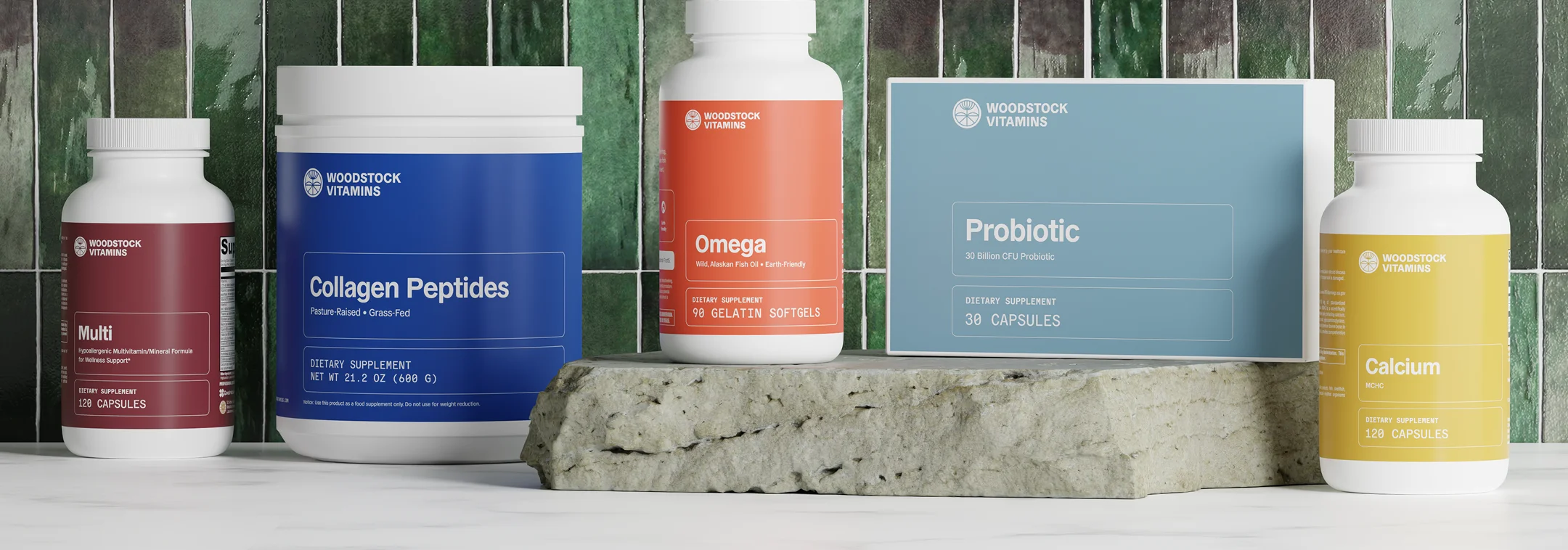
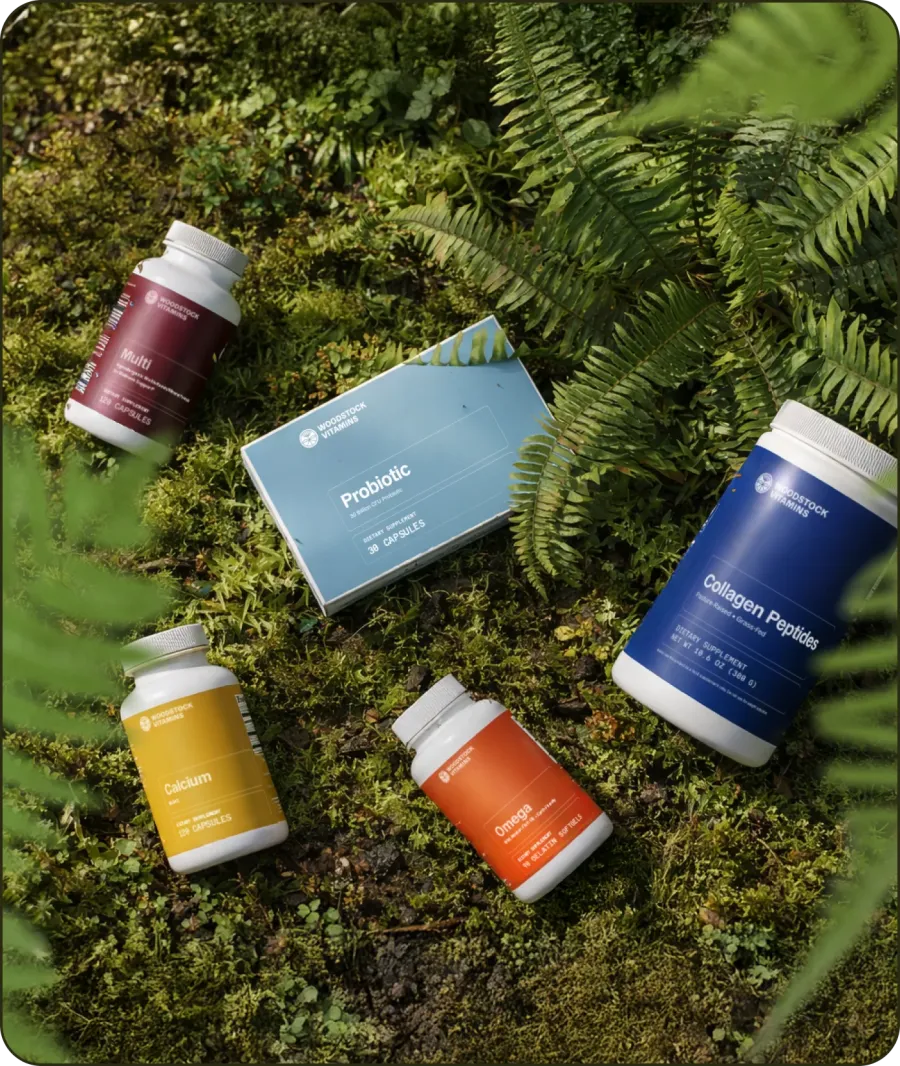
This is the reasoning behind naming Probiotic the Superstar of our Sleep Foundation. Not because one product fixes sleep — no single supplement does that, and we’d tell you if it did — but because the gut is where a measurable piece of your sleep chemistry originates, and probiotics are the First5 member most directly positioned to support that system.
The rest of the Sleep Foundation works alongside it. Calcium+D and Collagen round out the picture — supporting the broader physiological groundwork that consistent, restorative sleep depends on. None of these work in isolation, and none of them work overnight. This is a foundation, built the same way every foundation is built: by closing the gaps that are actually there, and giving your body the raw materials it needs, consistently, over time.
Where to Start
You don’t need to overhaul your routine to act on this. You need to know which gap, if any, is yours. That’s what the quiz is for — it identifies where your foundation is thin and which of the First5 belongs there first.
You don't need more products. You need a clear place to start.
You don't need to rush. You don't need to figure it out alone. Two minutes with the quiz and you'll know exactly where your foundation has gaps — and what to do about it.