






What Collagen Actually Supports: Skin, Joints, Bones, and Gut — The Evidence for Each

Collagen gets sold as a beauty ingredient. That’s not wrong, exactly — it’s just incomplete. Collagen is a structural protein, the most abundant one in the human body, and it shows up everywhere connective tissue does: skin, joints, bones, and the lining of your gut. Most people aren’t getting enough protein in general, and modern diets have quietly phased out the collagen-rich foods — bone broth, organ meats, skin-on cuts — that used to close this specific gap. But that’s not really the point. A person can hit their daily protein target and still be missing the amino acid profile — glycine, proline, hydroxyproline — that these particular structures depend on. Chicken breast and Greek yogurt don’t supply it. Collagen does.
Here’s what the research actually supports, structure by structure, and what it stops short of promising.
Skin Elasticity
Skin is roughly 70% collagen by dry weight, and that share declines with age — which is why skin gets thinner and less resilient over time. Clinical trials on hydrolyzed collagen peptides have found improvements in skin elasticity and hydration over consistent daily use, typically measured across 8 to 12 weeks.
Results build gradually and vary by person, skin type, and consistency of use. Collagen is not a substitute for sun protection, and it isn’t a same-week fix. Think of it as reinforcing a structure from the inside — not smoothing anything over the surface.
Joint Comfort
Cartilage — the tissue cushioning your joints — is built largely from collagen. As natural collagen production slows with age, cartilage has less to work with, which is part of why joints that felt fine at 30 start to complain by 50.
Research on collagen peptides, particularly in people with joint discomfort tied to activity or age, has shown improvement in comfort and mobility over consistent use, generally in the range of several months. The proposed mechanism is that free amino acids and small peptides support the body’s own collagen synthesis in cartilage.
This is support for joint comfort, not a repair claim. Collagen does not reverse joint damage or replace medical treatment for a diagnosed joint condition.
Bone Density
Bone is often thought of as pure mineral, but its underlying scaffold — the part that gives it flexibility rather than brittleness — is collagen. Roughly 90% of bone’s organic matrix is collagen protein, with calcium and other minerals built onto that frame.
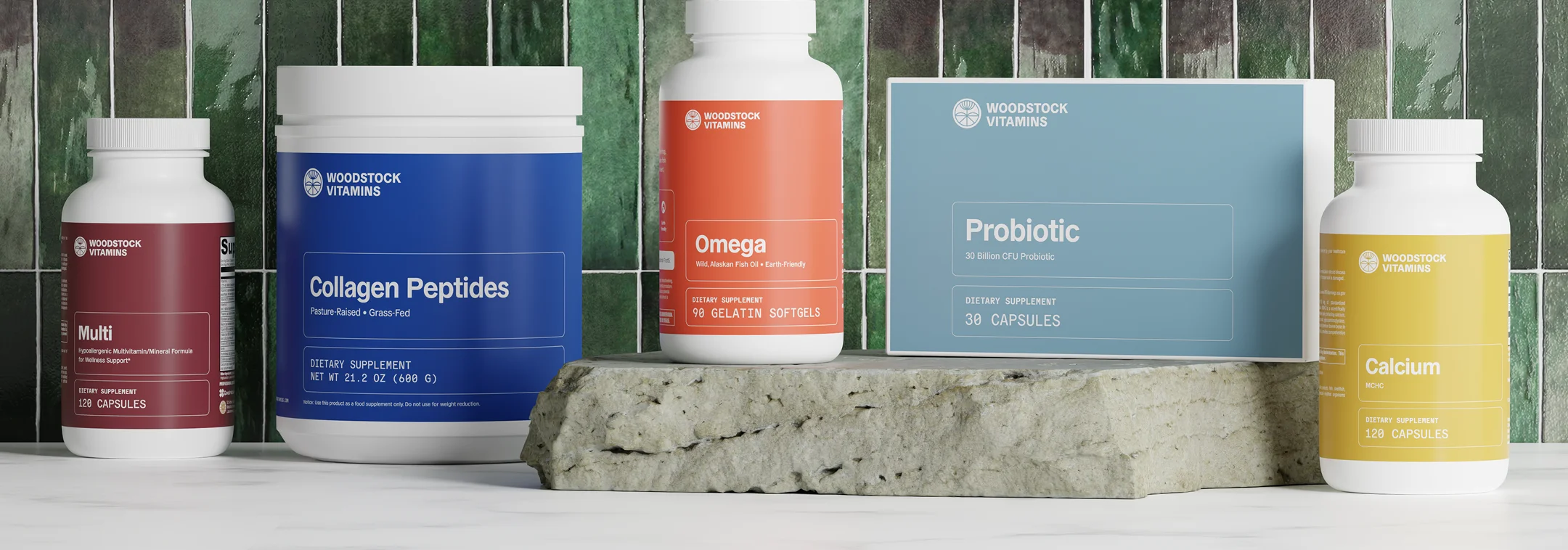
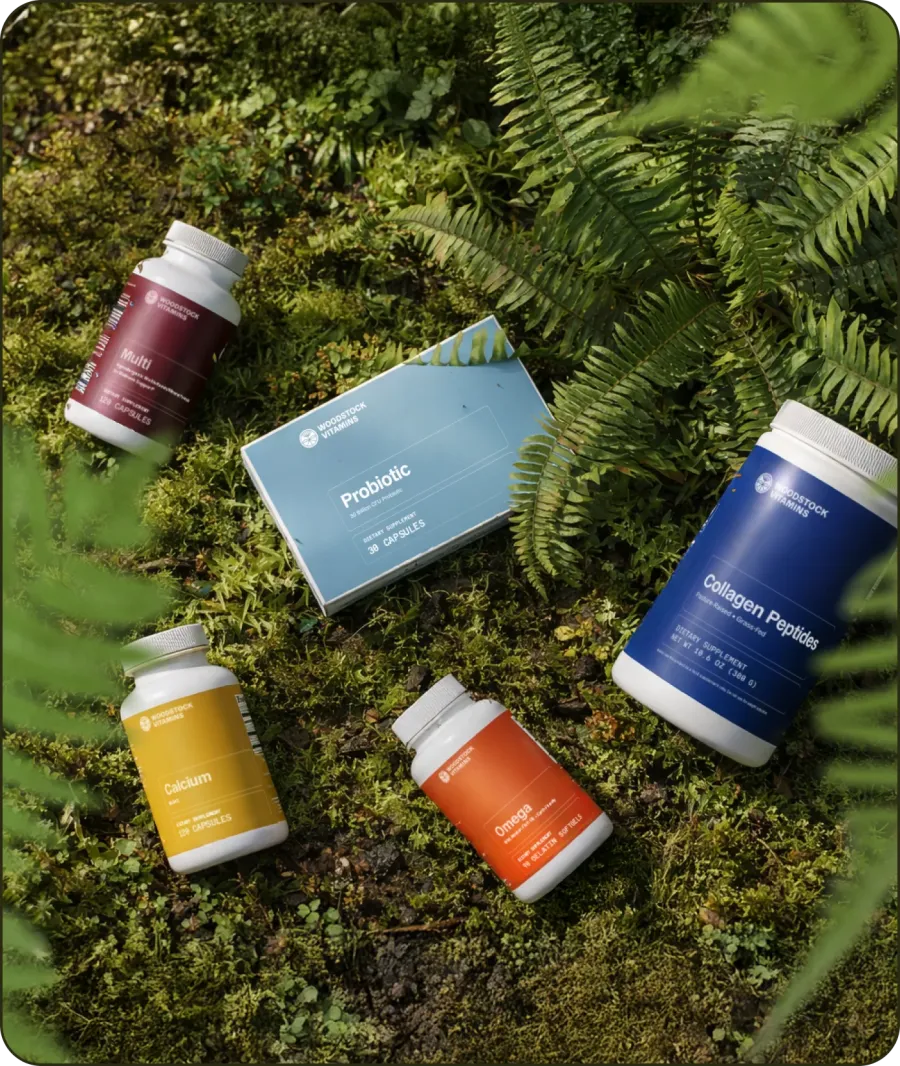
This is also why Calcium+D and Collagen work as a pair rather than substitutes for each other in the First5: one supplies the mineral, the other supports the structure the mineral needs to attach to. Studies on postmenopausal women — a population with accelerated bone density decline — have found that daily collagen peptide supplementation was associated with improvements in markers of bone density over roughly a year of consistent use.
Bone remodels slowly. This is a foundation-building timeline, not a quick-fix one, and it works alongside — not instead of — weight-bearing exercise and adequate calcium and vitamin D intake.
Gut Health
The gut lining is a single-cell-thick barrier, and a meaningful share of it is built from collagen — particularly the amino acid glycine. When that barrier is compromised, research suggests collagen’s amino acids may help support the body’s own repair of the intestinal lining, along with more consistent nutrient absorption and a more balanced gut microbiome.
This is an area of real but earlier-stage research compared to skin and joints, and results depend on consistent daily use over time rather than a single serving. For a deeper look at the mechanisms and what the current evidence shows, see Collagen for Gut Health.
Where This Leaves You
Four structures, one shared input. That’s the actual argument for collagen — not that it’s a beauty supplement with side benefits, but that it supports a specific structural need that shows up in skin, joints, bones, and gut lining alike, and that conventional protein sources don’t fully cover.
None of this replaces a full picture of what your body needs. It’s one piece of the foundation — which is exactly why it’s one of the First5. If you’re not sure whether Collagen belongs in yours, the quiz takes about two minutes and tells you where your foundation actually has gaps.
You don't need more products. You need a clear place to start.
You don't need to rush. You don't need to figure it out alone. Two minutes with the quiz and you'll know exactly where your foundation has gaps — and what to do about it.